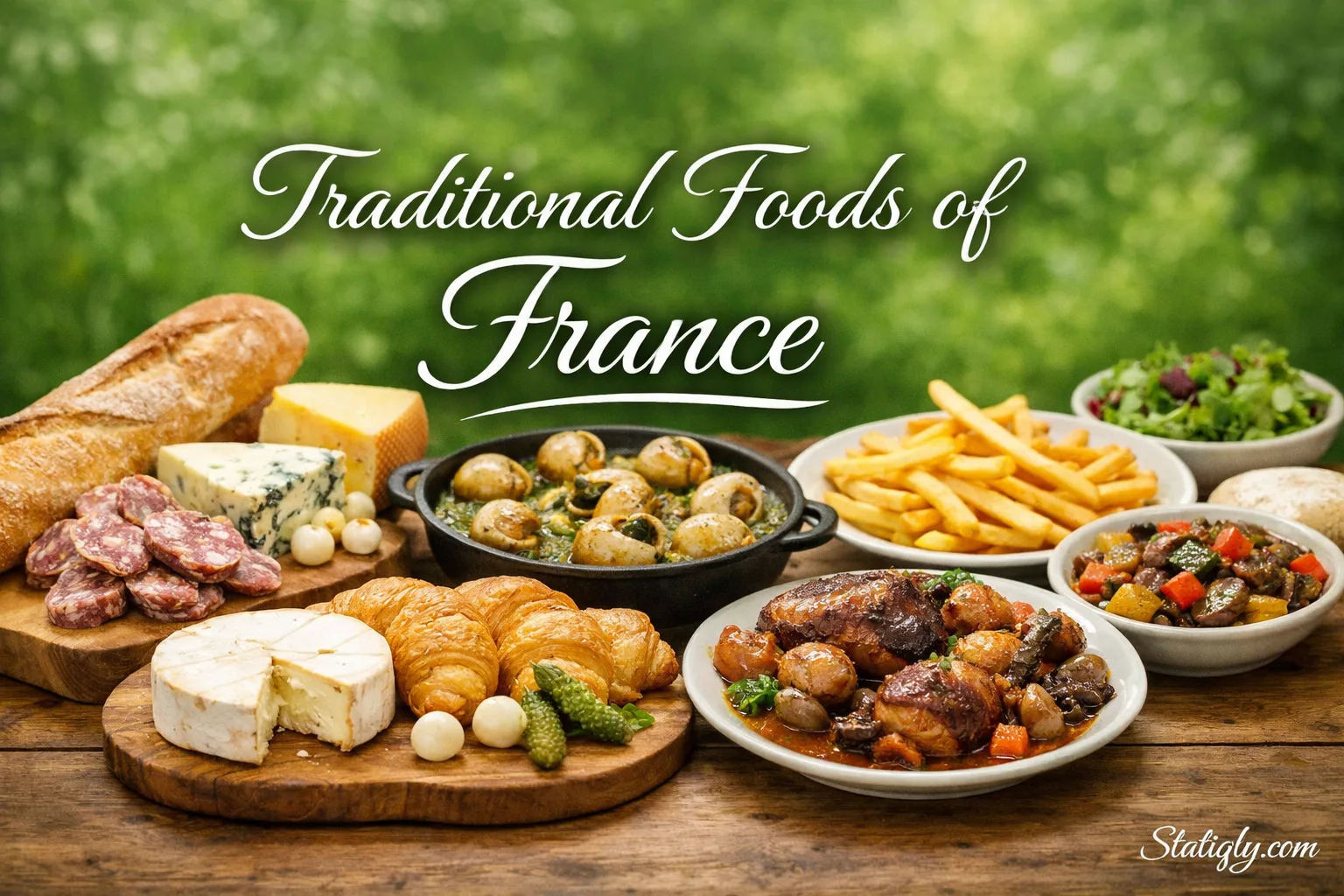
Traditional French food varies sharply by region, season, and local ingredients. Coastal cooking, farmhouse dishes, city bistro staples, breads, cheeses, and pastries all form part of the country’s food culture. The dishes below explain what many well-known French foods contain, where they are associated with, and what to expect when ordering them.
Traditional French foods range from slow-cooked meat dishes and seafood stews to buckwheat galettes, vegetable preparations, pastries, and desserts. Some are closely linked to a particular region, while others are now common across the country.
What Shapes Traditional French Food
French cooking differs from one region to another, but many classic French dishes share a few recurring features:
- Technique that changes texture and flavor through browning, braising, baking, emulsifying, or slow cooking.
- Seasonality that follows available vegetables, fruit, seafood, and other local ingredients.
- Meal structure that often separates courses and gives bread, cheese, and dessert distinct places at the table.
Familiar Ingredients, Different Preparations: Chicken, potatoes, onions, beans, and other everyday ingredients appear frequently in traditional dishes. The difference often comes from the cooking method, sauce, seasoning, or length of cooking.
Iconic Dishes You’ll Meet Across France
These widely recognized traditional French dishes include soups, braised meats, seafood, pastries, and desserts found in restaurants, homes, and regional cooking.
Comforting Starters And Soups
- French Onion Soup — slow-cooked onions in broth, topped with toasted bread and melted cheese.
- Potage (seasonal vegetable soup) — usually smooth, gentle, and perfect on cooler days.
- Salade Niçoise — a salad associated with Nice, commonly built around tomatoes, eggs, olives, anchovies or tuna, and other local ingredients depending on the preparation.
Classic Main Dishes
Boeuf Bourguignon
Beef slowly braised with red wine, aromatics, and often mushrooms or small onions until tender.
Coq Au Vin
Chicken braised with wine, aromatics, and often mushrooms or bacon, producing a rich, savory sauce.
Cassoulet
A slow-cooked dish of white beans with meat such as duck, pork, or sausage, with regional versions differing across southwestern France.
Steak Frites
Steak served with crispy fries, often accompanied by a pan sauce, pepper sauce, or herb butter depending on the restaurant.
Seafood Classics
- Bouillabaisse — a Provençal fish and seafood preparation associated especially with Marseille, typically served with broth and accompaniments such as rouille and bread.
- Moules-Frites — mussels served with fries, commonly found in northern France and neighboring Belgium.
Pastries And Desserts
- Crêpes — thin pancakes served with sweet or savory fillings; Brittany is especially associated with crêpes and buckwheat galettes.
- Crème Brûlée — baked custard topped with a thin layer of caramelized sugar that is broken with a spoon before eating.
- Tarte Tatin — caramelized apple tart with a buttery base, rich without feeling heavy.
Regional Flavors Worth Knowing
French food changes noticeably from one region to another. Regional ingredients, agriculture, climate, and neighboring culinary traditions all influence what appears on local menus.
Provence
Herbs, olive oil, tomatoes
Look for ratatouille, tapenade, and bright vegetable dishes.
Brittany
Seafood, buckwheat, butter
Try galettes (savory crêpes) and coastal seafood plates.
Alsace
Hearty, comforting flavors
Expect dishes like choucroute and flame-baked tarte flambée.
Normandy
Apples, cream, gentle richness
Seafood with creamy sauces and apple-forward desserts feel right at home here.
Lyon And Surroundings
Bistro comfort, sauces
This area is famous for hearty, traditional cooking and proud food culture.
Southwest
Duck, beans, rustic warmth
This is where slow-cooked dishes and rich flavors often shine.
A Practical Table Of Traditional French Foods
This table compares several well-known dishes by type, regional association, flavor profile, and the kind of meal they suit.
| Dish | Type | Typical Region Match | What It Usually Tastes Like | When It’s A Great Pick |
|---|---|---|---|---|
| Boeuf Bourguignon | Main | Burgundy | Rich, savory, slow-cooked depth | Cold evenings, comfort cravings |
| Bouillabaisse | Main | Mediterranean Coast | Fragrant, seafood-forward, herby | Seafood-focused meals |
| Cassoulet | Main | Southwest | Hearty, slow, deeply filling | Cold-weather or hearty meals |
| Galette | Main/Street Food | Brittany | Nutty buckwheat base, savory fillings | Lunch on the go |
| Crème Brûlée | Dessert | Widely Found | Creamy with a caramel crackle | A classic custard dessert |
| Tarte Tatin | Dessert | Widely Found | Buttery pastry, caramelized apples | Apple-based dessert menus |
How To Order And Eat Like A Local
You do not need fluent French to order traditional food. A few simple habits make menus easier to navigate, especially in restaurants that offer regional dishes or a daily special.
- Start Simple: choose one familiar dish, then add one regional or unfamiliar item if you want to try something new.
- Ask About The Day’s Dish: many places have a daily special that reflects local tradition.
- Follow The Meal Structure: many restaurant meals are organized around a starter, main course, then dessert or cheese.
- Share When Appropriate: sharing starters or desserts can make it easier to sample several dishes.
- Choose With The Season: soups and slow-cooked dishes are common in cooler months, while salads, vegetables, and seafood often suit warmer weather.
Useful Restaurant Phrases
- “Je prends…” — “I’ll have…” (simple and confident)
- “Qu’est-ce que vous conseillez ?” — “What do you recommend?”
- “Sans…” — “Without…” (helpful for preferences)
Easy Ways To Bring French Tradition Into Your Kitchen
Many traditional French techniques can be adapted easily at home. A few basic sauces, pantry ingredients, and reliable dishes are enough to reproduce some familiar flavors without copying a restaurant menu.
Master One Sauce
Try a simple pan sauce with sautéed aromatics, stock, butter, and a little lemon. It works well with chicken, fish, and vegetables.
Build A Small Pantry
Dijon mustard, dried herbs, good vinegar, and quality butter cover many simple preparations.
Choose One Familiar Dish
Crêpes are straightforward to practice at home, while onion soup is a useful weekend dish for learning slow browning and gratinating.
Use Good Basic Ingredients
Fresh bread, ripe fruit, good cheese, butter, vegetables, and herbs can form a simple meal without elaborate preparation.
Bread, Cheese, And Everyday Meal Habits
Bread and cheese commonly appear as part of everyday meals, while bakeries remain central to daily food routines in many towns and cities. Traditional French dining also tends to give separate attention to courses, texture, serving temperature, and seasonal ingredients. These habits vary by household and region, but they help explain why simple foods can occupy an important place at the table.