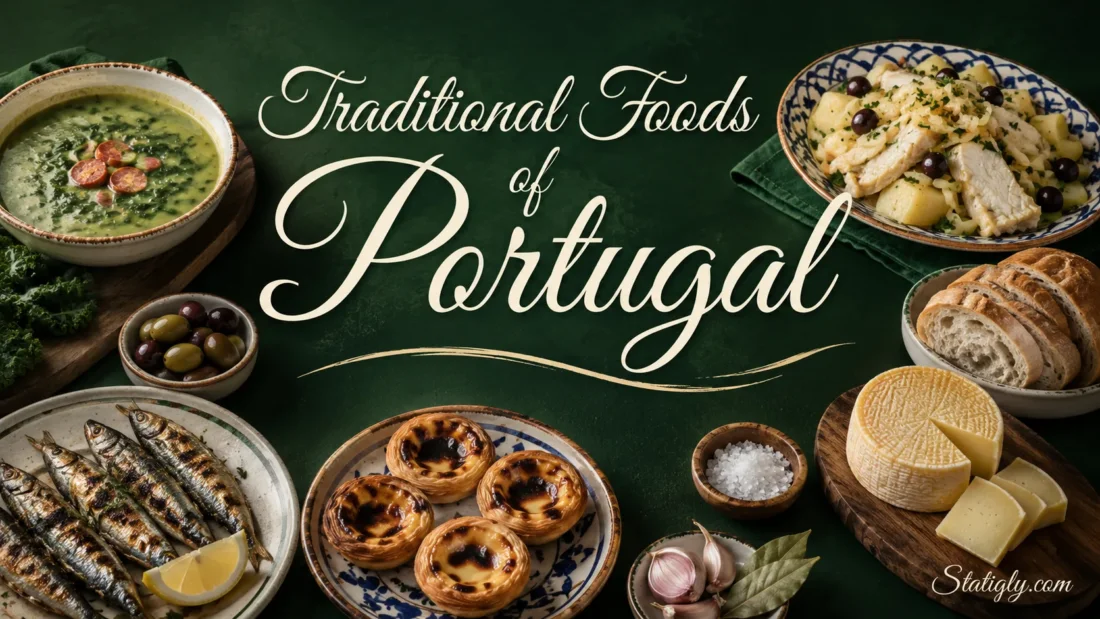
Traditional foods of Portugal are easy to love because they rarely try too hard. A bowl of soup, a grilled fish, a warm custard tart, a soft bread roll filled with simple meat, a seafood rice shared at the table — Portuguese food often feels like a calm conversation rather than a performance. The flavors are clear, the portions are generous, and many dishes carry a strong sense of place. Coastal towns lean toward fish and shellfish. Inland regions bring soups, stews, bread, pork dishes, and cheeses. In cafés, bakeries, markets, and small family restaurants, the country’s food culture shows itself in daily habits, not only in famous recipes.
Portugal sits on the Atlantic, so seafood plays a natural role. Yet Portuguese cuisine is not only about the sea. It also uses olive oil, garlic, onions, potatoes, rice, beans, greens, eggs, bread, and carefully cooked meats. Simple ingredients, handled well. That is the heart of it.
Foods That Show the Shape of Portuguese Cuisine
| Food | Type | Common Link to Place | What Makes It Memorable |
|---|---|---|---|
| Bacalhau | Salt cod dish | Known across Portugal | Served in many styles, from baked dishes to shredded cod with eggs and potatoes |
| Caldo Verde | Soup | Strongly linked with northern home cooking | A green soup made with potatoes, greens, olive oil, and often sliced chouriço |
| Pastel de Nata | Pastry | Famous in Lisbon and found widely | Crisp pastry with creamy custard and a lightly browned top |
| Sardinhas Assadas | Grilled fish | Popular in coastal cities and summer gatherings | Charcoal-grilled sardines, often served simply with bread or potatoes |
| Francesinha | Sandwich dish | Closely linked with Porto | A layered hot sandwich covered with melted cheese and sauce |
| Arroz de Marisco | Seafood rice | Coastal areas | Loose, saucy rice cooked with shellfish and seafood |
| Cozido à Portuguesa | Boiled meal | Family tables and regional kitchens | A filling mix of meats, sausages, vegetables, and sometimes beans |
| Bifana | Sandwich | Cafés and snack counters | Thin pork slices in a soft roll, often eaten as a casual meal |
Why Portuguese Food Feels So Practical
Many traditional Portuguese foods began as everyday meals. They were not made for display. They were made to feed families, workers, travelers, and neighbors. That explains the steady rhythm of the cuisine: soup before a meal, bread on the table, fish near the coast, stews inland, pastries with coffee, and small plates when people want to sit and talk.
The food often follows one clear idea: take a familiar ingredient and let it speak. A sardine does not need a heavy sauce. A good potato soup does not need much noise. A custard tart needs balance — crisp outside, soft inside, warm if possible. Easy to say. Harder to do well.
Bacalhau and the Many Ways Portugal Cooks Salt Cod
Bacalhau is one of the best-known names in Portuguese food. It means cod, usually dried and salted cod, and it appears in many home recipes and restaurant menus. People often say Portugal has countless ways to cook it. The exact number matters less than the habit itself: bacalhau is part of the Portuguese table in many forms.
Some versions feel soft and creamy. Others are baked, fried, shredded, or mixed with potatoes and eggs. The same ingredient can become a family meal, a holiday dish, or a small snack. Like a plain white shirt worn in many styles, bacalhau changes with the cook.
Bacalhau à Brás
Bacalhau à Brás mixes shredded salt cod with thin fried potatoes, onions, and eggs. It is usually soft, golden, and comforting. The texture matters. The potatoes should not feel heavy; the eggs should bind the dish without turning it dry.
Bacalhau com Natas
Bacalhau com Natas is a creamy baked cod dish. It often includes potatoes, onions, and a smooth cream-based sauce. It is the kind of dish people remember because it feels familiar even on the first bite. Warm, filling, and gentle.
Bacalhau à Gomes de Sá
Bacalhau à Gomes de Sá is usually made with salt cod, potatoes, onions, eggs, olives, and olive oil. It has a home-cooked feel and a clean structure. Nothing hides. Each part has a job.
Pastéis de Bacalhau
Pastéis de Bacalhau, also called codfish cakes, turn bacalhau into a small fried snack. They are often made with mashed potato, cod, parsley, onion, and egg. Crisp outside, soft inside. A small bite, but not a boring one.
Caldo Verde: The Green Soup People Remember
Caldo Verde is one of Portugal’s most familiar soups. It is often made with potatoes, onions, garlic, olive oil, and finely sliced greens such as couve-galega. Many versions include a few slices of chouriço. The soup looks modest, but the flavor has depth because the base is smooth and the greens give it life.
This is not a soup that needs decoration. It works because it is direct. The potatoes give body. The olive oil rounds it out. The greens cut through the softness. A spoonful feels light, then filling. That balance is the charm.
Caldo Verde also explains something important about Portuguese cooking: soup is not an afterthought. In many homes, it belongs near the start of the meal. Not fancy, not plain. Useful.
Pastel de Nata and Portugal’s Pastry Habit
Pastel de Nata is the small custard tart many travelers try first. The pastry should be crisp and flaky. The custard should be creamy, not stiff. The top usually has dark toasted spots. Those spots are part of its character, not a mistake.
People often eat it with coffee, especially in cafés and bakeries. One tart can feel like a whole scene: a counter, a small plate, a paper napkin, the sound of cups, and a warm pastry that disappears too fast.
Portuguese sweets often use eggs, sugar, and pastry skills with careful restraint. The best examples do not feel loud. They feel precise. A pastel de nata proves that a small dessert can carry a country’s food identity without saying a word.
Seafood Dishes From the Atlantic Table
Portugal’s long coastline gives seafood a natural place in the kitchen. Fish and shellfish appear grilled, stewed, fried, baked, and cooked with rice. The style often stays simple because fresh seafood does not need much help.
Sardinhas Assadas
Sardinhas Assadas are grilled sardines, often linked with summer meals and street-side cooking in coastal cities. They are usually cooked over heat until the skin blisters and the fish turns rich and fragrant. Bread, potatoes, salad, or roasted peppers may sit beside them.
The taste is bold but clean. Sardines are small fish with big personality. That is why they work so well with little more than salt, heat, and patience.
Arroz de Marisco
Arroz de Marisco is seafood rice, usually wetter and looser than a dry rice dish. It may include shrimp, clams, mussels, crab, or other seafood, depending on the place and the cook. The rice soaks up the flavor of the broth. Every spoonful tastes like the sea came indoors for lunch.
Cataplana de Marisco
Cataplana refers both to a cooking vessel and to dishes often made inside it. In southern Portugal, seafood cataplana may bring together shellfish, fish, tomatoes, onions, peppers, garlic, and herbs. The closed pan traps steam and aroma, so the dish opens at the table with a warm, fragrant rush.
Ameijôas à Bulhão Pato
Ameijôas à Bulhão Pato is a clam dish made with garlic, olive oil, coriander, and lemon. It is bright, simple, and very Portuguese in its confidence. The sauce is part of the pleasure, so bread often becomes useful here. Very useful.
Polvo à Lagareiro
Polvo à Lagareiro is an octopus dish often served with olive oil, garlic, and potatoes. The octopus should be tender, while the potatoes bring a rustic feel. Olive oil is not a side note in this dish. It is part of the language.
Hearty Meat Dishes With Regional Character
Inland Portuguese cooking often feels deeper and slower. The flavors come from stewing, roasting, boiling, and seasoning with care. Pork appears often, as do sausages, beans, cabbage, potatoes, and bread. These dishes can be filling, but they are not careless. A good version has balance.
Cozido à Portuguesa
Cozido à Portuguesa is a boiled meal made with a mix of meats, sausages, vegetables, and sometimes beans. The exact mix can change by region and household. It is not a delicate plate arranged with tweezers. It is food for a table where people plan to stay a while.
Carrots, cabbage, potatoes, turnips, rice, meats, and sausages may all appear. The dish feels like a full pantry turned into lunch. Heavy? It can be. Satisfying? Usually, yes.
Carne de Porco à Alentejana
Carne de Porco à Alentejana combines pork, clams, potatoes, garlic, and coriander. It brings land and sea onto the same plate. The idea may sound unusual at first, but the flavors make sense: the pork gives body, the clams bring a salty lift, and the potatoes catch the sauce.
Leitão da Bairrada
Leitão da Bairrada is roast suckling pig linked with the Bairrada area in central Portugal. The skin is prized for crispness, while the meat should stay tender. It is often served in slices, sometimes with simple sides. The dish shows how roasting can be both plain and exact.
Alheira de Mirandela
Alheira de Mirandela is a sausage associated with the northeast. Modern versions often use a mix of meats, bread, garlic, and seasoning. It is commonly fried or grilled and served with simple sides such as potatoes, greens, or egg. Its texture sets it apart: softer and breadier than many other sausages.
Portuguese Sandwiches and Everyday Café Food
Not every traditional food needs a long meal. Portugal has a strong café and snack-counter culture, and some of the most useful foods come in bread. A sandwich can be lunch, a late snack, or a quick stop during travel. Small places often do these foods best because repetition teaches the hand.
Bifana
Bifana is a pork sandwich made with thin slices of seasoned meat in a soft roll. Some versions are garlicky, some are lightly spicy, and some are kept very plain. The bread matters because it catches the juices without falling apart too soon.
Prego
Prego is a beef sandwich, often served in a roll with garlic-seasoned steak. It can be simple or more dressed up, depending on where it is served. The name is short. The pleasure is short too, because it tends to vanish quickly.
Francesinha
Francesinha is closely tied to Porto. It is a hot sandwich made with layers of meat, covered with melted cheese, and served with a warm sauce. It is often plated rather than eaten by hand. A fork and knife make sense here.
This is one of Portugal’s most filling urban dishes. It is not light café food. It is a full meal wearing the shape of a sandwich.
Small Plates, Snacks, and Foods Made for Sharing
Portuguese food includes many small plates and snacks that work well between meals or around a shared table. These foods are practical. They let people taste several things without turning the meal into a formal event.
- Rissóis de Camarão: crescent-shaped shrimp pastries with a creamy filling and crisp coating.
- Croquetes: small fried rolls often made with minced meat and a soft interior.
- Peixinhos da Horta: green beans dipped in batter and fried until crisp.
- Pataniscas de Bacalhau: flat cod fritters, often made with parsley and onion.
- Salada de Polvo: octopus salad with olive oil, onion, herbs, and a clean, fresh taste.
Peixinhos da Horta deserves a special mention because the name means “little fish from the garden.” No fish is needed. The green beans look a bit like tiny fish after frying, which gives the dish its playful name. A small joke on the plate, and a good one.
Bread, Olive Oil, Cheese, and the Quiet Parts of the Meal
Some Portuguese foods do not shout for attention, yet they shape the meal. Bread is one of them. It appears with soup, stews, clams, grilled fish, and sandwiches. In many places, it is not just a side. It is a tool.
Olive oil also has a steady role. It finishes soups, seasons fish, softens vegetables, and carries garlic and herbs. In dishes such as Polvo à Lagareiro, olive oil becomes part of the main character.
Portugal also has traditional cheeses worth knowing. Queijo da Serra, linked with the Serra da Estrela area, is one of the best-known. It is often soft and rich, with a strong dairy flavor. Served with bread, it can turn a simple plate into something memorable.
Regional Food Patterns Across Portugal
Portuguese cuisine changes from north to south, and the islands add their own food habits too. The differences are not hard borders. Think of them as accents. The same language, spoken with local flavor.
| Area | Food Pattern | Examples to Know |
|---|---|---|
| Northern Portugal | Soups, hearty dishes, sausages, and strong home-cooking traditions | Caldo Verde, Tripas à Moda do Porto, Alheira de Mirandela |
| Porto and Nearby Areas | Urban comfort food and filling sandwiches | Francesinha, Tripas à Moda do Porto |
| Central Portugal | Roasted meats, cheeses, breads, and regional sweets | Leitão da Bairrada, Queijo da Serra |
| Lisbon and Coastal Areas | Seafood, grilled fish, pastries, and café food | Pastel de Nata, Sardinhas Assadas, Ameijôas à Bulhão Pato |
| Alentejo | Bread-based dishes, pork, herbs, and simple rural flavors | Açorda Alentejana, Carne de Porco à Alentejana |
| Algarve | Seafood, fish stews, rice dishes, and citrus notes | Cataplana de Marisco, Arroz de Lingueirão |
| Madeira and the Azores | Island dishes shaped by seafood, meat, local breads, and tropical produce | Espetada, Bolo do Caco, Lapas Grelhadas |
Northern Comfort Foods
The north often feels hearty at the table. Soups, sausages, beans, greens, and slow-cooked dishes appear often. The food suits cooler weather and hilly landscapes. It feeds first, then charms.
Tripas à Moda do Porto
Tripas à Moda do Porto is a traditional Porto dish made with tripe, beans, and meats. It is one of the city’s old food symbols. The dish is filling and deeply tied to local identity, though it may not be the first choice for every visitor. Food can be honest like that.
Arroz de Pato
Arroz de Pato means duck rice. It is usually baked with shredded duck, rice, and slices of sausage on top. The best versions keep the rice moist inside while the top gains a little color and texture.
Alentejo Food and the Beauty of Bread
Alentejo cooking shows how much can come from bread, herbs, garlic, olive oil, and patience. The region is known for rural dishes that make simple ingredients feel complete.
Açorda Alentejana
Açorda Alentejana is a bread-based dish often made with garlic, coriander, olive oil, hot water, and egg. It may sound almost too simple. Then you taste it and understand why old dishes survive. Bread, when treated well, becomes more than bread.
Migas
Migas also uses bread as a base. In Portugal, it can be made with leftover bread, garlic, olive oil, and other ingredients depending on the region. It often appears with meat dishes and shows a practical habit in traditional kitchens: waste less, flavor more.
Island Foods From Madeira and the Azores
Portugal’s islands add another layer to the country’s food culture. Madeira and the Azores have dishes that reflect island life, local produce, cattle farming, fishing, and distinctive breads.
Espetada Madeirense
Espetada Madeirense is a Madeiran beef skewer, often seasoned with garlic and bay leaf. It is commonly grilled and served with simple sides. The flavor is direct and smoky, with the bay leaf giving it a local touch.
Bolo do Caco
Bolo do Caco is a round Madeiran bread traditionally cooked on a hot flat surface. It is often served warm, sometimes with garlic butter. Soft inside and lightly crisp outside, it works with grilled meats, soups, or on its own.
Cozido das Furnas
Cozido das Furnas is associated with São Miguel in the Azores. It is a slow-cooked stew of meats and vegetables prepared using geothermal heat in the Furnas area. The method gives the dish a special sense of place. The land itself helps cook the meal.
Portuguese Sweets Beyond Pastel de Nata
Portugal has a strong pastry tradition, and many sweets rely on eggs, sugar, almonds, cinnamon, or local cheese. Bakery windows can be confusing in the best way. Which one should you choose? Start with one. Then another later.
- Queijadas de Sintra: small cheese-based pastries with a sweet filling and a firm pastry shell.
- Ovos Moles de Aveiro: soft egg-yolk sweets from Aveiro, often shaped in thin wafer shells.
- Travesseiros de Sintra: puff pastry sweets filled with almond and egg cream.
- Bolas de Berlim: soft doughnuts often filled with custard, popular in bakeries and beach settings.
- Pão de Ló: a soft sponge cake that can range from light and airy to very moist, depending on the version.
These sweets show a careful kind of richness. They can be sweet, yes, but the best versions have texture and balance. Crisp pastry against soft cream. Light cake against a moist center. A small sweet with coffee after lunch. Done right, it feels enough.
How To Eat Traditional Portuguese Food With More Confidence
Portuguese menus can feel easy in some places and puzzling in others. A few food words help. Peixe means fish. Carne means meat. Marisco means seafood. Sopa means soup. Arroz means rice. Queijo means cheese. Learn these, and the menu opens a little.
Many traditional meals work best when ordered with the setting in mind. Near the sea, grilled fish or seafood rice makes sense. In Porto, Francesinha belongs to the city’s food story. In a bakery, pastel de nata is a natural first choice. In a small local restaurant, soup may be better than expected. Often, it is.
Useful Ordering Notes
- Ask about the dish of the day if the restaurant offers one.
- For seafood rice, expect a saucier texture rather than dry rice.
- For bacalhau, check the style: baked, creamy, shredded, fried, or served as cakes.
- For pastries, try them earlier in the day when turnover is high.
- For shared snacks, order a few small plates instead of one large dish.
- For soups, do not skip them too quickly; Portuguese soups often carry real flavor.
Best Traditional Foods for Different Tastes
The easiest way to explore Portuguese food is to match dishes to what you already enjoy. No need to be brave for the sake of it. Food should invite you in.
| If You Like | Try This | Why It Fits |
|---|---|---|
| Comfort Food | Caldo Verde, Bacalhau com Natas, Arroz de Pato | Warm textures, familiar ingredients, and filling portions |
| Seafood | Arroz de Marisco, Cataplana, Ameijôas à Bulhão Pato | Clear seafood flavor with garlic, herbs, rice, or broth |
| Grilled Foods | Sardinhas Assadas, Espetada Madeirense, Peixe Grelhado | Simple cooking that lets the main ingredient stand out |
| Street Snacks | Bifana, Prego, Pastéis de Bacalhau, Rissóis | Easy to eat, widely available, and full of local character |
| Sweet Pastries | Pastel de Nata, Queijadas, Travesseiros | Good with coffee and easy to find in bakeries |
| Regional Food | Leitão da Bairrada, Açorda Alentejana, Cozido das Furnas | Strong link to place, cooking method, and local habit |
Traditional Portuguese Food Words Worth Knowing
A few Portuguese food words can make menus less intimidating. They also help you notice patterns from region to region.
- Bacalhau: cod, usually dried and salted in traditional dishes.
- Marisco: seafood or shellfish.
- Peixe Grelhado: grilled fish.
- Sopa: soup.
- Arroz: rice.
- Porco: pork.
- Frango: chicken.
- Queijo: cheese.
- Pastel: pastry or small filled item, depending on context.
- Doce: sweet or dessert.
Common Ingredients in Traditional Portuguese Cooking
Portuguese food is easier to understand when you notice the repeated ingredients. They appear again and again, but the dishes still feel different because each region uses them in its own way.
- Olive Oil: used in soups, seafood, vegetables, and finishing sauces.
- Garlic: common in clams, meats, soups, and marinades.
- Potatoes: served boiled, fried, baked, mashed, or mixed into soups.
- Rice: used in seafood rice, duck rice, and regional dishes.
- Greens: important in soups such as Caldo Verde.
- Cod: central to many well-known recipes.
- Eggs: used in bacalhau dishes, pastries, and sweets.
- Bread: served with meals and used inside dishes such as açorda and migas.
- Coriander: common in several southern and seafood dishes.
- Cinnamon: often used with pastries and sweets.
How Portugal’s Food Culture Feels at the Table
Traditional Portuguese food is not only a list of famous dishes. It is also a way of eating. Coffee with a pastry. Soup before the main plate. Bread beside clams. Grilled fish that needs almost nothing. A sandwich eaten standing at a counter. A long family meal built around one pot.
That is why the cuisine feels so approachable. It does not ask the reader, traveler, or curious cook to decode a puzzle. It says: sit down, taste this, and notice how much care can fit into simple food.
Foods To Start With First
For a first taste of traditional Portuguese food, start with dishes that show different sides of the cuisine. Choose one soup, one seafood dish, one cod dish, one casual snack, and one pastry. That gives a fuller picture without turning the meal into a checklist.
- Caldo Verde for soup culture and home-style flavor.
- Bacalhau à Brás for a classic cod dish with soft texture and familiar ingredients.
- Sardinhas Assadas or Arroz de Marisco for the Atlantic side of the table.
- Bifana or Prego for everyday café food.
- Pastel de Nata for the pastry that many people remember first.
After that, follow the region. In Porto, look for Francesinha. In Alentejo, look for bread-based dishes and pork with local herbs. In the Algarve, seafood and cataplana make sense. In Madeira, try Bolo do Caco and espetada. In the Azores, look for island stews, local cheeses, and seafood. The map can guide the fork.