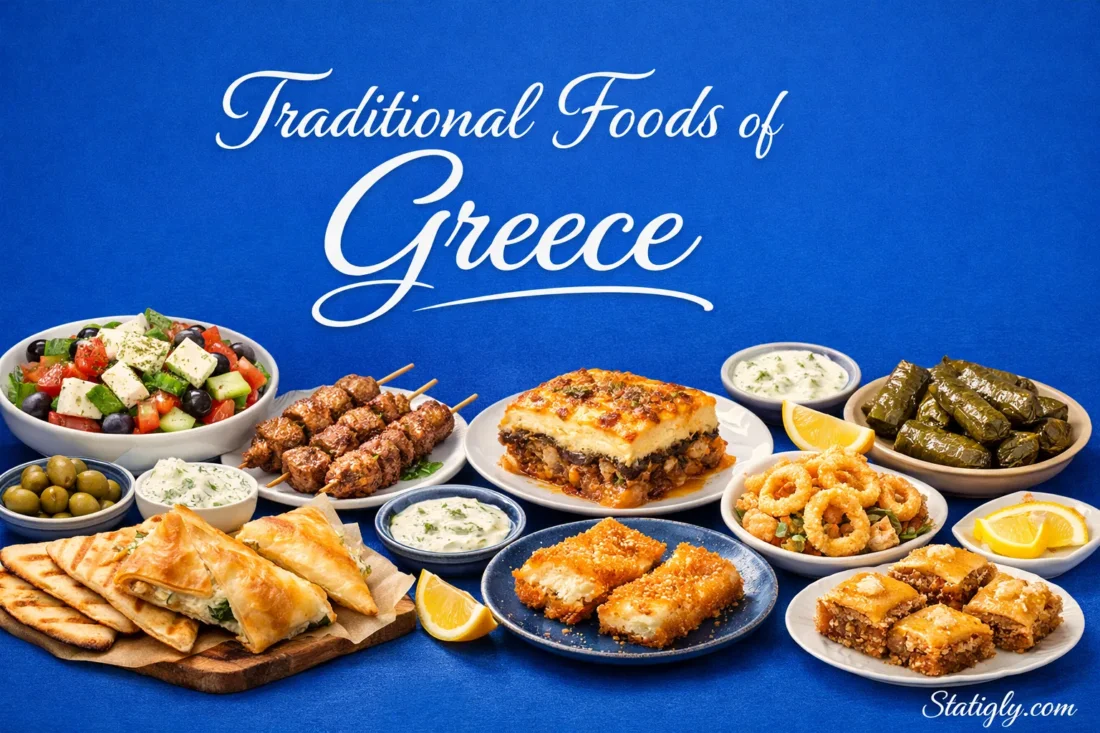
Greek food does not hide behind heavy tricks. You can usually see what matters right away: olive oil, bread, greens, legumes, cheese, herbs, tomatoes, and slow, steady cooking. That is why the traditional foods of Greece feel so clear and memorable. Some dishes are known almost everywhere, but the real picture is wider than that. Island kitchens lean toward seafood and simple vegetable plates. Mountain areas bring more pies, soups, and baked meals. On one table you may find beans, barley rusks, vine leaves, honey sweets, and a pie wrapped in thin phyllo. Simple, yes. Plain, no.
Popular Greek Foods and Where You Will Meet Them
| Food | What It Usually Includes | Where It Commonly Fits |
|---|---|---|
| Choriatiki | Tomatoes, cucumber, onion, feta, olives, oregano, olive oil | Everyday lunch, family table, taverna starter |
| Dakos | Barley rusk, tomato, soft cheese or feta, olive oil, oregano | Closely linked with Crete |
| Tzatziki | Greek yogurt, cucumber, garlic, herbs | Shared starter, side dish, sandwich filling |
| Dolmadakia | Vine leaves stuffed with rice, onion, and herbs | Home cooking, festive table, starter plate |
| Spanakopita | Phyllo pastry with spinach, cheese, and herbs | Snack, bakery item, light meal |
| Moussaka | Aubergine, potato, minced meat, béchamel | Baked family meal, restaurant classic |
| Fasolada | Bean soup with vegetables and olive oil | Home cooking, cooler months, everyday meal |
| Bougatsa | Layered pastry filled with custard, cheese, spinach, or meat | Breakfast or snack, especially in northern Greece |
| Baklava | Phyllo, nuts, syrup or honey | Sweet course, bakery counter, holiday table |
What Gives Greek Food Its Shape
Traditional Greek cooking stands on ingredients that appear again and again, but never in a dull way. A bowl of beans can feel different from one region to the next. A pie can change with the season. A tomato dish in summer does not taste like a winter stew, and that is exactly the point.
- Olive oil gives body to salads, soups, bean dishes, and vegetable trays.
- Legumes such as beans, chickpeas, lentils, and yellow split peas show up in daily cooking more often than many visitors expect.
- Cheese matters everywhere, from Feta PDO to local island and mountain cheeses.
- Herbs like oregano, dill, mint, and thyme keep flavors bright rather than heavy.
- Phyllo pastry turns vegetables, greens, and cheese into some of the country’s best-known savory foods.
- Seasonal produce shapes the menu, especially tomatoes, aubergines, peppers, greens, lemons, and grapes.
There is also a wider food culture behind the plates. In Greece, the Mediterranean diet is tied not only to ingredients but also to seasonal cooking and shared meals. That social side matters. Food is rarely treated as fuel alone; it is part of the rhythm of the day, the week, and family life.
Dishes That Show the Everyday Greek Table
Fresh Plates and Shared Starters
If you want to understand Greek food quickly, start with the simpler plates. Choriatiki is a good example. It looks easy because it is easy, yet the balance matters: ripe tomatoes, cucumber, onion, olives, feta, oregano, and olive oil. Nothing is there by accident. The same is true for dakos in Crete, where a barley rusk carries tomato, cheese, olive oil, and often capers. Crunch first, then softness. It works.
Tzatziki belongs here too. Cool, garlicky, and direct, it can sit beside grilled meat, roasted vegetables, or warm bread. Then come dolmadakia, vine leaves wrapped around rice, onion, and herbs. Small food, maybe. Still, they tell a big story about Greek home cooking: careful hands, pantry ingredients, and patient preparation.
Pies, Bakes, and Filling Favorites
Greek pies deserve real attention. Spanakopita is the name many people know first, and for good reason. Spinach, cheese, herbs, and layered phyllo create a dish that can be breakfast, lunch, snack, or part of a larger meal. Tiropita, the cheese version, is just as familiar in bakeries and homes.
Then there is moussaka, one of the best-known Greek baked dishes. It usually brings together aubergine, potato, minced meat cooked with tomato and spices, and a top layer of béchamel. It is fuller, warmer, and built for the table rather than for eating on the move. A different mood entirely.
Beans, Vegetables, and Olive Oil Dishes
Many people come to Greek food expecting grilled dishes first. They leave remembering the vegetables. Ladera dishes, cooked with olive oil and herbs, are a major part of the tradition. Stuffed vegetables, slow-cooked green beans, okra, peas, and other seasonal produce can all fall into this part of the menu. Meat is not required for the plate to feel complete. Often, not missed at all.
Fasolada, the classic bean soup, shows this side of Greece clearly. Beans, vegetables, olive oil, and slow cooking turn a modest ingredient into something steady and satisfying. The same goes for chickpea soups, lentil soups, and plates of gigantes beans. Why do these foods stay with people? Because they taste lived-in. They feel like food that belongs to a real kitchen.
Regional Foods That Add Local Character
Greek cuisine is not one flat national menu. It changes from island to island and from coast to mountain. That local shift is part of the charm. You can see the same method, the same herb, even the same cheese family, and still end up with a very different result.
- Crete: Known for dakos, barley rusks, greens, local cheeses, and a style of cooking that keeps ingredients clear and direct.
- Santorini and the Cyclades: Famous for fava made from yellow split peas, local tomatoes, capers, and dishes shaped by dry island conditions.
- Chios: Closely linked with Masticha Chiou PDO, the island’s well-known resin used in sweets, biscuits, pasta, and other local foods.
- Lesvos: Known for olive oil, local cheeses such as ladotyri, and cured sardines and anchovies from Kalloni Bay.
- Northern Greece: Better known for bakery culture, pies, and bougatsa, a layered pastry served with sweet or savory fillings.
Products With Protected Names
Some foods tied to Greece also carry protected names in the European Union. The best-known example is Feta PDO. It is not just any white brined cheese. The name is legally linked to a specific place and production tradition. The same is true for Fava Santorinis PDO and Masticha Chiou PDO. These names matter because they connect the product to the land, local practice, and long-standing food identity.
Greek Sweets and Bakery Traditions
The sweet side of Greece leans on ingredients that already belong to the wider kitchen: honey, nuts, sesame, fruit, olive oil, and thin pastry. That is why many desserts feel linked to the rest of the meal rather than separate from it.
- Baklava layers phyllo with nuts and syrup for a dense, crisp bite.
- Kataifi uses shredded pastry and nuts for a texture that feels lighter but still deeply satisfying.
- Galaktoboureko wraps semolina custard in pastry and bakes it until the top turns golden.
- Spoon sweets preserve fruits, peels, petals, or even vegetables in syrup and are often served in small amounts.
- Loukoumades bring fried dough, syrup or honey, and a texture that lands somewhere between airy and chewy.
Bakery culture also matters far beyond dessert. Koulouri, the sesame-covered bread ring, is a familiar breakfast food. Bougatsa shows how flexible pastry can be in Greece: one shop may lean sweet with custard, another savory with cheese or spinach. You can eat these on the move, but they still feel tied to place. That is not easy to do.
How to Read a Greek Menu More Easily
A few words come up often on Greek menus. Once you know them, the food starts to make more sense.
- Mezedes are small plates meant for sharing, not always side dishes.
- Ladera usually points to vegetables cooked with olive oil.
- Pita may refer to a pie made with pastry, so the full name matters: spanakopita, tiropita, and more.
- Fava in Greece often means a smooth yellow split pea dish, especially in Santorini, not the broad bean dip some readers may expect.
- Choriatiki means the village-style Greek salad.
That small vocabulary helps because Greek food is often straightforward in the best way. The name usually tells you the ingredient, the method, or the shape of the dish. Look for the local detail, though. That is where the plate becomes more than familiar.