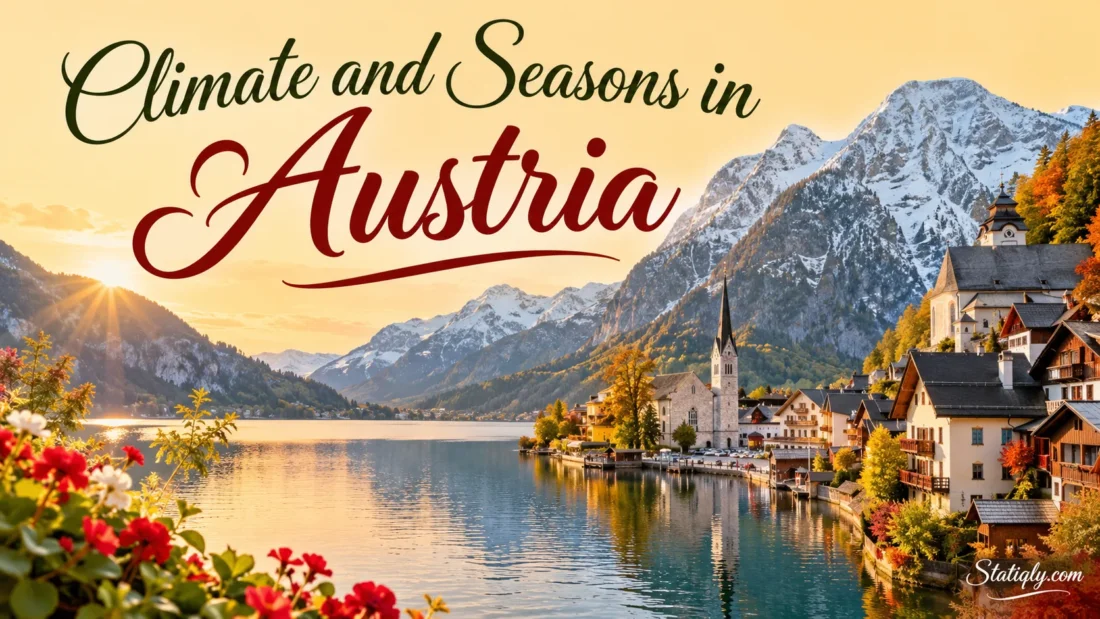
Austria has four distinct seasons, but the weather can feel very different depending on where you are. Altitude is one of the biggest influences on Austria’s climate. A mild afternoon in Vienna can coincide with cold, snowy conditions high in the Alps. Western mountain regions receive more moisture, while the eastern lowlands tend to be warmer and drier. This variety means that Austria offers very different experiences through the year.
The country lies in Central Europe, where Atlantic, continental, and Alpine weather influences meet. Mountains reshape local weather patterns, valleys create their own temperature conditions, and elevation can change the season within a short distance. For travelers, the month matters—but the region matters just as much.
Austria’s Seasons Through the Year
| Season | Months | Typical Conditions | Well Suited To |
|---|---|---|---|
| Spring | March–May | Cool to mild, changeable, with lingering snow at higher elevations | City visits, walking, countryside trips |
| Summer | June–August | Warm to hot in lower areas, cooler in the mountains, with occasional showers and thunderstorms | Hiking, lakes, cycling, outdoor sightseeing |
| Autumn | September–November | Mild early in the season, then progressively cooler; early snow is possible in high mountains | City trips, scenic drives, hiking, autumn landscapes |
| Winter | December–February | Cold in most regions, with dependable winter conditions more likely at higher Alpine elevations | Snow activities, mountain holidays, winter city visits |
Why Austria’s Climate Changes So Much by Region
Austria is not large, yet its landscape creates strong regional contrasts. Much of the country is shaped by the Alps, while eastern areas open toward lower and flatter parts of Central Europe. The result is a climate that cannot be described accurately with one temperature pattern.
The Alpine West and Central Mountains
Tyrol, Vorarlberg, Salzburg, and other Alpine areas are strongly affected by elevation. Valleys can become pleasantly warm in summer, but temperatures fall as you climb higher. Mountain weather can also change faster than conditions in nearby lowlands.
These regions generally receive more precipitation than the drier eastern parts of Austria. Snow is also more persistent at higher elevations during winter. Even during summer, cool conditions can develop on high mountain routes, especially after sunset or when clouds move in.
Eastern Austria and the Vienna Area
Eastern Austria has a stronger continental influence. Places such as Vienna, parts of Lower Austria, and Burgenland generally experience warmer summers and relatively drier conditions than many western mountain regions.
Summer afternoons can become hot in the eastern lowlands. Winters remain cold, though continuous snow cover is less dependable in low-elevation cities than in Alpine resorts. Wind can also make a cold winter day feel noticeably sharper.
Southern Austria
Carinthia and parts of Styria can experience warm summers, particularly around lower valleys and lake districts. Lakes often become a central part of summer life in these regions. Mountains remain close, however, so weather differences between a lakeside town and a nearby peak can be large.
Spring in Austria
Spring usually begins with a mixture of late-winter and milder conditions. March can still feel wintry, particularly in mountain regions. Snow may remain on Alpine slopes long after lower valleys have started turning green.
April is famously changeable. Sunshine, clouds, rain, and cool air can all appear within a relatively short period. By May, lower elevations often feel much warmer, trees are fully green, and outdoor travel becomes easier across much of the country.
- March: Cool and variable, with winter conditions still present in many mountain areas.
- April: Unpredictable weather with alternating mild, cool, sunny, and rainy periods.
- May: Generally milder, greener, and better suited to longer days outdoors.
Layered clothing works particularly well in spring. A morning may call for a jacket while the afternoon feels comfortable in lighter clothing. A compact rain layer is useful too.
Summer in Austria
Summer runs from June through August and brings Austria’s warmest weather. Lower valleys, cities, and eastern regions can become hot, while high mountain areas remain noticeably cooler.
June combines long days with fresh green landscapes. July and August are normally the main warm-weather months. Lakes become popular for swimming, mountain trails are widely used, and outdoor cafés fill city streets.
Summer Weather in the Mountains
Warm sunshine in an Alpine valley does not guarantee the same conditions higher up. Temperatures drop with elevation, and exposed mountain areas can become cool even during midsummer.
Afternoon showers and thunderstorms can develop during warm periods. For mountain outings, checking the local forecast on the same day is more useful than relying only on a forecast viewed several days earlier. Weather changes quickly up there.
Summer Weather in Cities
Vienna, Graz, and other lower-elevation cities may experience hot spells during summer. Sunny days can feel especially warm in built-up areas, while evenings may remain mild. Salzburg and Innsbruck also have warm summer days, though their surrounding mountains strongly influence local conditions.
For summer travel, light clothing works well in lowland areas, but carrying a light jacket or warmer layer still makes sense when visiting mountain destinations.
Autumn in Austria
Autumn changes Austria gradually rather than all at once. September can retain much of summer’s warmth, especially in lower areas. Days then become cooler through October, while November often feels much closer to winter.
September is often one of the most comfortable months for outdoor sightseeing. Temperatures are generally less intense than at the height of summer, yet many hiking areas remain accessible. Higher elevations can already become cold, particularly early in the morning and after sunset.
- September: Often mild, with comfortable daytime conditions in many lower regions.
- October: Cooler days, crisp mornings, and strong autumn color in forests and valleys.
- November: Colder, darker, and more winter-like, with snow becoming possible at higher elevations.
Fog and low cloud can occur in valleys and lowland areas during the cooler part of autumn. Meanwhile, mountain locations above the cloud layer may experience completely different conditions. Such contrasts are a normal feature of Austria’s landscape.
Winter in Austria
Winter generally covers December, January, and February. Cold conditions affect the whole country, but snow reliability varies strongly with altitude.
Higher Alpine areas usually have much more persistent snow than cities and lowland regions. Mountain resorts therefore experience a very different winter from places such as central Vienna or the lower Danube Valley.
Winter in the Alps
Snow plays a major role in Alpine winter conditions. December begins the main winter period in many mountain destinations, while January and February are firmly within the cold season. At high elevations, winter conditions can extend well beyond the calendar winter.
Temperature differences between valleys and mountain stations can be large. Sunshine may make a mountain afternoon feel pleasant, but shaded areas and evenings can remain very cold.
Winter in Vienna and Other Lowland Cities
Lowland cities experience cold winters, yet snow does not necessarily remain on the ground for long periods. A winter week may include frost, snowfall, cloudy weather, rain, or a temporary milder spell.
Short daylight hours are another noticeable part of the season. Outdoor sightseeing is still practical, but warm layers, suitable footwear, gloves, and protection from cold wind make city travel more comfortable.
Rain and Snow Across Austria
Precipitation is distributed unevenly across the country. Mountain regions generally receive more rain and snow because moist air is forced upward by the Alps. Eastern lowland areas are typically drier.
Rain can occur during every season. Summer precipitation often arrives as showers or thunderstorms, while cooler months bring longer periods of rain, snow, or mixed precipitation depending on altitude and temperature.
Snow follows the same elevation pattern. Seeing heavy snow in an Alpine resort does not mean nearby lowland towns will have similar conditions. Likewise, a snow-free city does not reveal much about conditions several hundred or thousand meters higher.
The Foehn and Sudden Temperature Changes
Austria’s Alpine geography can produce a weather pattern known as the Foehn. This is a dry wind that descends on the sheltered side of a mountain range and can raise temperatures noticeably in affected valleys.
Foehn conditions can create surprisingly mild weather on one side of the Alps while clouds and precipitation affect another area. Innsbruck and other Alpine valleys sometimes experience these sharp changes. It is one reason local weather can differ from a broad national forecast.
Daylight Changes Between Summer and Winter
Austria’s seasonal rhythm is shaped not only by temperature but also by daylight. Summer offers long evenings, making June and July particularly convenient for sightseeing and outdoor activities. Winter days are much shorter, so daylight becomes more valuable when planning outdoor schedules.
Spring gains daylight quickly, while autumn moves in the opposite direction. The difference becomes especially noticeable when comparing a June visit with one in December.
When To Visit Austria for Different Weather
| Travel Preference | Usually Suitable Period | What To Expect |
|---|---|---|
| Warm city weather | Late spring to early autumn | Mild to warm conditions with long daylight hours |
| Lake holidays | Summer | The warmest weather and best conditions for swimming |
| Mountain hiking | Summer to early autumn | Better access to higher trails, though mountain weather remains changeable |
| Cooler sightseeing | Spring and autumn | Moderate temperatures and fewer very hot days |
| Snow-focused trips | Winter | The strongest chance of persistent snow is in higher Alpine areas |
| Autumn scenery | September and October | Cooling temperatures and changing forest colors |
What To Pack for Austria’s Weather
Austria rewards travelers who pack in layers. The approach works throughout the year because elevation, cloud cover, wind, and time of day can change how the temperature feels.
- Spring: Light layers, a medium-weight jacket, comfortable shoes, and rain protection.
- Summer: Light clothing for cities and valleys, sun protection, a rain layer, and something warmer for mountain trips.
- Autumn: Layers, a warmer jacket as the season progresses, and footwear suited to cool or wet conditions.
- Winter: Warm outerwear, insulating layers, gloves, a hat, and suitable shoes.
Mountain visitors should prepare for cooler weather than the temperature shown for a nearby city or valley. A difference in elevation can matter more than a difference of many kilometers on the map.
Austria’s Weather Can Change Quickly
Seasonal patterns are useful for planning, but they cannot predict the conditions of a particular week. Austria can have warm spring days followed by cooler weather, summer heat interrupted by thunderstorms, or an early autumn snowfall on high peaks.
For city trips, checking the local forecast shortly before departure is usually enough. Mountain travel deserves closer attention because conditions can change rapidly with altitude. The weather in Innsbruck city center, for example, may tell only part of the story if the day includes a trip high above the valley.
Austria is genuinely a year-round destination, but not the same destination in every season. Summer opens lakes and high trails, autumn cools the valleys and colors the forests, winter shifts attention toward snowy mountains, and spring gradually reconnects lower landscapes with the warmer months. Choosing where to go is therefore just as important as choosing when.