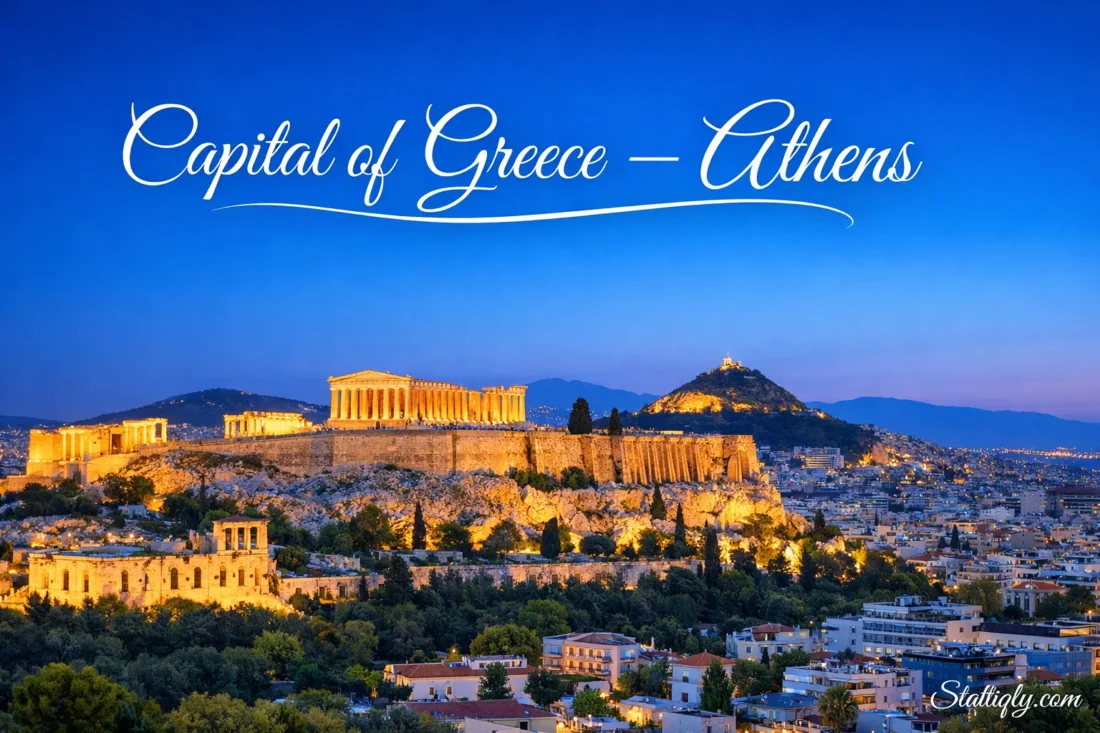
Athens is the capital of Greece, and it does not feel like a city built around one single era. It feels layered. Ancient stone, shaded streets, apartment blocks, hilltop views, museums, markets, and busy squares all sit close together. That mix is a big reason why Athens, Greece stays in people’s minds. It is the country’s political center, yes, but it is also a place where daily life and long history still share the same streets. Walk a little, and the city changes tone. Fast. One corner feels classical, the next feels local and relaxed.
Athens in Brief
| Country | Greece |
| Capital City | Athens |
| Administrative Region | Attica |
| City Area | 38.96 sq km |
| City Population | About 637,798 (City of Athens figure) |
| Historic Depth | Recorded history of about 3,400 years |
| World Heritage Landmark | Acropolis of Athens |
| Main International Airport | Athens International Airport |
| Best Known Global Sports Link | Host city of the first modern Olympic Games in 1896 |
Those details tell only part of the story. Numbers help, of course, but Athens makes more sense when you see how the city works: it is the meeting point for government, transport, business, museums, universities, and travel across much of the country. That is why the title capital of Greece fits Athens so naturally.
Why Athens Is the Capital of Greece
Athens became the capital of the modern Greek state in 1834. Since then, the city has grown into the main center for national administration, transport links, education, and public life. That growth matters. A capital city is not just the place where official buildings stand. It also needs reach. Athens has that reach through its airport, port connections, road network, urban rail, museums, and institutions.
There is also a cultural reason people keep returning to Athens when they think about Greece. The city carries a long historical memory, yet it still works as a modern capital. That balance is rare. Some capitals feel formal. Others feel touristic. Athens feels lived in. Busy in places, quiet in others, and often surprising when a small street opens toward a major ruin or a wide city view.
Why does that matter to visitors and readers? Because when people search for the capital of Greece, they usually want more than a one-word answer. They want to know what makes Athens important, what it looks like on the ground, and why it stands above every other Greek city in public attention. Fair question. The city answers it well.
Where Athens Stands in Greece
Athens sits in the region of Attica, in the southeastern part of mainland Greece. The city spreads across a basin surrounded by mountains, with the sea not far away. This setting shapes daily life more than many first-time visitors expect. Hills rise inside the urban area. The coast is accessible. Light changes quickly across the city, especially in the morning and late afternoon.
That geography also helps explain why Athens feels broad and varied. The historic center is only one part of it. Around that center, neighborhoods stretch outward in many directions, each with its own pace. Some areas feel almost village-like. Others feel fully metropolitan. So when people say “Athens,” they may mean the central municipality, the wider built-up city, or the greater urban zone around it. Same name. Different scale.
What Makes Athens Feel Different
The first thing many people notice is the contrast, though not in a harsh way. Athens rarely feels polished from edge to edge. Instead, it feels real. A neoclassical building may stand beside a small shop. A narrow lane may lead to a church, a café, or a view of the Acropolis. The city does not hide its age. It lives with it.
There is movement everywhere. Morning coffee stops. Outdoor tables. Market streets. Museum lines. Evening walks. And still, parts of Athens remain calm, especially when you step off the main routes. That is when the city starts to open up. Slowly, sometimes. Then all at once.
Plaka and Anafiotika
Plaka is one of the best-known parts of Athens, set below the Acropolis with lanes, old houses, shops, and tavernas. Inside and above it sits Anafiotika, a smaller area with whitewashed houses and a softer, quieter mood. This is where Athens can feel almost island-like, even though you are in the capital.
Monastiraki and Psyrri
Monastiraki draws people in with its square, market energy, and easy access to major sights. Nearby Psyrri has a more local rhythm, with food spots, street life, and a creative edge. These areas show another side of Athens: social, open, and always in motion.
Kolonaki, Pangrati, and Koukaki
Kolonaki feels polished and central. Pangrati often feels residential and easygoing. Koukaki, close to the Acropolis Museum, blends visitor interest with neighborhood life. Put them together, and you get a better picture of modern Athens, Greece: not just monuments, but districts where people actually spend their week.
Landmarks That Define Athens
- The Acropolis sits above the city and remains the clearest visual symbol of Athens.
- The Parthenon gives the skyline its best-known outline.
- The Acropolis Museum adds context to the hill and its finds, and helps visitors read the site with fresh eyes.
- The National Archaeological Museum holds one of Greece’s most important collections of ancient material.
- The Panathenaic Stadium connects Athens with the first modern Olympic Games.
- Syntagma Square serves as one of the city’s main meeting points and transport hubs.
Each of these places tells a different part of the city’s story. The Acropolis gives Athens its image. The museums give it depth. The stadium adds another layer, tying the city to global sports history. And squares such as Syntagma remind you that Athens is not preserved behind glass. It works every day as a living capital.
How Large Athens Really Is
This point often confuses readers, so it helps to keep it simple. The City of Athens is the central municipality. That is the compact core with its own population figure and administrative limits. The wider Athens urban area stretches much farther, linking many districts and neighboring municipalities into one large built environment.
So when someone says Athens feels huge, they are usually talking about the wider urban area. When they say central Athens is easy to explore on foot, they mean the core around places such as Syntagma, Plaka, Monastiraki, Koukaki, and parts of Kolonaki. Both statements are true. It depends on the map you have in mind.
How to Move Around the City
Athens International Airport connects the capital with the rest of Greece and many cities abroad. Once in the city, travelers use the metro, suburban rail, buses, trams, taxis, and a lot of walking. In the center, walking is often the best choice. Major sights sit fairly close to one another, and many of the most rewarding moments in Athens happen between destinations, not only at them.
- For first visits: stay near the historic center to reduce travel time.
- For museums and major sights: combine walking with short metro rides.
- For coastal areas: tram and taxi options become more useful.
- For short trips: choose one or two neighborhoods per day rather than trying to cover the whole city.
Athens rewards a steady pace. Not a rushed one. Trying to do too much in one day can flatten the city into a checklist, and Athens is better than that.
Best Times to Visit Athens
Spring and autumn are often the easiest seasons for walking and outdoor sightseeing. Light is pleasant, the city feels open, and long days still leave room for museums, meals, and evening views. Summer brings a brighter, busier mood, though midday heat can slow the pace. Winter can be a good choice for travelers who want a calmer feel and more space around major sites.
The city changes with the season, but not its character. Athens still feels social, open-air, and active through much of the year. Coffee outside, even in cooler months? Very common.
Food to Try in Athens
Food matters in Athens because the city is not only about what you see. It is also about how you pause. A bakery stop in the morning, a long lunch, a simple plate shared late in the day — these moments shape the place just as much as museums do.
- Souvlaki for a classic quick meal.
- Spanakopita from a bakery for an easy local snack.
- Greek salad when you want something fresh and simple.
- Moussaka for a fuller sit-down meal.
- Loukoumades if you want something sweet after walking the center.
The best meals in Athens are not always the most formal ones. Often, they are the ones that fit the moment: quick, local, and unforced.
Common Questions About Athens
Is Athens the Only Capital Greece Has Had?
No. Athens became the capital in 1834. Since then, it has remained the capital of Greece and grown into the country’s main urban center.
Is Athens Worth Visiting Even if You Are Not Focused on Ancient Sites?
Yes. Very much so. The city also offers neighborhood walks, museum visits, food culture, shopping streets, viewpoints, and coastal access. Ancient landmarks may draw people in first, but they are not the whole experience.
How Many Days Do You Need in Athens?
Two to four days works well for many visitors. Two days gives you the historic center and the best-known sights. Three or four lets you slow down, add museums, spend time in different neighborhoods, and enjoy the city at a more natural pace.
What Is the Most Famous Place in Athens?
The Acropolis is the city’s best-known landmark, with the Parthenon standing as its most recognized monument. For many people, that hill is Athens in a single image.
What Makes Athens Different From Other European Capitals?
Its layers. Few capitals place such old landmarks so close to active neighborhoods, everyday apartment life, open-air dining, and a modern transport system. Athens can feel grand in one moment and very local in the next. That shift gives the city much of its character.
Athens is more than the answer to a quiz question about the capital of Greece. It is a city of scale, memory, movement, and daily life. Large, but walkable in the right places. Old, yet never frozen. For readers planning a trip or simply learning about Greece, Athens is the place where the country becomes easiest to read.