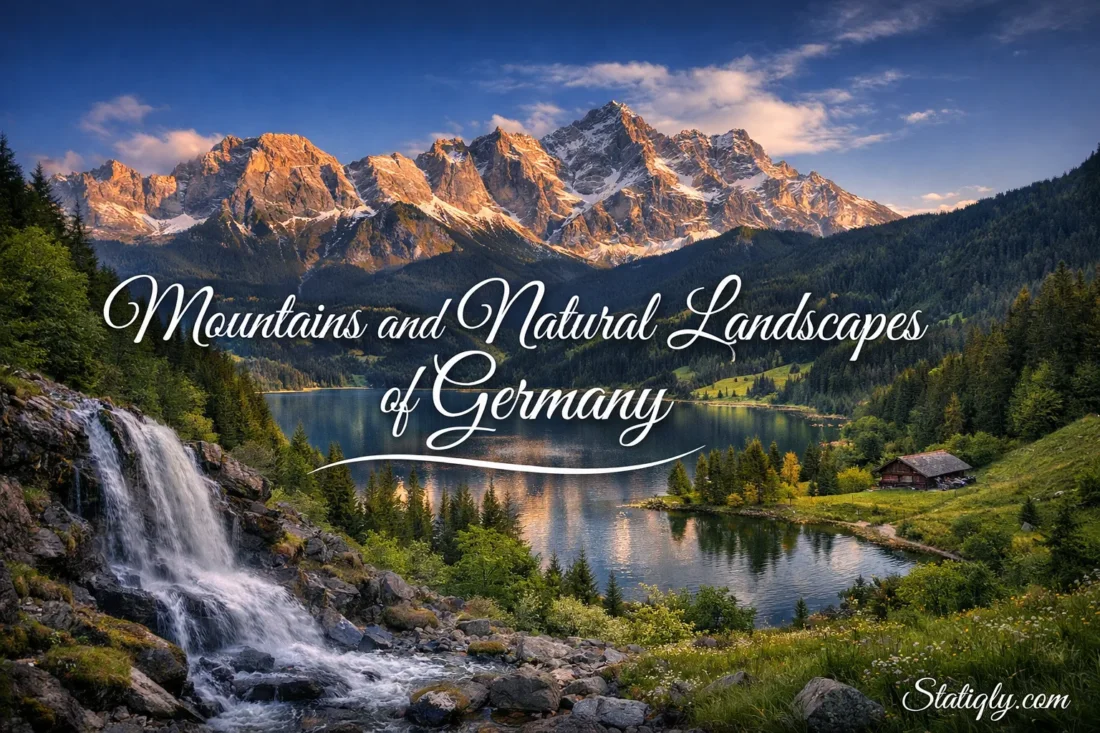
Germany packs a surprising range of scenery into one country. In the south, the German Alps rise like a crisp skyline. Farther north, wooded ridges, sandstone towers, and quiet valleys take over. Want a day of big viewpoints? Or a soft, foresty walk where the air smells like pine? Germany makes both feel easy.
A Handy Overview of Germany’s Mountain Regions
| Region | Signature Landscape | Standout High Point | Best For |
|---|---|---|---|
| German Alps (Bavaria) | High limestone peaks, turquoise lakes, dramatic valleys | Zugspitze (2,962 m) | Panoramas, alpine walks, “wow” moments |
| Berchtesgaden Alps | Sheer rock faces, clear lakes, protected mountain habitats | Watzmann (2,713 m) | Iconic scenery, lakeside paths, viewpoints |
| Black Forest (Schwarzwald) | Dark-green slopes, high meadows, glacial lakes | Feldberg (about 1,493 m) | Forest hikes, gentle climbs, fresh-air breaks |
| Bavarian Forest | Old woodland, granite outcrops, quiet trails | Großer Arber (1,455.5 m) | Slow travel, nature immersion, calm viewpoints |
| Harz Mountains | Brooding peaks, forests, highland moors | Brocken (about 1,141 m) | Classic mountain day, ridge walks, wide horizons |
| Saxon Switzerland | Sandstone cliffs, deep gorges, river views | Bastei viewpoint (rock formation) | Short hikes with big views, rock scenery |
| Ore Mountains (Erzgebirge) | Rounded ridges, forested highlands, open plateaus | Fichtelberg (1,214.6 m) | Easygoing peaks, scenic walks, crisp mountain air |
| Swabian Jura (Schwäbische Alb) | White limestone ridges, “witness” hills, viewpoints | Lemberg (1,015.3 m) | Lookouts, ridge rambles, day trips |
Where Germany’s Nature Feels Most Alive
Germany’s mountains often come in “layers.” The south delivers true alpine height. The center and north offer low mountain ranges—not low on beauty, just lower on elevation. That’s the sweet spot for many travelers: you get views, forests, lakes, and cliffs without needing a mountaineering plan. Sounds like your kind of trip?
The German Alps and Nearby Natural Gems
If you want the classic “mountain postcard,” head for Bavaria. The Wetterstein region around Garmisch-Partenkirchen and the protected landscapes of Berchtesgaden deliver sharp peaks, clear lakes, and trails that range from relaxed strolls to full-day hikes.
Zugspitze: Germany’s Highest Point
At 2,962 meters, Zugspitze is the country’s top summit. Even if you stay on easy paths, the scenery feels huge—peaks stacking up like waves. A favorite gentle option is the Eibsee loop, a lakeside walk of around 7 km with constant views toward the mountain.
- Best vibe: bright alpine air and wide-open horizons
- Great for: couples, families, first-time alpine visitors
- Small tip: go early for quieter paths and softer light
Berchtesgaden and Königssee: Lakes Under Limestone Walls
Berchtesgaden National Park was established in 1978 to protect this alpine corner of Germany. The star of the show is Watzmann (2,713 m), a landmark peak that looks carved from stone. For an easy, beautiful outing, the Malerwinkel loop by Königssee is about 5.1 km and delivers a viewpoint that feels like a framed painting.
- Best vibe: calm water, steep rock, quiet forest edges
- Great for: scenic walks, viewpoints, nature-focused days
- Small tip: carry a light layer—lakeside air can feel cool
A Short Taste of Alpine Drama Without Big Effort
Love the idea of a gorge walk—cool rock walls, rushing water, a path that keeps you curious? Near Garmisch-Partenkirchen, Partnach Gorge is roughly 702 meters long and, in places, over 80 meters deep. It’s a compact experience with an outsized “this is real” feeling.
Forest Mountains That Feel Like Green Cathedrals
Not every memorable landscape needs sharp peaks. Some places win you over with texture: mossy stones, tall trunks, soft light filtering through leaves. Germany’s forest mountain ranges are made for that kind of day.
Black Forest: High Meadows and Deep Woods
The Black Forest (Schwarzwald) is famous for its thick woodland and open summit areas. Feldberg, the region’s highest mountain at about 1,493 meters, offers broad views on clear days. If you like variety, aim for routes that mix forest shade with open ridge—you’ll feel the landscape change step by step.
- Look for: glacial lakes, highland paths, panoramic benches
- Perfect pace: unhurried, with plenty of photo stops
Bavarian Forest: Old Trees and Quiet Ridges
Bavarian Forest National Park, founded on 7 October 1970, was Germany’s first national park. Think mixed mountain forests and granite underfoot. The range’s best-known high point is Großer Arber at 1,455.5 meters. This is the kind of place where a simple walk can feel like a reset button.
- Look for: forest-edge viewpoints and gentle summit paths
- Best mood: calm, steady, nature-first
Cliffs, Ridges, and Iconic Viewpoints
Germany’s most memorable landscapes often come with a twist. Sometimes it’s a river slicing through rock. Sometimes it’s a ridge that opens like a stage curtain. If you enjoy scenery that changes fast, these regions deliver.
Saxon Switzerland: Sandstone Towers Above the Elbe
Saxon Switzerland National Park was established in 1990 in the German part of the Elbe Sandstone Mountains. Its signature landmark is the Bastei, a dramatic rock formation that rises 194 meters above the Elbe River. The Bastei Bridge, built from sandstone in 1851, links the rocks and turns a short walk into a “how is this real?” moment.
- Best vibe: cliffs, river views, cinematic lookouts
- Great for: short hikes with maximum scenery
Harz Mountains: A Classic Peak Day
The Harz range is compact, scenic, and easy to fit into a short trip. Its best-known summit is Brocken at about 1,141 meters. If you want a straightforward mountain goal, this is it. One popular hiking approach from Torfhaus to the summit is about 7.6 km one way along the Goethe Trail.
Ore Mountains and Swabian Jura: Easy Peaks With Wide Skies
In Saxony, Fichtelberg reaches 1,214.6 meters, offering a highland feel without the scale of the Alps. Farther southwest, the Swabian Jura is built from limestone ridges and distinct “witness” hills. The region’s highest point is Lemberg at 1,015.3 meters, a great pick when you want views and a relaxed walking rhythm.
Natural Landscapes That Round Out the Picture
Mountains are only half the story. Germany’s best nature trips often mix peaks with forests, lakes, and rock formations. The magic is in the contrast: one hour you’re under beech trees, the next you’re looking out across a valley like it’s an open map.
Eifel National Park for Forests and Starry Skies
Eifel National Park was founded on 1 January 2004 and is known for tranquil forests, reservoirs, and wide, walkable paths. A special bonus: in 2014, the protected area was certified as the first International Dark Sky Park in Germany. If your perfect evening includes calm skies and a quieter pace, Eifel is an easy win.
- Signature route: the Wilderness Trail (85 km total, typically walked in four stages)
- Best vibe: slow, peaceful, nature-forward
Jasmund National Park: Chalk Cliffs and Beech Forests
Established on 12 September 1990, Jasmund National Park blends white chalk coastlines with deep green beech forest. The park is also known for its beech woods recognized as UNESCO World Heritage. It’s a beautiful counterpoint to mountain travel: same sense of wonder, different kind of horizon.
Plan Your Trip Like a Local Nature Lover
A great nature day rarely needs a complicated plan. It needs one good base, one clear goal, and time to slow down. Try this simple approach:
- Pick the feeling first. High alpine drama (Alps), deep forest calm (Black Forest, Bavarian Forest), cliffside wonder (Saxon Switzerland), or wide-sky quiet (Eifel).
- Choose one “anchor” walk. A lakeside loop, a ridge stroll, or a viewpoint route. One great walk beats five rushed ones.
- Build in breathing room. A scenic bench, a short detour, a slow section where you just listen.
What To Bring for Comfort and Ease
- Water and a simple snack
- A light layer (mountain weather can change fast)
- Comfortable shoes with grip
- A small daypack to keep your hands free
- Sun protection for open ridges and lakesides
Nature Etiquette That Keeps Places Beautiful
- Stay on marked paths, especially in protected areas.
- Carry out any litter, even small bits.
- Keep a respectful distance from wildlife and let the landscape be the main event.
Short Walks With Big Scenery
Not every trip needs long mileage. Sometimes you just want a perfect two- to three-hour window of beauty. These ideas keep things simple and rewarding:
- Eibsee Loop (near Zugspitze): around 7 km of lakeside views and mountain reflections.
- Malerwinkel Loop (Königssee): about 5.1 km to a viewpoint that looks like a landscape painting.
- Partnach Gorge: a compact gorge walk with dramatic rock walls and rushing water.
- Bastei Viewpoint Walk: short distance, massive cliff-and-river payoff.
- Feldberg Area Paths: mix forest shade with open summit meadows.
- Eifel Evening Sky: pair a late-day walk with dark-sky viewing for a calmer finish.