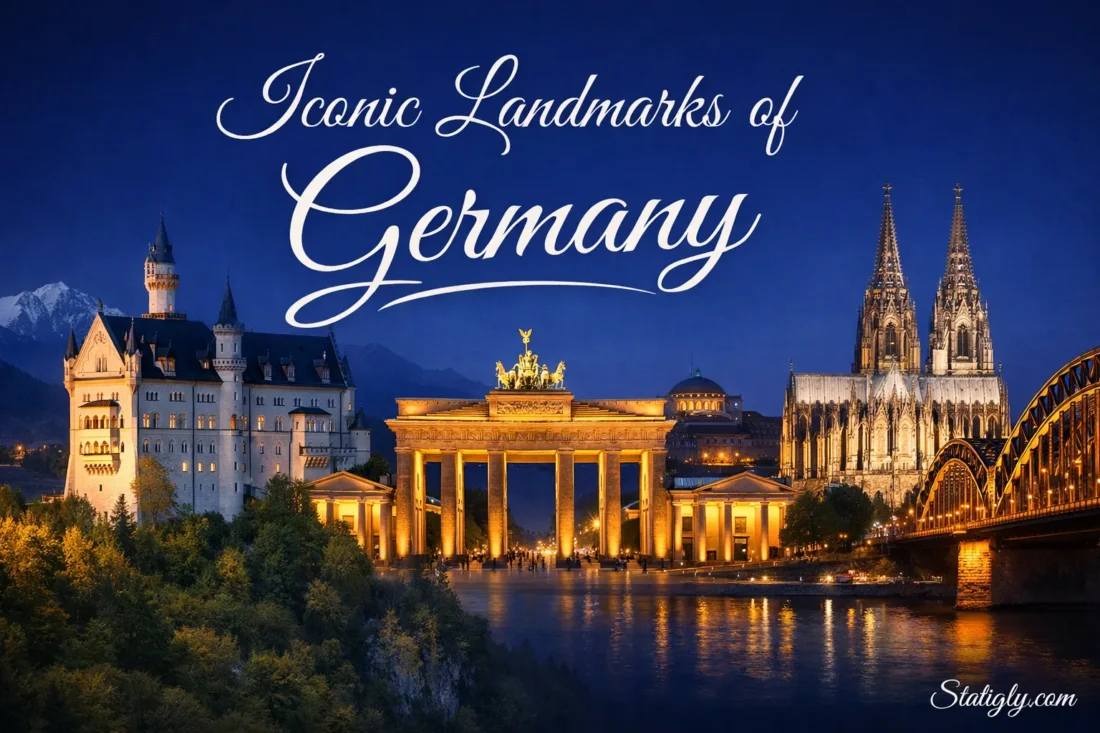
Germany’s landmarks don’t just sit on a skyline—they shape it. One minute you’re staring up at a Gothic cathedral, the next you’re walking through a palace garden that feels like it was designed for slow breaths and long afternoons. Want a trip that feels full without feeling rushed? Start with a handful of truly iconic places, then build your route around them like beads on a string.
Landmark Planning That Feels Effortless
- Pick 3–5 anchors (big landmarks) and let smaller stops fill the gaps.
- For popular attractions, assume timed entry exists and book ahead when you can.
- Start mornings with “vertical” sights (towers, viewpoints), then keep afternoons for strolls and museums.
- Keep one flexible slot each day. The best moments often happen between plans.
| Landmark | Where | Why People Love It | Plan For |
|---|---|---|---|
| Brandenburg Gate | Berlin | Neoclassical “city-gate” look, photogenic at any hour | 20–40 minutes |
| Sanssouci Palace | Potsdam | Rococo palace plus a park built for wandering | 2–4 hours |
| Cologne Cathedral | Cologne | Sky-high Gothic silhouette and striking interior spaces | 1–2.5 hours |
| Neuschwanstein Castle | Bavaria (near Füssen) | Storybook architecture in a dramatic landscape | 3–5 hours |
| Elbphilharmonie | Hamburg | Modern “wave-roof” landmark with waterfront vibes | 1–2 hours |
| Zugspitze | Bavarian Alps | Germany’s highest peak and big-sky panoramas | Half day to full day |
Choose Landmarks That Match Your Mood
- If you like big-city energy, prioritize Berlin, Hamburg, and Cologne.
- If you want romantic scenery, head for Bavaria and the Elbe Sandstone landscapes.
- If architecture is your thing, mix Gothic, Renaissance, and modern design in the same trip.
Small Habits That Make Visits Smoother
- Carry a light layer. Viewpoints can feel cooler than street level.
- Historic towers often mean many stairs. Keep one “easy” stop that day.
- Plan one sit-down break near each major landmark.
Berlin and Potsdam Highlights
Brandenburg Gate
There’s something instantly recognizable about Brandenburg Gate—clean lines, calm symmetry, and that satisfying “arrival” feeling when you step into the open space around it. The current gate was built from 1788 to 1791, designed by Carl Gotthard Langhans, with the famous quadriga sculpture created by Johann Gottfried Schadow.
- Go early if you want clean photos with fewer people in frame.
- Pair it with a relaxed walk through nearby streets and squares—this area is made for slow exploring.
Sanssouci Palace
Sanssouci is the kind of place that nudges you to walk a little slower. Built in 1745–1747 as a summer palace in Potsdam, it was designed by Georg Wenzeslaus von Knobelsdorff in an elegant Rococo style. The surrounding park isn’t just “nice landscaping”—it’s a whole day’s worth of calm paths, viewpoints, and little discoveries.
- Give yourself time for the gardens. They’re not an add-on; they’re the point.
- Go with comfortable shoes. You’ll likely wander more than you expect.
Cathedrals and City Icons
Cologne Cathedral
Cologne Cathedral feels like a mountain made of stone—steep, detailed, and impossible to ignore. Construction began in 1248 and the cathedral was completed in 1880. Its twin spires rise to about 157 meters, and it’s recognized as a UNESCO World Heritage site.
If you like a challenge, the south tower climb is a classic: 533 steps up to an observation platform about 97 meters high. It’s a workout, but the view feels earned.
- Start with the interior first, then decide if you want the tower climb.
- Bring a small bottle of water if you plan on the stairs.
Ulm Minster
Ulm Minster is all about vertical drama. Groundbreaking began in 1377, and the church was completed in 1890. Its spire reaches about 161.5 meters, putting it among the most impressive church silhouettes you’ll see anywhere.
- Even if you skip climbing, take time outside to appreciate the scale from different angles.
- Combine it with a gentle old-town stroll—Ulm is easy to enjoy at a relaxed pace.
Castles That Feel Like Stories
Neuschwanstein Castle
Neuschwanstein looks like imagination turned into architecture—sharp towers, pale stone, and a setting that makes every angle feel cinematic. The foundation stone was laid on September 5, 1869, and the complex was built between 1869 and 1892 in a Neo-Romanesque style.
One practical detail matters here: entry is limited to guided tours at a fixed time, with capacity controls. If you want the visit to feel calm, booking ahead can make the whole day easier.
- Plan a few extra minutes for viewpoints around the castle—some of the best moments happen outside the rooms.
- Keep your schedule light afterward. This is a “take it in” kind of place.
Heidelberg Castle
Heidelberg Castle is a beautiful mix of Gothic and Renaissance architecture, perched above a riverside city that’s easy to fall for. The earliest castle structure was built before 1214, and today the ruins still dominate the view over Heidelberg’s old town.
- Go near late afternoon if you love warm light on stone walls.
- Pair it with a relaxed walk through the old town—this combo feels timeless.
Modern Landmarks With Big Personality
Elbphilharmonie
Elbphilharmonie gives Hamburg a bold, modern signature. The concert hall opened on January 11, 2017, designed by Herzog & de Meuron. Its wave-like roof rises up to about 110 meters, and the waterfront setting makes it feel like it belongs to the river as much as the city.
- If you can, time your visit for golden-hour light. The glass surfaces come alive.
- Even a short stop can feel satisfying here—architecture fans will want to linger.
Miniatur Wunderland
Miniatur Wunderland is proof that “small” can still feel epic. Located in Hamburg’s Speicherstadt, it’s recognized (including by Guinness World Records) as the largest model railway system in the world. The attraction was founded on January 4, 2001.
Tickets are tied to a time window for entry, which helps reduce waiting. If you enjoy detail—tiny scenes, tiny motion, tiny surprises—this place can keep you smiling for hours.
- Give yourself at least 2 hours. Many visitors happily stay longer.
- Go in with one question: How did they build all this? You’ll spot clever engineering everywhere.
Mountains and Stone Viewpoints
Zugspitze
Zugspitze is Germany at its most expansive—high altitude, wide horizons, and crisp air that wakes you up fast. At 2,962 meters, it’s the country’s highest mountain. Access is well-developed, with options that combine cable cars and a cogwheel train depending on the route you choose.
- Check conditions the same day. Mountains have their own mood.
- If visibility is good, give yourself time to simply stand and look.
Bastei Bridge
Bastei is a natural landmark that feels like a balcony over the landscape. The rock formation rises about 194 meters above the Elbe River, and the views are the kind you remember weeks later. A wooden bridge was built here in 1824, replaced in 1851 by the sandstone bridge that still stands today.
The bridge itself is about 76.5 meters long—long enough to feel dramatic, short enough to stroll slowly and soak it in.
- Arrive early if you want a quieter walk across the bridge.
- Bring a light snack and enjoy a “sit-and-stare” break—this place rewards patience.
Easy Routes By Time You Have
3 Days: Berlin and Potsdam
- Berlin: Brandenburg Gate plus relaxed neighborhood walks.
- Potsdam: Sanssouci Palace and long park time.
- Buffer day: revisit what you loved most, or explore museums at an unhurried pace.
5 Days: Add Hamburg’s Modern Side
- Berlin and Potsdam (as above).
- Hamburg: Elbphilharmonie for architecture.
- Hamburg: Miniatur Wunderland for pure joy and detail.
7–9 Days: The Classic Landmark Mix
- Berlin + Potsdam: Brandenburg Gate, Sanssouci
- Hamburg: Elbphilharmonie, Miniatur Wunderland
- Cologne: Cologne Cathedral
- Heidelberg: Heidelberg Castle
- Ulm: Ulm Minster
- Bavaria: Neuschwanstein, then a mountain day at Zugspitze
- If you want more nature: add Bastei Bridge as a scenery-focused day
Make Your Trip Feel Lighter, Not Longer
- Alternate “big-ticket” days with calmer days (parks, riverside walks, neighborhoods).
- Keep your schedule realistic: one major landmark plus a few small stops often feels better than three major landmarks.
- If a place offers timed entry, treat your slot like a soft anchor—and let the rest of the day breathe around it.