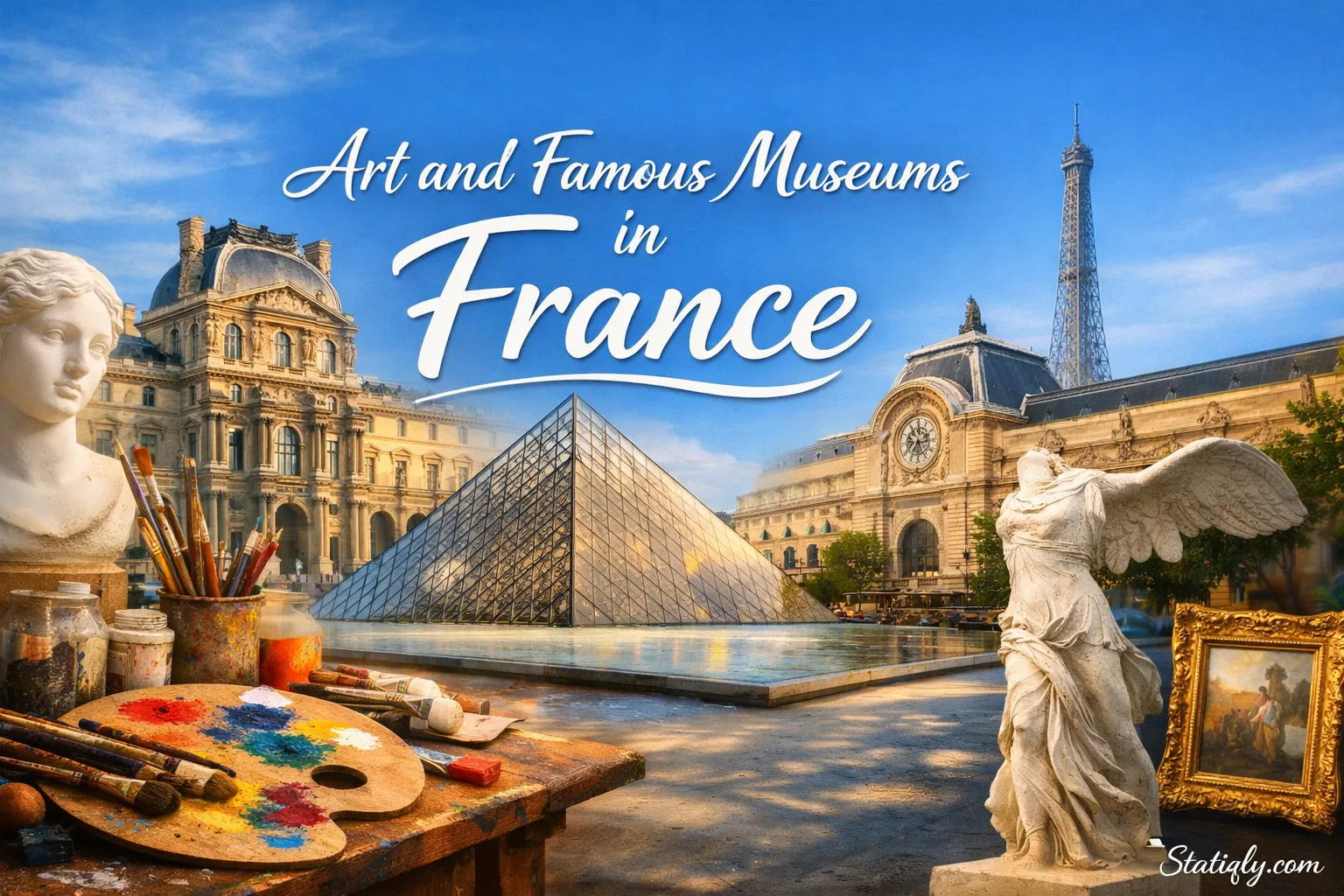
France has a way of making art feel close, like it’s sitting at the next café table waiting for you. Step into the right museum and time suddenly behaves—minutes stretch, colors get louder, and you start noticing tiny things: a brushstroke that looks like mist, marble that feels almost warm, a sketch line that’s somehow braver than paint. Ready to wander through the places where French culture and world masterpieces meet?
Why France Feels Like A Living Gallery
French museums don’t just display art—they stage it. One room might be as calm as a library; the next hits like a drumbeat. In a single day you can move from ancient sculpture to Impressionist light to bold, modern experiments that feel like they were made last week.
- Paris is the headline act, with world-famous museums close enough to combine in one day.
- Regional cities offer “wow” collections with a slower rhythm and easy breathing room.
- Many places pair art with architecture—sometimes the building is the first masterpiece you see.
A Simple Way To Choose Museums That Match Your Taste
Picking museums in France can feel like choosing pastries in a bakery—everything looks tempting. Try this quick filter and your day gets instantly easier.
- Choose your “time zone.” Do you want Old Masters, 19th-century painting, or modern and contemporary art?
- Pick one “anchor” museum. Make it the main event, then add something smaller nearby.
- Plan by energy, not distance. Start big when you’re fresh, end small when your eyes get tired.
Small trick that works: If you’re torn between two major museums, choose the one that matches your favorite kind of looking. Love detail and craft? Go for sculpture and decorative arts. Love atmosphere? Chase Impressionism. Love surprise? Pick bold modern collections.
Paris Museums That Art Lovers Keep Coming Back To
Paris is a museum city in stereo: one ear hears centuries, the other hears new ideas. Below are standout stops with clear reasons to go, plus simple planning notes.
The Louvre Museum
Go if you want: a “one roof, many worlds” experience.
- Vibe: epic, cinematic
- Time: 2–4 hours (or a lifetime)
The Louvre isn’t a single museum; it’s a city of galleries. The key is to arrive with a shortlist. Pick one theme—ancient, Renaissance, or decorative arts—and let that guide your steps.
- Don’t miss: one “big-name” work plus two quiet rooms you stumble into.
- Good to know: early morning or late-day slots usually feel calmer.
Musée d’Orsay
Housed in a former railway station, the Musée d’Orsay is where Impressionism and Post-Impressionism feel incredibly human—art made for real streets, real weather, real afternoons.
- Perfect for: Monet, Renoir, Degas, Van Gogh, and the wider 19th-century story
- Plan: 2–3 hours if you want to slow down and actually look
- Little delight: the grand hall feels like a cathedral built for daylight
Musée de l’Orangerie
This is the museum for people who want art to feel like weather. The star experience is Claude Monet’s Water Lilies, installed in two oval rooms that invite you to circle the paintings the way you’d circle a pond.

- Best for: a calm, immersive moment that still feels world-class
- Plan: 60–90 minutes
- Tip: sit for five full minutes before you move—seriously
Musée Rodin
Rodin’s world is all about gesture—how stone and bronze can look like breath. The sculpture garden is a highlight, and it’s one of the nicest museum “reset buttons” in Paris.
- Signature moment: The Thinker outdoors, where light changes the mood every few minutes
- Plan: 90 minutes to 2 hours
- Works well with: a relaxed afternoon walk nearby
Centre Pompidou
If classic paintings are a well-written novel, the Pompidou is a bold playlist. It’s a home for modern and contemporary art, and the building itself is part of the experience. Do check opening status in advance: the Paris building entered a major renovation phase in autumn 2025.
- Great for: modern masters, design energy, and big ideas
- Plan: 2–3 hours when fully open
- If you love it: look at related programming and partner venues around Paris
Musée Picasso-Paris
Picasso can feel like a fast conversation—sharp turns, sudden jokes, unexpected tenderness. This museum is a strong way to follow that creative zigzag, especially if you enjoy seeing how an artist evolves rather than just hunting for one famous piece.
- Best for: an in-depth look at one artist with a wide range of work
- Plan: 90 minutes to 2 hours
- Bonus: the historic building adds a Parisian “texture” to the visit
Musée du quai Branly – Jacques Chirac
For a broader view of creativity, this museum highlights works from Africa, Asia, Oceania, and the Americas. It’s a strong choice when you want something different from the typical Paris art circuit.
- Great for: global art traditions and striking display design
- Plan: 1–2.5 hours
- Mood: thoughtful, immersive, quietly impressive
Petit Palais
Want a beautiful museum stop that feels gentle on the schedule? The Petit Palais is a smart pick, especially because permanent collections have free access. It’s ideal when you want high-quality art without committing to an all-day marathon.
- Best for: a “bonus museum” that still feels special
- Plan: 60–90 minutes
- Nice pairing: combine with a walk and a relaxed meal nearby
If You Only Have One Day In Paris
Option A (Classic + Light): Louvre in the morning, then Musée de l’Orangerie late afternoon for a softer landing.
Option B (19th Century Focus): Musée d’Orsay as the main event, then Petit Palais as a calm second stop.
Option C (Sculpture + Stroll): Musée Rodin, then a neighborhood wander with a café break—simple, elegant, memorable.
A Handy Museum Planner
Use this as a quick matchmaker. It helps you seperate “must-see” energy from “nice-to-see” curiosity without overloading your day.
| Museum | Best For | Feels Like | Suggested Time | Easy Pairing |
|---|---|---|---|---|
| Louvre | Big classics across eras | an art metropolis | 2–4 hours | Orangerie |
| Musée d’Orsay | Impressionism and 19th century | sunlit and story-rich | 2–3 hours | Seine walk |
| Orangerie | Monet’s Water Lilies | a deep breath | 60–90 min | Louvre or Orsay |
| Musée Rodin | Sculpture and gardens | quiet drama | 90–120 min | Picnic-style afternoon |
| Pompidou | Modern and contemporary art | creative electricity | 2–3 hours | Marais walk |
| Picasso-Paris | One artist, many phases | fast and inventive | 90–120 min | Small galleries nearby |
| Quai Branly | Global collections | immersive and textured | 1–2.5 hours | Evening stroll |
| Petit Palais | Free permanent collections | easy elegance | 60–90 min | Café break |
Famous Museums Beyond Paris
France’s museum story gets even better once you look beyond the capital. These picks are well-known, visitor-friendly, and worth building into a trip.
The Louvre-Lens
A Louvre experience outside Paris, opened in December 2012. It’s a great choice if you want major works in a calmer setting.
Matisse Museum In Nice
A monographic museum dedicated to Henri Matisse on the Côte d’Azur—bright, personal, and easy to enjoy even if you’re not an art expert.
Musée Fabre In Montpellier
A major fine-arts museum with a strong, classic museum feel—perfect for a focused afternoon of painting and drawing.
Palais Des Beaux-Arts De Lille
One of France’s richest museums outside Paris, known for standout European collections and an enjoyable, “take-your-time” layout.
Practical Tips For A Smooth Museum Day
- Book ahead when you can. Time slots reduce stress and help you keep your day flexible.
- Start with one “hero” gallery. Get your main wish first, then explore freely.
- Take micro-breaks. A bench stop can make the next room feel brand new.
- Mix scale. Pair a major museum with a smaller one to keep your attention fresh.
- Leave space for surprise. The best moment is often the painting you didn’t plan for.
If you’re visiting with family or friends who aren’t art-focused, choose one museum with a clear “wow” hook (a garden, immersive rooms, or famous highlights), then balance it with a relaxed walk and a good meal. Art days should feel like a treat, not a test.
Official Museum Sites For Hours and Tickets
For the most accurate opening hours and ticket options, these are the places to check.
One last thought: treat your museum day like a good playlist—start with a strong opener, build to a peak, then end with something gentle that makes you smile on the walk back.