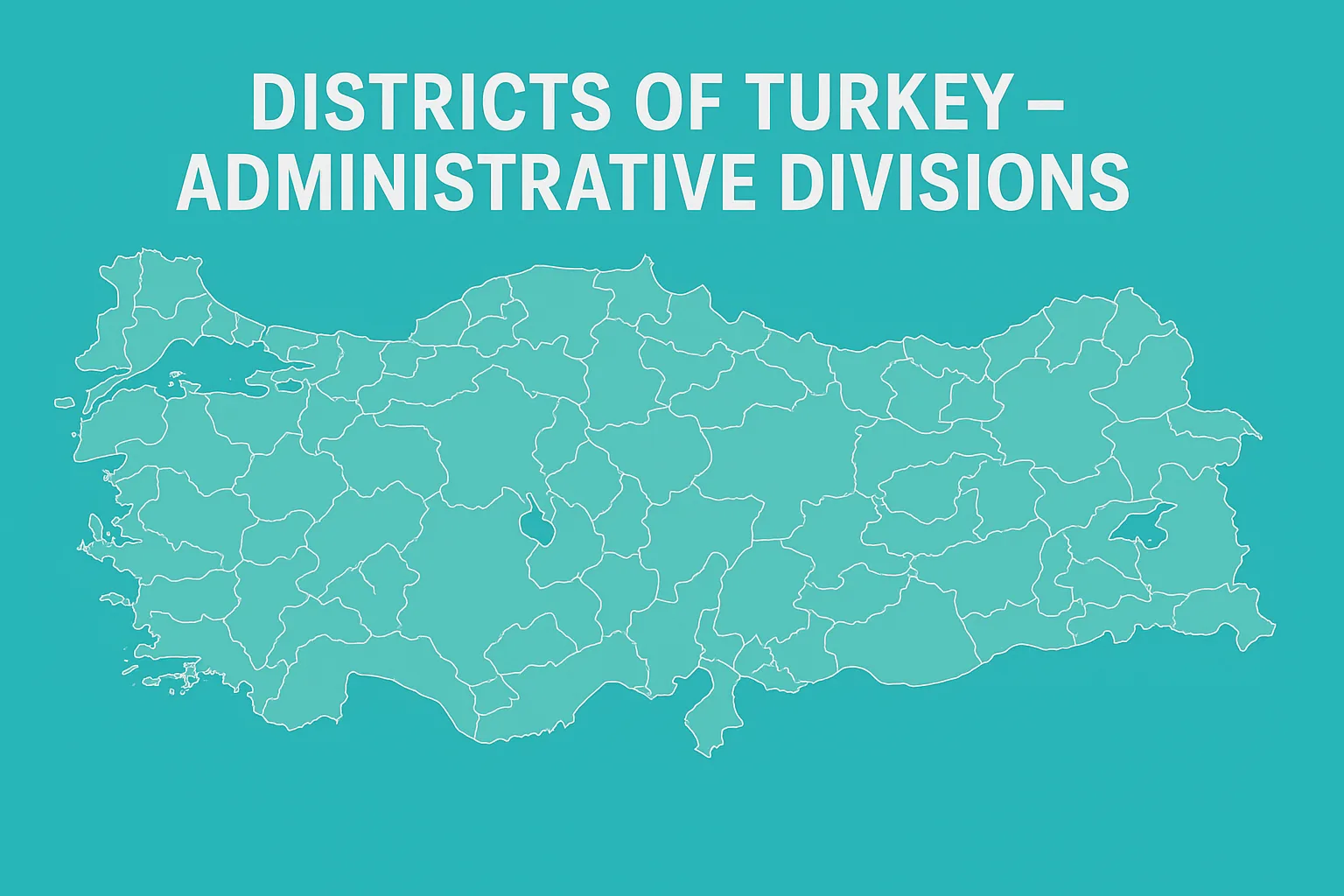
Understanding the Pulse of Turkey: The District System
Have you ever looked at a map of Turkey and felt a bit overwhelmed? You see the big names like Istanbul, Ankara, or Antalya. But zoom in a little closer. The real magic happens in the smaller pieces of the puzzle. We call these Districts, or in Turkish, “İlçe”.
Think of Turkey like a massive, intricate mosaic. The provinces are the large outlines, but the districts are the colorful tiles that actually make the picture complete. Without understanding districts, you’re just skimming the surface.
The “Matryoshka Doll” of Administration
If you have ever played with those Russian nesting dolls, you already get how Turkey works. It is a centralized system, but it has layers.
- The Big Shell (The Province/İl): There are 81 provinces in total. Each one is ruled by a Governor (Vali).
- The Middle Doll (The District/İlçe): This is our focus today. Every province is divided into these. There are 973 districts across the country.
- The Tiny Doll (The Neighborhood/Mahalle): These are the streets and blocks within a district.
Traveler’s Tip: When you look up an address in Turkey, knowing the district is often more important than the city name. Navigating Istanbul without knowing you need to go to Kadıköy is like trying to find a specific restaurant in New York without knowing it’s in Brooklyn.
Who runs the show?
Here is where it gets interesting. While cities have Mayors (elected by the people), the administrative power of a district lies with the Kaymakam. This person is appointed by the state, not elected. They represent the central goverment in that specific area.
But wait, there is a twist! Every district also has a municipality (Belediye) with an elected Mayor. So, you have a mix of appointed officials keeping order and elected officials fixing the roads and collecting trash. It’s a dual-engine system.
| Administrative Level | Turkish Name | Leader Title | Key Function |
|---|---|---|---|
| Province | İl | Vali (Governor) | Security, Health, Education |
| District | İlçe | Kaymakam | Implementing Laws, ID Cards |
| Municipality | Belediye | Belediye Başkanı | Infrastructure, Parks, Water |
Districts You Probably Know (Without Realizing It)
You might think districts are just boring administrative lines on a map. Wrong! Some Turkish districts are more famous than the provinces they belong to. They have their own brand, their own vibe, and sometimes, their own climate!
Alanya
Technically just a district of Antalya, but it is massive. It receives millions of tourists and feels like a country of its own.
Bodrum
Part of Muğla province. Ask anyone where they are going for summer; they say “Bodrum,” never “Muğla.” It’s the St. Tropez of Turkey.
Çankaya
Located in Ankara. This is the heart of the administration. It hosts the Parliament and many embassies. It’s the brain of the capital.
Central Districts vs. Rural Districts
Here is a distinction that confuses many newcomers. In big metropolitan cities (Büyükşehir), there isn’t one single “city center.” Instead, there are several central districts.
Take Istanbul. Is the center Taksim (Beyoğlu District)? Or is it the historic Sultanahmet (Fatih District)? Or perhaps the business hub in Levent (Beşiktaş/Şişli Districts)?
The answer? All of them.
In rural provinces, it is simpler. You have the “Merkez” (Central District) which carries the same name as the province, and then the outlying towns. For travelers, staying in the “Merkez” usually means better access to hotels and transport.
Why Should You Care?
If you are planning to spend time in Turkey, whether for a week-long vacation or a longer stay, ignoring the district system is a mistake. It dictates which police station helps you, which hospital is nearest, and even how much you pay for a taxi.
So next time you look at that map of Turkey on Statiqly, do not just count the provinces. Look deeper. The real stories, the distinct cultures, and the true flavor of the country are hidden in those 973 districts.