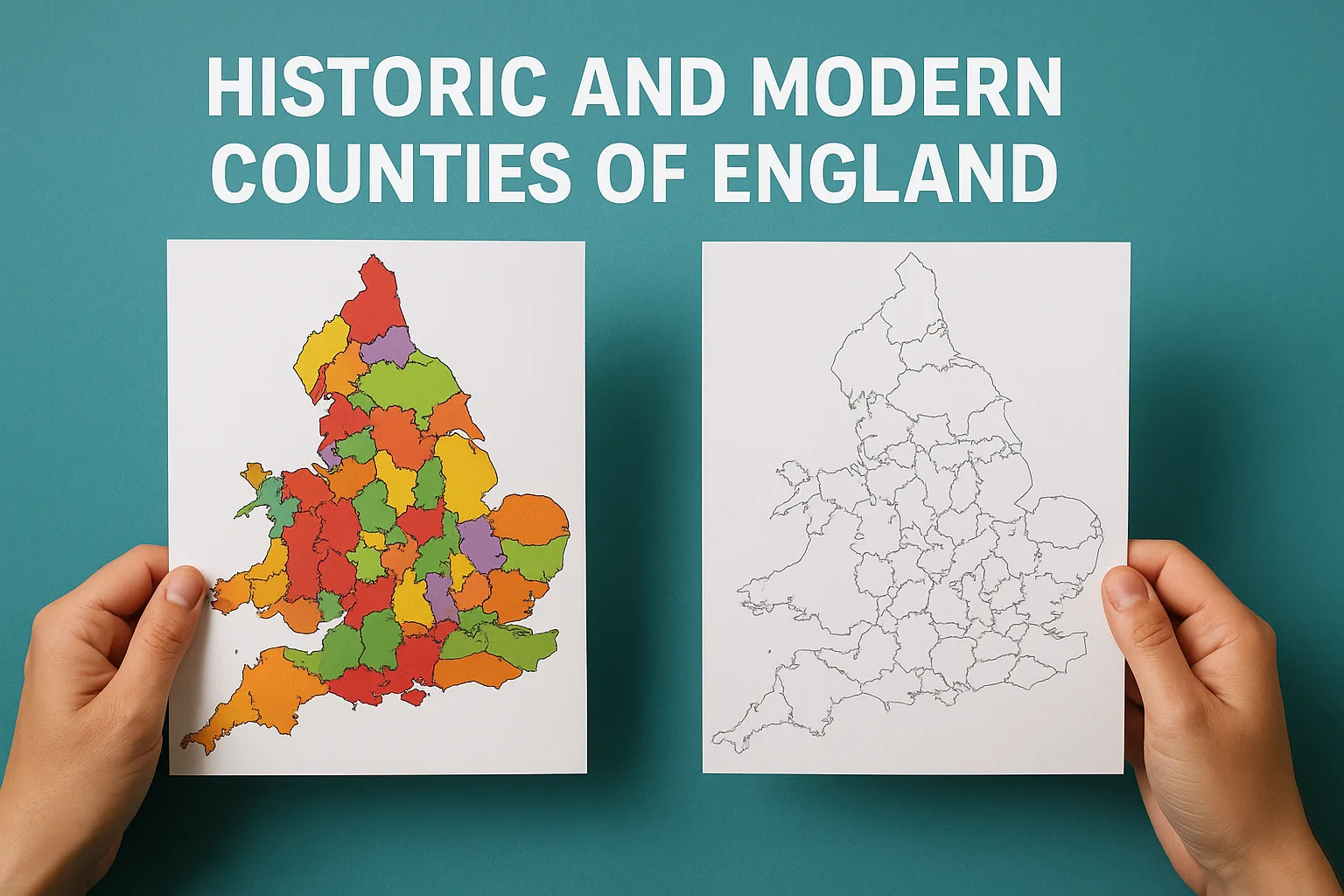
Historic and Modern Counties of England: A Friendly Guide
England’s counties can seem confusing at first glance. You might see one map showing Yorkshire, another showing North Yorkshire and West Yorkshire, and a third talking about something called a “ceremonial county”. Are these all the same place, or completly different?
This guide walks you through the historic counties and the modern (ceremonial) counties of England in clear, simple language. Think of it as your roadmap to how England is traditionally and practically divided up – useful whether you’re planning a trip, studying geography, or just curious about the shapes on the map.
Quick insight: England has historic counties that grew over many centuries, and modern ceremonial counties that are used today for official and everyday purposes. They overlap, but they’re not always identical.
1. What Does “County” Mean in England?
In simple terms, a county is a large area of land used to organise life: where people identify with, where events are held, how maps are drawn, and much more. Over time, England has used counties in slightly different ways, which is why you’ll see more than one type mentioned.
Historic counties
Traditional divisions of England, many dating back hundreds of years. They reflect older patterns of life, identity and geography.
Ceremonial counties
Modern “geographic” or “ceremonial” areas used for things like royal visits and official representation. Every part of England belongs to one of these counties today.
You may also see terms such as local authority areas or unitary authorities. Those are about day-to-day local services, but for most visitors and learners, the key story is the link between historic and ceremonial counties.
2. Historic Counties of England
Historic counties are the classic, traditional counties that took shape between the early medieval period and the 19th century. Many grew out of early kingdoms and shires, and by the late 1800s England was commonly described as having 39 historic counties.
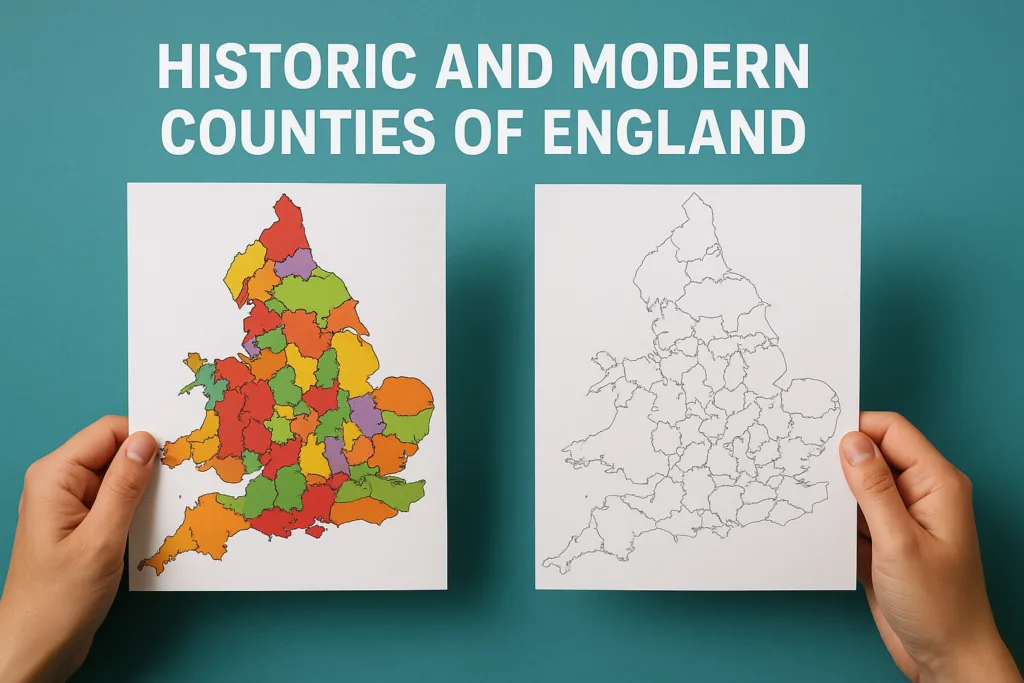
These counties were used for many aspects of life: courts, fairs, records, local identity, even county-based sports and cultural activities. For many people, they still feel like the “real” map of England.
Key traits of historic counties
- Deep roots – some can trace their origins back over a thousand years.
- Stable shapes – their outlines changed slowly, so old maps remain surprisingly familiar.
- Cultural anchors – county names appear in literature, music, and everyday speech.
- Local pride – people still say they are “from Devon” or “from Lancashire” in a historic sense.
Examples of historic counties
- Yorkshire – traditionally England’s largest county, once divided into three “ridings”.
- Lancashire – closely linked with the north-west’s industrial story and coast.
- Devon – rolling hills, moorland and long Atlantic and Channel coastlines.
- Kent – often called “the Garden of England” for its orchards and fields.
- Surrey – wooded landscapes just south of London.
- Cornwall – a peninsula with its own distinct heritage and sea-framed scenery.
If you imagine the historic counties as the original patchwork quilt of England, you won’t be far off. Later changes stitched some pieces in new ways, but the original pattern still shows through.
3. Modern Ceremonial Counties
Today, when you see a modern map of England coloured into larger regions, you are often looking at the ceremonial counties. These are sometimes called geographic counties or simply “the counties of England” in everyday speech.
The ceremonial counties are defined in law for the purposes of having a lord-lieutenant and high sheriff for each area – traditional, symbolic roles representing the monarch in that county. Every part of England falls within one of these counties, and modern lists usually describe 48 ceremonial counties in total.
Why ceremonial counties matter today
- They provide a clear, full coverage map of England – no gaps.
- They are widely used in statistics, travel guides, atlases and weather reports.
- They help keep a sense of continuity with the older historic counties, even where boundaries have shifted.
Example: The historic county of Yorkshire has long cultural importance. Today, on a ceremonial map, you will usually see North Yorkshire, West Yorkshire, South Yorkshire and the East Riding of Yorkshire as seperate areas, all reflecting different parts of that wider Yorkshire story.
4. Historic vs Modern Counties: Side-by-Side View
It helps to see how a few well-known areas look in both the historic and modern frameworks. The table below focuses on clear, simple examples rather than listing every county.
| Historic county | Main ceremonial county (today) | Helpful note |
|---|---|---|
| Yorkshire | North Yorkshire, West Yorkshire, South Yorkshire, East Riding of Yorkshire | One traditional giant county, now represented by several modern ceremonial counties. |
| Lancashire | Lancashire, Greater Manchester, Merseyside (parts) | Places that identify with historic Lancashire can sit in more than one modern ceremonial county. |
| Middlesex | Greater London, Hertfordshire, Surrey (small parts) | The name “Middlesex” is still used in some addresses and sports, even though modern maps show other ceremonial counties. |
| Cornwall | Cornwall | Here the historic county and ceremonial county closely align, making it easy to understand. |
| Devon | Devon | Another case where historic and ceremonial boundaries are very similar for everyday purposes. |
From this small sample you can see the pattern: sometimes the old and new views match neatly, sometimes they overlap in more complex ways.
5. How Counties Work in Everyday Life
You might wonder, “If there are historic and ceremonial counties, which should I pay attention to?” The honest answer is: it depends what you’re doing.
- Planning a trip
Most modern travel guides, tourism websites and sat-nav systems use ceremonial counties or current local areas. If you are booking accommodation, follow the county shown in the booking details. - Exploring heritage
If you are reading old books, looking at vintage maps, or exploring local history, you will often see historic county names. That’s where they truly shine. - Addresses and postcodes
Modern postal systems focus on post towns and postcodes. County names may appear, but they are not always essential for mail to arrive. - Local identity
People may say they are “from Yorkshire” or “from Devon” in a historic sense, even when modern ceremonial maps show more than one county in the area. This is part of England’s rich sense of place.
6. Why Historic Counties Still Matter
Across the United Kingdom, groups and charities celebrate and promote the historic counties as part of the country’s cultural and geographic heritage. They emphasise that these older counties are a stable way to understand the landscape, independent of changing administrative arrangements.
For learners and travellers, this is good news. It means that when you take time to understand the historic counties, you are learning a pattern that helps you read old and new maps together, not just one moment in time.
Tip for students and map lovers: when you learn a new English place name, note both the historic county and the ceremonial county if possible. Over time, you’ll build a flexible mental map that works with almost any source.
7. Simple Workflow: How to Read Counties on a Map
Here is a practical, step-by-step way to deal with counties when you see them mentioned online or on paper.
- Check the context
Is the map or article about history, culture or heritage? It probably leans on historic counties. - Look for modern clues
If it talks about population statistics, services, or current official roles, it’s likely using ceremonial counties or current local authority areas. - Match the name
Some names (like Devon) are very similar in both historic and modern usage. Others (like Yorkshire) may be broken into several modern counties; treat the historic name as the wider umbrella. - Use both views together
Think of the historic county as the story layer and the ceremonial county as the today layer. Together they give a fuller picture.
8. FAQ: Common Questions About English Counties
Are historic counties still “real”?
Yes. Historic counties are real geographic and cultural areas, and they continue to be recognised and celebrated. They may not always match the lines used for modern services, but they remain important for identity, heritage and mapping.
How many counties does England have?
The answer depends on which type you mean:
- Historic counties: commonly described as 39 in England.
- Ceremonial counties: modern lists usually give 48 for England.
Both numbers are useful, as they describe slightly different ways of viewing the same country.
Which type of county should I use on my website or project?
It depends on your goal:
- If your project focuses on tradition, heritage or long-term geography, historic counties are a strong choice.
- If you need to match current data, tourism information or official lists, ceremonial counties are usually the best starting point.
- Many modern projects use both: ceremonial counties for current data, plus historic counties for deeper cultural context.
9. Bringing It All Together
Historic and modern counties are not rivals. They are different lenses on the same landscape. One shows how England has been understood for centuries; the other helps organise life today.
When you remember that:
- Historic counties = long-standing cultural and geographic regions.
- Ceremonial counties = modern official map used for representation and statistics.
…the whole system becomes much easier to read. Next time you see a place described as “Bath, Somerset” or “Leeds, West Yorkshire”, you’ll know which layer of the county story you’re looking at – and how it connects to the one beneath.
Factual details in this article were cross-checked against modern descriptions of England’s historic and ceremonial counties to ensure names, numbers, and roles remain accurate.