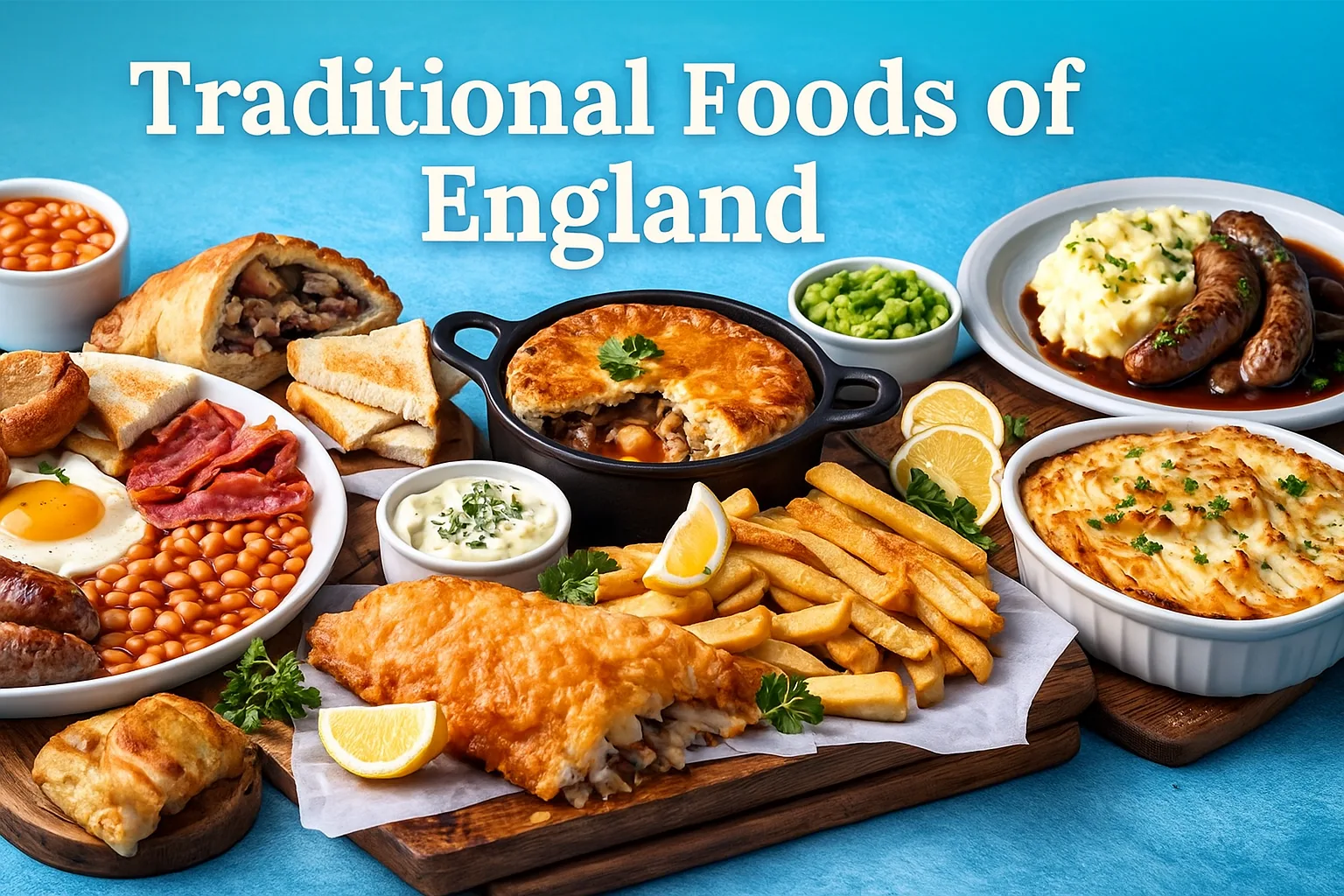
When people think of England, they often picture red buses, green countryside and cups of tea. Yet the real heartbeat of everyday life is on the plate: traditional English food. From a sizzling breakfast in a tiny café to a slow Sunday roast shared with family, these dishes tell warm, simple stories of comfort, routine and celebration.
This guide walks you through the classic traditional foods of England you’re most likely to meet when you visit. You’ll see what each dish is, when locals actually eat it, and how to order it with confidence – so your meal feels less like a tourist tick-box, and more like sitting at a friend’s kitchen table.
What Makes Traditional English Food Special?
At first glance, English cuisine looks simple: meat, potatoes, seasonal vegetables, pies, puddings. But look closer and you’ll notice a few patterns that repeat from breakfast to dessert:
- Comfort over complexity – dishes are usually hearty, warm and filling rather than showy.
- Local produce – beef, lamb, pork, root vegetables, apples, berries and plenty of dairy.
- Occasion-based eating – a Full English for slow mornings, Sunday roast for family time, afternoon tea for relaxed socialising.
- Clear routines – many dishes are tied to a day of the week or time of day, which makes them fun to plan for as a visitor.
Tip for travellers: if you’re ever unsure what to order, look for dishes described as “classic,” “pub favourite,” “Sunday special” or “proper British”. These phrases almost always point to traditional recipes locals actually eat.
The Full English Breakfast: A Morning Feast
Few plates say “England” quite like a Full English breakfast. It’s big, it’s hot and it’s designed to keep you going for hours. Typically you’ll see:
- Sausages (“bangers”)
- Back bacon
- Eggs – fried, scrambled or poached
- Baked beans
- Grilled tomato and mushrooms
- Toast or fried bread
- Sometimes extras like hash browns or black pudding
The Full English has been enjoyed in some form for centuries, evolving from generous morning meals served in country homes into the café and pub plates you see today.
Think of it as a warm blanket on a plate. It’s especially popular on weekend mornings, lazy holidays and the day after a big night out. If you’re not very hungry, ask for a “small” or “mini” breakfast – cafés often have a lighter version.
How to order like a local
- Ask: “Can I swap the beans for extra mushrooms?” – most places are happy to adjust.
- Pair it with strong English breakfast tea for the full experience.
- If you’re short on time, look for menus offering a “breakfast bap” (a soft roll with bacon, sausage or egg).
Fish and Chips: England’s Seaside Classic
Fish and chips is the dish many visitors dream about before they even land. At its heart, it’s simple: a fillet of white fish (often cod or haddock) in crisp golden batter, served with thick-cut chips.
You’ll usually see extras on the side:
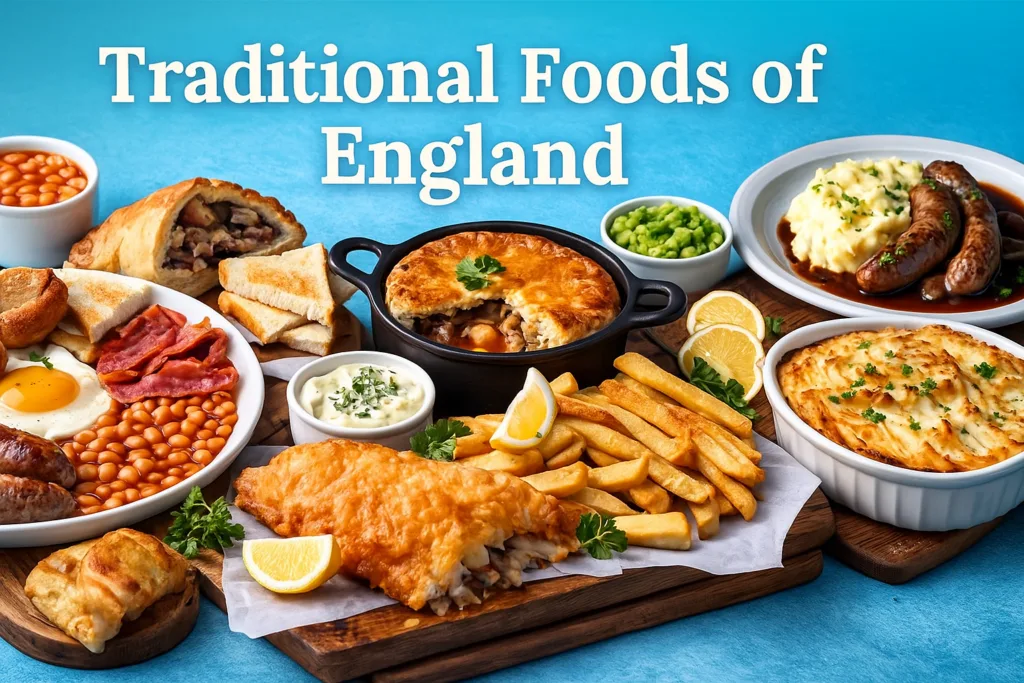
- Mushy peas – mashed green peas, soft and slightly sweet
- Tartare sauce – creamy with pickles and herbs
- Malt vinegar – sprinkled over the chips for a tangy kick
- Lemon wedges to squeeze over the fish
For the most atmospheric experience, try it near the coast, then eat outdoors if the weather is kind. Just watch out for seagulls – locals know they love chips almost as much as people do.
Good to know: Many traditional “chippies” still fry in small batches so the fish stays crisp. If the queue is long, that’s usually a very good sign.
The Sunday Roast & Yorkshire Pudding
If you’re in England on a Sunday, make time for a Sunday roast. It’s less a single dish and more a weekly ritual in pubs and homes. A typical plate includes:
- Roast meat – beef, chicken, pork or lamb
- Roast potatoes – crispy outside, fluffy inside
- Seasonal vegetables – carrots, cabbage, parsnips, peas
- Rich gravy
- For beef, a puffed-up Yorkshire pudding – a savoury batter pudding that soaks up the gravy
Roast beef with Yorkshire pudding is one of the best-known traditional English combinations and still appears on countless pub menus.
Ever wondered why locals care so much about this meal? It’s because the roast is about time together as much as the food. Families linger over it, friends meet in cosy pubs, and the whole afternoon can quietly drift by over gravy and potatoes.
How to enjoy a Sunday roast
- Look for pubs advertising “Sunday carvery” or “Sunday lunch”.
- Book ahead in popular areas; tables fill quickly.
- If you’re unsure which meat to pick, roast beef is the most iconic choice.
Pies, Pasties and Proper Pub Comfort
English cooking shines when it comes to pastry. Warm, golden crusts hide savoury fillings that are ideal for cool days, long walks and cosy pub evenings.
Cornish Pasty
The Cornish pasty is a folded pastry, crimped along one side and filled traditionally with beef, potato, swede and onion. It is strongly associated with Cornwall in southwest England and was once a practical handheld meal for miners and farm workers.
Today you can find pasties all over England, from railway stations to small bakeries. Eat them hot, ideally while walking by the sea or exploring a market town.
Classic Meat Pies
Walk into almost any traditional pub and you’re likely to spot at least one pie on the menu. Popular choices include:
- Steak and ale pie – slow-cooked beef in a rich ale gravy under a pastry lid.
- Chicken and mushroom pie – tender chicken in a creamy sauce.
- Pork pie – served cold, encased in a firm hot-water crust, often sliced for picnics.
A good pie should feel generous and homely, with plenty of sauce and pastry that’s crisp rather than soggy. It’s the kind of meal you definetely remember years later.
Everyday Favourites: Bangers, Mash & Cottage Classics
Bangers and Mash
Bangers and mash is exactly what it sounds like: sausages with mashed potato, usually topped with onion gravy. Simple? Yes. Forgettable? Not at all.
- Sausages – often pork, sometimes flavoured with herbs or apple.
- Mashed potatoes – smooth and buttery.
- Onion gravy – the savoury sauce that ties everything together.
This is a classic pub dish, a weekday dinner at home and a reliable option if you’re craving something cosy and straightforward.
Shepherd’s Pie & Cottage Pie
These two baked dishes look very similar: a savoury meat filling topped with mashed potato, baked until golden.
- Shepherd’s pie – usually made with lamb.
- Cottage pie – usually made with beef.
Both are deeply comforting, especially on cold evenings. Imagine a hug in casserole form – that’s the feeling.
Sweet Traditions: Puddings and Afternoon Tea
England has a long love affair with puddings and baked sweets. Some are light, some are rich, and many taste even better with custard or cream.
Sticky Toffee Pudding
Sticky toffee pudding is a warm dessert of moist sponge cake, often made with finely chopped dates, drenched in glossy toffee sauce and frequently served with vanilla ice cream or custard.
It’s rich without being heavy, sweet without being cloying, and perfect after a long day of exploring. If you see it on a menu, it’s usually worth saving room.
Cream Tea and Cakes
An afternoon cream tea is one of the gentlest traditions in English food culture. On the table you’ll find:
- Scones – slightly sweet, served warm.
- Clotted cream – thick, rich and silky.
- Jam – often strawberry or raspberry.
- Tea – usually a strong black tea served with milk.
Cafés and tearooms often add slices of Victoria sponge cake, lemon drizzle cake or fruit cake. It’s not only about eating; it’s an excuse to slow down, chat and watch the world move gently past the window.
Quick Reference Table: Traditional Foods of England
To help you plan meals on your trip, here’s a simple overview of classic dishes, when to try them and what to expect.
| Dish | Type | Key Ingredients & Flavour | Typical Occasion | Where to Try |
|---|---|---|---|---|
| Full English breakfast | Hot breakfast | Sausages, bacon, eggs, beans, toast, mushrooms, tomato | Slow mornings, weekends, holidays | Cafés, B&Bs, pubs |
| Fish and chips | Main meal | Battered white fish, thick-cut chips, peas, tartare sauce | Lunch or dinner, especially by the sea | Fish & chip shops, pubs |
| Sunday roast with Yorkshire pudding | Main meal | Roast beef or other meat, potatoes, vegetables, gravy | Traditional Sunday lunch | Pubs, restaurants, family homes |
| Bangers and mash | Main meal | Sausages, mashed potatoes, onion gravy | Comforting weekday meal | Pubs, simple restaurants |
| Shepherd’s / cottage pie | Baked main | Minced meat with vegetables topped with mashed potato | Cool evenings, homely dinners | Pubs, home-style restaurants |
| Cornish pasty | Handheld savoury pastry | Pastry filled with beef, potato, swede, onion | On the go, picnics, seaside walks | Bakeries, pasty shops, markets |
| Ploughman’s lunch | Cold plate | Cheese, bread, pickles, salad, sometimes ham | Light midday meal | Pubs, country inns |
| Sticky toffee pudding | Dessert | Date sponge cake with warm toffee sauce | After dinner treat | Pubs, restaurants |
| Cream tea | Afternoon snack | Scones with clotted cream and jam, tea | Afternoon break, social catch-ups | Tearooms, cafés, hotels |
Tasting Traditional English Food Like a Local
You don’t need to visit fancy restaurants to enjoy authentic English dishes. In fact, everyday places are often the most rewarding. So how can you make your food experience feel more local and less like a checklist?
- Choose pubs with handwritten specials boards – these usually reflect fresh, seasonal dishes.
- Look for regional names like Cornish, Devon, Lancashire or Yorkshire on the menu; they often point to traditional recipes with local roots.
- Ask simple questions such as “What do you recommend today?” – staff often enjoy guiding visitors to the most typical dishes.
- Share plates so you can try a roast, a pie and a pudding without feeling too full.
- Time your meals – breakfast dishes shine in the morning, roasts on Sundays, cream tea in the afternoon.
One last thought
Traditional English dishes might look modest, but they carry generations of family recipes, Sunday rituals and seaside memories. Treat them with a bit of curiosity, slow down over your plate, and you’ll taste much more than just gravy or batter – you’ll taste the rhythm of everyday life in England.