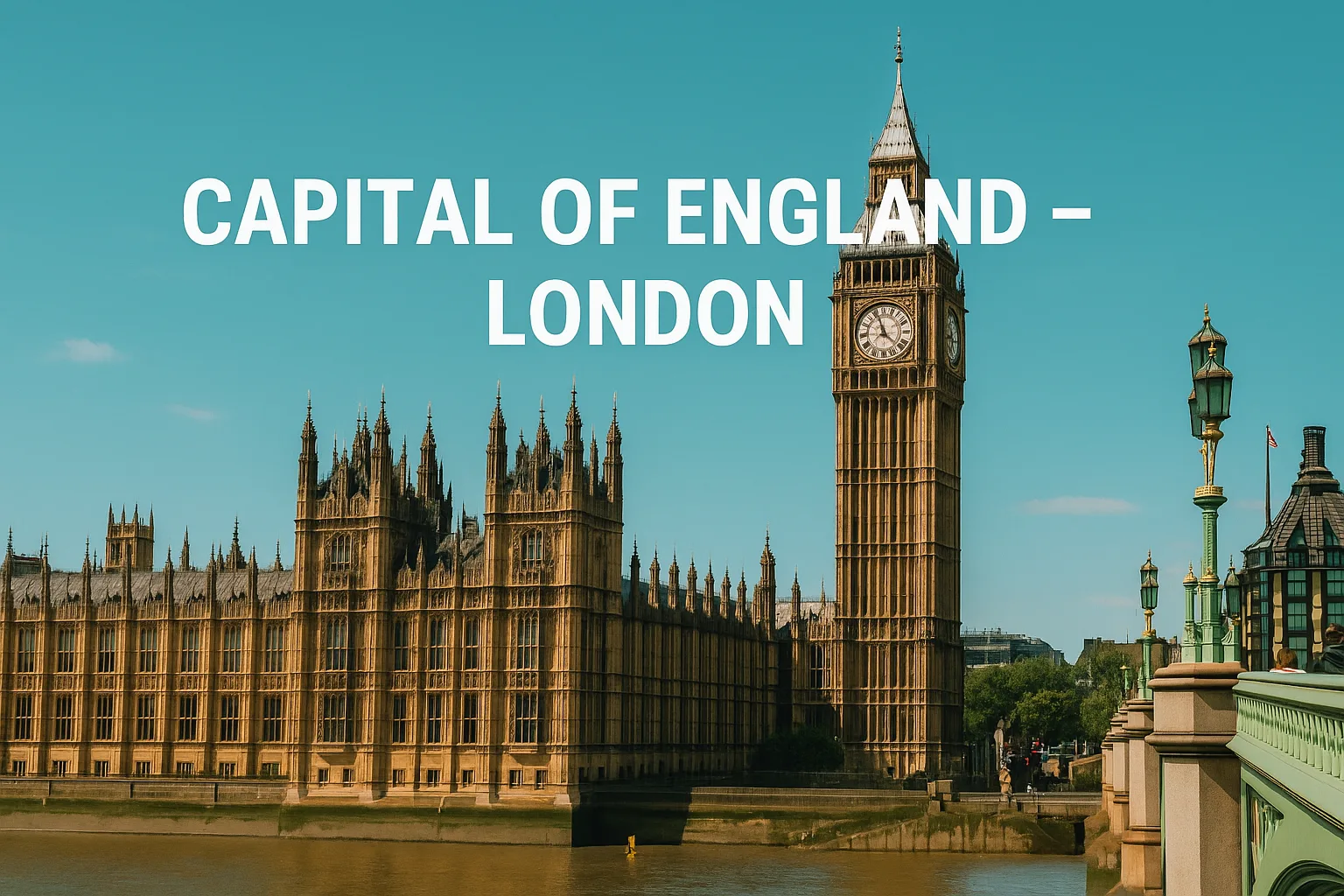
London, the capital of England, is a city where royal palaces, riverside walks and glass towers all share the same postcard. It is home to millions of people, yet it can still feel like a collection of cosy villages stitched together by the River Thames, red buses and the familiar sound of “Mind the gap”.
Where Exactly Is London?
The city sits in the south-east of England, spread across both banks of the River Thames. When people say “London”, they usually mean Greater London, a wide area made up of 32 boroughs and the historic City of London at its heart. This whole region forms the political, cultural and economic centre of the country.
Think of London as a wheel: the City and Westminster are the hub, while famous districts such as Camden, Kensington, Greenwich and Notting Hill form the colourful spokes that stretch out in every direction.
Essential Facts About London
| Country | England (within the United Kingdom) |
| Region | Greater London |
| Population (Greater London) | Approx. 9.1 million people (2024) |
| Area | About 1,572 km² (607 sq mi) |
| River | River Thames |
| Time Zone | GMT (UTC+0), summer: BST (UTC+1) |
| Official Language | English |
| Currency | British Pound Sterling (GBP, £) |
| Main Airports | Heathrow, Gatwick, Stansted, Luton, London City, Southend |
A Short, Friendly History
London grew from a riverside settlement called Londinium, founded by the Romans almost two thousand years ago. Over the centuries it developed into a busy port, a centre of trade, and eventually the capital city where important national events and celebrations are held.
Today, the city blends this long story with a modern skyline. Historic lanes sit next to skyscrapers in areas such as the City and Canary Wharf, while traditional markets share the streets with creative studios and cutting-edge theatres.
Neighbourhoods You’ll Hear About Again and Again
Westminster & The City
This is the postcard centre: grand buildings, river views and many of the sights first-time visitors dream about. Around every corner you’ll spot statues, towers and bridges you recognise from films.
The West End
Love theatres, bright lights and busy streets? The West End includes Leicester Square, Soho and Covent Garden. It’s ideal for a show, a late dinner and people-watching on a lively evening.
South Bank & Bankside
Follow the wide walkway along the Thames for one of the city’s most enjoyable strolls. Street performers, riverside cafés and major attractions like the London Eye and Shakespeare’s Globe all sit side by side here.
Village-Style Districts
Areas such as Greenwich, Hampstead and Richmond give London a gentler feel. They offer leafy streets, traditional pubs and parks with wide views back across the city neigbourhoods below.
Must-See Sights in the Capital of England
Why do travellers keep returning to London? A big reason is its collection of world-class sights, many of them within walking distance of each other in the centre.
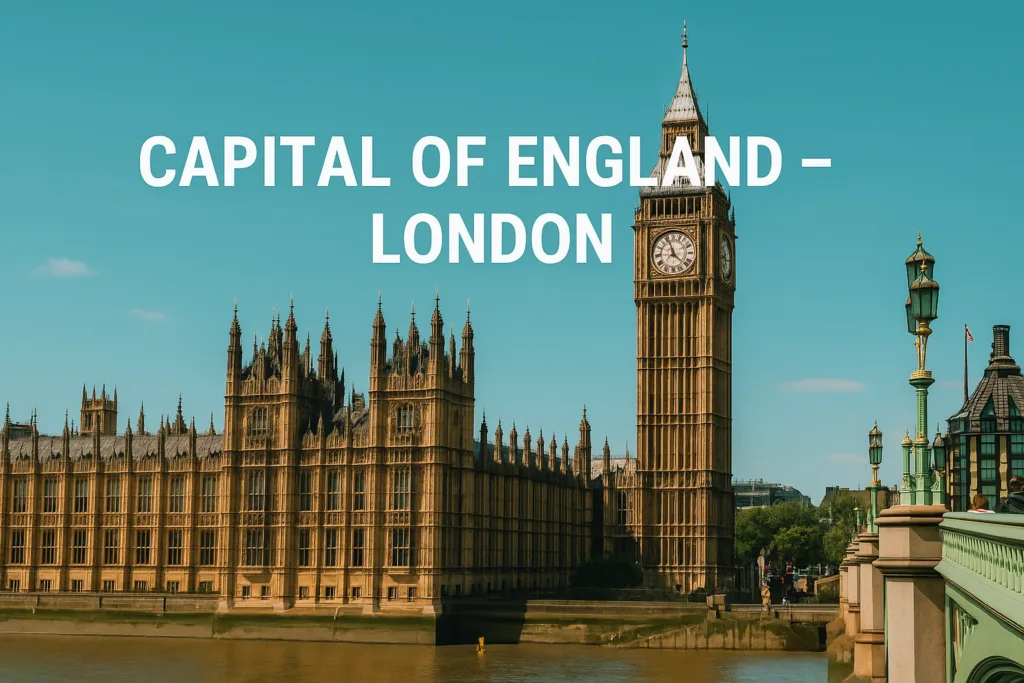
Royal & Historic Icons
- Buckingham Palace – the monarch’s London residence, famous for the colourful Changing of the Guard ceremony.
- Tower of London – a riverside fortress that now houses the Crown Jewels and centuries of stories.
- Westminster Abbey – a beautiful gothic church where major ceremonies and celebrations take place.
River & Skyline Views
- London Eye – a 135-metre cantilevered observation wheel giving sweeping views over the Thames, Big Ben and far beyond.
- Tower Bridge – the city’s most famous bridge, with towers you can visit and a glass-floor walkway high above the water.
- The Shard – a glass skyscraper with viewing platforms and restaurants looking out across the capital.
Museums & Culture
- British Museum – one of the world’s great collections, with free entry and treasures from many cultures.
- National Gallery – a gallery on Trafalgar Square with paintings from masters such as Van Gogh and Turner.
- Tate Modern – a modern art museum in a former power station on the river.
Local tip: Many national museums in London offer free general entry. You only pay for special exhibitions, so you can easily pop in for an hour between other sights.
Everyday Life: Markets, Parks and Food
Beyond the big landmarks, London’s charm lives in its daily rhythm. Flower stalls brighten up early mornings, commuters crowd local cafés, and parks fill with picnics the moment the sun appears.
Markets
- Borough Market – a paradise for food lovers with fresh produce, street snacks and global flavours.
- Portobello Road Market – antiques, vintage fashion and colourful terraced houses.
- Camden Market – music, alternative fashion and canal-side food stalls.
Parks & Green Spaces
- Hyde Park – central, spacious and great for walking, cycling or renting a small boat on the Serpentine.
- Regent’s Park – rose gardens, open-air theatre and paths that lead up to Primrose Hill for sunset views.
- Greenwich Park – sweeping lawns and one of the best panoramas of the city skyline.
Food in London reflects its international character. From classic fish and chips in a cosy pub to street food from all over the world, you can eat differently every single day of your stay.
Getting Around the Capital
At first glance, the map of London can look complicated. Yet moving around is easier than it seems once you know your options.
Public Transport
- Underground (Tube) – the fastest way across long distances. Lines are colour-coded and clearly signed.
- Buses – good for short hops and scenic rides. The front seat on the top deck turns the city into your own moving viewpoint.
- DLR, Overground & Elizabeth line – extra rail lines that link the centre with newer areas and airports.
Tickets & Payment
- Use a contactless bank card or phone, an Oyster card or a Visitor Oyster card to tap in and out on most services.
- There is daily and weekly fare capping, so once you reach a set limit your extra journeys that period are effectively free.
- Remember: on buses and trams you only tap in, not out.
Walking & Cycling
Central London is surprisingly walkable. Many major sights sit within a 30-minute stroll of each other, and public hire bikes are available for short rides along the river or through the parks.
Transport Snapshot
| Best for first visit | Contactless / Oyster pay-as-you-go |
| Most scenic ride | Top deck of a red double-decker bus |
| Airport to centre | Heathrow & Gatwick Express trains, Elizabeth line, or coach services |
| Cheapest in one day | Tap the same card all day and let fare caps work for you |
When Is the Best Time to Visit London?
London welcomes visitors all year. Each season has its own character, so the “best” time really depends on the kind of trip you want.
- Spring (March–May) – parks burst into blossom, days grow longer and temperatures are mild. Ideal for sightseeing and park picnics.
- Summer (June–August) – long evenings, outdoor festivals and busy streets. Great for rooftop bars and river cruises.
- Autumn (September–November) – golden leaves in the parks, slightly quieter attractions and comfortable walking weather.
- Winter (December–February) – cosy cafés, festive lights and indoor museums. A good time if you enjoy a crisp chill and warm city lights.
Sample One-Day Itinerary in the Capital of England
Need a simple plan for your first full day? Here is a gentle route that links several of the city’s highlights.
- Morning in Westminster – Start near Big Ben and walk around Westminster Bridge, the riverside and the outside of Westminster Abbey.
- Stroll to Buckingham Palace – Walk through St James’s Park to see the palace and its famous balcony.
- Afternoon on the South Bank – Cross the river, ride the London Eye if you wish, then wander east past street performers towards Tate Modern.
- Evening in Covent Garden – Finish with dinner and a show in the West End, watching the streets glow as the theatres light up.
Practical Tips for a Smooth London Trip
- Stay central if you can – areas like Covent Garden, South Bank, Victoria and King’s Cross make it easy to explore.
- Carry a reusable water bottle – many public fountains and cafés will refill it, saving money and plastic.
- Use maps offline – download your favourite map app in advance so you never feel lost underground.
- Stand on the right – on Tube escalators, stand on the right and let people walk on the left.
- Walk between nearby sights – sometimes it’s quicker to walk between neighbouring stations than to change lines.
- Plan one “wow” moment – a river cruise at sunset, a view from the Shard or a theatre show can turn a good trip into a unforgettable one.
Why London Stays With You
Some cities are about one single sight. London is different. It’s the feeling of the Thames at your side, the mix of voices on the Tube, the way a quiet garden square suddenly appears just a street away from bright neon lights.
As the capital of England, London is a place where history, creativity and everyday life meet on the same pavement. Long after you leave, you may still hear the echo of a bus braking, a street performer’s song or the soft chime of a clock somewhere over the river – gentle reminders that this city has a special way of staying with you.