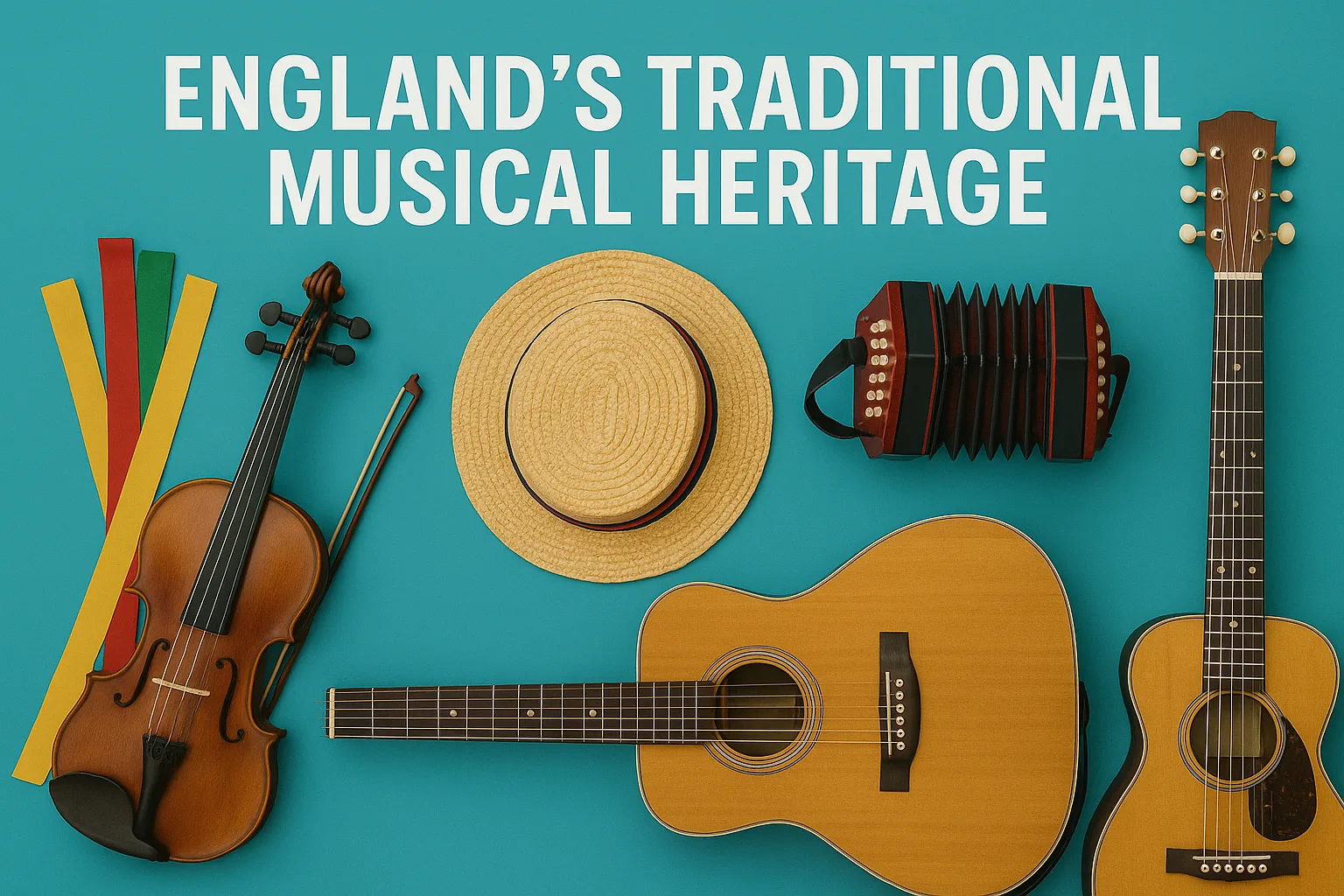
England’s Traditional Musical Heritage
When people think of England, they often picture stone villages, green hills, and perhaps a pub on the corner. Yet the most English thing of all might be something you hear rather than see: a fiddle leading a dance tune, voices joining in an old chorus, bell pads jingling in time with steady steps.
This guide explores England’s traditional musical heritage as a living, breathing culture. You’ll discover how songs, dances, and instruments connect regions, seasons, and communities – and how you can experience this world for yourself, whether you are a traveller, a learner, or just a curious listener.
Think of it as a friendly map: not just to where the music came from, but where you can find it today.
What Makes Traditional English Music Unique?
Traditional English music is sometimes quiet and reflective, sometimes loud and joyful, but nearly always social. It grew in homes, on village greens, in local halls, not on big stages. The goal was simple: give people a reason to step, sing, and smile together.
At its heart, this musical heritage blends four key elements:
- Memorable melodies – tuneful, often easy to hum, yet rich enough to explore for years.
- Clear rhythm – strong pulses that match walking, clapping, or dancing steps.
- Stories and images – songs that paint scenes of work, love, journeys, and everyday life.
- Community participation – music meant to be joined in with, not just consumed passively.
Ask yourself: when was the last time you sang with strangers and felt the room change? That shared energy lies at the centre of England’s traditional sound.
Core Styles and Forms of English Traditional Music
Dance Tunes & Social Dancing
Much of England’s traditional music was created to get people moving. Dance tunes – especially jigs, reels, hornpipes and lively country dance melodies – are tightly structured so that dancers always know where their feet should go next.
Some key settings for these tunes include:
- Morris dance music – energetic tunes played for small sets of dancers with bells and sticks or handkerchiefs.
- Country dances – figures for longways sets or squares, where couples weave, turn, and swap partners.
- Village hops and barn dances – informal evenings where a caller guides everyone through simple steps.
Historically, a single musician with pipe and tabor (a small drum and three-holed pipe) or a fiddle might lead a whole village’s dancing. Over time, instruments such as the concertina, melodeon and accordion joined the sound, giving the music a bright, punchy lift ideal for outdoor events.
Close your eyes at a summer fair in England and you might still hear it: a cascade of fiddle notes, the lift of a squeezebox, and shoes landing on wooden boards in perfect time.
Storytelling Ballads & Narrative Songs
Alongside dance music, England has a deep tradition of ballads – narrative songs that tell complete stories. A single voice can carry a room for minutes at a time, with the tale slowly unfolding verse by verse.
These songs often include:
- Strong repeated refrains – lines everyone can join in on, even on first hearing.
- Clear scenes and characters – so listeners can “see” the story as it develops.
- Simple yet powerful language – everyday words arranged in memorable patterns.
In a quiet pub, you may hear the air shift as one person begins a ballad unaccompanied. No microphones, no backing track – just breath, pitch, and story, carrying histories from one generation to the next.
Seasonal, Village & Ceremonial Music
Many English tunes and songs are tied to specific seasons, customs and village events. A few examples:
- Village carols and seasonal songs sung in pubs and streets in winter.
- May celebrations with music for dancing around a maypole or processing through a town.
- Local ceremonial dances such as the long-running Abbots Bromley Horn Dance, where a small ensemble – often including accordion or concertina – accompanies a day-long procession each year.
These customs mix movement, costume, and music into a single experience, turning whole villages into informal stages.
Instruments that Shape the English Folk Sound
Melody Leaders
- Fiddle – agile, expressive, ideal for fast dance tunes and slow airs.
- Flute & whistle – clear, bright tones that cut through busy rooms.
- English concertina – a small, hexagonal instrument with a clean, ringing sound often linked with English dance music and the folk revival.
- Melodeon & button accordion – punchy and rhythmic, perfect for outdoor dancing.
Rhythm & Texture
- Pipe and tabor – one hand plays melody on a small pipe while the other keeps beat on a tiny drum.
- Guitar & bouzouki – modern additions providing chords and gentle bass lines.
- Harmonium, keyboard & small organs – supporting village bands and chapel singing in some regions.
- Percussion – from simple hand drums to the tap of dancers’ clogs on wooden floors.
Each instrument adds its own colour, but the overall sound stays grounded in clear rhythm and memorable melody. These tunes feel simple at first listen, but their patterns are surprsingly sophisticated when you dig deeper.
Regional Styles Across England
England is not musically uniform. Travel a few hours and you’ll hear different accents in both speech and music. Some areas are known for smooth, flowing tunes; others for bouncy, driving rhythms or rich harmony singing.
| Region | Musical Character | Typical Instruments | Example Focus |
|---|---|---|---|
| Northumbria | Graceful, intricate melodies; gentle yet steady pulse. | Fiddle, Northumbrian smallpipes, accordion. | Pipe-led dance tunes and lyrical airs. |
| North-West & Border areas | Driving rhythms for processional and display dances. | Bands with melodeons, fiddles, brass, strong percussion. | Morris and other team dances in streets and squares. |
| Cotswolds & central England | Buoyant tunes for small sets of dancers with bells. | Fiddle, concertina, melodeon, pipe and tabor. | Classic Morris dance repertoires and jigs. |
| West Country | Big, rolling tunes with strong choruses. | Fiddle, accordions, village bands. | Social dances & sing-along choruses at local festivals. |
| Yorkshire & Midlands | Powerful harmony singing and village band traditions. | Voices, brass, strings, keyboards. | Seasonal singing in pubs and community halls. |
These are broad patterns rather than strict rules, but they show how place is woven into the music. Tunes and song variants often carry the name of a town, a valley, or even a particular village musician who passed them on.
From Village Green to Modern Stage
By the late 19th and early 20th centuries, collectors such as Cecil Sharp and others began to notate songs and dance tunes from singers and musicians in the countryside. Their work helped preserve many pieces that might otherwise have faded as lifestyles changed and people moved to towns.
Organisations like the English Folk Dance and Song Society (EFDSS) and archives such as the Vaughan Williams Memorial Library continue this work today. They collect manuscripts, recordings, and modern performances, making them available for learners, researchers, and performers around the world.
Festivals, Folk Clubs & Youth Ensembles
Today, England’s traditional music lives in many forms:
- Folk clubs – regular evenings in pubs or arts centres where anyone may sing or play.
- Dance teams – Morris and other groups with their own musicians, costumes, and repertoires.
- Major festivals – multi-day gatherings featuring concerts, workshops, and informal sessions.
- Youth folk ensembles – groups such as Folkestra in North-East England, where young players explore regional and contemporary material side by side.
In other words, the tradition is not trapped in museums or old books. It is interwined with modern life – from school projects and community choirs to professional touring bands.
How You Can Experience England’s Traditional Music
Whether you’re visiting England in person or exploring from afar, it’s easier than ever to step into this musical world. Here are practical, human-level ways to connect with it.
As a Listener
- Look for local folk nights on community notice boards or venue websites.
- Visit festivals – even a single afternoon can give you a feel for dances, songs, and instruments.
- Sit in on a session in a pub, where musicians gather informally to swap tunes.
- Explore recordings of traditional singers and players, then compare how modern artists reinterpret the same material.
As a Participant
- Join a workshop at a festival or arts centre – many welcome complete beginners.
- Take a simple dance class (such as a ceilidh or barn dance) and feel how the music guides your steps.
- Try a “session-friendly” instrument – whistle, fiddle, melodeon, or concertina – and learn a handful of core tunes.
- Learn a chorus song so you’re ready to join in when someone starts it in a folk club.
Quick Tips for Respectful Enjoyment
- Listen first – notice when people are joining choruses, sitting in silence, or chatting quietly.
- Ask before recording – some singers are happy, others prefer the moment to stay in the room.
- Support venues and artists – buy a CD, drop a few coins in the hat, or simply thank the musicians.
- Be curious – ask about a tune’s name, or which part of England it comes from. People usually love to share.
England’s Traditional Music in a Modern World
Traditional English music has influenced everything from choral compositions to modern folk-rock and film soundtracks. Dance rhythms, old song fragments, and folk-style harmonies often reappear in new works, sometimes in ways casual listeners don’t immediately notice.
At the same time, the core community scene still values face-to-face sharing. Tunes are passed around at sessions, new dances are created for old melodies, and young musicians blend laptops with fiddles, or loop pedals with concertinas, without losing the music’s social purpose.
If you enjoy the idea of culture as something you can touch, hear, and join in with, England’s traditional musical heritage offers exactly that: a chance to step into a circle where the past and present move together in time.
Short FAQ: Understanding England’s Traditional Musical Heritage
1. Is English traditional music the same as “British folk music”?
Not exactly. English traditional music is one part of the wider picture, alongside the traditions of Scotland, Wales, and other areas. There are overlaps and shared influences, but each has its own styles, instruments, and histories.
2. Do I need to be a skilled musician to take part?
No. Many folk spaces are designed for people who are still learning. You can start by clapping along, joining a chorus, or learning a very simple tune on an accessible instrument. The important thing is participation, not perfection.
3. Where should a beginner start exploring?
- Search for a local folk club or session in the part of England you’re visiting.
- Check the programme of a folk festival and choose a day with both concerts and beginner-friendly workshops.
- Listen to a mixture of traditional singers and modern folk artists to hear how the same heritage can sound in different hands.
In the end, England’s traditional musical heritage is an open invitation. Step into a hall or a pub where the first chord is just about to ring out, and you are already part of the story.