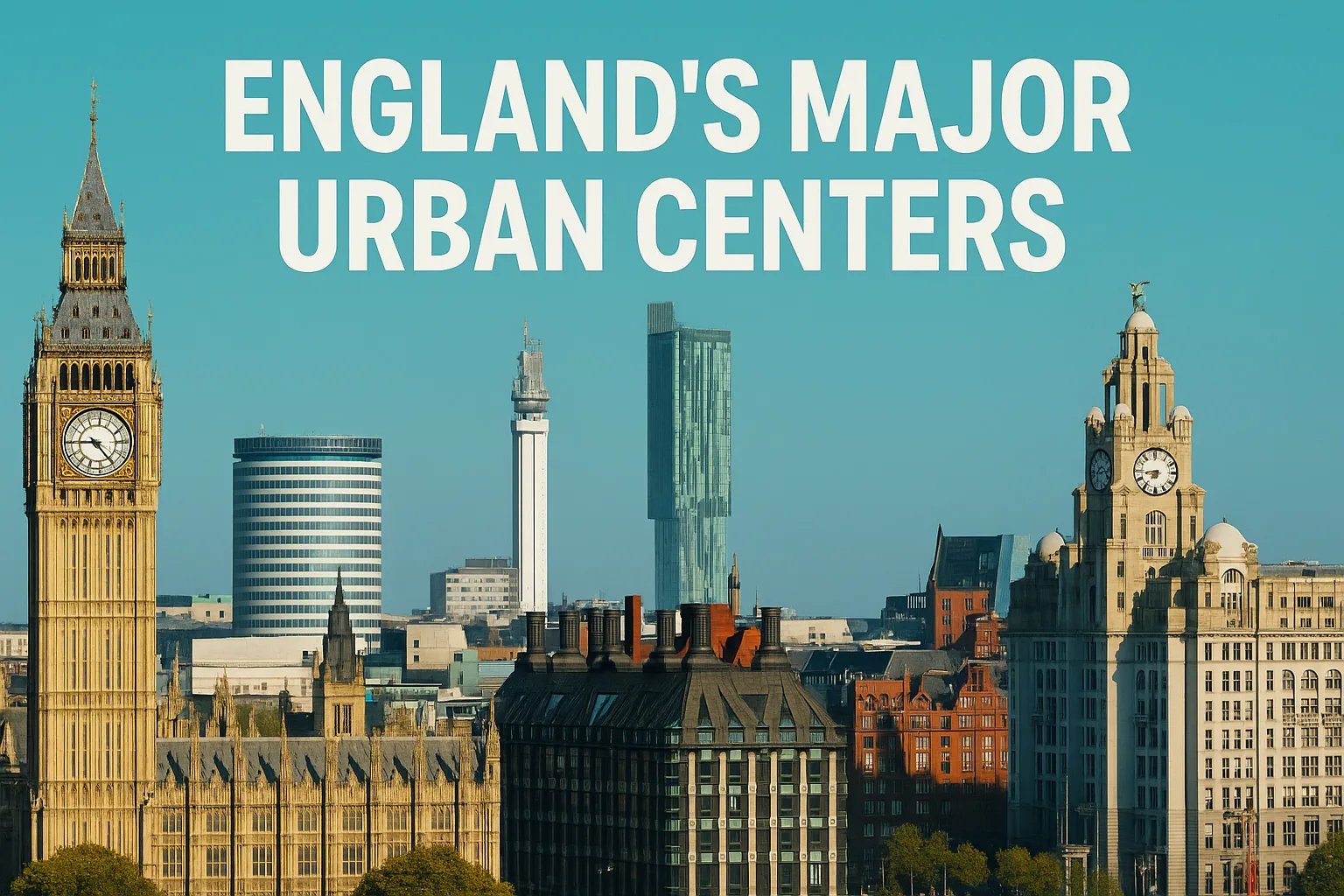
England’s Major Urban Centers: A Practical Guide
England is often pictured as rolling green countryside and quiet villages. Yet most daily life actually unfolds in a network of major urban centers – cities that concentrate jobs, universities, culture, nightlife and advanced industries. Understanding these urban hubs helps you decide where to live, study, work or simply spend an unforgettable city break.
This guide focuses on key English cities that stand out by population size, economic role, cultural pull and transport connections: London, Birmingham, Manchester, Leeds–Bradford, Liverpool, Sheffield, Bristol and Newcastle (Tyneside). Together they form a kind of urban constellation across England, each one bright in its own way.
What Makes an English City a “Major Urban Center”?
When people talk about the “big cities” in England, they usually mean more than just legal city status. In practice, a major urban center tends to have:
- Large population – typically hundreds of thousands of residents or more.
- Diverse economy – multiple sectors (finance, tech, creative, manufacturing, logistics and more).
- Strong transport links – rail, motorways and often an airport nearby.
- Cultural depth – theatres, museums, festivals, live music, sports.
- Regional influence – the city acts as a hub for a wider region.
Population estimates vary slightly by source and by whether you look at the city proper or the wider urban area. Broadly speaking, London is by far the largest, with Birmingham, Manchester, Leeds, Liverpool and Sheffield forming the next tier, followed by cities like Bristol and Newcastle with a few hundred thousand residents each.
Tip for readers: Think of an English city not just as a dot on the map, but as a living ecosystem – people, transport, jobs, universities, parks and nightlife all interacting every day.
Quick Snapshot of England’s Urban Heavyweights
London
Massive global city of around 8.8 million residents, a world leader in finance, culture, media, education and tourism.
Best if you want: Global careers, unmatched cultural variety, endless neighbourhoods to explore.
Birmingham & Manchester
The largest cities outside London, with urban populations in the millions when wider built-up areas are included. Key hubs for manufacturing, services, tech, music and sport.
Best if you want: Big-city energy at slightly more manageable scales and costs.
Leeds–Bradford, Liverpool, Sheffield, Bristol, Newcastle
Mid-sized powerhouses with populations in the 250k–600k range in the city proper, and much higher in the surrounding urban areas.
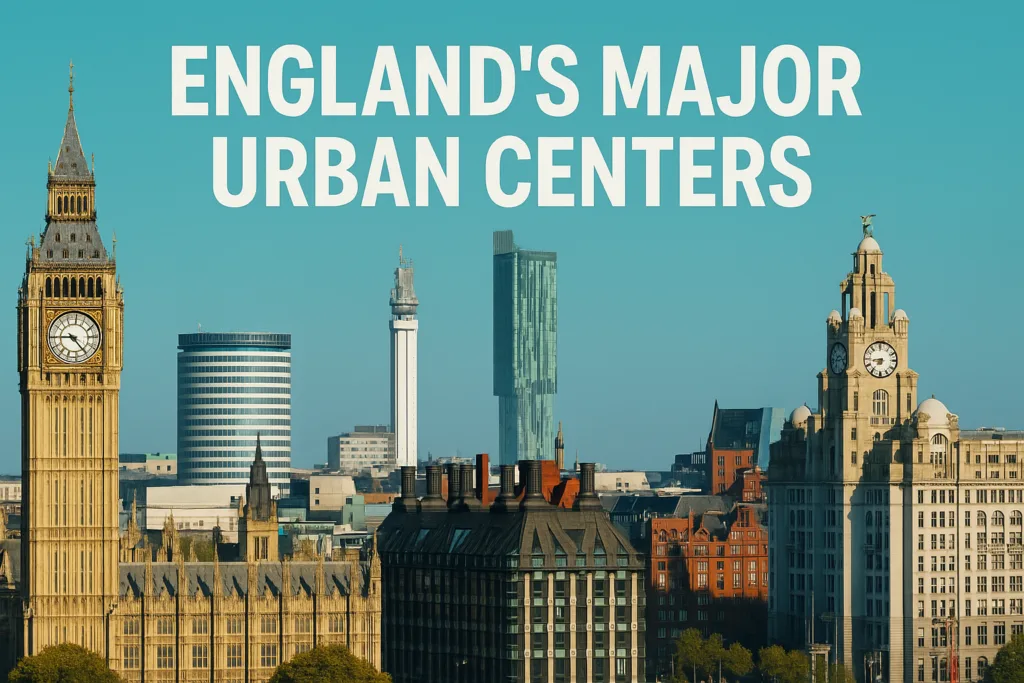
Best if you want: Strong universities, distinct local culture and a clear regional “personality”.
Every English city tells a different story – your goal is to find the chapter you want to live in.
London – England’s Global Mega-City
London is not just England’s largest city; it is one of the world’s most influential urban centers. With roughly 8.8 million residents in the city and many more in the wider metro, it clearly dominates England’s urban landscape.
The city stretches along the River Thames, offering a mix of historic districts, glass-and-steel business districts, leafy suburbs and vibrant high streets. It hosts leading financial institutions, creative studios, start-ups, global headquarters and world-class universities.
Why people choose London
- Career magnet – especially in finance, professional services, media, design, tech and higher education.
- Cultural variety – hundreds of museums, galleries, music venues and theatres, from fringe rooms above pubs to famous West End stages.
- Incredible diversity – communities from across the globe, with food, festivals and languages to match.
- Non-stop city life – late-night transport, 24-hour neighbourhoods and events almost every day of the week.
What living in London feels like
Life in London can feel like riding a fast-moving escalator: the opportunities keep coming, but so do the crowds and commuting times. Housing costs sit among the highest in England, so many residents carefully balance location vs. space vs. budget when choosing a neighbourhood.
If you enjoy dense city streets, global connections and you don’t mind planning your week around public transport, London gives you more options than anywhere else in the country.
Birmingham – Industrial Roots, Young Energy
Birmingham, often called “Brum”, is the largest city in England outside London, with a population of around 1.1 million and a wider urban region stretching through the West Midlands.
Historically famous for metalworking and manufacturing, today Birmingham combines canalside regeneration, major shopping districts, big arenas and a very young population.
Stand-out features of Birmingham
- Central location – a transport crossroads with fast rail links across England.
- Diverse food scene – from street food to award-winning restaurants.
- Strong student presence – several universities and colleges create a lively, youthful atmosphere.
- Ongoing regeneration – new office districts, cultural venues and public spaces are still reshaping the city centre.
For many, Birmingham feels like a “just right” size: big enough for variety, small enough that you can get to know distinct areas without feeling overwhelmed.
Manchester – Creative and Digital Powerhouse
Manchester sits at the heart of one of England’s largest urban regions, with the city itself around half a million residents and a much bigger built-up area when neighbouring towns are counted.
Once a textile engine of the Industrial Revolution, Manchester has reinvented itself as a hub for media, music, sport and digital industries. Modern glass towers rise beside red-brick warehouses converted into lofts, studios and bars.
Why Manchester appeals
- Thriving tech and media scene – especially around MediaCityUK and the city centre.
- Legendary music culture – venues small and large, with a strong live gig tradition.
- Football heritage – major clubs nearby and a strong sporting identity.
- Urban feel with nearby countryside – the Peak District lies within easy reach.
If you want a city that feels creative, slightly gritty in parts, and full of energy, Manchester can definately give you that buzz.
Leeds & Bradford – Northern Business and Student Cluster
The neighbouring cities of Leeds and Bradford form a large urban area in West Yorkshire. Leeds has around 530k residents, Bradford over 330k, and together they anchor a wider metropolitan region of well over a million people.
Leeds is known for its financial and business services, shopping arcades and universities. Bradford adds a strong film and media identity, industrial heritage and a rich food culture.
Good reasons to choose Leeds–Bradford
- Major student population – several universities and colleges across the two cities.
- Employment in services – finance, legal, retail, health and public services play big roles.
- Gateway to Yorkshire – easy access to national parks, historic towns and countryside.
- Distinct neighbourhoods – from Victorian terraces to modern riverside developments.
Liverpool – Waterfront Culture and Global Connections
Liverpool, with around half a million residents in the city proper and many more in the surrounding Merseyside area, has transformed its famous docks into museums, galleries, apartments and leisure spaces.
The skyline along the River Mersey mixes historic port buildings with modern waterfront architecture. Music, football and maritime heritage all shape the city’s identity.
Why visitors and residents love Liverpool
- Strong cultural offer – theatres, concert halls, street art and festivals.
- Compact city centre – easy to walk between shops, museums and the waterfront.
- Studying by the river – several universities attract students from across the world.
- Friendly atmosphere – many people describe the city as warm and welcoming.
Sheffield – Green City with Industrial Roots
Sheffield grew famous for steel and cutlery; today it is also known as one of Europe’s greener big cities, with extensive parks and easy access to the Peak District National Park. Its population sits around half a million within the city, more in the wider urban zone.
Old factories and warehouses now mix with student housing, cultural venues and modern offices. The hills around the city give dramatic views and a slightly different feel from flatter English cities.
Sheffield Overview
- Outdoor access – ideal if you like hiking or cycling at weekends.
- Two universities – a strong academic presence shapes the city centre.
- Emerging creative districts – studios, music venues and independent businesses in former industrial areas.
Bristol – Harbour City for Innovation and Lifestyle
Bristol lies in South West England, with a city population of around 425k and a wider travel-to-work area reaching close to one million people.
The city’s harbour, once packed with ships, is now a centre for cafes, museums, arts spaces and waterside apartments. Bristol is known for aerospace and engineering, but also for its independent spirit, street art and festival culture.
What stands out in Bristol
- Strong creative scene – design studios, animation, music and visual arts.
- High quality of life feel – many residents value the mix of urban life and nearby countryside.
- Harbourside lifestyle – walking, cycling and relaxing along the water.
Newcastle & Tyneside – Friendly Hub of the North East
Newcastle upon Tyne sits on the River Tyne close to the North Sea. With around 280k residents in the city and a wider urban area that includes Gateshead and neighbouring towns, it plays a central role in the North East.
The city combines historic bridges and streets with modern waterfront developments and a compact centre full of shops, bars and venues. Universities bring in a large student population, and the region’s coastline and countryside lie within easy reach.
Why Newcastle attracts people
- Strong regional identity – a clear accent, local pride and distinct culture.
- Walkable centre – many key areas are close together.
- Access to nature – dramatic coastline and national parks within a short journey.
Comparing England’s Major Urban Centers
The table below brings together approximate population figures (city proper), plus a simple summary of what each urban center is especially known for. Figures are rounded and based on early-2020s estimates from national statistics and city-level data.
| Urban Center | Approx. City Population | Signature Strengths | Great For |
|---|---|---|---|
| London | ≈ 8.8 million | Global finance, culture, tourism, higher education, creative industries | International careers, diverse neighbourhoods, world-class sights |
| Birmingham | ≈ 1.1 million | Manufacturing & services mix, canalside regeneration, major events | Balancing job options with central UK location |
| Manchester | ≈ 470,000 | Media, music, football, digital industries, lively nightlife | Creative careers, big-city feel without London scale |
| Leeds | ≈ 536,000 | Finance, legal, retail, universities | Students and professionals wanting a busy yet manageable city |
| Bradford | ≈ 333,000 | Film and media identity, food culture, industrial heritage | Residents who value cultural depth and more space |
| Liverpool | ≈ 506,000 | Music, museums, waterfront regeneration, football heritage | Students and visitors drawn to a strong local personality |
| Sheffield | ≈ 500,000 | Green spaces, universities, advanced manufacturing | People who want city life plus quick access to hills and trails |
| Bristol | ≈ 425,000 | Aerospace, engineering, creative industries, harbourside culture | Independent-minded residents who like a relaxed yet forward-looking vibe |
| Newcastle upon Tyne | ≈ 286,000 | Universities, nightlife, regional services, iconic bridges | Those seeking a friendly, compact city near coast and countryside |
How to Choose the Right English City for You
Different cities suit different stages of life. Instead of asking “Which city is the biggest?”, a more useful question is: “Which city fits my goals, budget and lifestyle?”
If you are a student
- Leeds, Manchester, Sheffield, Bristol and Newcastle offer a strong mix of universities, nightlife and relatively compact centres.
- London provides famous institutions and huge variety, with higher living costs.
- Liverpool and Birmingham blend campus life with large-city culture and big events.
If you are early in your career
- London excels in finance, consulting, media and global industries.
- Manchester and Bristol stand out in digital, tech and creative roles.
- Leeds and Birmingham offer growing business districts and central locations.
If lifestyle is your main focus
- Sheffield and Bristol give easy access to nature alongside city amenities.
- Liverpool and Newcastle offer strong local identity and lively centres.
- Leeds–Bradford provide a mix of city life and quick trips into Yorkshire’s landscapes.
Practical questions to ask yourself
- Do I prefer a huge, global city or a mid-sized regional hub?
- Is being close to nature or nightlife more important to me right now?
- Which sectors are strongest in this city – do they match my skills and ambitions?
- How will housing, commuting and everyday costs fit my budget?
Final Thoughts: Building Your Own Urban Map of England
England’s major urban centers are not in competition; they are like different instruments in the same orchestra. London delivers the loudest, most global sound, while cities such as Manchester, Birmingham, Leeds, Liverpool, Sheffield, Bristol and Newcastle add their own tones – some creative, some industrial, some coastal, some hillside.
Instead of searching for “the number one city”, focus on the city that fits your story. Maybe you picture yourself working in a glass tower near the Thames; maybe you see weekends walking in the Peak District after days in Sheffield’s labs; or perhaps you imagine sunsets over Bristol’s harbour or Liverpool’s waterfront.
Use this guide as a starting point, then layer on your own priorities: career paths, study plans, hobbies, family needs and budget. In the end, the “major” city is the one where your daily life feels balanced, inspiring and sustainable – and that definition belongs entirely to you.