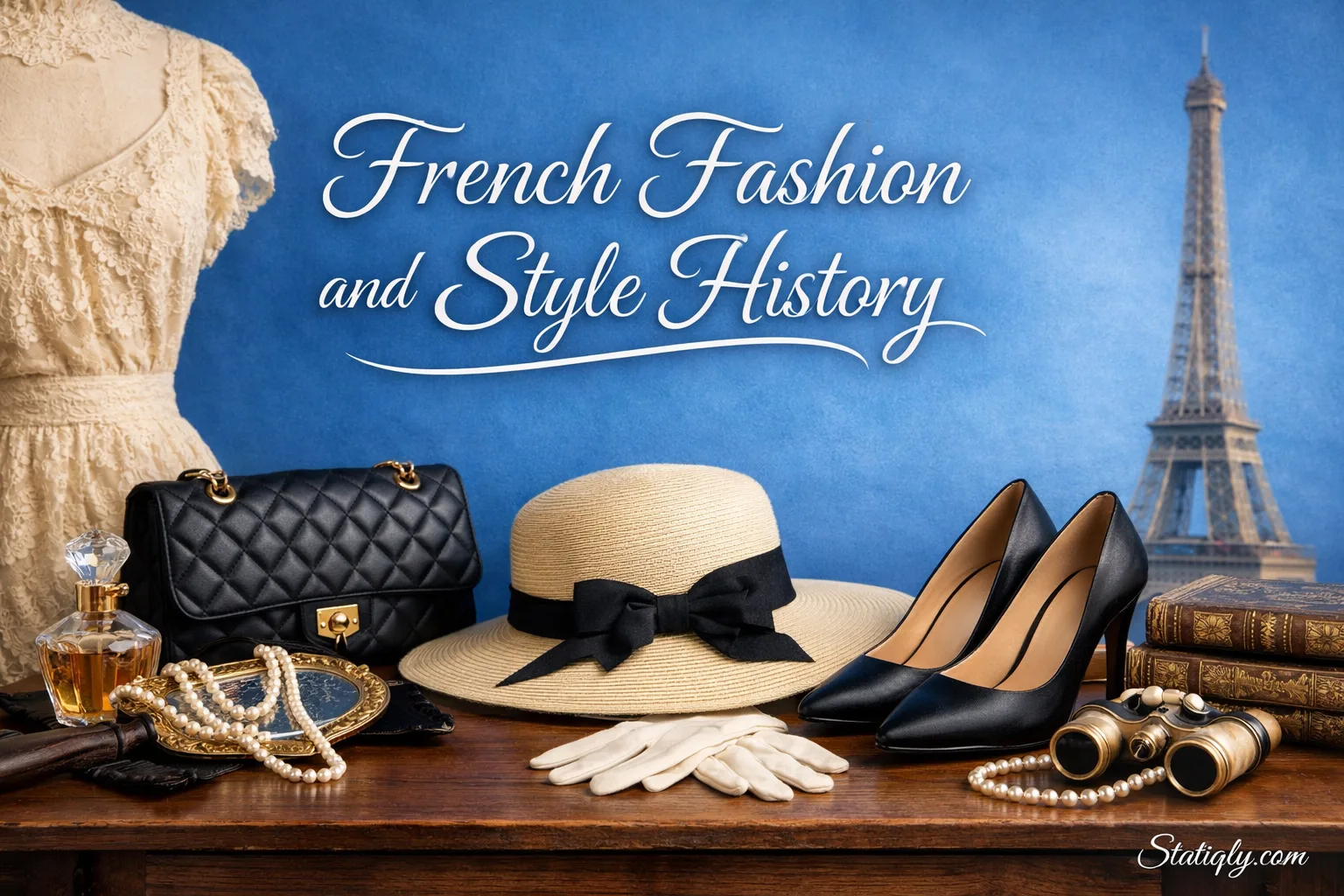
France doesn’t just “do” fashion. It shapes the way the world talks about silhouettes, fabric, and confidence. Ever wondered why a simple blazer can feel like a passport to instant polish? French style history is the quiet engine behind that feeling—part craft, part attitude, and just enough sparkle to keep it fun.
Why French Style Still Sets The Mood
French fashion is often described as effortless, but that “effortlessness” has a long memory. For centuries, France refined a few powerful ideas and kept remixing them:
- Shape First: a strong silhouette can do more than loud prints.
- Fabric Matters: texture is a style language all its own.
- Craft Is Status: handwork, fit, and finishing are the “secret sauce.”
- Less, But Better: a tight edit can look richer than a crowded look.
From Court Splendor To City Chic
Early French fashion influence grew around elite dressing culture, where clothing worked like a stage set: dramatic, detailed, and designed to be noticed. Think of it as a “language of materials”—silk, lace, embroidery—used the way a chef uses seasoning. Not too much. Just the right hit.
As Paris life expanded, style started to shift toward movement and practicality. Lighter layers, cleaner lines, and smarter tailoring became more desirable. The vibe changed: less costume, more character.
A Helpful Way To Read French Fashion History
Try this lens: France repeatedly asks one big question—how can clothing look refined and still feel alive? Every era answers it differently, but the question stays.
The Rise Of Haute Couture In Paris
In the 1800s, Paris became the workshop of fashion ambition. Haute couture emerged as made-to-measure artistry: garments built with precision, fittings, and finish so clean it feels almost invisible. Picture a cathedral. You don’t need to see every tool that built it to feel the mastery.
What mattered most wasn’t only the dress—it was the system: ateliers, specialized craftspeople, and a culture that treated fit like a form of respect. The result? Paris became the reference point for luxury craftsmanship.
Iconic Houses And Signature Codes
French style history is also a story of “codes”—recurring design ideas that become instantly recognizable. A few examples:
Clean Lines, Clever Comfort
French design often treats comfort as a kind of elegance. Simple knits, tailored separates, and pieces that move well can still look expensive—because proportion does the heavy lifting.
Shape Drama, But With Control
From sculpted tailoring to playful details, French fashion loves a bold idea—then edits it down. Like a good haircut: you notice the form, not the fuss.
A Century Of Looks: A Fast Visual Companion
If you want a quick visual sweep across modern French fashion eras, this video pairs well with the timeline below.
Timeline: French Fashion Eras And What They Added
Here’s a practical way to remember French fashion history: each era adds a tool to the style toolbox. Want a sharper outfit tomorrow? Borrow one tool and go.
| Era | Signature Silhouette | Texture And Detail | Style Lesson You Can Use |
|---|---|---|---|
| Late 1800s | Structured waists, flowing skirts | Hand finishing, rich trims | Let one strong shape lead |
| Early 1900s | Long lines, refined tailoring | Light layers, delicate lace | Elegance can be quiet |
| 1920s–1930s | Relaxed silhouettes, smart separates | Jersey, fluid fabrics | Comfort can look polished |
| 1950s | Defined waist, dramatic volume | Luxurious textiles, crisp structure | Use proportion for impact |
| 1960s–1970s | Clean geometry, modern tailoring | Graphic details, sleek finishes | Make basics feel fresh |
| 1980s–1990s | Statement tailoring, relaxed minimalism | Bold buttons, sharp shoulders | Balance strong and simple |
| 2000s–Today | Mix of classic and street-ready | Heritage craft meets new materials | Build a personal uniform |
The Craft Behind The Chic
French fashion isn’t only about labels. It’s about construction. Even a simple coat feels different when the collar rolls cleanly, the lining sits smoothly, and the sleeve length hits the wrist just right.
- Atelier Techniques: hand-sewn finishing, careful pressing, and precise pattern cutting.
- Fabric Literacy: knowing when wool should feel crisp, when silk should float, when cotton should hold shape.
- Fit Rituals: small tweaks that make a garment feel “made for you.”
Small Detail, Big Upgrade
Want the most “French” upgrade with the least effort? Check your hem lengths and your shoe condition. It’s like cleaning a camera lens—suddenly everything looks sharper.
Parisian Style Principles You Can Actually Use
French style advice is famous for sounding mysterious. Let’s make it simple. These ideas work whether you love vintage, minimalist outfits, or bold fashion moments.
Build A Personal Uniform
- Pick 2–3 base colors you genuinely wear.
- Add one “signature” item: a trench, a blazer, or a silk scarf.
- Repeat shapes that flatter you. No guilt.
Use One Statement, Not Five
- Bold jacket, calm top and pants.
- Striking shoes, simple dress.
- Bright lipstick, softer accessories.
And yes, you can love trends. Just treat them like seasoning. Sprinkle, don’t pour.
French Wardrobe Essentials With Historical Roots
A great shortcut into French fashion history is to notice how often certain items return, decade after decade. They’re not “basics.” They’re tools.
- The Trench Or A Crisp Coat: structure without stiffness.
- A Well-Cut Blazer: instant shape, instant confidence.
- A Simple Knit: comfort that still photographs beautifully.
- Leather Shoes You Maintain: this one detail changes the whole wardobe.
- A Scarf Or Silk Accent: a small piece that carries personality.
French Fashion And Style History For Travelers And Curious Readers
If you’re exploring French style through museums, boutiques, or just street-watching, keep your focus on three things:
- Silhouette: what shape is the outfit making from a distance?
- Material: does it look matte, glossy, crisp, airy?
- Finish: hems, buttons, collars, and clean lines.
A Tiny Challenge For This Week
Choose one outfit and remove one extra thing. Then add one precise thing back: a belt, a watch, a scarf, or a clean shoe. Notice the difference. It’s surprisingly satisfying.