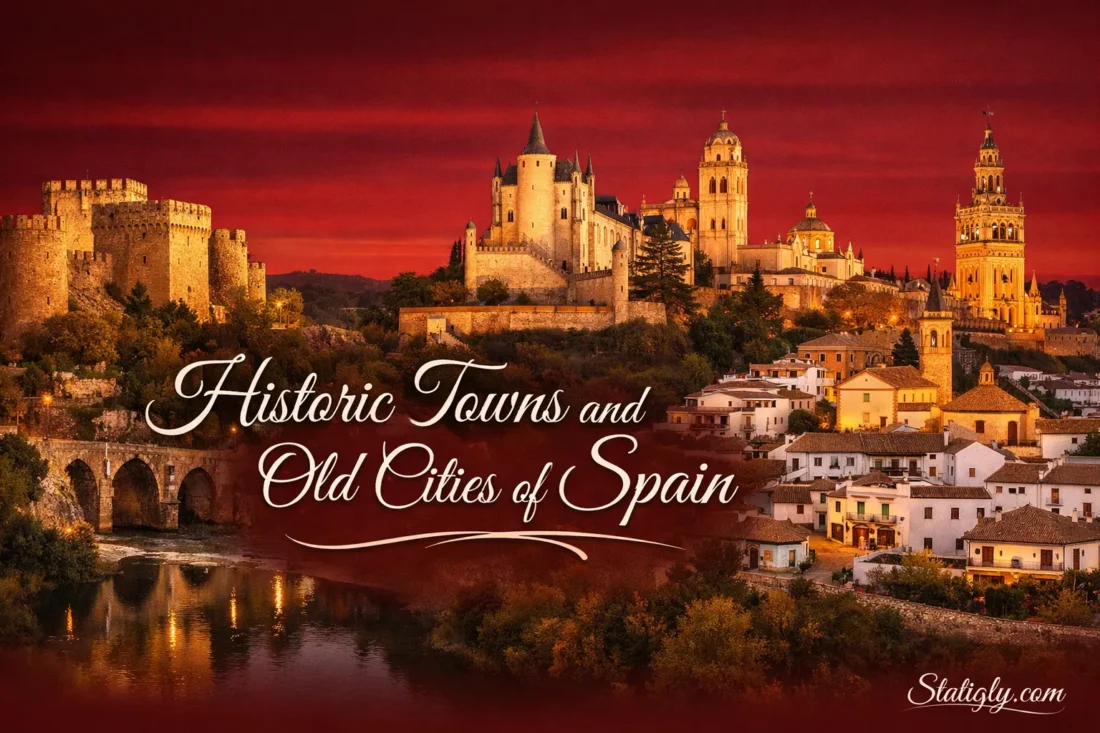
Spain’s historic towns and old cities can feel like a living storybook—stone streets, sunlit plazas, and doorways that have welcomed generations. Ever rounded a corner and felt time slow down, just for a second? That’s the magic here: history doesn’t sit behind glass. It’s under your shoes, above your head, and in the small details you notice when you stop rushing.
If you want places that are beautiful, easy to enjoy, and packed with real heritage, this guide gives you a clear way to choose where to go, what to prioritize, and how to build a route that feels natural.
A Friendly Starting Point For Planning
These well-known historic places are all UNESCO World Heritage listings in Spain. Use the table to pick your “musts” fast, then dive into the details below.
| Place | Best For | UNESCO Year | A Memorable Detail |
|---|---|---|---|
| Toledo | Layers of architecture, viewpoints, crafts | 1986 | Old city on a dramatic river bend |
| Segovia | Roman engineering, fairytale skyline | 1985 | Iconic Roman aqueduct in the city center |
| Ávila | Medieval walls, walkable old town | 1985 | Remarkably complete city walls |
| Salamanca | Golden-stone streets, university energy | 1988 | University founded in 1218 |
| Córdoba | Courtyards, grand monuments, old streets | 1984 (expanded 1994) | Mezquita-Cathedral at the heart of the historic center |
| Granada | Palace gardens, hillside neighborhoods | 1984 (expanded 1994) | Alhambra and the Albaicín on neighboring hills |
| Santiago De Compostela | Old lanes, iconic cathedral area | 1985 | Historic center shaped around pilgrimage tradition |
| Cáceres | Atmospheric plazas, stone towers, calm evenings | 1986 | A striking blend of styles in a compact core |
| Mérida | Roman sites, open-air ruins | 1993 | Founded as Augusta Emerita in 25 BC |
| Cuenca | Clifftop views, medieval streets | 1996 | Historic town set between deep river gorges |
| Tarragona | Roman coastal heritage, archaeology | 2000 | Ancient Tarraco with major Roman remains |
How To Pick The Right Historic Town
Not sure where to start? Try this simple approach: choose one “anchor” city you’ll explore deeply, then add one or two smaller stops that match your travel style.
Pick This If You Love…
- Big landmark moments: Córdoba, Granada
- Roman heritage: Segovia, Mérida, Tarragona
- Walled towns: Ávila, Cuenca
- Old university atmosphere: Salamanca
- Candlelit stone streets: Cáceres
A Fast Reality Check
- Do you want day trips or a slow base?
- Are you happiest with monuments, street life, or views?
- Will you walk a lot? Old towns mean cobblestones and slopes.
Answer those three, and your shortlist basically picks itself.
Signature Old Cities Worth Your Time
Toledo
Toledo is the kind of place where every street feels intentional. The old city sits on a steep rock above the Tagus River, so viewpoints come naturally—no effort to “find the angle.”
- Look For: winding lanes, artisan workshops, and skyline views from across the river
- Good To Know: it’s close to Madrid, which makes it a comfortable day trip or an easy overnight
Segovia
Segovia makes a strong first impression: the Roman aqueduct stands right in town, like an ancient bridge between daily life and history. Many sources place its construction around the 1st–2nd century CE.
- Best Moment: early morning for quiet streets and clean views
- Don’t Rush: climb to higher viewpoints to see the city’s full silhouette
Ávila
Ávila is famous for its formidable city walls, completed over centuries (often described as spanning the 11th to 14th). It’s compact, clear, and satisfying—like a perfectly drawn circle on a map.
- Try This: plan a gentle loop that keeps the walls in sight
- Best Pace: slow and steady—let the stonework speak
Salamanca
Salamanca has a warm glow—literally. In certain light, its sandstone looks honeyed, softening grand buildings into something welcoming. The University of Salamanca dates to 1218, and that long academic tradition still shapes the city’s rhythm.
- Don’t Miss: the Plaza Mayor’s atmosphere at different times of day
- Good Idea: look up—facades and carvings are part of the fun
Córdoba
Córdoba’s historic center invites you to slow down. One moment you’re in a narrow lane, the next you’re standing before the Mezquita-Cathedral, an architectural landmark at the heart of the old city. UNESCO listed the site in 1984 and later expanded it in 1994.
- Look For: patios, small squares, and the old bridgeside views
- Best Tip: go earlier in the day for a calmer feel
Granada
Granada’s historic areas feel like two worlds on neighboring hills: the Alhambra and Generalife, and the Albaicín. UNESCO recognized the first in 1984 and later included the Albaicín in 1994.
- Plan Ahead: timed-entry tickets can sell out, especially in busy seasons
- Best Feeling: late-afternoon light in the hillside streets
Santiago De Compostela
Santiago’s old town is a maze you’ll be happy to get lost in. The historic center grew around the cathedral area, and the city is closely tied to long-running pilgrimage routes. UNESCO listed the old town in 1985.
- Best Moment: after rain, when stone streets shine
- Try This: wander without a strict plan for an hour
Cáceres
Cáceres is compact, atmospheric, and easy to love. Expect a historic core filled with stone towers, palaces, and quiet plazas. UNESCO listed it in 1986.
- Best Pace: unhurried—this is a “slow footsteps” place
- Good Idea: visit near sunset for softer light on stone
Mérida
If you enjoy Roman history, Mérida is a highlight. UNESCO lists its Archaeological Ensemble (1993), rooted in the founding of Augusta Emerita in 25 BC. It’s an open-air reminder that the ancient world wasn’t small—it was ambitious.
- Look For: theaters, bridges, and wide archaeological spaces
- Best Tip: bring sun protection in warmer months
Cuenca
Cuenca sits in a striking natural setting, with the historic town perched between river gorges. UNESCO listed the Historic Walled Town in 1996. This is where you come for views that stop you mid-sentence.
- Best Moment: golden hour for cliffside panoramas
- Try This: balance street wandering with scenic overlooks
Tarragona
Modern Tarragona was once Tarraco, a major Roman center in the Iberian Peninsula. UNESCO listed the Archaeological Ensemble of Tarraco in 2000. It’s an ideal choice if you like history you can walk through, step by step.
- Look For: amphitheater and city archaeology woven into daily life
- Good To Know: combine it with other Catalonia stops for an easy route
Easy Routes That Fit Together Nicely
Want a plan that feels smooth? Think in clusters. Old cities are more enjoyable when you’re not constantly packing and unpacking.
Madrid Base With Classic Day Trips
- Toledo for layered old streets and viewpoints
- Segovia for the aqueduct and skyline
- Ávila for walls and a compact medieval feel
Andalusia’s Landmark Pair
- Córdoba for the historic center and grand monument
- Granada for palace gardens and hillside neighborhoods
Two stops, two distinct moods. It’s a satisfying contrast.
Extremadura’s Roman-And-Stone Combo
- Mérida for Roman archaeology
- Cáceres for a beautifully preserved old core
A Coastal History Stretch
- Tarragona for Roman remains by the sea
- Add-Ons in Catalonia based on your pace and interests
Practical Tips That Make Old Town Days Better
- Wear comfortable shoes: historic centers often mean uneven stone and long walks.
- Start early: mornings feel calmer, and landmarks are easier to enjoy.
- Pre-book timed entries: especially for high-demand sites like the Alhambra.
- Build in quiet time: a plaza break can reset the whole day.
- Plan for slopes: hillside districts are beautiful, and they ask a little more from your legs.
More Historic Towns To Consider If You Have Time
Once you’ve chosen the big anchors, these smaller additions can round out the trip with fresh scenery and a different pace.
- Girona for a picturesque old quarter and a satisfying city walk.
- Ronda for dramatic viewpoints and a memorable setting.
- Albarracín for a storybook-style hill town feel and winding lanes.
- Hondarribia for colorful streets and a charming historic center near the coast.
Pick one extra town, not five. The best memories usually come from having time to linger, not from racing a checklist.