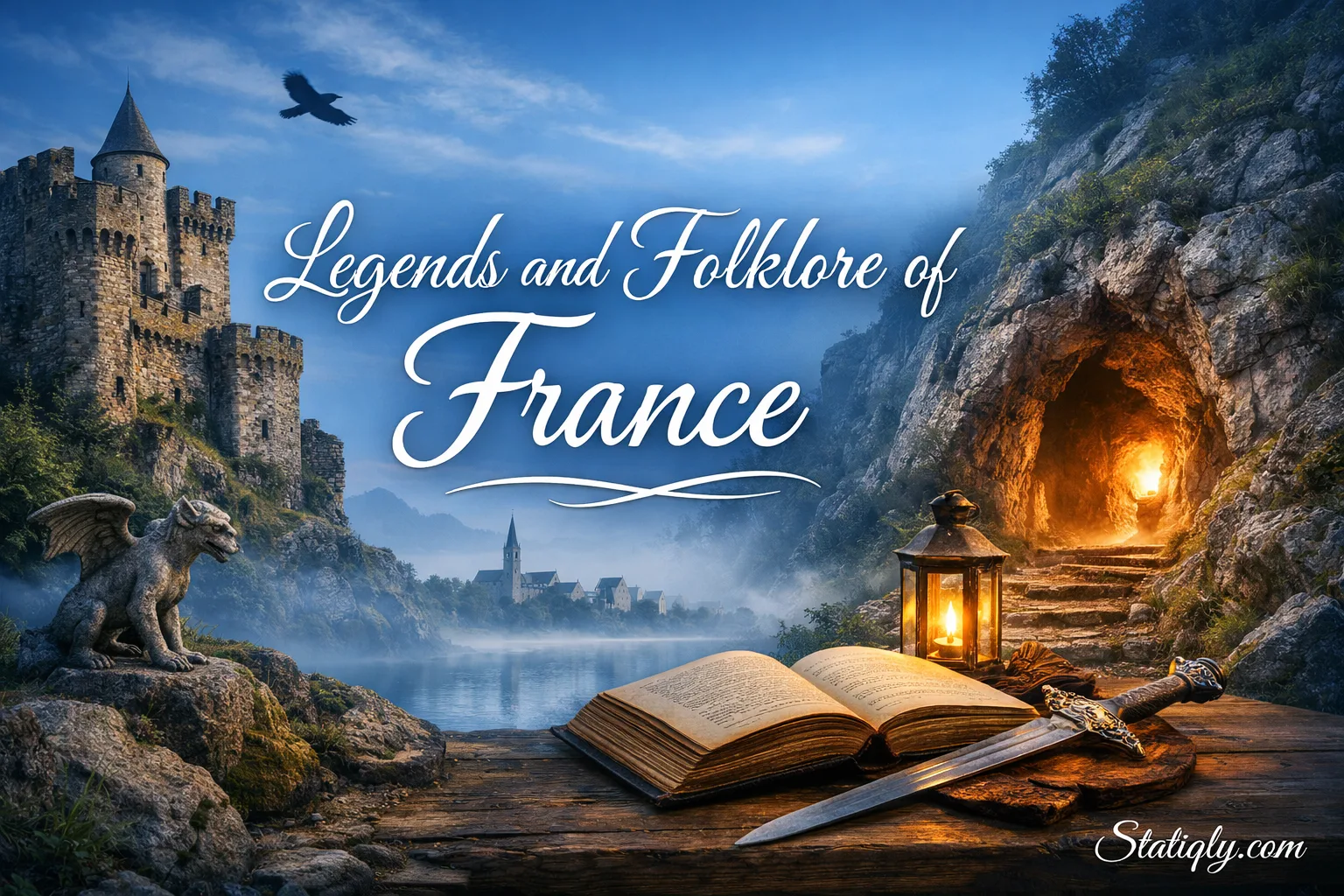
France has a way of making stories feel close. Not locked in books, not sealed behind glass—more like a perfume that lingers after you pass a bakery door. Walk a forest path, pause by an old fountain, or join a village festival, and you’ll notice it: legends still breathe here. Want to explore them without turning anything into a museum piece?
Your Friendly Guide To French Legends
Scroll like you’re leafing through a storybook—then jump to what you love.
What Makes French Folklore Feel So Alive
French folklore isn’t one single “set of myths.” It’s more like a patchwork quilt: each region stitches in its own landscapes, languages, and local humor. A rocky coastline invites sea tales. A deep forest invites whispers. A sunny river town invites parades and music. The result is a culture where place and story keep shaking hands.
Another reason it stays vivid: many legends are tied to everyday rituals. Seasonal festivals. Guided walks. Family stories told at the table. Even a street name can work like a tiny bookmark that says, “Look—there’s a tale here.”
Ask Yourself This
When you visit a place, do you want facts only… or do you also want the mood? Folklore gives you that mood—the “soft lighting” that makes a destination feel memorable.
Legend-Rich Regions You Can Still Visit
Below are a few areas where folklore is easy to feel—even if you’re new to French myths. Think of them as doorways. You step through, and suddenly the world looks a little more enchanted.
Brittany: Forests, Springs, And Story Trails
Brittany is often described as the heartland of French legend. The famous forest linked with Arthurian tradition is commonly identified with Paimpont—and nearby, you’ll hear about names like Merlin, the Lady Of The Lake, and wonder-working fountains.
- Best Way To Experience It: take a guided storytelling walk (many routes are family-friendly).
- What To Listen For: how the same tale shifts slightly from village to village.
- A Small Detail That Feels Magical: fountains and stones often come with “rules” in the stories—like a game with hidden instructions.
Provence: Dragons, Parades, And Summer Joy
In Provence, legends don’t always hide in the shadows. Sometimes they roll right down the street—literally. One of the best-known creatures is the Tarasque, celebrated in local tradition and festive processions. The tone today is often cheerful: music, costumes, and community pride.
- Best Way To Experience It: time your visit around a local summer festival.
- What To Notice: how a once-frightening creature can become a beloved mascot.
- Why It Matters: it shows folklore as a living tradition, not a dusty tale.
Mountain France: Playful Tall Tales
In the Alps and the Pyrenees, you’ll find a wonderful tradition of cheeky folklore—stories that tease newcomers, entertain kids, and make adults grin. One famous example is the dahu, a humorous “creature” often used in playful local jokes. It’s folklore with a wink.
- Best Way To Experience It: visit small towns, talk to locals, enjoy a mountain market.
- What To Learn: not all legends are meant to be “believed”—some are meant to be shared.
Old Cities: Stone Guardians And Whispered Corners
Folklore isn’t only “out in nature.” France’s older cities can feel like open-air storybooks. Look up at cathedral façades, stroll past medieval lanes, notice statues and carvings. People have long treated certain figures—like gargoyles and protective symbols—as watchful guardians. Not monsters. More like dramatic bookmarks carved in stone.
- Best Way To Experience It: take a slow walk at golden hour and look above eye level.
- A Fun Habit: pick one carving and invent a “job title” for it (Guardian Of Rain, Keeper Of Secrets… you get the idea).
Beloved Characters And Creatures In French Folklore
Here’s a handy way to remember some of the most talked-about figures. Think of it like a tasting menu: small bites, clear flavors, no overwhelm.
| Name | What It Is | Where You’ll Hear It | Why People Love It |
|---|---|---|---|
| Mélusine | A legendary fairy figure tied to medieval storytelling | Western France traditions, castle lore, old romances | Part wonder, part mystery—like a moonlit reflection that won’t sit still |
| Korrigans | Mischievous faery folk from Breton tradition | Brittany, especially around springs, stones, and old paths | They keep the landscape playful—nature with a sense of humor |
| Farfadets | Small household or farmyard spirits in regional tales | Rural stories across parts of France | They turn ordinary chores into a stage for small surprises |
| La Tarasque | A famous legendary creature associated with a Provençal town | Provence festival tradition and local storytelling | A perfect example of fear transforming into celebration |
| Stone Guardians | Protective figures in architecture and local imagination | Historic districts, churches, old bridges | They make cities feel like they’re quietly watching over you (in a friendly way) |
Small Tip That Changes Everything
When you read any legend, ask: what is the story protecting? A spring’s “magic” often protects a real spring by making people treat it with respect. A forest taboo often protects a forest by teaching visitors to behave. Folklore can be a soft fence—strong enough to guide you, gentle enough to feel like freedom.
How To Experience French Folklore Without Forcing It
You don’t need to “hunt” legends like trophies. The best approach is lighter—more like following music in the distance until you find the band.
Start With Place, Not Plot
- Pick one landscape: forest, coast, or river town.
- Find a local walk, visitor center, or small museum that mentions “legends” or “tales.”
- Let the first story be short. You can always go deeper tomorrow.
Collect Stories Like Souvenirs
- One Phrase: a local name you keep hearing.
- One Object: a fountain, stone, or carving linked to a tale.
- One Feeling: calm, curiosity, delight—write it down while it’s fresh.
Later, those three notes will bring the whole moment back. It’s a tiny spell, honestly.
If you’re traveling with family, keep it playful. If you’re solo, go slower. Either way, aim for respect. Not because legends are fragile—because places are.
A Simple Folklore-Themed Day Plan
Use this as a template anywhere in France. Swap the “forest” for “old town,” swap the “fountain” for “bridge,” and you’re set.
- Morning: choose one spot linked to a legend (a grove, a spring, a landmark). Walk quietly for 20 minutes before reading anything. Let the place speak first.
- Midday: eat somewhere local and ask a simple question: “Are there any local stories about this area?” You’ll be surprised how often people light up.
- Afternoon: visit a small museum, craft shop, or market. Folklore often hides in motifs: dragons, fairies, protective symbols.
- Evening: read one short retelling (keep it brief). Write one line about what felt most real. Even if it’s just the sound of wind in teh trees.
Where To Learn More In A Safe, Enjoyable Way
If you want to go deeper, keep it practical and pleasant. The goal isn’t to memorize every version. It’s to understand how people and places shaped the tales.
- Local Tourism Offices: many regions offer story-themed routes and guided walks (often designed for all ages).
- Folktale Collections: look for editions that clearly say “French folktales” or “regional tales” and include notes about where stories were collected.
- Festivals And Parades: some traditions feature giant figures, animals, or dragon effigies—community theater on a grand scale.
- Museums With Local Focus: smaller museums can be gold mines for regional identity—costumes, crafts, symbols, and seasonal customs.
Keep It Joyful
French folklore can be dreamy, funny, and full of wonder. When you share it—especially with kids—choose versions that focus on curiosity, kindness, and the beauty of place. The best legends feel like a warm lantern, not a scary spotlight.