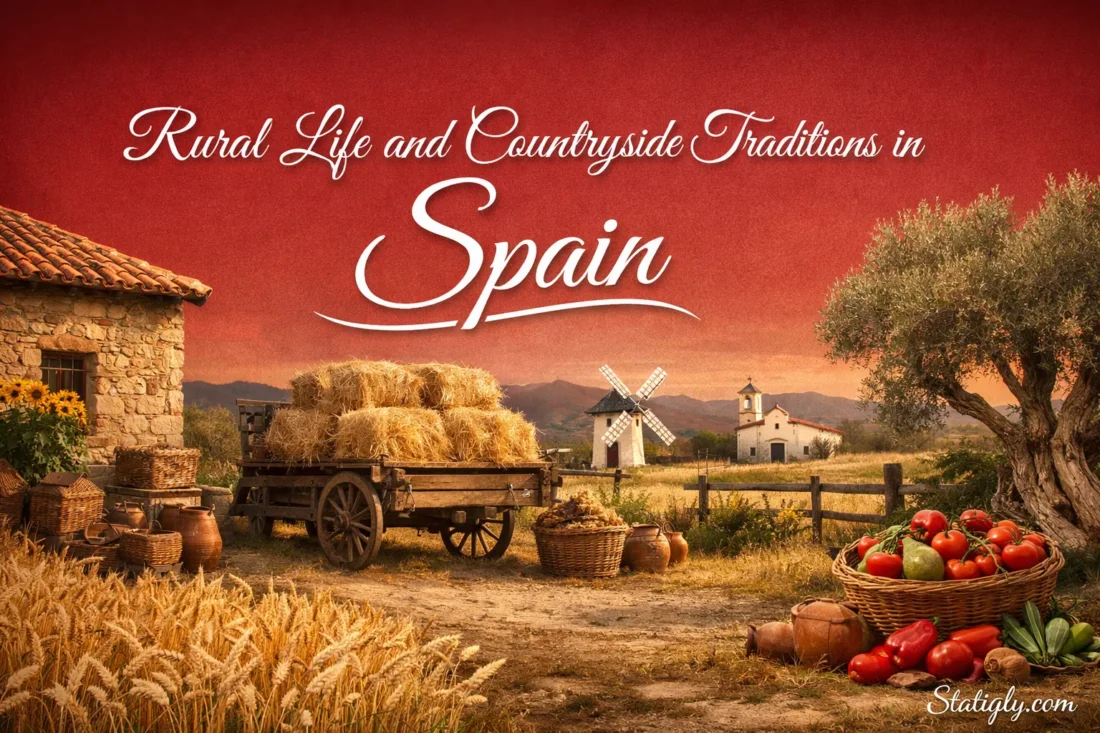
Rural Spain is where the country’s heartbeat feels closest. Not loud. Not rushed. More like a steady drum you notice once you stop listening for noise. Step into a village lane, and you’ll catch it in the morning bread run, in the slow conversations at the local shop, and in fields that look like they’ve been patiently tended for a very long time.
What You’ll Pick Up From This Guide
- How village life tends to flow—daylight, seasons, and small rituals.
- The countryside traditions that still shape daily life: farming, herding, and craft.
- What to look for in homes, markets, and local gatherings—without needing a deep background.
- Simple, respectful ways to experience the countryside so you feel welcome, not in the way.
| Tradition | Where You’ll Notice It | What It Looks Like | A Visitor-Friendly Way To Join In |
|---|---|---|---|
| Olive Harvest | Andalusia, Castilla-La Mancha, Extremadura, parts of Catalonia | Nets under trees, careful picking, family-run groves alongside modern farms | Visit a local mill that offers tastings of fresh olive oil and learn how harvest timing changes flavor |
| Seasonal Herding Routes | Interior plateaus, mountain corridors, old livestock trails | Flocks moving between pastures, stone paths, wide drove roads | Walk a marked trail section; look for drove-road signage and local interpretation panels |
| Dry-Stone Craft | Mediterranean hillsides, terraces, rural boundaries | Walls built without mortar, stones fitted like a quiet puzzle | Choose a countryside walk that passes terraces and ask guides about dry-stone techniques |
| Village Markets | Small towns and regional hubs, week by week | Seasonal produce, household goods, local crafts, friendly bargaining | Arrive early, bring small bills, and try one local ingredient you’ve never cooked before |
| Granary Architecture | Northwest Spain (especially Galicia and Asturias) | Raised granaries designed to keep food dry and safe from pests | Explore a village walk and learn how design follows climate, not trends |
What Rural Spain Feels Like
Spain’s countryside doesn’t come in one flavor. The green north leans into misty hills and stone villages, while the interior plains stretch wide under big skies. Along the Mediterranean, you’ll see terraced slopes and orchards. In the southwest, you might cross a landscape of scattered oaks and open pasture known as the dehesa, where farming and grazing share the same ground.
What ties these places together is a practical kind of beauty. Things are built for weather, work, and community. Even the quiet has texture—like a wool blanket: simple, warm, and made to last.
Look For This
- A central plaza where daily life gathers naturally
- Small farms near villages: gardens, orchards, animal pens
- Signs of seasonal work: stacked firewood, trimmed vines, nets in groves
Feel This Shift
- Time follows sunlight more than screens
- Meals act like anchors in the day
- Neighbors greet each other as a habit, not an event
The Village Day: Simple Rhythms, Small Rituals
Ever wondered why rural life feels calmer even when people work hard? It’s often because the day has a familiar shape. Not rigid. Just known. Like a well-worn path through a field.
- Morning tends to start early: shops open, errands happen, and the village feels most active before midday.
- Midday often slows down. In hotter areas, people naturally avoid the strongest sun. You’ll see shutters partly drawn and streets quieter.
- Late afternoon and evening bring a second wave: social time in the plaza, family walks, and kids playing as the air cools.
If you’re visiting, this rhythm is your secret advantage. Plan active exploring in the morning, then leave room for a long lunch and a slower pace later. You’ll feel less like you’re “doing a trip” and more like you’re simply there.
Work With The Land: Farming And Herding Traditions
Olive Groves And The Winter Harvest
In many parts of Spain, olive harvest season runs from October into winter, varying by region and variety. Some groves still use traditional methods—nets spread beneath trees, olives gathered by hand or with small tools—while nearby farms may use modern shaking equipment. The countryside changes tone during harvest: more movement, more family help, more local talk about timing and quality.
A small detail that matters: early-picked olives can produce oil that tastes greener and more peppery, while later harvests often lean softer. It’s like choosing fruit at the market—same ingredient, different moment.
Transhumance: The Moving Map Of Pastures
One of Spain’s most fascinating rural traditions is transhumance, the seasonal movement of livestock to follow better grazing. It isn’t random wandering. It’s a living system supported by historic livestock trails—some of them wide drove roads known as cañadas reales. Across Spain, these trails form a vast network that stretches for about 125,000 kilometers.
Even if you never see a flock on the move, you can still sense the tradition in the landscape: long straight tracks, stone markers, old water points, and villages positioned like resting notes along a route.
The Dehesa: Oaks, Pasture, And Patient Balance
In parts of the southwest and interior, the dehesa stands out right away: open pasture dotted with holm oaks and cork oaks. It’s a working landscape shaped over time—grazing, careful tree management, and seasonal cycles all sharing space. The result feels almost like a natural park, yet it’s deeply practical.
What makes it special is the idea behind it: not squeezing the land, but partnering with it. That mindset shows up in lots of rural Spanish traditions, even in the smallest garden plot.
Handmade Skills That Still Matter
Rural craftsmanship in Spain isn’t just decoration. It’s problem-solving with style. When you see it that way, the details become more interesting.
Dry-Stone Building
Stone walls and terraces built without mortar show up across rural Spain. Each wall is a quiet lesson in balance. This craft is recognized internationally as living heritage, celebrated for its knowledge and technique.
- Why it exists: to hold soil on slopes, mark boundaries, and manage water flow
- What to notice: stones fitted like puzzle pieces, slightly tilted for strength
Esparto Weaving
In drier Mediterranean areas, esparto grass has long been woven into baskets, mats, and useful household items. The material is tough, flexible, and made for arid landscapes.
- Why it matters: local fiber, practical goods, low-waste tradition
- What to buy: a small basket or trivet you’ll actually use at home
Talavera Ceramics: A Craft With Deep Roots
Spanish countryside traditions include well-known ceramics, especially Talavera-style pottery from the province of Toledo. The methods and designs have been practiced for centuries and are recognized as cultural heritage. In rural settings, pottery isn’t only for display—think plates, jars, and tiles that make everyday spaces feel cared for.
- What to notice: hand-painted motifs, cobalt blues, and earthy tones
- A practical pick: a small dish, a tile, or a simple serving plate
Homes Built For Weather And Work
Spanish rural architecture reads like a guidebook written by climate. Thick walls for heat. Sloped roofs for rain. Courtyards for air. It’s design that answers a question: What does life here demand?
- Cortijo (often seen in the south): a farmhouse complex that may include a courtyard and working areas for land-based life.
- Masía (common in the northeast): sturdy countryside houses tied to farming land, built to last through changing seasons.
- Caserío (in the northern countryside): solid farmhouses connected to family land and local production.
- Hórreo (northwest): raised granaries designed to protect food from moisture and pests, with ventilation built into the walls.
- Thatched Stone Dwellings (parts of the northwest): traditional forms like pallozas, shaped for mountain weather and older rural lifeways.
When you see these buildings in person, notice the materials. Stone from nearby hills. Wood from local forests. Clay from regional earth. It’s the countryside leaving its signature on the walls.
Markets And Gatherings That Keep Traditions Alive
Not every tradition needs a grand stage. In many towns, the most authentic “event” is simply market day. Stalls appear, neighbors catch up, and the season announces itself through what’s piled high: citrus, peppers, almonds, cheeses, honey, mushrooms, or early spring greens—depending on where you are and the time of year.
Smaller fairs and local celebrations can feel like a village opening its living room. You might see regional costumes, simple dances, or craft demonstrations. The best approach is light and respectful: watch first, then join when it’s clearly open to everyone.
Market-Day Tips That Make Life Easier
- Bring small cash and a reusable bag.
- Arrive early for the best produce, later for a calmer browse.
- Ask a simple question like “What’s in season?” and you’ll often get the best suggestions.
- Buy one item from a local craft stall, even if it’s small. It keeps skills alive.
Music, Dance, And Storytelling In The Countryside
Rural Spain has a musical map, too. In Aragón and beyond, the jota carries lively steps and proud posture. In Galicia and parts of Asturias, the muiñeira moves fast, often driven by the sound of the gaita (bagpipe). These aren’t museum pieces. They show up at local gatherings, community events, and cultural weekends, especially outside big cities.
And then there’s storytelling—the kind that happens over dinner, on a bench, or while someone works with their hands. If you listen closely, the countryside teaches you the same lesson again and again: tradition is not a performance. It’s a habit.
How To Experience The Countryside Respectfully
Want the quickest way to feel welcome in a small town? Keep it simple. Smile, greet people, and match the local pace. Rural life runs on trust, and trust grows from small moments.
Small Things That Help
- Use a friendly greeting: “Hola” goes far.
- Keep voices softer in quiet streets and near homes.
- Support local producers: bread, oil, cheese, honey, crafts.
- Ask before entering private land, even if it looks open.
Easy Mistakes To Avoid
- Don’t expect every place to run on city hours. Some shops close midday.
- Don’t treat traditions like props. Observe first, then participate if invited.
- Don’t rush meals. In rural Spain, eating is often the day’s meeting point.
- Don’t litter on trails or near fields—countryside pride is real.
Easy Countryside Ideas For A Short Visit
You don’t need a complicated plan to experience rural traditions. Think of it like cooking: a few good ingredients, treated well, can taste better than a crowded recipe.
- The Market Morning: Pick one town’s market day, arrive early, buy seasonal produce, then enjoy a long walk through the historic center and nearby fields.
- The Craft Trail: Look for a small ceramics workshop, an esparto craft store, or a local museum focused on rural life. Pair it with a countryside lunch using local ingredients.
- The Stone-And-Path Walk: Choose a trail that passes dry-stone terraces or old drove roads. Walk slowly and notice the landscape’s “infrastructure.”
- The Olive Season Day: If you’re visiting between autumn and winter, seek out an olive mill experience and learn how harvest timing shapes taste.
A Simple Packing Mindset
- Comfortable walking shoes for stone streets and rural paths
- A light layer for changing countryside weather
- A little patience—because the best moments often arrive slowly