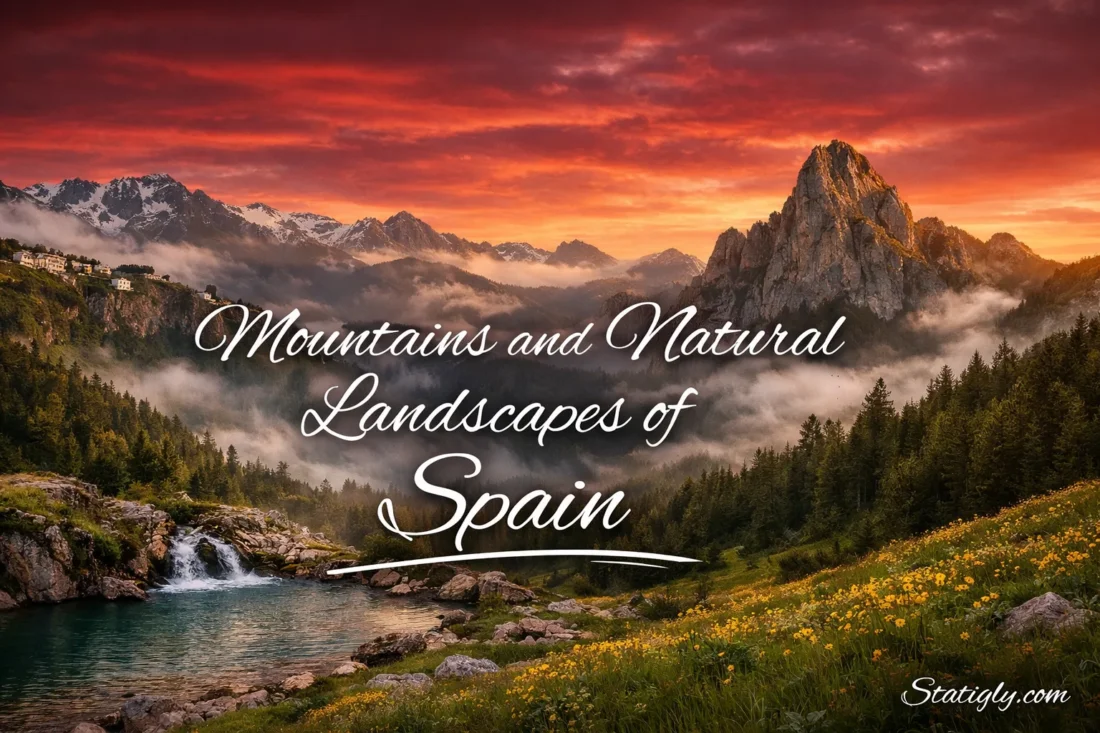
Spain is a place where landscapes change like pages in a picture book. One day you’re walking beneath pine-scented ridgelines, the next you’re staring into a volcanic bowl of lava and ash, and by afternoon you can trade mountain air for a shoreline that still feels wild. If you want to understand Spain quickly, start with its mountains and the natural worlds they create.
A Simple Snapshot Of Spain’s Mountain And Landscape Regions
| Region | Where It Sits | Standout Peaks Or Landmarks | What You’ll Notice First |
|---|---|---|---|
| Pyrenees | Northern Spain | Aneto (3,404 m), glacial lakes | Sharp high peaks and a “glacier-carved” feel |
| Sierra Nevada | Andalusia | Mulhacén (3,479 m) | Alpine heights surprisingly close to warm southern light |
| Picos De Europa | Northern Spain | Torre De Cerredo (around 2,650 m) | Limestone towers, deep gorges, dramatic contrasts |
| Central System | Central Spain | Peñalara (2,428 m), Almanzor (2,592 m) | Granite boulders, forests, and wide open ridges |
| Serra De Tramuntana | Mallorca | Puig Major (1,445 m) | Stone terraces and mountains rising straight from the sea |
| Teide National Park | Tenerife (Canary Islands) | Teide (3,718 m) | A vast volcanic landscape that feels almost otherworldly |
| Cabo De Gata-Níjar | Almería | Volcanic cliffs, coves, salt flats | Rugged coast shaped by ancient volcanic activity |
| Doñana | Andalusia | Marshes and dunes | Big skies, shifting sand, and rich wetland scenery |
Want Big Peaks?
Head for the Pyrenees or Sierra Nevada. They deliver that “stand-on-a-ridge-and-breathe” feeling, with high summits and long views.
Prefer Variety In One Day?
Picos De Europa and the Central System are excellent for mixing forests, rocky viewpoints, and valleys without needing a huge travel plan.
Craving Something Unusual?
Choose Teide for volcanic drama, Cabo De Gata-Níjar for a rugged coast, or Bardenas Reales for sculpted badlands.
The Big Mountain Ranges That Shape Spain
The Pyrenees: High Peaks, Glacial Lakes, And Classic Valleys
The Pyrenees run along Spain’s northern edge like a natural wall, and they’re packed with variety. One moment you’re beside a lake that looks polished by ice, and the next you’re walking through a valley framed by limestone cliffs.
- Aneto reaches 3,404 meters, making it the highest summit in the Pyrenees.
- Ordesa And Monte Perdido National Park is famous for dramatic canyons and the Monte Perdido massif (Monte Perdido rises to 3,355 meters).
- Aigüestortes I Estany De Sant Maurici National Park stands out for water everywhere: streams, waterfalls, and over 200 lakes.
If you like routes that feel like a journey, this is your zone. And if you’re chasing that special kind of silence you only get above the tree line, you’ll find it here.
The Sierra Nevada: Alpine Heights With Southern Sun
The Sierra Nevada in Andalusia is a twist in the story: truly high mountains in Spain’s south. It’s home to Mulhacén at 3,479 meters, the highest peak on mainland Spain.
What Makes It Special
- Big elevation range means quick changes in scenery as you go up.
- The park became a national park in 1999, and many routes start from easy-access mountain villages.
- On clear days, viewpoints can feel like balconies over the landscape.
Want a mountain experience that doesn’t feel “far away” from everyday comforts? Sierra Nevada often hits that sweet spot.
The Picos De Europa: Limestone Towers And Hidden Gorges
Picos De Europa looks like it was carved for drama. Limestone massifs rise fast, valleys drop deep, and the scenery changes quickly as clouds roll through. The highest point, Torre De Cerredo, sits at around 2,650 meters.
- The national park dates back to 1918, making it one of Spain’s earliest protected mountain areas.
- Expect limestone viewpoints, green valleys, and routes that feel adventurous even when they’re short.
If the Pyrenees feel like a long epic, Picos feels like a punchy short story: compact, intense, unforgettable.
The Central System: Granite Landscapes Close To Major Cities
Central Spain’s mountain backbone is often called the Central System. It’s a world of granite, forests, and big skies. Two headline areas stand out for nature lovers who want strong scenery without complicated logistics.
Sierra De Guadarrama
Now a national park since 2013, it’s known for granite formations and high ridges. Peñalara rises to 2,428 meters.
Sierra De Gredos
Granite cirques and open valleys give Gredos a rugged beauty. Almanzor reaches 2,592 meters, the highest point of the range.
Volcanoes, Badlands, And Coastal Wonders
Teide National Park: Spain’s Highest Point In A Volcanic Sea
Teide on Tenerife rises to 3,718 meters, the highest point on Spanish soil. The landscapes around it are volcanic and wide, with lava fields, rocky outcrops, and a sense of scale that makes you pause mid-sentence.
A Small Detail That Matters
Access to Teide’s summit trail is regulated. If the very top is on your list, plan ahead and check the official booking instructions before your trip.
Is it still “mountain travel” when the ground looks like another planet? Absolutely. It just comes with a different kind of magic.
Cabo De Gata-Níjar: A Rugged Volcanic Coastline
In southeastern Spain, Cabo De Gata-Níjar blends sea views with volcanic geology. Think sharp rock formations, dramatic coastal shapes, and quiet coves where the water feels like a reward at the end of a walk.
- Its mountain range is of volcanic origin, with striking landforms like volcanic plugs and calderas.
- If you enjoy nature that feels raw and clean-edged, this area delivers.
Bardenas Reales: Wind-Carved Badlands With Big Sky
Bardenas Reales, in Navarre, is a semi-desert badlands landscape shaped into ridges, plateaus, and isolated formations. It’s a place that proves “Spain = mountains” is only half the story.
- Recognized as a UNESCO Biosphere Reserve (inscribed in 2000).
- Best for short scenic drives and easy walks where the scenery does the heavy lifting.
Serra De Tramuntana: Mountains Above The Sea In Mallorca
Mallorca’s Serra De Tramuntana brings together stone villages, terraces, and steep mountain silhouettes. The highest peak, Puig Major, rises to 1,445 meters.
The range is also listed by UNESCO as the Cultural Landscape Of The Serra De Tramuntana (inscribed in 2011). It’s a reminder that in Spain, nature and human-made landscapes often fit together like puzzle pieces.
Wetlands, Dunes, And River Landscapes
Doñana: Where Water, Sand, And Sky Meet
Doñana National Park is famous for its blend of marshes, lagoons, and dunes near the mouth of the Guadalquivir. It became a national park in 1969 and is a UNESCO World Heritage Site (inscribed in 1994).
If mountain scenery is a symphony, Doñana is a wide-open chorus: softer lines, huge horizons, and a calm rhythm that feels restorative.
Monfragüe: Rivers And Mediterranean Forest In Extremadura
Monfragüe National Park is known for a classic Iberian mix: rolling hills, Mediterranean forest, and river-cut viewpoints. It sits between the Tagus and Tiétar rivers, creating a landscape that feels spacious and peaceful.
How To Pick The Right Natural Landscape For Your Style
Spain isn’t a “one perfect place” destination. It’s more like a menu. So what are you hungry for?
- For towering peaks and long hikes: Pyrenees, Sierra Nevada.
- For dramatic landscapes without going extreme: Picos De Europa, Guadarrama.
- For volcanic scenery and surreal terrain: Teide, Cabo De Gata-Níjar.
- For scenic drives and easy viewpoint walks: Bardenas Reales, Tramuntana.
- For a calmer, open-sky nature day: Doñana, Monfragüe.
Simple Planning Tips For Comfort And Respect
- Think in seasons, not months. Spring and autumn often feel pleasant for many regions. High peaks can stay cooler, even when the coast is warm.
- Start early for viewpoints. Morning light is gentle, and popular trails feel quieter.
- Check access rules for protected areas. Some places use permits or controlled entry for sensitive routes.
- Pack light, pack smart. Water, a layer for wind, and comfortable shoes cover most day plans.
- Stay on marked paths. It protects fragile terrain and keeps your day simple.
Is Spain’s Highest Mountain On The Mainland?
No. Teide is on Tenerife in the Canary Islands. The highest mountain on mainland Spain is Mulhacén in the Sierra Nevada.
Which Places Feel Most “Lakes And Waterfalls”?
Try Aigüestortes I Estany De Sant Maurici (famous for its many lakes) and valleys within Ordesa And Monte Perdido.
Where Can I Combine Mountains With Sea Views?
Look at Serra De Tramuntana in Mallorca for mountain ridges above the coast, or Cabo De Gata-Níjar for a rugged shoreline shaped by volcanic terrain.
Do I Need A Permit For Teide’s Summit?
Yes, the summit access trail is regulated. If reaching the top matters to you, plan ahead and confirm the current reservation steps on the official booking channels.