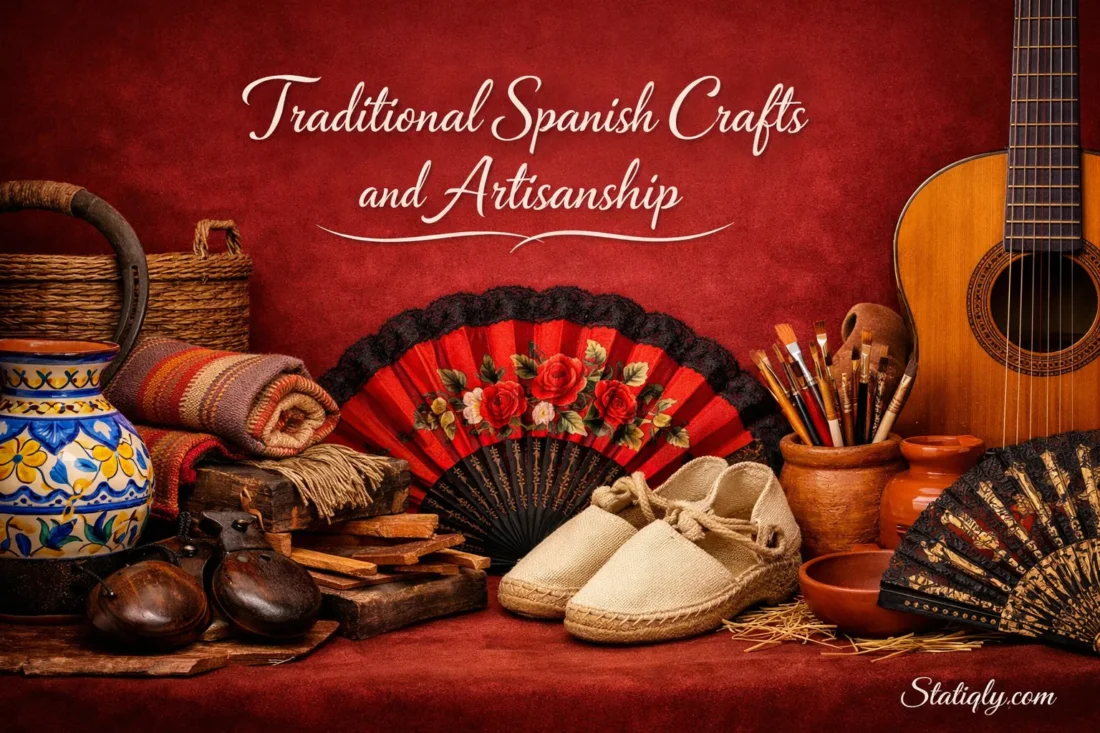
Step into a Spanish workshop and you’ll notice it fast: hands do the talking. Clay turns, thread tightens, metal warms, wood clicks into place. These aren’t “souvenirs.” They’re useful art—objects made to live with you, not sit on a shelf. Want to spot the real thing, meet the makers with respect, and choose pieces you’ll love for years? Let’s do it.
What You’ll Learn Here
- How to recognize traditional Spanish crafts without needing expert jargon
- Where each craft tends to shine—regions, materials, and patterns
- A practical way to buy with confidence: questions to ask and details to check
- Simple care tips so handmade pieces stay beautiful and usable
| Craft | Signature Look Or Feel | Where You’ll Commonly Encounter It | Smart Buying Tip |
|---|---|---|---|
| Talavera-Style Ceramics | Glossy tin-glaze, hand-painted blue-and-white or colorful motifs | Central Spain, specialty ceramic towns, artisan markets | Look for brushstroke variation and a maker’s stamp or signature |
| Andalusian Tiles (Azulejos) | Geometric repeats, floral scrolls, strong glazes | Southern Spain, historic neighborhoods, tile workshops | Ask how it’s made—hand-painted work usually shows tiny, charming irregularities |
| Valencian Ceramics | Bright tableware, sometimes metallic sheen, kitchen-friendly forms | Valencian Community, ceramics-focused towns and studios | Choose pieces with even glaze and a stable base (no rocking) |
| Silk Weaving | Dense sheen, patterned ribbons or fabrics, smooth hand-feel | Valencia and textile workshops, traditional fabric shops | Rub lightly between fingers—real silk feels cool, then warm as it settles |
| Bobbin Lace | Fine nets, floral edges, intricate repeats | Northwestern Spain and coastal craft towns, lace fairs | Check the back: handmade lace often has tiny tension shifts that add character |
| Espadrilles | Jute or esparto-style soles, stitched uppers | Eastern and northern regions, shoe workshops, heritage stores | Flip them over: neat stitching and a well-bound sole edge signal quality |
| Cordovan-Style Leatherwork | Tooled patterns, smooth burnished edges, rich natural tones | Andalusia, leather ateliers, long-running family shops | Smell and touch matter—good leather feels supple, not plasticky |
| Damascene Metalwork | Gold or silver inlay set into darker metal | Toledo and specialist workshops, heritage craft stores | Look closely: true inlay reads like metal woven into metal, not surface paint |
| Wood Inlay (Taracea) | Geometric mosaics in wood, mother-of-pearl or bone-style accents | Granada and artisan furniture studios, small object makers | Run a finger across the surface—quality inlay feels flush and smooth |
Why Spanish Handcraft Still Feels Alive
Some places treat craft like a museum label. Spain often treats it like daily life. Plates are made to be used. Tiles are made to be walked past every morning. Shoes are made to break in, not break down.
What keeps these traditions strong? Three quiet forces:
- Local materials that shape the final look—clay, wool, leather, wood, metal
- Techniques passed person-to-person, often inside small workshops
- Regional identity—patterns and forms that feel “from here,” not “from anywhere”
And here’s a fun question: when you hold a handmade bowl, are you holding an object… or a conversation between maker, material, and time?
A Tiny Mindset Shift That Helps
Instead of asking, “Is this perfect?” try: “Does this feel made?” A small glaze ripple, a brushstroke turn, a stitch that isn’t machine-straight—these are often signatures, not flaws.
Ceramics and Clay Traditions You Can Recognize
Spanish ceramic work spans rustic kitchenware to tile panels that feel like frozen music—rhythm, repeats, and surprise notes.
Talavera-Style Tin-Glazed Pieces
These pieces often feature a bright, opaque glaze and hand-painted motifs. If you tilt a plate under light, you may spot subtle brushwork shifts—like the piece is still moving.
- Common forms: plates, bowls, tiles, jars
- What to look for: hand-painted line variation, a stable base, a maker’s mark when available
- Best use: display plus everyday use (choose practical shapes you’ll actually reach for)
Andalusian Tilework (Azulejos)
Tiles in southern Spain often lean into bold geometry and lush color. They’re made for walls, courtyards, and kitchens—spaces where light changes through the day and the glaze responds like a quiet mirror.
- Clue of skilled work: corners align cleanly, patterns feel intentional, edges are finished well
- Ask the artisan: “Is this hand-painted or stenciled?” Both can be beautiful—your goal is clarity
Valencian Tableware And Workshop Ceramics
In and around Valencia, ceramics often show up as cheerful, practical tableware—plates that invite food, not fear. A good piece feels balanced in your hands, like it wants to be used.
- Check: smooth rim, consistent glaze coverage, no sharp rough spots
- Choose: pieces that fit your life—salad bowls, serving plates, everyday cups
Textiles: From Loom To Wardrobe
Textile traditions can feel like a map you can wear. Thread becomes pattern, and pattern becomes memory. Ever touched a woven scarf that made you think, “Yep, this was made slowly”? That’s the point.
Silk Craft In Valencia
Silk weaving in Valencia is known for rich texture and a sheen that changes with movement. Hold fabric at two angles: the surface “shifts,” like a soft glow traveling across it.
- Signs of quality: tight weave, clean edges, pattern alignment
- Good questions: “How should I store it?” and “Is this pure silk or a blend?”
Bobbin Lace In The Northwest
Bobbin lacework is patient and precise. You’ll often see repeating motifs that feel almost mathematical, yet the final effect is delicate—like air with structure.
- Where it shines: trims, decorative panels, small accessories
- What to check: even tension overall, but with tiny handmade character when viewed close
Espadrilles With Traditional Soles
Espadrilles are a classic Spanish craft-meets-everyday item. The sole is usually made from braided fiber (often jute or esparto-style materials), then stitched to the upper. Good pairs feel secure, not stiff—like a friendly handshake for your feet.
- Check: even stitching around the sole, tidy finishing, comfortable seam placement
- Pick your purpose: daily walking, warm-weather dinners, or indoor comfort
Leather, Metal, and Wood: Small Objects With Big Skill
These crafts reward close looking. Think of them like a good novel: the first glance is nice, but the details make it memorable.
Cordovan-Style Leatherwork And Tooling
Spain’s leather traditions are often associated with Andalusia, especially Córdoba. You’ll see tooled patterns, carefully burnished edges, and finishes that age gracefully. Great leather goods feel alive—they soften where you touch them most.
- Smart check: edges are smooth and sealed, stitching is even, hardware feels solid
- Ask this: “How do you recommend I condition it?” A real maker has a real answer
Damascene Inlay Work
Damascene pieces are known for precious-metal inlay set into a darker base metal, creating patterns that catch light like a spark in shadow. Toledo is the name most people connect with this technique.
- Look for: crisp lines, clean borders, inlay that appears integrated—not simply sitting on top
- Great starter items: small pendants, cufflinks, or a slim decorative plaque
Granada-Style Wood Inlay (Taracea)
Taracea often uses geometric patterns built from tiny pieces—wood tones and inlay accents arranged like a puzzle. Done well, it’s mesmerizing. Your eyes follow the pattern the way they follow waves: again, again, again.
- Quality signs: smooth surface, tight joins, patterns that align across edges
- Popular picks: small boxes, trays, decorative panels, compact furniture pieces
Easy Questions That Open Great Conversations
- “Which part is done by hand?”
- “What material did you choose, and why?”
- “What’s the best way to care for it at home?”
- “Do you sign or mark your work?”
How To Visit Workshops Respectfully And Get The Most From It
A workshop is someone’s rhythm and focus. Treat it like you would a small kitchen during dinner service: friendly, curious, and mindful. The reward? You’ll often get stories and details you’d never find on a price tag.
- Go at quieter hours if you can—makers are more likely to chat when they’re not rushing
- Ask before touching, especially textiles, ceramics with fresh glaze, or inlaid surfaces
- Keep questions simple: process, materials, care, and how long a piece takes
- Buy something small if you’re learning—an artisan magnet in your home matters more than an impulse purchase you won’t use
How To Choose Authentic Pieces Without Being An Expert
Authenticity doesn’t mean “old.” It means honest making—clear materials, clear process, clear care instructions. Here are practical checks you can do in seconds.
- Look for the maker. A signature, stamp, workshop card, or even a consistent style can signal responsibility.
- Scan the edges. On ceramics, rims; on leather, burnished edges; on wood, corners and joins. Clean finishing often separates “nice” from lasting.
- Notice small variation. Handmade work rarely repeats perfectly. That gentle unevenness is often the tell.
- Ask one process question. If the seller can explain how it’s made, you’ll feel the difference fast.
- Buy for your life. The most “authentic” piece is the one you’ll use—weekly, monthly, or every time someone visits.
Simple Care Tips That Keep Handmade Items Looking Great
Ceramics
- Wash gently if you’re unsure; avoid harsh abrasives on painted areas
- Let hot items cool before rinsing with cold water to reduce thermal shock
- Store plates with soft separators if they’re decorative or heavily painted
Textiles
- Store away from direct sunlight to preserve color and fiber strength
- Fold silk with breathable tissue or keep it loosely rolled
- For lace, avoid snag points—smooth hangers and soft storage help
Leather And Metal
- Leather: condition lightly, store with airflow, avoid heat sources
- Metal inlay: wipe with a soft cloth; avoid aggressive chemicals
- Wood inlay: keep away from high humidity swings when possible
Gift Ideas That Feel Personal (Not Random)
If you’re choosing a gift, match the craft to the person’s daily habits. A beautiful object that’s used becomes a tiny ritual. Here are easy pairings.
For Home Lovers
- Handmade serving bowl or platter
- A small tile set for a kitchen corner
- Wood inlay box for keys or jewelry
For Style And Wear
- Espadrilles in a versatile neutral tone
- A silk ribbon or scarf
- A small lace accessory or decorative trim
For Detail People
- Damascene pendant or cufflinks
- A tooled leather cardholder
- A small ceramic piece with hand-painted motifs
A Friendly Shopping Checklist You Can Use Anywhere
Keep this simple. You’re not interrogating anyone—you’re learning. If a piece passes these, you’re usually in a great place.
- Material clarity: ceramic, silk, leather, wood, metal—what exactly is it?
- Process clarity: hand-painted, hand-stitched, inlaid—what part shows the maker’s hand?
- Finish quality: edges, seams, joins, and bases feel clean and stable
- Care guidance: you can leave knowing how to keep it beautiful
- Personal fit: you can imagine it in your routine next week
Where To Start If You Only Have One Afternoon
Pick one craft, then go deep. Visit a workshop or a specialist shop, ask two questions, and buy one small piece you’ll genuinely use. That’s the fastest way to build taste. It’s like learning a new language: a few real conversations beat a thousand flashcards.