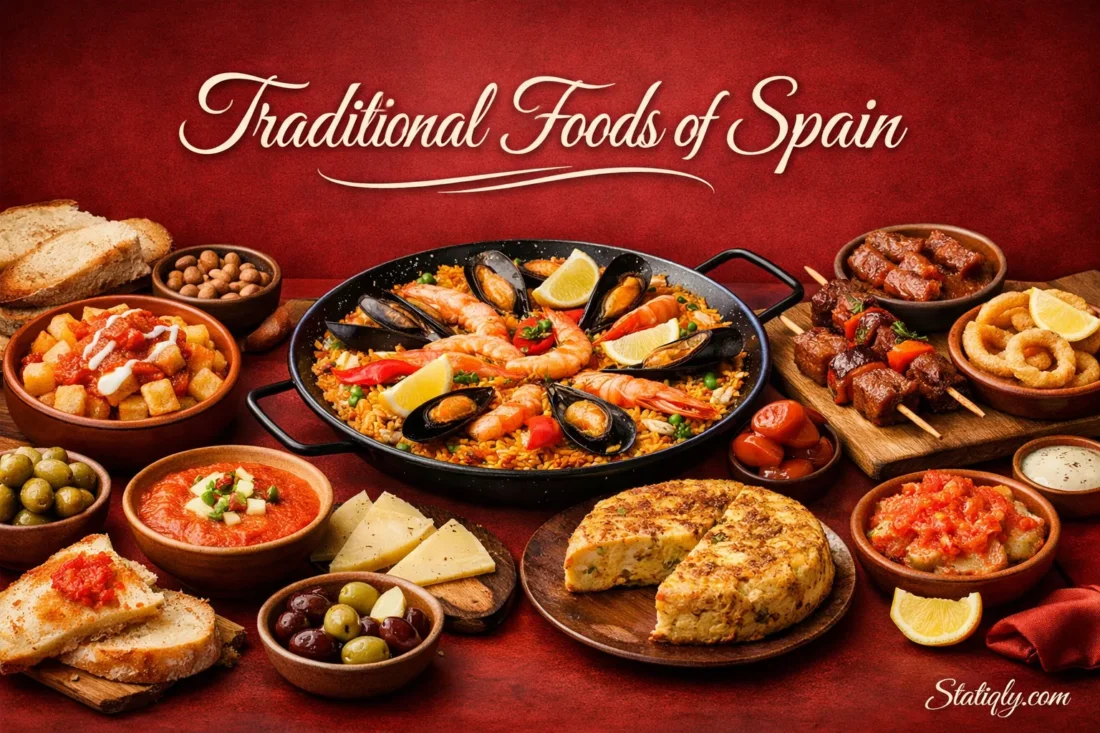
Spain eats like a celebration, even on an ordinary Tuesday. One minute you’re nibbling something crisp and salty at a bar counter, the next you’re spooning a slow-cooked stew that tastes like it’s been waiting for you all day. Curious where to start? Think of Spanish cuisine as a delicious mosaic: small pieces, bold colors, and every region adding its own tile.
A Tasty Map Of Spain In Dishes
Want a fast, practical overview before you dive deeper? This table links traditional Spanish foods to the places and moments where they feel most at home.
| Dish | Most Closely Linked Region | What It Tastes Like | Usually Enjoyed As |
|---|---|---|---|
| Paella Valenciana | Valencian Community | Saffron-kissed rice, savory meat, green beans | Lunch with friends or family |
| Gazpacho | Andalusia | Chilled tomato, olive oil, garlic, fresh vegetables | Starter on warm days |
| Tortilla Española | Across Spain | Silky eggs, tender potatoes, olive oil comfort | Tapa, snack, light meal |
| Jamón Ibérico | Western & Southern Spain | Nutty, rich, melt-in-your-mouth cured ham | Shared plate at any hour |
| Pulpo A La Gallega | Galicia | Tender octopus, paprika warmth, olive oil shine | Tapa or starter |
| Fabada Asturiana | Asturias | Creamy beans, smoky cured meats, deep broth | Hearty main meal |
| Cocido Madrileño | Madrid | Chickpeas, vegetables, meats, slow-cooked comfort | Long lunch, often in stages |
| Escalivada | Catalonia | Smoky roasted vegetables, fruity olive oil | Light tapa or side |
| Calçots With Romesco | Catalonia | Sweet grilled onions, nutty tomato-pepper sauce | Seasonal shared feast |
| Crema Catalana | Catalonia | Cinnamon-citrus custard, crackly sugar top | Dessert |
| Turrón | Alicante Province | Honey-almond nougat, soft or firm styles | Festive sweet treat |
| Churros Con Chocolate | Across Spain | Crisp fried dough, thick hot chocolate dip | Breakfast or afternoon snack |
What Makes Spanish Food Feel So Spanish
If you taste only one “theme” across Spain, it’s simplicity with confidence. A few ingredients, treated with care, can hit harder than a complicated recipe.
- Olive oil shows up like a friendly spotlight, lifting vegetables, eggs, seafood, and bread.
- Seasonal produce matters. Tomato-based dishes taste brightest when tomatoes are truly ripe.
- Slow cooking is a quiet superpower, especially in stews built from beans, chickpeas, and patient simmering.
- Sharing culture is baked in. Even a full meal can arrive in small plates that invite conversation.
Tapas, Pintxos, And Raciones
Ever walked into a busy bar and thought, “Where do I even begin?” Relax. You don’t need a script. You just need a few words that unlock the menu.
Tapas are small portions. Raciones are larger plates meant for sharing. In many places you can also order media ración (half portion), which is perfect when you want variety without overdoing it.
- Pintxos are especially associated with the Basque Country: bite-sized snacks often served with bread, sometimes pinned with a toothpick.
- One smart move: order two small things first, then decide what deserves a second round.
- Bar rule of thumb: if locals are lingering, the food is usually worth your time.
A Simple Daily Meal Rhythm
- Lunch often lands in the mid-afternoon (many people eat around 2–4 pm).
- Merienda is a small afternoon bite, great for pastries or a sandwich.
- Dinner can feel delightfully late (often after 9 pm).
It’s like a song with a longer chorus: the day stretches, and food keeps time.
Ordering Phrases That Help
- Una tapa, por favor. (One tapa, please.)
- Media ración, por favor. (Half portion, please.)
- Para compartir. (To share.)
- ¿Qué me recomienda? (What do you recommend?)
Say it with a smile and you’re already halfway there.
Classic Dishes You’ll See Everywhere
Tortilla Española
Tortilla española is a humble masterpiece: eggs and potatoes gently cooked in olive oil, sometimes with onion. At its best, it’s tender, slightly creamy, and surprisingly filling. One wedge can disappear fast.
- Look for a texture that’s soft inside, not dry.
- It’s often served at room temperature, which is part of the charm.
Croquetas
Croquetas are bite-sized, golden, and hard to stop at “just one.” The classic version uses a creamy base and is often flavored with jamón or chicken. Crisp outside, velvety inside. Like a warm sweater in snack form.
Patatas Bravas
These are crispy potato cubes topped with a bold sauce, often tomato-based with smoky paprika notes. Some places add a garlicky sauce too. Order them when you want something lively and shareable.
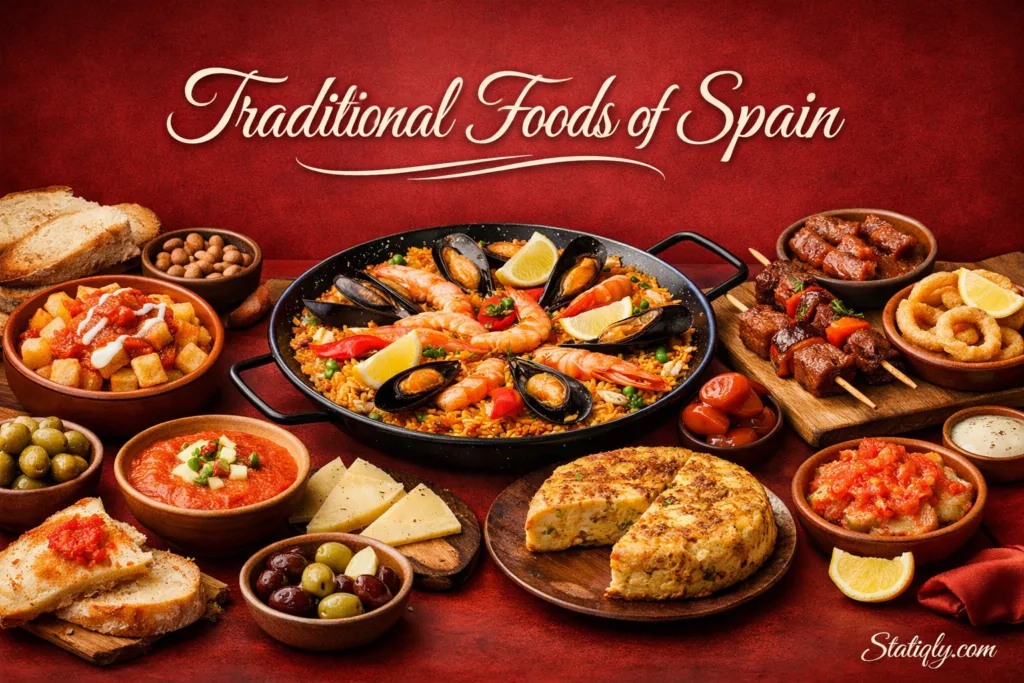
Gazpacho
Gazpacho is a chilled soup from Andalusia made with tomatoes, olive oil, garlic, and fresh vegetables. It tastes like summer in a glass. Clean, bright, and refreshing.
Regional Stars Worth Seeking Out
Spain’s regions cook with distinct accents. Try the same ingredient in two places and you might get two completely different stories on the plate.
Paella Valenciana
True paella valenciana is rooted in the Valencian Community and traditionally features rice, saffron, and meats like chicken and rabbit, plus local beans and green vegetables. If you’ve only had seafood versions, this can feel like a revelation—earthier, deeper, and very satisfying. Try it for lunch, and give it time. Paella isn’t meant to be rushed.
Fabada Asturiana
From Asturias, fabada is a slow-cooked bean stew enriched with cured meats such as chorizo and morcilla. The beans turn creamy, the broth turns silky, and the whole bowl feels like a cozy cabin—only tastier. It’s especially beloved when the air is cool.
Cocido Madrileño
Madrid’s signature stew blends chickpeas, vegetables, and meats in a long simmer. In many traditional settings it’s served in stages, starting with broth and moving toward the hearty parts. The best advice? Arrive hungry and let the meal unfold at its own pace.
Pulpo A La Gallega
Galicia brings the sea to the table with pulpo a la gallega: tender octopus seasoned with paprika, olive oil, and sea salt, often served with potatoes. Simple, rustic, and pure. If you love seafood, this is a must-try.
Pimientos De Padrón
These small green peppers from Galicia are blistered in olive oil and finished with sea salt. Most are mild. Occasionally one is spicy, which makes the plate feel like a playful game. Suprisingly addictive.
Escalivada
A Catalan favorite made from roasted vegetables like eggplant, red peppers, and onion, dressed with olive oil. Smoky, sweet, and effortless. Pair it with bread and you’ve got a light meal that still feels special.
Calçots With Romesco
Calçots are grilled spring onions enjoyed in Catalonia during their season, commonly dipped into romesco, a rich sauce built from roasted peppers, tomatoes, nuts, and olive oil. It’s messy in the best way. You eat with your hands, laugh a little, and wonder why more meals aren’t like this.
Sweet Endings And Snacks
Crema Catalana
This custard is perfumed with citrus zest and cinnamon, then topped with a thin layer of caramelized sugar. Crack the surface with your spoon and you get that perfect contrast: cool cream under a crisp snap.
Turrón
Turrón is Spain’s famous almond-and-honey nougat, strongly linked with the Alicante area. Some styles are soft and almost creamy; others are firm and crunchy. Either way, it’s a small bite that feels like a holiday even when it’s not one.
Churros Con Chocolate
Churros are crisp, ridged sticks of fried dough. The classic pairing is thick hot chocolate made for dipping, not sipping. It’s comforting, a little dramatic, and absolutely memorable.
Shop And Serve Spanish Ingredients At Home
If you want your kitchen to taste a bit more like Spain, you don’t need a suitcase full of specialty items. Start with a few essentials that pull a lot of weight.
- Extra-virgin olive oil: choose one you enjoy on bread or tomatoes, because you’ll taste it often.
- Smoked paprika (pimentón): brings instant warmth to potatoes, stews, and seafood.
- Saffron: a pinch goes far in rice dishes like paella.
- Sherry vinegar: brightens gazpacho, salads, and roasted vegetables without overpowering them.
- Queso Manchego: a firm sheep’s milk cheese from La Mancha, lovely in thin slices with fruit.
- Good bread: not optional. It’s the quiet hero of many Spanish tables.
A Quick, No-Stress Tapas Spread
Hosting friends? Keep it simple and let each plate do one job well.
- Slice Manchego and add a bowl of olives.
- Make tortilla española earlier, then serve it at room temperature.
- Roast peppers or serve escalivada with bread.
- Finish with fruit and a small plate of turrón pieces.
Friendly Allergy Notes
When you’re sharing many plates, it helps to ask a quick question before ordering. Most places are happy to guide you.
- Nuts can appear in sauces like romesco.
- Gluten is common in breaded tapas such as croquetas.
- Seafood dishes may share cooking spaces with other items in busy kitchens.
Whether you’re exploring Spain in person or recreating these flavors at home, let your next bite be guided by curiosity. Ask for one recommendation, share one plate, and enjoy how quickly the table starts to feel like a small celebration.