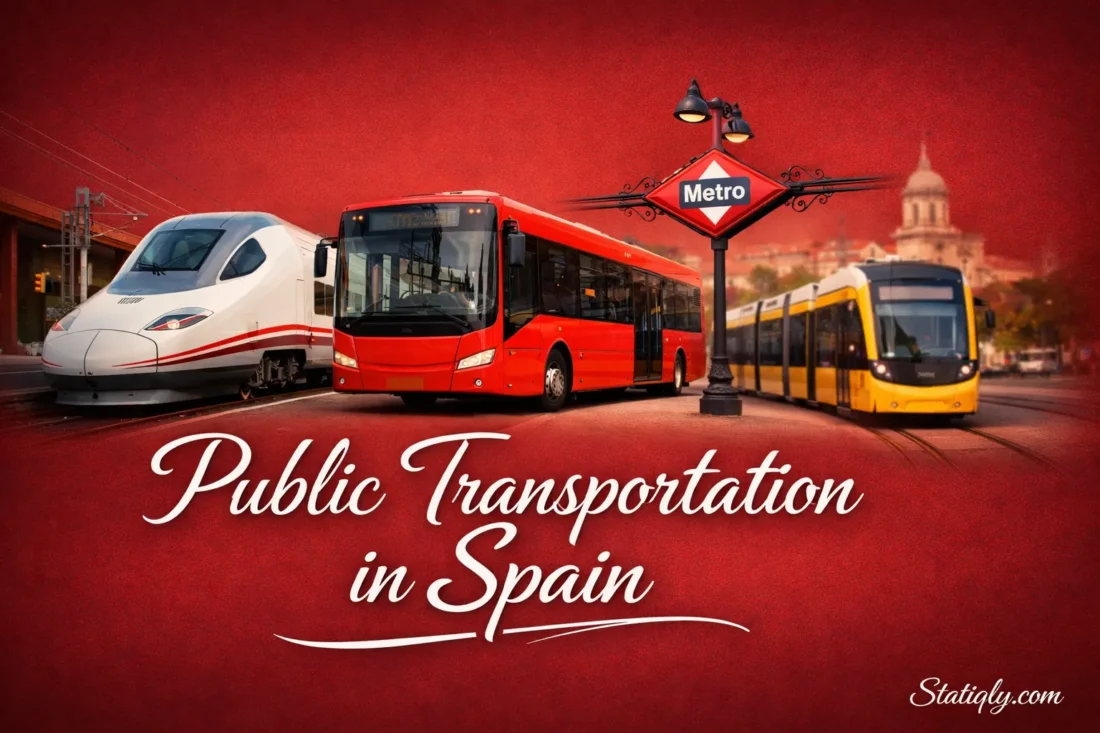
Spain’s public transportation feels like a well-tuned orchestra: metros keep the rhythm underground, buses fill the gaps on the surface, and trains stitch cities and regions together. Want to move smoothly without overthinking every step? This guide shows you how the system usually works, what to expect in different places, and the small habits that make rides easier.
Find What You Need, Fast
A Clear Overview of Public Transportation in Spain
Think of Spain’s transit as a layered map. Big urban areas rely on metro lines and frequent buses, metro areas add commuter rail, and longer journeys shift to intercity trains or coaches. Which layer fits your day?
| Mode | Where You’ll See It | Best For | How Ticketing Usually Works |
|---|---|---|---|
| Metro | Major cities and some regional capitals | Fast city travel, avoiding traffic | City/metro-area tickets, often zone-based |
| Urban Bus | Every city and town | Door-to-door coverage, neighborhoods | Single fares plus multi-ride passes (varies by city) |
| Tram / Light Rail | Selected cities and coastal corridors | Simple routes, smooth rides, easy transfers | Often integrated with metro-area tickets |
| Commuter Rail | Large metro areas | Suburbs, airports, day trips near big cities | Distance or zone fares; validation is common |
| Regional Train | Between nearby cities and provinces | Scenic routes, medium-distance hops | Ticket is typically tied to a route and time |
| High-Speed Train | Key city pairs across the country | Comfortable, time-saving intercity travel | Advance purchase is common; seats are reserved |
| Long-Distance Coach | Nationwide, including smaller towns | Direct routes where trains are limited | Reserved seat tickets; baggage rules vary |
| Ferry | Islands and some coastal links | Balearic and Canary connections, sea crossings | Booked by sailing; check-in time depends on route |
Tickets, Passes, and Validation Basics
Ticketing in Spain is friendly once you spot the pattern: cities handle local travel, and operators handle intercity routes. The details change by region, but these habits keep you on track.
What You’ll Buy Most Often
- Single tickets for one ride (handy, but not always the best value).
- Multi-ride tickets for flexible days with several trips.
- Day or multi-day passes when you plan to hop around a lot.
- Airport add-ons in some metro areas (depends on the line and city).
Validation Is the Quiet Rule
Sometimes you tap in at gates. Sometimes you validate a paper or card ticket at a small machine. On buses, you’ll often tap or show your ticket to the driver area. If you’re unsure, watch what locals do for five seconds. It’s like following footprints in fresh snow.
One more thing: on some services you can recieve your ticket as a QR code for scanning.
Pro move: if you’re staying several days in one area, ask station staff or check the official transport site for the most suitable pass. A little match-making up front can save you repeat purchases later.
Getting Around Cities: Metro, Tram, and Buses
Spain’s city networks are built for everyday life. You’ll see students, families, commuters, and visitors all sharing the same routes. That’s a good sign: when a system works for locals, it usually works for you too.
Metro Travel That Feels Effortless
In larger cities, the metro is the fastest way to cross town. Signage is generally clear, maps are easy to read, and stations are designed for steady flow. Ever notice how people move like water through a channel at rush hour? Follow that current and you’ll rarely get stuck.
- Look for line colors and end-of-line station names to confirm direction.
- Keep your ticket handy for exits in systems that require tapping out.
- If you have luggage, aim for wider gates and elevators where available.
Trams and Light Rail for Simple Routes
Where trams exist, they’re usually straightforward: fewer lines, fewer surprises, and stops that connect shopping streets, beaches, business districts, or residential zones. They can feel like a calm hallway compared to the metro’s busy lobby.
Buses That Fill Every Gap
Buses are the all-terrain option. They reach hills, smaller neighborhoods, and places the metro doesn’t touch. In many cities, real-time displays at stops and in apps make waiting feel predictable rather than random.
Small Bus Habits That Help
- When you board, move in and leave space near the doors.
- If a stop request button exists, press it early for the next stop.
- Have your ticket ready so boarding stays smooth for everyone.
Night Options When the City Stays Awake
Many cities keep late hours with a mix of night buses and extended weekend service on key routes. If you’re heading back after dinner or a show, check the last departures before you leave. It’s a tiny planning moment that can feel like a superpower.
Commuter and Regional Trains for Easy Day Trips
Commuter rail networks around major metro areas are a quiet gift. They connect city centers with suburbs, beach towns, and nearby destinations that make perfect half-day or full-day outings. Spain’s main commuter services are commonly known as Cercanías (and Rodalies in Catalonia), and they’re built for frequent, practical travel.
When Commuter Rail Shines
- Airport links and business districts outside the center
- Coastal day trips without driving
- Stadiums, university areas, and outer neighborhoods
Regional Trains for Nearby Cities
Regional services connect provinces and medium-distance routes. They’re a great choice when you want a steady ride, a clear schedule, and stations close to town centers.
If you’re buying a train ticket at a station, keep an eye on whether it’s tied to a specific time. Some services are flexible within a window, others are more fixed. A quick glance avoids surprises.
Traveling Between Cities: High-Speed Trains and Coaches
For longer distances, Spain gives you two dependable choices: high-speed trains for comfort and speed, and coaches for direct routes that can be very convenient.
High-Speed Trains That Feel Like Time Travel
High-speed services connect major city pairs with reserved seating and a calm, modern vibe. Spain’s network is served by multiple operators on certain corridors, including Renfe and competitors like Ouigo and Iryo on selected routes. The big advantage? You arrive close to the heart of the city, not far outside it.
- Choose your route and compare departure times.
- Book earlier when you can, especially on popular city pairs.
- Arrive with a small buffer for platform finding and boarding.
- Keep your ticket ready for scanning at gates or onboard checks.
Coaches for Direct Connections
Long-distance coaches are a strong option for smaller cities, rural areas, and routes where trains aren’t frequent. Stations can be simple, boarding is straightforward, and many services run direct without transfers.
Easy Boarding Checklist
- Confirm the correct bay or platform number.
- Keep your ticket and ID accessible if requested.
- Check luggage guidance for your operator, then relax.
Island and Coastal Connections by Ferry
Spain’s sea routes add another layer, especially for the Balearic and Canary Islands. Timetables depend on the specific route and season, but the overall rhythm is familiar: choose a sailing, book a ticket, and follow clear boarding steps at the port. On some coastal areas, you may also find short passenger boat links that feel like a scenic shortcut.
Planning Tools That Make Routes Simple
Want fewer “Wait, which way?” moments? Use two kinds of tools: local transit apps for real-time updates, and a map app for door-to-door routing.
- Official operator apps (city transport authorities, commuter rail, and long-distance rail) for service alerts and live times.
- Station screens for next departures and platform changes.
- Map routing to compare metro vs bus vs walking in one glance.
If you’re staring at two routes that look similar, pick the one with the simpler transfer. One clean connection often beats two “maybe” connections.
Comfort, Accessibility, and Small Courtesies
Public transportation works best when everyone plays their part. The good news? In Spain, the “rules” are mostly common sense. A few small moves go a long way, and they’re easy to copy.
Ride Smoothly
- Let people exit first, then board.
- Stand to the side of doors, especially on metro cars.
- On escalators, follow local cues for standing lanes.
Accessibility and Family Friendliness
Many modern stations include elevators, tactile paving, and clear signage. Priority seating is usually marked, and staff can often help with step-free routes. If you’re traveling with a stroller, luggage, or mobility needs, aim for stations labeled with accessible entrances and elevators.
Smart Ways to Save Time Without Stress
Saving time in Spain’s transit system usually means doing less, not more. Fewer ticket purchases. Fewer transfers. Fewer last-second decisions. Sounds nice, right?
- Choose one reloadable option when you’ll ride repeatedly in a city.
- Favor routes with one transfer over routes with multiple changes.
- When heading to a major station, arrive a little early and enjoy the calm.
- If you’re mixing sights, group places by neighborhood to reduce cross-town trips.
Two Simple Questions Before You Tap In
- Am I traveling within one city, or between cities? (This tells you whether you need a city pass or an operator ticket.)
- Do I need to validate or scan? (Watching the flow at the gate answers this instantly.)