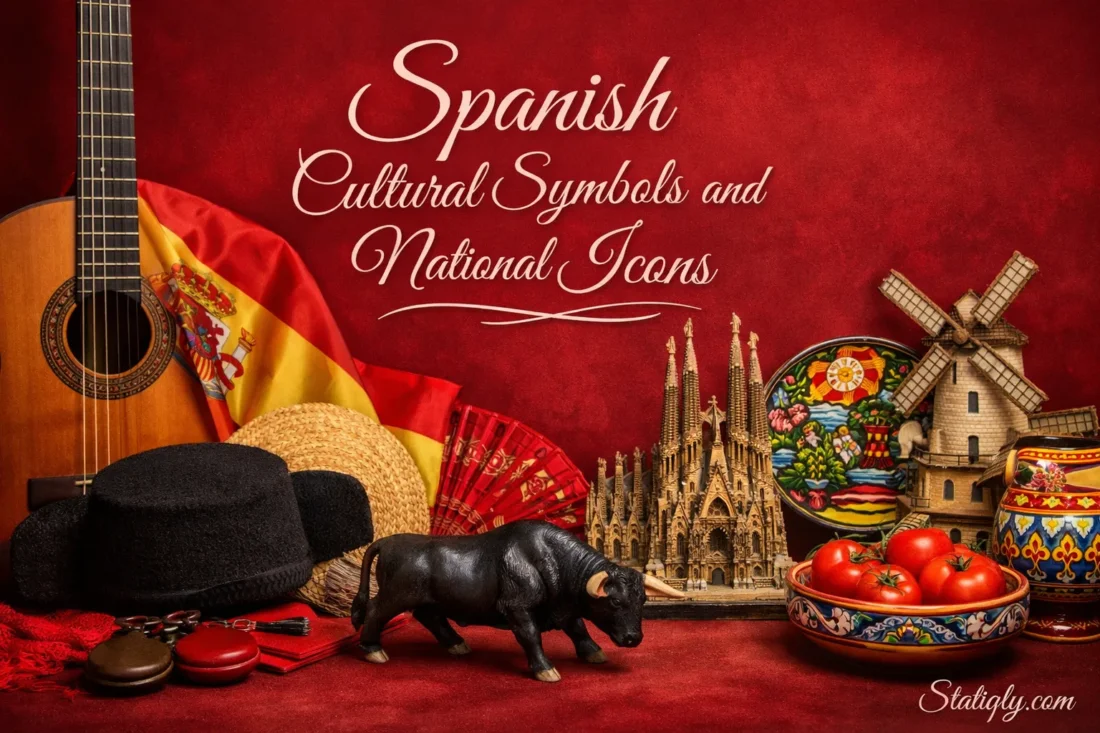
Walk through Spain and you’ll notice it fast: symbols are everywhere. On balconies, on ceramic tiles, in stadium chants, in the smell of olive oil warming in a pan. They work like a shared set of shortcuts—tiny signs that say, “You’re here.” Want to recognize them with confidence, without overthinking it? Let’s make Spain’s cultural symbols feel familiar.
A Handy Map Of Spain’s Best-Known Symbols
This table gives you a clean starting point. Use it like a “spotter’s guide” while you read the details below.
| Symbol | What It Is | Where You’ll Notice It | What It Often Signals |
|---|---|---|---|
| La Rojigualda | Spain’s national red-yellow-red flag | Balconies, public buildings, sporting events | Shared national identity |
| Coat Of Arms | Heraldic shield with “Plus Ultra” on columns | Flag details, passports, official seals | State representation and tradition |
| Marcha Real | Spain’s national anthem (instrumental) | Ceremonies, medal moments, major matches | Formal national moments |
| Castilian Spanish | The national language, used countrywide | Signs, menus, transport, media | Everyday communication |
| Flamenco | Song, guitar, and dance tradition | Andalusia, stages, festivals, cultural shows | Emotion, rhythm, artistry |
| Olive Oil | A defining ingredient and food culture marker | Homes, markets, tapas bars, groceries | Local taste and daily life |
| Azulejos | Decorative ceramic tiles and patterns | Courtyards, facades, metro stations | Craft, place, and style |
| Iconic Architecture | Landmarks that became visual shorthand | Skylines, postcards, travel routes | Regional character |
National Emblems You’ll See Everywhere
The Spanish Flag And Its Bold Simplicity
Spain’s flag is instantly recognizable: red, yellow, red, with the yellow band twice the height of each red band. Many people call it La Rojigualda, a nickname that points straight to those colors.
- Where it pops up: balconies, town halls, airports, and big community celebrations.
- A small etiquette tip: if you’re handed a flag at an event, treat it like a keepsake—fold it neatly and avoid placing it on the ground.
The Coat Of Arms And The “Plus Ultra” Motto
Look closely at official designs—especially the flag version—and you’ll spot Spain’s coat of arms. One detail stands out: two columns with the motto Plus Ultra (“Further Beyond”). It’s a compact message, like a compass that points outward.
- Where you’ll notice it: passports, government documents, some coins, and formal signage.
- How to recognize it fast: scan for the paired columns and the ribbon text.
Marcha Real, The Anthem Without Official Lyrics
Spain’s national anthem is Marcha Real, and it’s known for a distinctive trait: it has no official lyrics. That’s why you’ll often hear it as pure music—especially during formal moments and major sporting ceremonies.
Listening cue: if you’re in a stadium and the anthem starts, you’ll notice a quick shift in energy—people stand taller, conversations pause, and the moment becomes almost ceremonial.
Cultural Symbols That Shape Everyday Life
Food Icons You Can Actually Taste
Some symbols aren’t hung on walls—they’re served on plates. Spanish food culture is full of shared classics that travelers recognize in minutes.
- Paella (especially linked with Valencia): a rice dish that turns a meal into a gathering.
- Tortilla Española: potatoes and eggs, simple ingredients, big comfort.
- Tapas Culture: small plates that encourage sharing and conversation.
- Olive Oil: a daily staple that carries regional pride in flavor.
Here’s a helpful trick: if a menu highlights local olive oil, it’s often a quiet sign you’re in a place that cares about craft.
Flamenco, A Symbol Of Emotion And Rhythm
Flamenco is more than a performance style. It’s a cultural symbol that blends voice, guitar, and dance into one language of feeling. UNESCO recognized flamenco as Intangible Cultural Heritage in 2010, which helped spotlight its global cultural value.
- What to watch for: hand claps, footwork, and the call-and-response between musician and dancer.
- Best mindset: let it land slowly—flamenco often builds like a rising wave.
Azulejos And Patterns That Signal Place
Spain’s decorative tile tradition—often called azulejos—turns everyday spaces into visual storytelling. You’ll see repeating geometry, floral motifs, and bold color contrasts that feel instantly “Spanish,” especially in courtyards, train stations, and historic neighborhoods.
- Where to look: stairways, fountains, street name signs, interior patios.
- Why it matters: it’s design you live with, not design you only admire.
Landmarks That Became National Icons
Some places are so visually distinctive that they become symbols on their own. Even if you’ve never visited Spain, you may recognize the outlines—like a logo made of stone.
- Sagrada Família (Barcelona): Antoni Gaudí’s world-famous basilica with a one-of-a-kind silhouette.
- The Alhambra (Granada): intricate architectural artistry and calm, patterned spaces.
- Plaza Mayor (Madrid): a classic, grand square that frames local life and visitors in one scene.
A simple way to “read” a landmark: focus on one repeated detail—an arch shape, a tile pattern, a tower style. Your brain locks onto it fast, and suddenly the whole place feels easier to remember.
Festivals And Traditions With Strong Symbol Power
Spain’s calendar is packed with celebrations. Each one comes with its own visual language—colors, music, outfits, and local rituals that repeat year after year.
- Las Fallas (Valencia): towering artistic figures, parades, and a city-wide creative mood.
- Feria De Abril (Seville): traditional dress, dancing, and community gathering spaces.
- Carnival (Santa Cruz de Tenerife): costumes, music, and street energy with a playful spirit.
A Respectful Way To Join In
- Follow the local pace: watch first, then participate. It’s like learning a dance step by step.
- Ask before photographing close-ups: especially if someone is dressed in traditional clothing.
- Learn one greeting: a simple “Hola” and a warm smile go far.
Sports Colors And Shared Chants
Sports add a modern layer to national icons. You’ll see the flag colors in scarves and jerseys, and you’ll hear nicknames like “La Roja” used as a quick, affectionate shorthand in fan culture. It’s community in real time.
- What makes it symbolic: shared colors, shared songs, shared moments.
- Traveler tip: if you’re invited to watch a match, it’s an easy way to feel local for an evening.
Small Ways To Spot Symbols Like A Local
Want a simple game to play while you explore? Treat symbols like breadcrumbs. Each one tells you something about place, pride, and daily life.
On Streets And Buildings
- Look for tile patterns near entrances and fountains.
- Notice flag displays on balconies during big events.
- Scan official plaques for the coat of arms.
In Markets And Cafés
- Ask for a local olive oil suggestion if one is offered.
- Try one classic dish, then compare it in another region.
- Notice how tapas culture turns eating into social time.
A Mini Challenge For Your Next Walk
- Spot three uses of red and yellow in public spaces.
- Find one place where ceramic design appears outside a museum.
- Hear one moment of live music—street guitar, a small stage, or a festival rhythm.
- Try one everyday food icon: tortilla, churros, or a simple tapa.