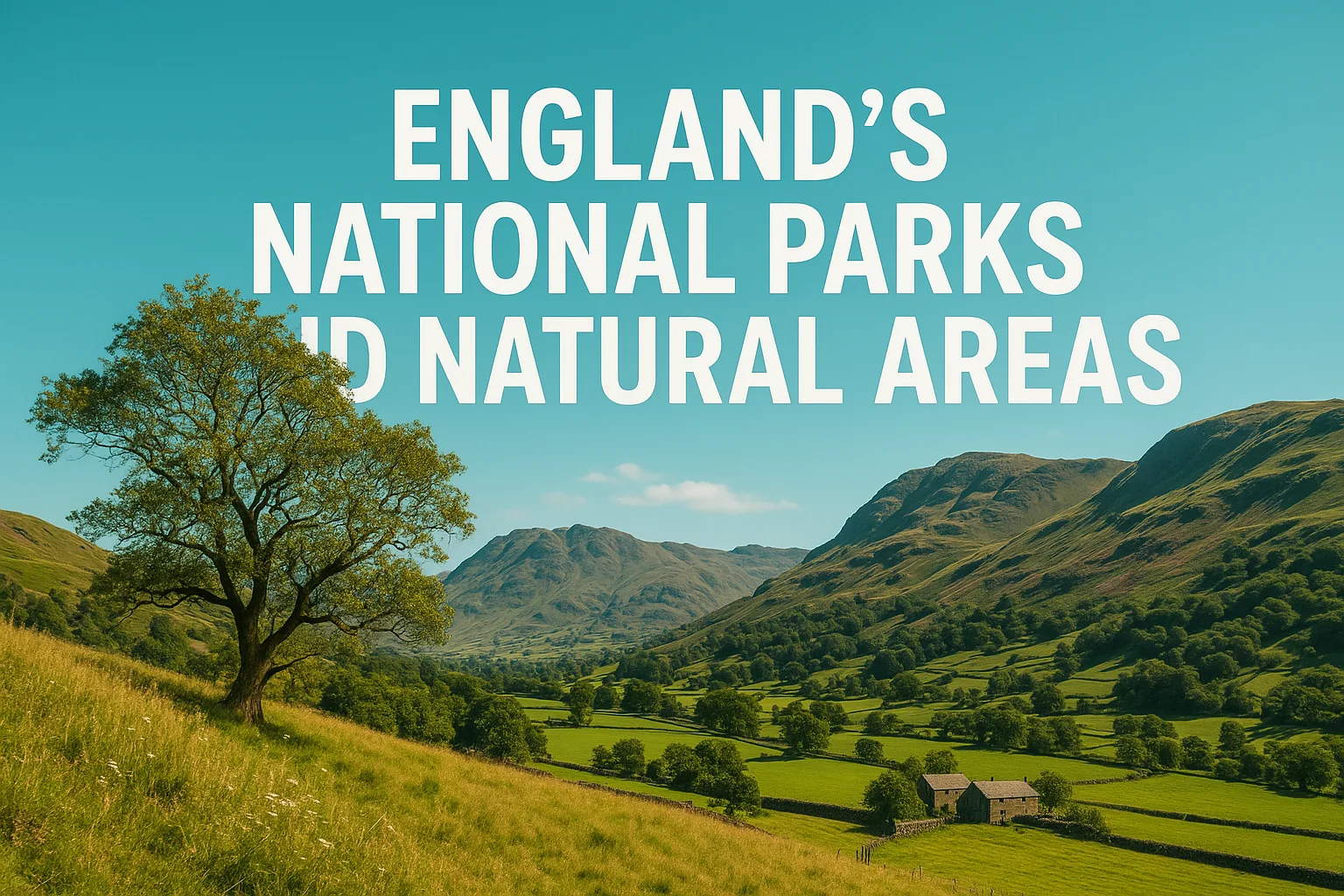
England’s National Parks and protected natural areas are the country’s breathing spaces: wild uplands, quiet wetlands, rolling downs, ancient woodland and soft sandy coasts. They are places where you can slow down, feel the wind on your face, watch clouds drift over distant hills – and remember that life is bigger than your inbox.
This guide walks you through England’s 10 National Parks and other key natural areas, how they are organised, what makes each one special, and how you can experience them in a simple, practical way – whether you’re planning a weekend escape or a longer nature-filled holiday.
Think of England’s National Parks as a giant outdoor wellbeing studio – only the ceiling is the sky and the soundtrack is birdsong.
Why England’s National Parks Matter
England’s National Parks are large protected landscapes cared for so that nature, local communities and visitors can all thrive together. They are living, working places, not fenced-off reserves – farmers, small businesses and villages sit alongside mountain ridges, moors, rivers and broad, open skies.
Across the UK there are 15 National Parks; 10 of them are in England. Each was chosen for its natural beauty, wildlife and cultural heritage, and each one offers miles of paths, cycle routes, rivers, lakes and viewpoints to explore.
What you’ll find in the parks
- Hundreds of walking trails – from flat lakeside loops to long-distance ridge walks.
- Cycling and mountain-biking routes through forests, dales and quiet lanes.
- Water activities like kayaking, sailing and gentle boat trips.
- Wildlife watching – red deer, seals, ponies, rare birds and more.
- Dark skies in places like Northumberland for spectacular stargazing.
Who they’re perfect for
- Families looking for easy, well-marked trails and picnic spots.
- Hikers and trail runners chasing big views and long days out.
- Nature lovers who enjoy birds, wildflowers and peaceful valleys.
- Photographers – sunrise ridges, mirror-calm lakes, dramatic coasts.
- First-time visitors to England who want to see the countryside beyond cities.
The official National Parks network highlights walking, cycling, horse-riding, boating and many other outdoor activities, making these areas some of the most accessible wild places in the country.
England’s 10 National Parks
Here is a quick overview of the 10 National Parks in England. Together they form a mosaic of mountains, moors, wetlands, forests and coastline:
| National Park | Main Region | Signature Landscapes | Typical Experiences |
|---|---|---|---|
| Lake District | North West England (Cumbria) | High peaks, deep lakes, stone-walled valleys | Mountain walks, lake cruises, classic villages |
| Peak District | Central England | Gritstone edges, limestone dales, rolling farmland | Day walks, rock climbing, cycling trails |
| Yorkshire Dales | Northern England | Green dales, waterfalls, dry-stone walls, caves | Valley walks, caving, waterfalls and scenic drives |
| North York Moors | North-East England | Heather moorland, cliffs, heritage steam railway | Coastal paths, moor walks, village pubs |
| Northumberland | Far North-East England | Remote hills, big skies, dark-sky reserve | Stargazing, long-distance hiking, historic sites |
| South Downs | Southern England | Chalk hills, rolling downs, white cliffs | Easy ridge walks, cycling, vineyard visits |
| New Forest | Southern England (Hampshire) | Ancient woodland, heath, free-roaming ponies | Family bike rides, gentle walks, wildlife watching |
| Dartmoor | South-West England (Devon) | Granite tors, high moors, rivers and woodland | Tor-top hikes, wild feeling moorland, local legends |
| Exmoor | South-West England (Somerset & Devon) | High cliffs, moorland, deep wooded valleys | Coastal paths, red deer, dark skies |
| The Broads | Eastern England (Norfolk & Suffolk) | Lakes, reedbeds, slow rivers, big skies | Boating holidays, birdwatching, waterside villages |
These 10 – Broads, Dartmoor, Exmoor, Lake District, New Forest, Northumberland, North York Moors, Peak District, South Downs and Yorkshire Dales – make up England’s share of the UK National Parks family.
Quick insight: The South Downs is now one of the most visited National Parks in the UK, with around 39 million visitor days each year, while the Lake District often tops popularity charts for walking routes.
Uplands and Lakes: Big Views & Classic Walks
If you picture rugged hills and mirror-calm lakes, you’re thinking of England’s upland parks – the Lake District, Peak District and Yorkshire Dales. Here the landscape feels dramatic yet welcoming, like a huge natural amphitheatre for walkers.
Lake District National Park
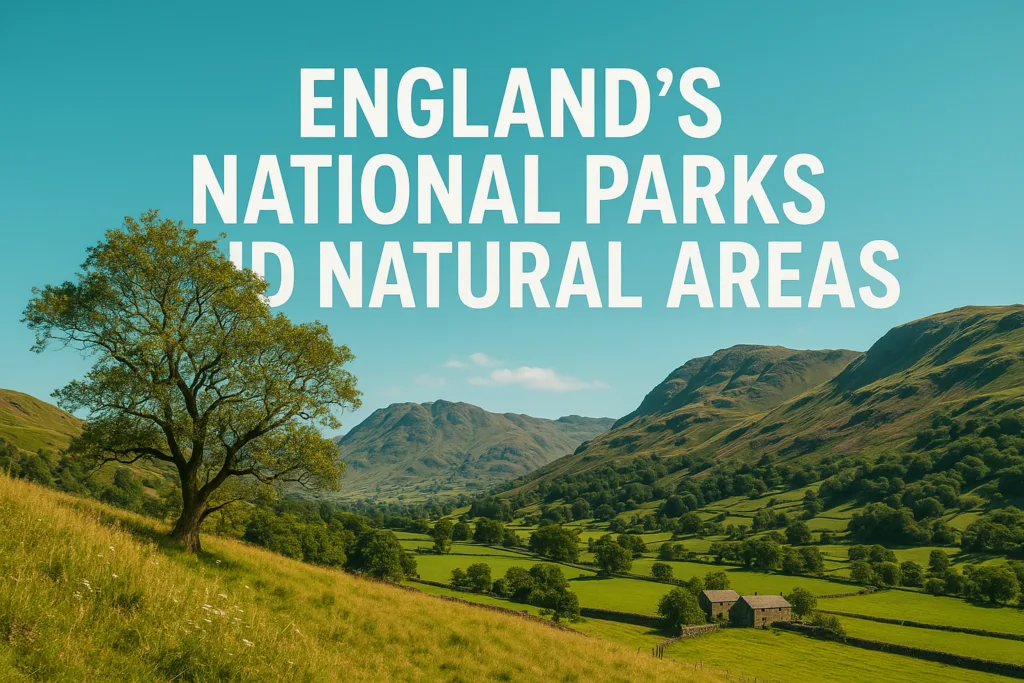
The Lake District in Cumbria holds England’s highest peak and some of its largest lakes. Valleys are stitched together with stone walls and dotted with sheep farms, creating a patchwork of greens and greys that changes with every cloud.
- Best for: Classic hikes, lakeside strolls, scenic boat trips.
- Don’t miss: A lakeshore walk around Derwentwater or Windermere at golden hour.
- Great for: First-time visitors who want the “postcard” English landscape.
Peak District National Park
The Peak District, England’s first National Park, lies in the heart of the country. It offers gritstone edges with sweeping views, gentle dales with riverside paths, and villages with stone cottages and cosy tearooms.
- Best for: Day walks, trail running, cycling on converted railway lines.
- Don’t miss: A walk along Stanage Edge or through Dovedale’s limestone gorge.
- Great for: Travelllers coming from major cities like Manchester, Sheffield or Nottingham.
Yorkshire Dales National Park
The Yorkshire Dales feel like a deeper dive into rural England: narrow lanes, barns in the fields, dry-stone walls climbing the hillsides. Waterfalls tumble into limestone pools, and wide dales open out like green corridors between the fells.
- Best for: Scenic road trips, valley walks, photography.
- Don’t miss: Waterfalls such as Aysgarth Falls or Ingleton Waterfalls Trail.
- Great for: Visitors who enjoy peaceful villages and slower-paced adventures.
Moors, Tors and Wild Plateaus
England’s moorland parks feel more open, wilder, sometimes mysterious – landscapes where legends sit alongside granite tors and purple heather.
Dartmoor National Park
Dartmoor is known for its rugged granite tors rising above rolling moorland. Rivers carve deep wooded valleys, while wild ponies graze across the open uplands.
- Highlights: Short climbs up tors like Haytor or Hound Tor for wide views.
- Atmosphere: Open, windy, a little mystical – especially on misty days.
- Ideal for: Walkers who want a “wild” feeling without remote expeditions.
Exmoor National Park
Exmoor blends moorland, dramatic sea cliffs and sheltered wooded valleys. You might walk from high heathery tops down to little harbours and pebble beaches in a single day.
- Highlights: Coastal stretches of the South West Coast Path, especially around Porlock and Lynmouth.
- Wildlife: Red deer, Exmoor ponies and excellent dark-sky stargazing.
- Ideal for: People who love both sea and hills in one trip.
North York Moors National Park
The North York Moors offer sweeping heather moorland that turns vivid purple in late summer, as well as a striking coastline with cliffs and small fishing towns.
- Highlights: Moorland walks, the heritage steam railway, coastal paths near Robin Hood’s Bay.
- Feel: Open, airy, with big skies and long views.
- Ideal for: Visitors who enjoy both history and wild scenery.
Ask yourself: do you want gentle valley paths and villages, or a more open, exposed landscape where the wind feels like a friendly challenge? The answer will gently point you toward either the dales or the moors.
Coast, Forest and Wetlands
Not all of England’s National Parks are about hills. Some are shaped by the sea, ancient woodland or waterlogged plains full of birds and reeds.
South Downs National Park
The South Downs stretch across southern England as a long ribbon of rolling chalk hills. On one side, green ridges; on the other, views toward the sea and distant towns.
- Best for: Gentle ridge walks, cycling, easy access from London and the South East.
- Don’t miss: Trails above the famous white cliffs near Beachy Head and Seven Sisters.
- Ideal for: First-time visitors who want big views without tough climbs.
New Forest National Park
The New Forest is a patchwork of ancient woodland, heathland and quiet villages, famous for its free-roaming ponies and gentle cycling routes.
- Best for: Family bike rides, wildlife spotting, relaxed picnics.
- Don’t miss: Early-morning or late-evening rides when ponies and deer are most active.
- Ideal for: Visitors with children or anyone who prefers flat, easy paths.
Northumberland National Park
Northumberland is one of the quietest National Parks, known for its Dark Sky Park status and sense of remoteness. Hilltops, open moorland and historic sites share the landscape with some of the clearest night skies in England.
- Best for: Stargazing, long-distance walks, peaceful escapes.
- Don’t miss: A clear night under the stars – pack a warm layer and a hot drink.
- Ideal for: Visitors who love quiet and big horizons.
The Broads
The Broads in Norfolk and Suffolk are a network of shallow lakes, rivers and reedbeds, with waterside villages and wide skies that reflect every colour of the sunset.
- Best for: Boating holidays, slow travel, birdwatching.
- Don’t miss: Sunrise or sunset from a boat – the water turns into a sheet of glass.
- Ideal for: People who prefer water-based adventures and relaxed exploring.
Beyond National Parks: England’s National Landscapes
Alongside National Parks, England has many other protected natural areas. For many years these were known as Areas of Outstanding Natural Beauty (AONBs). In 2023 they were rebranded as National Landscapes, a name that reflects their importance for nature, climate and people.
Famous National Landscapes include the Cotswolds, the North Pennines, the Chilterns and the Mendip Hills. They often sit close to major towns and cities, giving millions of people easy access to countryside views, walking routes and wildlife.
National Parks vs. National Landscapes (A Simple View)
- National Parks – larger areas with their own park authorities; strong focus on recreation, nature and local communities.
- National Landscapes – slightly smaller or more fragmented areas; often closer to urban centres but still very scenic and carefully protected.
The key idea is simple: both types of designation protect beautiful, important landscapes and give you more places to walk, cycle, paddle and breathe deeply.
Planning Your Visit: Simple, Practical Tips
1. Choose the right park for your style
- Love mountains and long hikes? Try the Lake District or Peak District.
- Prefer gentle countryside and villages? Head for the South Downs, New Forest or Yorkshire Dales.
- Want water-based adventures? The Broads are ideal for boats and slow travel.
- Chasing the quietest corners? Look at Northumberland or some of the National Landscapes like the North Pennines.
2. When to go
- Spring (March–May): Flowers, newborn animals, fresh green landscapes.
- Summer (June–August): Long days, warmer temperatures, busier trails.
- Autumn (September–November): Rich colours in forests and on hillsides.
- Winter (December–February): Quieter paths, crisp days – best if you’re prepared for cold and changeable weather.
3. Getting around safely
- Check the forecast before long walks; hills and moors can feel colder and windier than towns.
- Carry a simple map or offline app; signal can drop in remote valleys.
- Wear comfortable shoes with good grip – paths can be muddy after rain.
- Pack layers even in summer; weather can change fast.
- Respect signs and paths to protect wildlife and farmland.
4. Traveling kindly
- Leave no trace: take all litter home, use marked paths and car parks.
- Support local: buy from village shops, markets and small cafés.
- Share space: give animals, walkers and cyclists plenty of room.
- Listen: birds, wind in the trees, flowing water – they’re part of the experience.
Sample 3-Day Ideas for Different Types of Trips
A: Classic Lake District Escape
- Day 1 – Arrival & lake walk: Arrive in a valley village, stretch your legs on a short lakeshore path, dinner at a local inn.
- Day 2 – Hilltop views: Choose a well-known, way-marked fell such as Catbells for wide views without technical climbing.
- Day 3 – Gentle morning: Boat trip or easy riverside walk, then café stop before traveling home.
B: Relaxed South Downs & Coast
- Day 1 – Ridge walk: Catch a train to a downs town, walk a gentle section of the South Downs Way, enjoy sunset views.
- Day 2 – Cliffs & sea: Follow a coastal path above the white cliffs; pause often just to watch the waves.
- Day 3 – Villages & vineyards: Explore a market town, maybe visit a vineyard or farm shop before heading back.
C: Family-Friendly New Forest Break
- Day 1 – Short woodland walk: Settle into accommodation, take an easy loop through the forest.
- Day 2 – Cycling adventure: Hire bikes and follow one of the marked family routes on forest tracks.
- Day 3 – Wildlife morning: Look for ponies, birds and maybe deer before a relaxed journey home.
D: Slow-Travel Broads Journey
- Day 1 – Boat base: Arrive, stock up at a local shop, settle onto a small hire boat.
- Day 2 – On the water: Cruise between villages, stop for short walks, café visits and birdwatching.
- Day 3 – Sunrise start: Early-morning trip on quiet water, then return the boat and explore a nearby town.
Quick Planning Checklist
- Pick a park or National Landscape that fits your style and fitness.
- Check simple maps and a couple of marked routes in advance.
- Book stays with good trail or public-transport access if you don’t want to drive much.
- Pack layers, water, snacks and a small first-aid kit for longer days out.
- Leave some time with no plan at all – just to sit, listen and look.
Bringing It All Together
England’s National Parks and National Landscapes are like an open invitation: come outside, breathe, notice the details. One person might chase summits in the Lake District; another might drift along the Broads or cycle under New Forest oaks. Both are using these spaces in exactly the right way – in the way that works for them.
When you walk an old track, watch ponies on the heath or sit quietly by a moorland stream, you’re part of a longer story of people enjoying and caring for these landscapes. That mix of joy, respect and simple outdoor time is what keeps England’s parks and natural areas alive for the next visitor – and for the next generation who will come to explore.