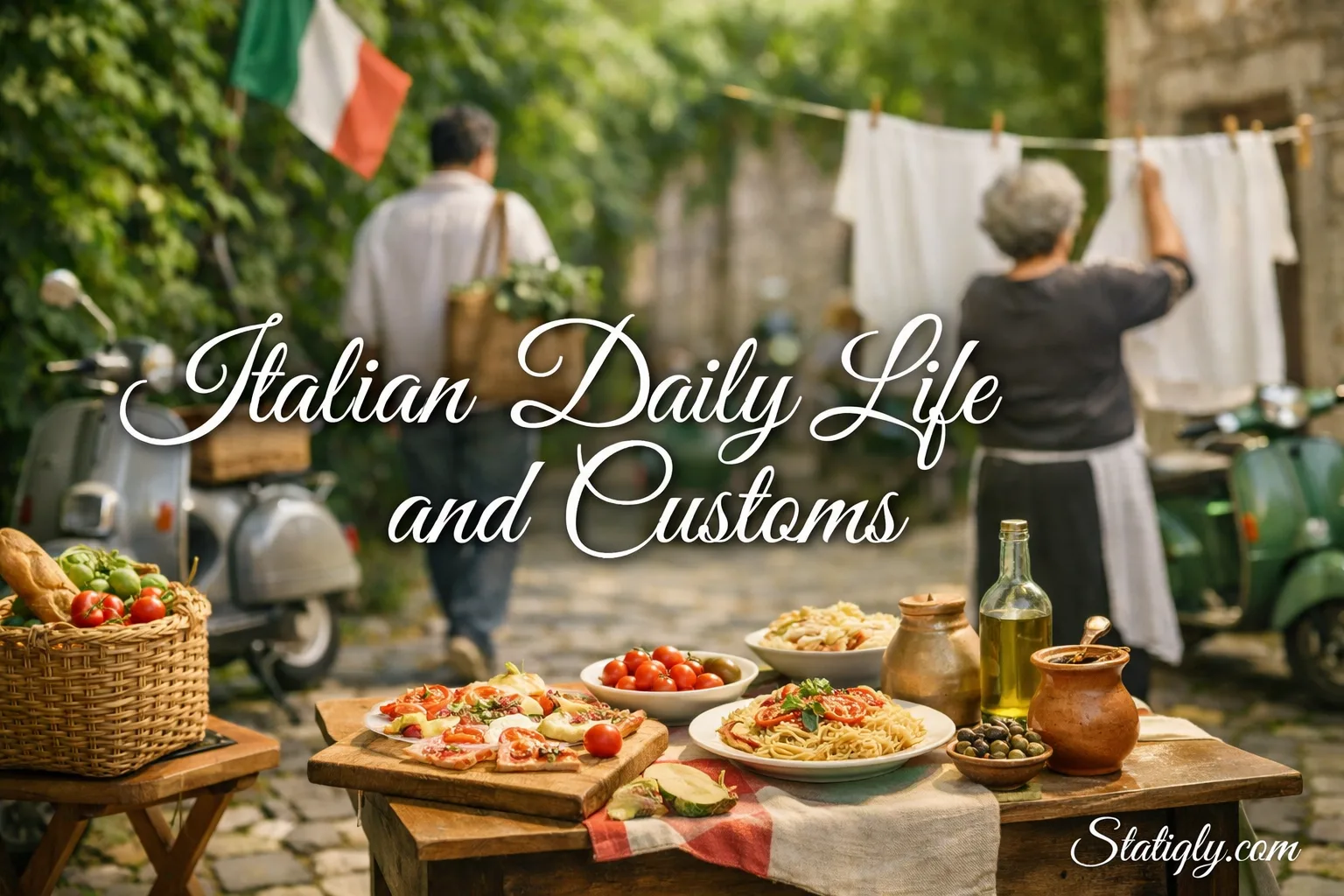
Italy’s daily life has a quiet rhythm—not rushed, not lazy, just intentional. You’ll notice it in the way people greet each other, how coffee is treated like a quick ritual, and how meals feel less like “fuel” and more like a shared moment. Want to blend in without trying too hard? Learn the small customs that locals follow without thinking, the same way you don’t think about tying your shoes.
A Simple Map Of Italian Daily Habits
Use this as a friendly reference. Italy has regional variety, so think “often”, not “always”.
- Greetings and everyday politeness
- Meal timing, coffee culture, and table manners
- Shopping, opening hours, and the midday pause
- Dress, social life, and the evening stroll
- Helpful etiquette tips for visitors and newcomers
Greetings, Personal Space, and Everyday Politeness
In Italy, a greeting is more than a formality—it’s a tiny signal that says “I see you.” Walk into a small shop and a warm buongiorno can change the whole mood. Ever notice how a room feels friendlier when someone acknowledges you first? Italy leans into that.
Common Greetings
- Buongiorno: daytime greeting (shops, hotels, neighbors)
- Buonasera: later in the day, especially in the evening
- Ciao: friendly and casual (save it for people you’re comfortable with)
Small Polite Moves
- Say permesso when passing close by someone.
- Use per favore (please) and grazie (thank you) freely.
- If you bump someone, a quick scusi helps smooth it out.
Personal space exists, but social warmth is normal. You may see animated hand gestures, but they’re usually just emphasis, like underlining a sentence. If you’re unsure, mirror the other person’s tone and distance. That simple habit works in almost any region.
A Day’s Flow Without A Stopwatch
Italian daily life can feel like a piece of music: verses (work and errands), then a chorus (food, conversation, a walk). It’s not about doing less—it’s about placing people and meals where they belong: right in the middle of the day.
- Morning: quick coffee, commuting, getting things moving
- Midday: lunch is meaningful, not an afterthought
- Afternoon: work, errands, and often a calmer pace
- Early Evening: social time begins to bloom
- Night: dinner later than many visitors expect
Why This Matters
If you plan errands like you would at home, you might hit closed doors and empty counters. If you plan with the local rhythm, the day feels easy. That’s the secret sauce.
Meals, Coffee, and The Italian Clock
Food customs in Italy are practical, social, and quietly strict in the best way. Not strict like rules in a textbook—more like traffic patterns. People follow them because it keeps the day smooth.
| Moment | Often Happens Around | What It Feels Like | Easy Local Tip |
|---|---|---|---|
| Colazione (Breakfast) | Early morning | Light and quick | Try a pastry and coffee without turning it into a long sit-down meal. |
| Pranzo (Lunch) | About 13:00–14:30 | The day’s anchor | Restaurants may get busy; arrive a bit earlier if you like calm. |
| Merenda (Snack) | Mid-afternoon | A small pause | Keep it simple: fruit, something small, or a coffee. |
| Aperitivo | Early evening | Social warm-up | You can choose a soft drink too; the real point is the chat. |
| Cena (Dinner) | Often 20:00–22:00 | Unhurried | Don’t show up too early; many places open for dinner later. |
Now, about coffee. Espresso is often treated like a comma, not a paragraph—short, purposeful, and perfectly placed. Many people drink it standing at the bar, exchange a few words, and move on. If you sit at a table, you may pay more in some touristy areas. Not a trap, just a different way of pricing service and space.
Coffee Habits That Surprise Visitors
- Cappuccino is commonly a morning choice.
- Espresso shows up any time, even after meals.
- If you want “coffee with milk” later, asking for caffè macchiato can feel more natural.
At The Table (Simple Manners)
- Meals are often enjoyed at a steady pace—no need to rush the last bite.
- “Buon appetito” is a friendly opener, like saying “let’s enjoy this.”
- Keep your voice warm, not loud; conversation is part of the meal.
One more detail: bread is common, but it’s not always treated as an automatic side dish in every setting. If you see it offered, enjoy it naturally. If you don’t, no need to ask as if something is missing. Think of it like arriving to a friend’s house: you don’t rearrange their living room—you settle in.
Shopping Hours, Daily Errands, and The Midday Pause
In many Italian towns and neighborhoods, you’ll run into a midday break that can feel like the city is taking a deep breath. Some smaller shops may close for a few hours and reopen later. Larger supermarkets and big-city areas often keep longer hours, but the “pause” still shows up in how people plan their day.
How To Plan Errands Without Stress
- Handle important errands in the morning.
- Assume a slower pace around lunchtime.
- Use late afternoon for shopping, then shift to social time.
Markets are their own world—full of color, small talk, and seasonal produce. If you try just one thing, try this: greet first, then ask. That tiny rhythm—hello → request → thanks—feels natural in Italy and often gets you a friendlier response.
Home Life, Family Time, and Everyday Social Warmth
Family and close friendships often shape the weekly rhythm. It’s common to see multiple generations spending time together, especially around meals. The feeling is less “schedule” and more tradition—like a well-worn path through a garden.
- Invitations can be warm and spontaneous. A simple “yes, thank you” goes a long way.
- When visiting someone’s home, bringing a small gesture can be appreciated. Keep it simple and cheerful.
- Conversation is usually lively. Listening well is valued just as much as speaking.
And yes, the famous Italian hand gestures exist, but don’t treat them like a performance. Think of them as punctuation. You don’t need to copy them to be understood. Be yourself; just be present.
Dress, Style, and First Impressions
Italian style is often less about flashy labels and more about fit, clean lines, and looking put together. You don’t need a new wardrobe. Small choices carry weight: clean shoes, neat basics, and clothes that match the setting.
Easy Style Wins
- Choose comfortable but tidy outfits for walking cities.
- Keep one slightly nicer option for evenings out.
- In many places, beachwear belongs at the beach. In town, go for casual-but-neat.
Why It Works
Dressing appropriately is a form of respect—like arriving on time. It tells people, “I care about this moment.”
Evenings, The Stroll, and Social Life
In many communities, evenings open up like a flower. People meet, walk, talk, and reconnect. The evening stroll—often called passeggiata—isn’t exercise with a goal. It’s social glue. You’re not “going somewhere.” You’re being around.
- Expect more life in streets and squares after the sun softens.
- Meeting friends can start with something small—coffee, gelato, a light bite, or just a walk.
- Conversations can feel animated. That’s often enthusiasm, not anger.
If you’re visiting, this is a great time to do what locals do: slow down. Watch the street. Listen to the sound of cups clinking. It’s like the city is exhaling, and you get to exhale too.
Practical Etiquette You Can Use Today
This section is the “do it tomorrow” part. Nothing complicated. Just small choices that make interactions smoother and more pleasant. (And yes, these tips work even if you only know a few Italian words.)
In Cafés
- Say hello before ordering. It feels human.
- If it’s busy, keep your order simple and clear.
- Take your cue from locals: stand at the bar for a quick coffee, sit when you want to linger.
In Shops
- Start with buongiorno or buonasera.
- If you need help, ask politely and wait a beat. No need to rush the exchange.
- End with grazie, even for small things.
In Restaurants
- Expect a calmer pace. Meals can be a conversation, not a sprint.
- Ask questions if you’re unsure—staff usually appreciate genuine curiosity.
- If you need the check, politely request it; it’s not always dropped automatically.
Mini Phrase Kit (Tiny, Useful, Real)
| Buongiorno | Hello / Good day |
| Buonasera | Good evening |
| Per favore | Please |
| Grazie | Thank you |
| Scusi | Excuse me |
| Permesso | May I pass? |
Learn these and you’ll sound polite fast. That alone can open doors—sometimes literally.
Regional Variety, Without The Confusion
Italy is one country with many flavors. Customs can shift from one place to the next—meal times, greetings, even how chatty a shopkeeper feels on a rainy day. If you remember one idea, remember this: follow the room. Italians are usually generous with visitors who show good will.
- If a place feels formal, use more formal greetings and tone.
- If a place feels casual, relax—but keep your politeness.
- If you’re unsure, a soft smile and scusi can rescue the moment.
Somtimes the most “Italian” thing you can do is simply not force it. Let the day guide you, the way you’d follow a shoreline when you don’t know the city yet.
A Warm Ending: Living Like A Local, Gently
Italian daily life isn’t a performance. It’s a collection of small choices: greeting first, eating with attention, dressing with care, and making time for people. Try a few customs at a time. See what fits. And if you make a tiny mistake? Most locals respond to effort with kindness. That’s the real custom worth remembering.