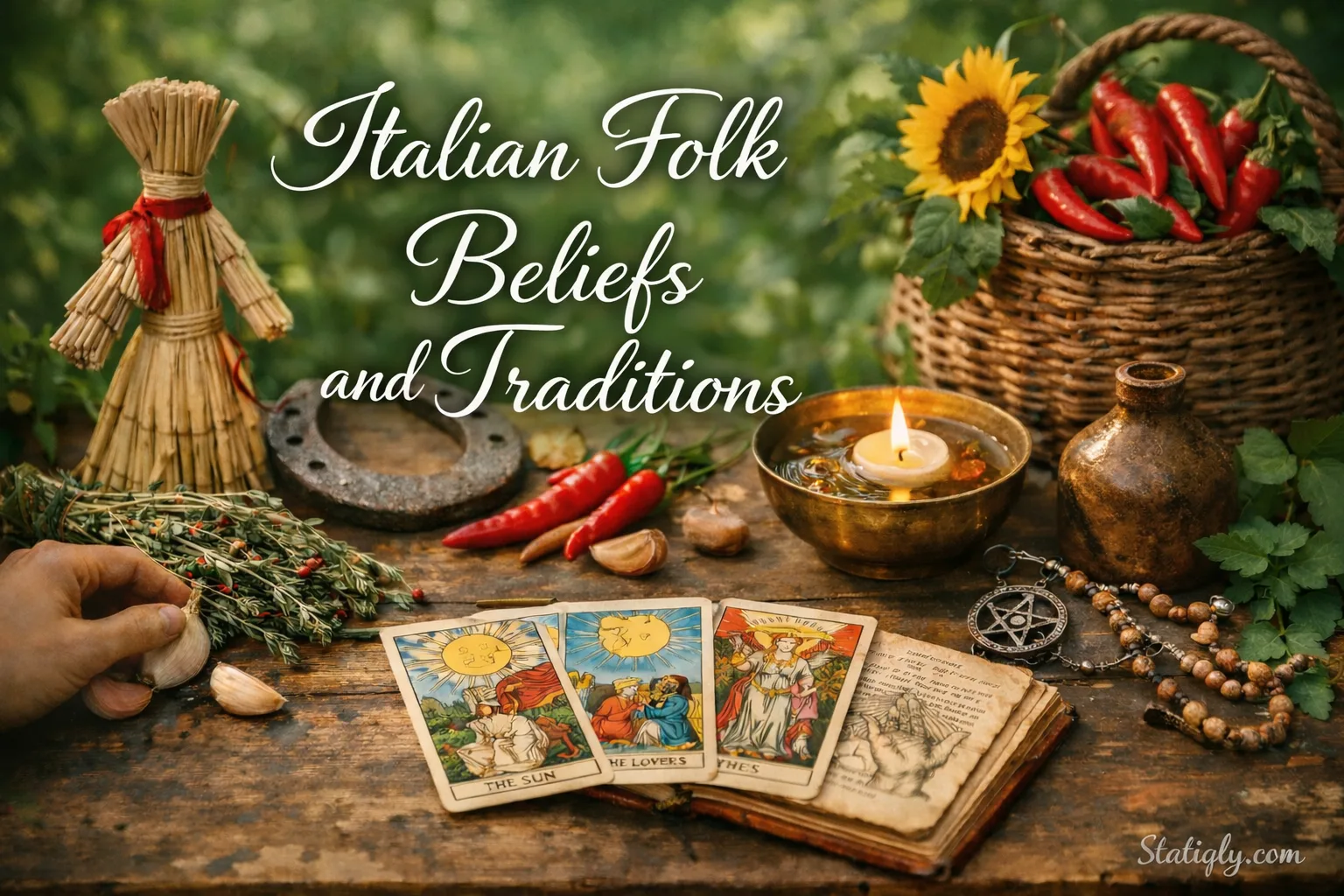
Italy’s folk beliefs and traditions aren’t tucked away in museums. They live in a glance from a nonna, a tiny charm on a keyring, a phrase whispered before a big day, and the way a town changes mood when a festival arrives. If you’re curious, you’ll notice something quickly: these customs are less about “rules” and more like small everyday rituals that make life feel warmer, safer, and a little more meaningful.
Where Folk Beliefs Live Today
Italian folk tradition is wonderfully local. What feels “normal” in one valley might be a curiosity two towns away. That’s part of the charm: beliefs travel through families, marketplaces, and neighborhood friendships, changing shape like a river that keeps the same name but never the same water.
You’ll often see traditions show up in three places:
- Home life: small habits around meals, guests, and special dates.
- Street life: festivals, saints’ days, seasonal markets, and community events.
- Language: idioms that carry old beliefs in a modern voice.
A Helpful Way To Think About It
Many Italian customs work like social glue. They give people an easy way to say: “I care about you,” “I’m hopeful,” or “Let’s start fresh.” Isn’t it comforting when a culture leaves you little tools like that?
Malocchio, Charms, and Gentle Protection
One of the most famous Italian folk beliefs is malocchio, often described as the “evil eye.” In everyday conversation, it’s less scary than it sounds. It’s a way of talking about envy, intense attention, or the feeling that luck has gone a bit wobbly.
Because the idea is so widespread, you’ll also see a whole world of protective symbols. Some are worn, some are hung at home, and some simply appear in gestures and sayings.
The Red Horn Charm
The cornicello (a small horn-shaped amulet, often red) is especially associated with Southern Italy. You’ll spot it on necklaces, keychains, and even shop signs. Many people treat it as a friendly “luck companion,” the way you might carry a favorite coin or bracelet.
The Eye Symbol
You may also notice an eye motif in jewelry or home decor—an easy, recognizable sign linked to protection. In many families, it’s simply “a nice thing to have around,” especially for children and new beginnings.
Another everyday habit you’ll hear about is toccare ferro (“touch iron”). It’s Italy’s close cousin to “knock on wood,” and it’s used in the same moment: right after someone says something hopeful and doesn’t want to jinx it.
| Symbol Or Habit | Where You’ll See It | What It Expresses | Visitor Tip |
|---|---|---|---|
| Cornicello | Jewelry, keychains, shops (often in the South) | Luck, protection, warm wishes | Buy from local artisans when possible; ask about materials and meaning. |
| Eye Motif | Bracelets, home charms, souvenirs | “Keep good energy close” | It’s usually a friendly symbol—still, be respectful and avoid joking about it. |
| Toccare Ferro | Conversation, daily life | Hope without tempting fate | If someone does it, smile and follow their lead—no need to overthink it. |
| Small Ritual Gestures | Family moments, big events | Comfort, reassurance | Observe first. If you’re unsure, a simple “Is there a story behind that?” works well. |
Lucky Numbers, Little Rules, and Everyday Phrases
Italian folklore is full of tiny “rules” that people mention with a grin. They’re often shared like family recipes: half serious, half playful, always personal.
Numbers With Personality
- 17 is widely seen as unlucky in Italy.
- 13 is often treated as a lucky number.
It’s amazing how a number can feel like a character in a story, isn’t it?
Classic “Don’t Do That” Moments
- Opening an umbrella indoors is often frowned upon.
- Spilling salt can spark a quick little reaction.
- Some families avoid placing bread upside down on the table.
Then there are the phrases—short, memorable, and full of cultural sparkle. One you may hear often is in bocca al lupo, used to wish someone good luck. A traditional reply is crepi or crepi il lupo. It’s like Italy’s version of handing someone a lucky match before a big performance.
Seasonal Traditions That Shape The Calendar
In Italy, the year often feels like a necklace of celebrations—each bead a local tradition, each clasp a moment where the community comes back together. Some dates are famous nationwide, others are deeply tied to a single town or region.
Winter: La Befana and New Year’s Hopes
La Befana arrives for Epiphany on January 6, bringing a beloved folklore figure into family life. Children hang stockings, and the mood feels cozy—like the holidays get one last friendly wink before everyday routines return.
New Year’s traditions often lean into optimism. Many Italians wear red underwear for luck, and a classic celebratory plate is lentils with cotechino (lentils symbolizing “coin-like” abundance).
Spring: Pasquetta Picnics and Flower Carpets
Pasquetta (Easter Monday) is widely known as a day for getting outdoors—picnics, short trips, and relaxed time with friends. It’s simple, joyful, and very Italian: good food, fresh air, no rush.
In some places, spring also brings infiorata events, where streets become temporary art with detailed flower-petal carpets. These displays are often treated with real pride—like the whole town is quietly saying, “Look what our hands can do.”
Summer: Acqua Di San Giovanni and Ferragosto
A beautiful midsummer folk practice is Acqua di San Giovanni, linked to the night of June 23 and the feast day on June 24. In places where it’s kept alive, herbs and flowers are gathered and left in water overnight outdoors, connecting the ritual to dew, moonlight, and seasonal change.
Later in summer, Ferragosto (August 15) marks a major pause in the Italian calendar. Many people head to the sea, mountains, or family homes. Even cities feel different—quieter, sun-soaked, pleasantly unhurried.
| Season | Tradition | What It Feels Like | Easy Way To Experience It |
|---|---|---|---|
| Winter | La Befana (Jan 6) | Family warmth, folklore, sweet treats | Visit a local market; look for Befana sweets and decorations. |
| Late December | Red Underwear + Lentils | Optimism, “fresh start” energy | Try lentils in a trattoria; ask what locals eat for luck. |
| Spring | Pasquetta | Outdoor joy, easy togetherness | Plan a park picnic with simple local foods. |
| Spring/Early Summer | Infiorata | Community pride, temporary beauty | Observe respectfully; avoid stepping on floral carpets. |
| Midsummer | Acqua di San Giovanni (Jun 23–24) | Nature, renewal, seasonal rhythm | Ask locals if the tradition is practiced nearby. |
| Summer | Ferragosto (Aug 15) | Rest, sunshine, family time | Book ahead for coastal areas; enjoy the slower pace. |
Music, Dance, and Storytelling
Italian folk tradition isn’t only about charms and dates. It’s also carried in sound—songs, proverbs, and dances that turn a gathering into a shared memory.
In Southern Italy, forms of the tarantella are among the best-known folk dances. The rhythm is quick, bright, and social. Even if you don’t dance, you can feel what it does: it pulls people into the same heartbeat, like a conversation without words.
Listen For These Folk Details
- Proverbs that sound like tiny life lessons.
- Call-and-response moments at festivals and dinners.
- Tambourines and clapping that turn on the party switch instantly.
How To Join In Respectfully
Want to experience Italian traditions without feeling like you’re performing them? Great instinct. The best approach is gentle curiosity—like stepping into a friend’s home and letting the atmosphere teach you.
- Ask simple questions: “Is this a local tradition?” opens doors fast.
- Follow the room: if people are quiet and respectful, mirror that mood.
- Treat symbols kindly: charms and rituals are meaningful to many families.
- Support local craft: a small artisan purchase can be more meaningful than mass souvenirs.
- Protect community art: for events like infiorata, never step on the designs.
One more tip that saves thier day: if you’re invited to something, bring appreciation more than opinions. A warm “Thank you, this is beautiful” fits almost everywhere.
Bring The Spirit Home
You don’t need a suitcase full of souvenirs to keep the feeling. Try one small, fascintating habit instead:
- Cook a simple bowl of lentils when you want a “fresh start” meal.
- Learn one warm phrase, like in bocca al lupo, and use it sincerely.
- Keep a tiny object that reminds you of Italy—like a charm or a shell—and treat it as a memory anchor.