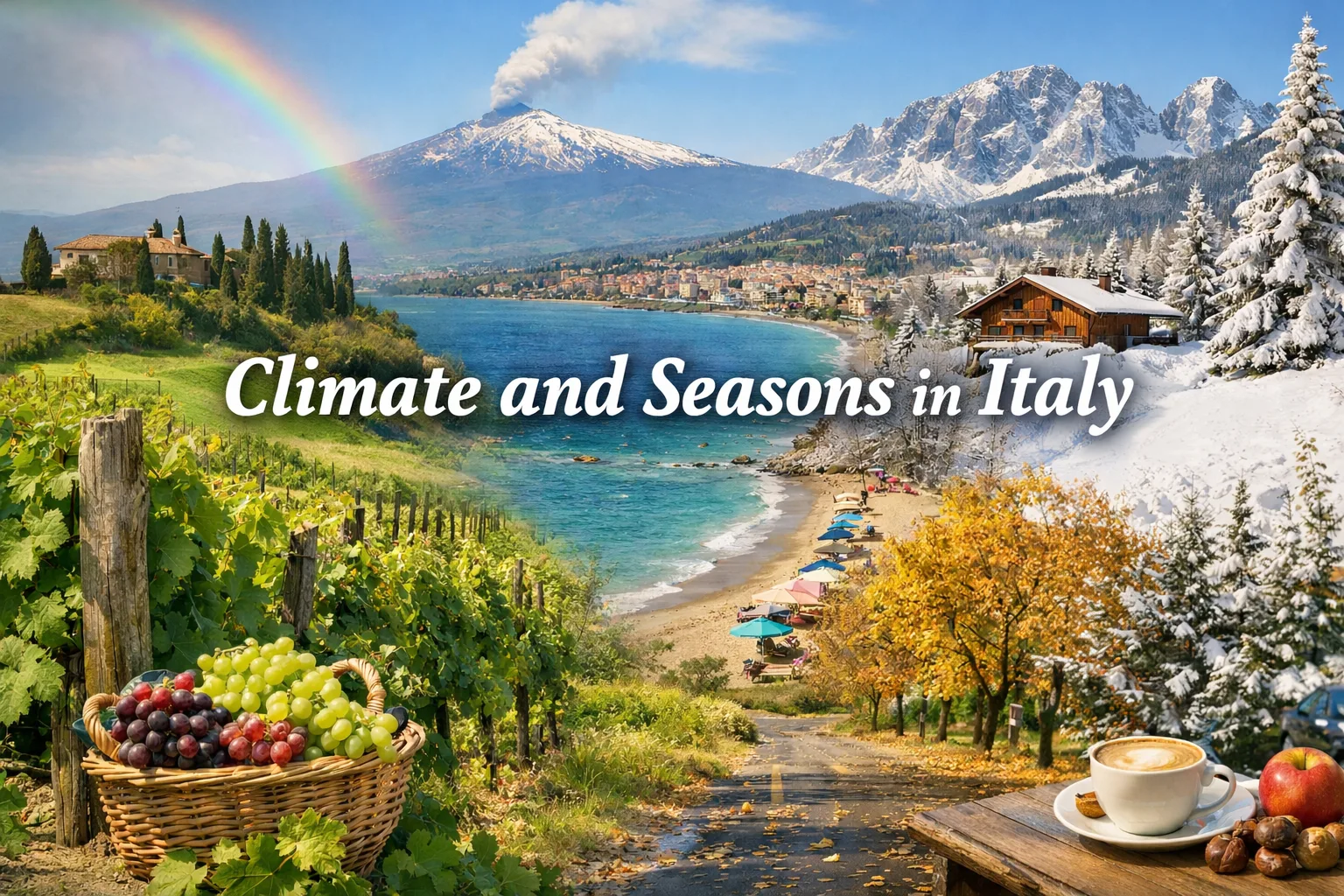
Italy doesn’t have one climate. It has a whole collection. In the same week, you can sip espresso in a mild coastal breeze, then spot snow on distant peaks. Sounds like a lot to keep track of? It is—until you learn the simple pattern behind Italy’s seasons and microclimates.
Fast Take: Italy’s weather is shaped by latitude, mountains, and two seas. Learn the zones, then match your plans to the season.
Why Italy’s Climate Feels Like Many Countries
Think of Italy as a climate mosaic. A few big pieces create most of the picture:
- North vs. South: The farther south you go, the more you feel the Mediterranean influence.
- Mountains: The Alps and Apennines act like tall walls that redirect winds and trap moisture.
- Coasts vs. Inland: Sea air softens temperature swings, while inland areas heat and cool faster.
- Valleys and Plains: Lowlands can hold fog, humidity, or summer heat like a bowl.
So yes, “What’s the weather like in Italy?” is a bit like asking, “What’s the flavor of an Italian gelato shop?” There’s more than one scoop.
Italy’s Main Climate Zones
Alpine And Pre-Alpine North
Up near the Alps, seasons feel crisp and clear. Winters are colder, and snow is common at higher elevations. Summers stay pleasantly mild in many mountain towns—perfect when you want fresh air that feels like it’s been rinsed.
- Best vibe: Cool evenings, bright skies
- Common pattern: Big day-to-night temperature change
The Po Valley Plain
The wide plain around cities like Milan and Bologna can feel more humid. Winter often brings fog and still air. Summer can be hot, with warm nights that linger.
- Best vibe: Spring blooms and early autumn clarity
- Common pattern: Hazy mornings, warmer-feeling heat
Apennine Highlands
Italy’s spine—the Apennines—creates cooler pockets, sudden showers, and snow in winter at higher altitudes. Even in summer, mountain villages can offer a refreshing break from coastal warmth.
- Best vibe: Sunny days, cooler nights
- Common pattern: Quick weather changes—pack layers
Coastal Belts: Tyrrhenian And Adriatic
Coasts enjoy the sea’s “soft blanket” effect. Winters are usually gentler than inland areas. Summers are sunny and bright, with breezes that can make a warm day feel easier on the skin.
- Best vibe: Long light, beach-friendly days
- Common pattern: Breezier evenings—bring a light layer
Southern Italy And The Islands
Down south, the Mediterranean rhythm becomes clearer: mild winters, early springs, and summers that love the spotlight. Coastal areas stay comfortable longer into autumn, which is why September can feel like a secret encore.
- Best vibe: Warm shoulder seasons, sea air
- Common pattern: Strong sun—shade breaks feel wonderful
Seasons in Italy: What Each One Really Feels Like
Spring (March To May)
Spring is Italy waking up and stretching. Days get longer, terraces reopen, and air starts to smell like fresh leaves. The north warms later than the south, and rain can pop in briefly—especially in April.
- Expect: Mild afternoons, cooler evenings
- Wear: Light jacket, comfortable shoes, a compact umbrella
- Love it for: City walks, gardens, countryside drives
Summer (June To August)
Summer is bold. Coastal towns glow, and late sunsets stretch the day like taffy. Inland cities can feel warmer, while mountains stay cooler and crisp. If you’re wondering, “Will it feel hot?” In many places, yes—so plan like locals do: shade, water, and slower afternoons.
- Expect: Strong sun, warm nights in some areas
- Wear: Breathable fabrics, hat, sunglasses, sunscreen
- Love it for: Beaches, islands, evening strolls by the water
Autumn (September To November)
Autumn is the gentle storyteller. The heat eases, the light turns golden, and many regions feel comfortably alive outdoors. Early autumn stays warm near the sea, while November can bring more rain—especially in parts of the north and along some coasts.
- Expect: Pleasant days, cooler nights
- Wear: Light layers, a rain-ready jacket
- Love it for: Harvest season vibes, scenic drives, outdoor dining
Winter (December To February)
Winter depends on where you stand. Alpine areas are built for snow, while many coastal cities stay relatively mild. Inland and northern plains can feel colder, especially with fog or damp air. Want an easy rule? Higher usually means colder.
- Expect: Crisp air, shorter days, quieter streets
- Wear: Warm coat, scarf, waterproof shoes
- Love it for: Mountain escapes, cozy cafés, calmer city sightseeing
Seasonal Snapshot By Region
Use this table as a quick compass. Ranges are typical and can shift with altitude, distance from the sea, and local conditions.
| Season | North (Cities & Lakes) | Central (Hills & Art Cities) | South & Islands (Coasts) | Best For |
|---|---|---|---|---|
| Spring | 10–20°C, changeable | 12–22°C, comfortable | 15–24°C, early warmth | Walkable cities, nature, day trips |
| Summer | 22–32°C, some storms | 24–34°C, sunny | 26–36°C, bright & dry | Seaside time, islands, late evenings |
| Autumn | 8–22°C, clearer air | 12–24°C, golden days | 16–26°C, long “summer tail” | Scenic routes, food markets, outdoors |
| Winter | -1–10°C, fog possible | 3–13°C, crisp | 8–16°C, mild | Snow escapes up high, calm city breaks |
Rainfall, Sunshine, and Sea Breezes
Italy’s weather isn’t just temperature. It’s also the timing of rain, the strength of sun, and those breezes that turn a warm afternoon into something you want to bottle.
- Rain often peaks in spring and autumn in many areas. Summer rain, when it appears, may come as short storms—then clear skies return.
- Sunshine is generous from late spring through early autumn, especially in the south and on islands.
- Sea Breezes are most noticeable along coasts in summer afternoons and evenings. Inland? You feel less of that natural “fan.”
In Italy, the sea edits the air—softening edges, smoothing the day.
Best Times To Go, Based on Weather Goals
For Comfortable City Days
- April–June for mild walks and café weather
- September–October for warm light and easy evenings
For Beaches And Sea Time
- June for bright days before peak heat
- September for warm water and softer crowds
For Hiking And Lakes
- May–June for fresh trails and long daylight
- September for crisp air and clear views
For A Cozy, Calm Pace
- December–February for quieter city breaks
- Late November for crisp walks and warm interiors
Packing Checklist By Season
Pack for the region and the time of day, not just the calendar. Italy loves a surprising evening.
Spring And Autumn
- Layer: T-shirt + light sweater + jacket
- Rain-ready: Packable shell or small umbrella
- Shoes: Walkable, closed-toe
Summer
- Sun kit: Hat, sunglasses, sunscreen
- Fabric: Breathable tops, light trousers/shorts
- Evenings: A thin layer for breezy waterfronts
Winter
- Warm core: Coat + scarf
- Footwear: Water-resistant shoes
- Extra: A layer for indoor/outdoor temperature jumps
- Tip: If you’re heading north, check the temprature swing between day and night.
Quick, Weather-Smart Planning Ideas
If you want a plan that “fits” the forecast, try these simple pairings:
- Hot inland afternoon? Choose museums or shaded neighborhoods, then save viewpoints for sunset.
- Cool spring morning? Start with a longer walk, then switch to café time once the air softens.
- Rainy spell? Go for covered markets, galleries, and slower meals—Italy is great at cozy days.
- Breezy coast? Add a light layer and enjoy longer seaside evenings without rushing.
FAQ: Climate And Seasons in Italy
Is Italy always warm?
No. Coastal southern areas often stay mild, but northern plains and mountain regions can be quite cold in winter. Altitude changes everything.
When are the most comfortable months for walking?
Many travelers find late spring and early autumn ideal. Days are pleasant, evenings are cooler, and you can stay outside longer.
Does it rain a lot?
Rain is usually seasonal rather than constant. Spring and autumn often bring more showers, while summer can be sunnier with occasional short storms.
Where can I find cooler air in summer?
Higher elevations in the Alps and Apennines, plus some breezy coastal spots, often feel more comfortable during peak summer days.
One last thought: Italy rewards small adjustments. Swap midday plans, add a layer, follow the breeze. Do that, and the season starts working with you.