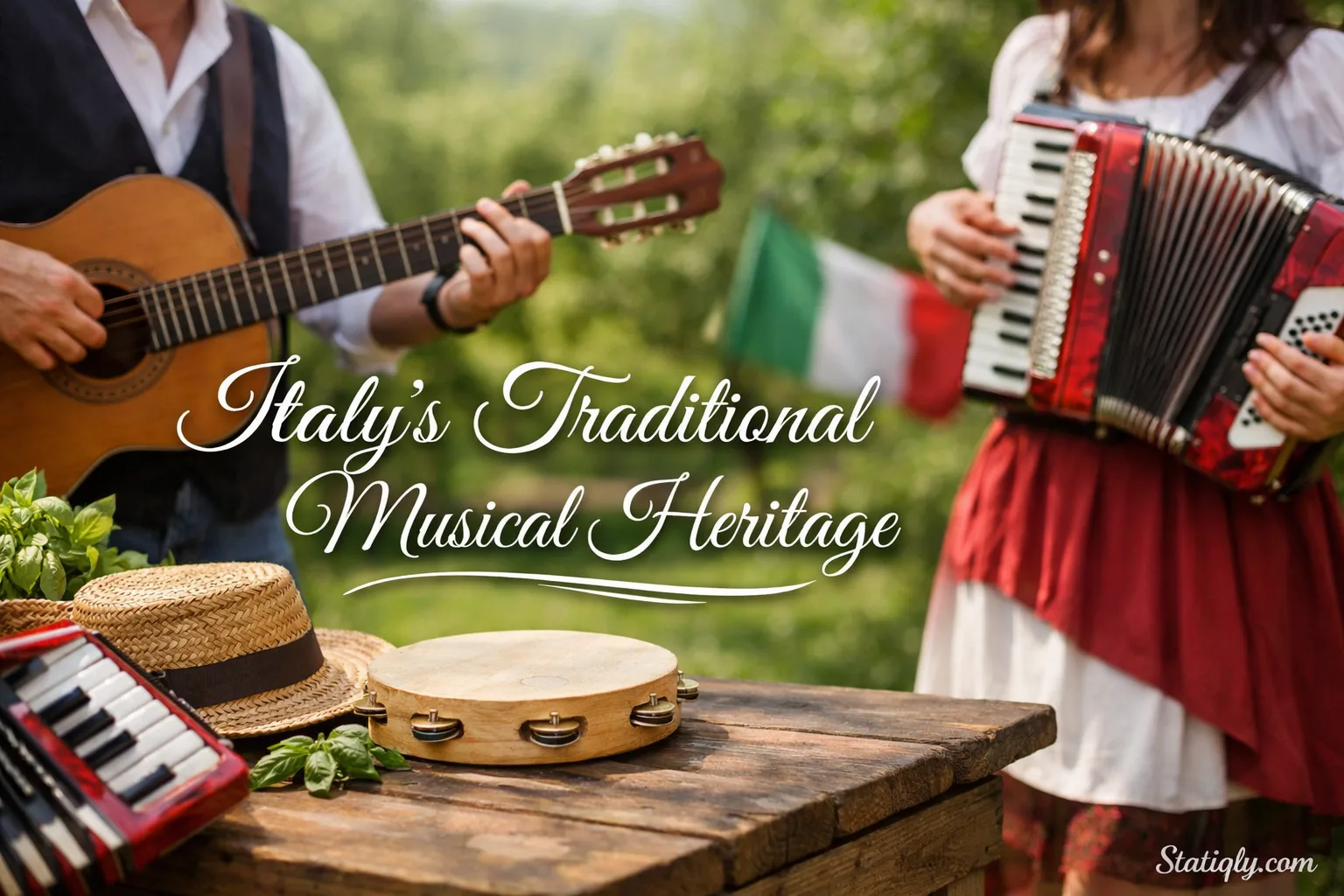
Italy doesn’t just sing—it remembers. Step into a village square and you might hear a frame drum pulling people into a circle. Wander a mountain town and a chorus can rise like warm air, steady and sure. Ever noticed how some places feel “musical” even before the first note? In Italy, that feeling comes from tradition living in everyday moments.
What You’ll Discover About Traditional Italian Music
- How Italy’s regions shaped distinct sounds (sometimes town by town).
- The voices and instruments that define the folk soundscape.
- Dances where rhythm becomes a kind of shared language.
- Practical ways to experience this heritage with respect and joy.
A Patchwork Of Sounds, Not One “Italian” Style
Italian traditional music is best understood as a patchwork quilt: many pieces, stitched by geography, history, and local pride. Coastlines, islands, mountains, and valleys all nudged communities toward different instruments, rhythms, and vocal habits. That’s why a tune from Sardinia can feel worlds apart from one in Campania, even though both are unmistakably Italian in spirit.
North: Choirs, Strings, Alpine Energy
In northern areas, you’ll often find choral traditions, dance tunes played for community gatherings, and instruments shaped by mountain life. The feeling can be crisp and bright—like sunlight on stone.
Center: Story-Songs And Dance Steps
Central regions are rich in storytelling songs, call-and-response styles, and lively dances. It’s music that travels well—perfect for fairs, weddings, and long evenings outdoors.
South & Islands: Drums, Pipes, Trance-Like Grooves
Southern traditions often lean into percussion, reed instruments, and dance rhythms that can feel hypnotic. The beat isn’t just support—it’s the center of gravity.
| Region / Area | Signature Feel | Common Sounds | Where It Often Lives |
|---|---|---|---|
| Sardinia | Ancient, raw, layered | Polyphonic singing; launeddas (triple-pipe woodwind) | Village festivals, pastoral celebrations |
| Campania | Earthy, drum-led | Tammorra (large frame drum); call-and-response singing | Community feasts, open-air dances |
| Apulia (Salento) | Fast, bright, magnetic | Pizzica; tamburello; accordion (organetto) | Summer squares, dance gatherings |
| Central Italy | Story-driven, social | Saltarello dance tunes; improvised sung poetry | Fairs, wine harvest celebrations |
| Liguria (Genoa) | Harmonic, playful | Trallalero (polyphonic singing with “guitar” vocal imitation) | Local singing groups, cultural events |
| Calabria | Warm, bowed, intimate | Lira calabrese (bowed folk instrument); dance accompaniment | Serenades, traditional dance nights |
Voices That Feel Like Architecture
Italian vocal traditions can be surprisingly physical. Some styles stack voices the way stone masons stack blocks—each part supporting the next. Others sparkle with quick lines and teasing replies. The point isn’t perfection; it’s presence.
Canto A Tenore: Sardinia’s Four-Voice Power
Canto a tenore is a Sardinian polyphonic style typically performed by four singers standing close together. One voice leads, while the others build a dense, resonant texture beneath it. The result can sound almost like a living instrument—half human, half wind in a canyon.
- Listen for the contrast between a clear lead line and the deep, rounded supporting voices.
- In performance, the tight circle matters: it helps singers blend and lock into a shared pulse.
Stornelli: Short Lines, Big Personality
Stornelli are compact folk verses often sung with a quick wit and a conversational flow. They’re the musical equivalent of a friendly wink—simple on the surface, memorable in the moment.
Improvised Sung Poetry: When Words Become Sport
In parts of central Italy, performers keep older traditions alive through improvised sung poetry. Think of it as verbal agility set to melody—fast thinking, musical timing, and a lot of smiles from the crowd.
Trallalero: Genoa’s Harmony Machine
Trallalero from Genoa is polyphony with a twist: singers may include a part that imitates a guitar sound. It’s playful, layered, and oddly addictive once you “hear” how the pieces fit.
Instruments That Carry Local Identity
Traditional instruments in Italy often double as cultural symbols. You’re not just hearing wood, reed, and skin—you’re hearing craft traditions, family workshops, and a sense of “this is ours.”
Winds And Breath: Pipes, Reeds, And Air
- Launeddas (Sardinia): a three-pipe instrument played with circular breathing, creating a continuous, pulsing sound.
- Zampogna (Central/Southern Italy): an Italian bagpipe tradition often heard in seasonal street performances, especially around winter festivities.
- Friscalettu (Sicily): a small fipple flute with a bright, direct voice—perfect for dance tunes and local celebrations.
Strings And Serenades: Plucked, Bowed, And Sung Along
Strings are where Italy’s romantic side quietly shows up. A plucked line can sit under a melody like a soft lamp in a window.
- Mandolin: strongly associated with Naples and southern popular traditions, with historical development tied to skilled local makers.
- Lira Calabrese: a bowed folk instrument used for dance accompaniment and local song traditions in Calabria.
Rhythm And Frame Drums: When The Beat Leads
In much of southern Italy, percussion doesn’t sit politely in the back. It drives. It invites. It can turn listeners into dancers before they realize what’s happening. It’s easy to feel teh pulse in your chest.
- Tammorra (Campania): a large frame drum often linked with local dances and festive gatherings.
- Tamburello (widely used): a powerful tambourine-style frame drum central to many dance traditions, including pizzica.
Dances That Turn Music Into Community
Some Italian traditions are meant to be watched. Many are meant to be joined. Folk dances are social by design: they teach timing, closeness, and the gentle art of sharing space.
Tarantella And Its Many Cousins
Tarantella is a family of fast dance traditions rather than one fixed form. It often moves in lively, rolling rhythms and can change character from region to region—lighter here, heavier there, always energetic.
- Pizzica (Salento, Apulia): known for its driving tamburello and a dance feel that’s both playful and intense.
- Saltarello (Central Italy): a traditional dance tied to “leaping” steps, historically present in court contexts and still alive in folk practice.
- Tammurriata (Campania): drum-led dance energy where rhythm feels like a friendly command: “come closer, follow me.”
New To Italian Folk Dance? Here’s A Simple Way In
Start by listening for the “home” beat—the moment that feels like the floor under your feet. Clap softly on that pulse. Then add small steps. If you’re at a live event, watching one full circle before joining is a smart, respectful move.
Where Traditional Music Still Sounds Natural
Traditional music in Italy thrives in places where people gather for reasons that have nothing to do with “performing.” That’s the secret. When music is part of life, it stays fresh.
Village Feasts And Seasonal Festivals
Local festivals often feature folk groups, dance circles, and instruments you may never see on a big stage. If a square fills up, follow the sound—gently.
Museums And Cultural Centers
For instruments, a museum visit can be surprisingly moving—especially when displays include audio. One standout example is the Museo Internazionale della Zampogna in Scapoli, known for a large collection of bagpipes from many places.
Big Folk Gatherings (If You Love Crowds)
Some traditions also thrive through large summer events—especially in southern regions where dance music spills into the night. Go for the atmosphere, stay for the collective rhythm.
A Friendly Listening Etiquette (It Helps, Trust Me)
- Ask before recording up close; many performers are happy to say yes.
- Let dancers keep their space—especially in fast circles.
- Clap along only after you’ve found the shared pulse.
- Compliment the sound, not the “exotic vibe.” It lands better.
How To Explore Italy’s Musical Heritage From Home
You don’t need a plane ticket to start. Traditional Italian music is wonderfully accessible once you know what to search for—and what to listen for.
A Simple Listening Path (No Stress)
- Pick one region (try Sardinia or Salento).
- Choose one “anchor sound”: a voice style, a drum, or a reed instrument.
- Listen twice: first for mood, second for patterns (repeated phrases, call-and-response, steady rhythms).
- Then switch regions and notice what changes. It’s like tasting the same recipe with different local ingredients.
Mini Glossary: Words You’ll See Often
- Folk: music rooted in community life—dances, feasts, seasonal rituals, local storytelling.
- Polyphony: multiple vocal lines at once, woven together.
- Frame Drum: a drum with a shallow frame, often played by hand (tammorra, tamburello).
- Drone: a sustained tone underneath a melody (common with pipes and some vocal styles).
Why This Heritage Feels So Alive
Because it’s still functional. It helps people dance together. It marks seasons. It turns a normal night into a shared memory. And when tradition keeps doing a job, it doesn’t collect dust—it keeps changing shape without losing its soul.