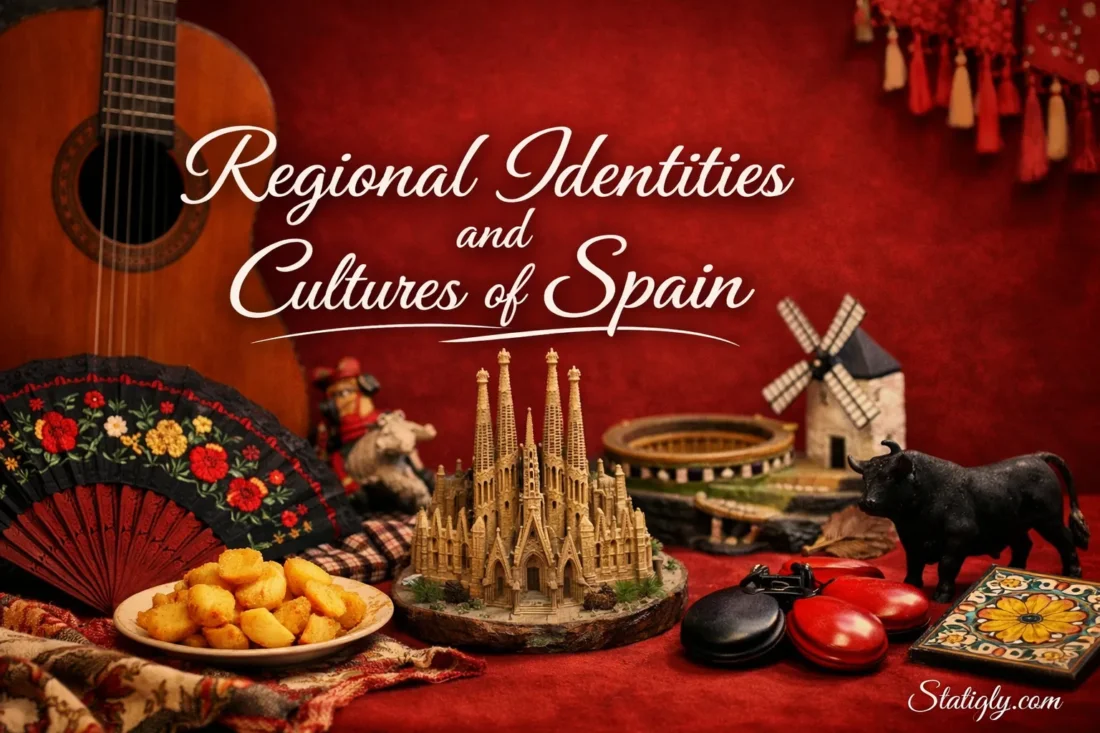
Spain is one country, yet it often feels like a whole shelf of storybooks. Step off a train in Barcelona, and the rhythm changes. Wander a market in Seville, and the air smells different. Head north to Bilbao, and you’ll notice new flavors, new sounds, new habits. Why does that happen? Because regional identity in Spain isn’t a footnote—it’s part of daily life.
| Culture Zone | Places You’ll Hear It Mentioned | What Stands Out Fast |
|---|---|---|
| Atlantic North | Galicia, Asturias, Cantabria, Basque Country | Seafood traditions, green landscapes, local cider culture, pintxos in the Basque Country |
| Pyrenees And Ebro Valley | Navarre, Aragón, La Rioja, Catalonia | Mountain villages, robust seasonal cooking, renowned wine areas, distinct folk festivals |
| Central Heartland | Madrid, Castile And León, Castile-La Mancha, Extremadura | Historic towns, hearty stews, classic plazas, big open skies |
| Mediterranean East | Valencian Community, Murcia, Catalan Coast | Rice dishes, lively seaside promenades, produce-forward cuisine, festival calendars |
| Sunny South | Andalusia | Flamenco arts, patios and courtyards, late-evening social life, tapas culture |
| Island Worlds | Balearic Islands, Canary Islands | Island recipes, unique crafts, coastal walks, distinct local words and accents |
How To Use This Guide
If you’re planning a trip, choose two or three regions and go deeper instead of racing across the map. If you’re learning about Spain from home, pick one theme—food, music, or languages—and compare how it changes from place to place. That simple contrast is where the magic lives.
What “Region” Means In Spain
Spain is organized into 17 autonomous communities plus two autonomous cities (Ceuta and Melilla). For travelers and curious readers, the practical point is easy: each community has its own mix of traditions, recipes, festivals, and sometimes a regional language. This diversity isn’t seperated into neat boxes; it blends along borders, like watercolor.
North
Think green hills, ports, and a strong connection to the sea. You’ll spot cider houses in parts of Asturias, and you’ll hear a proud local food vocabulary in the Basque Country.
Center
Expect historic towns, wide plains, and cuisine built for cooler evenings. In Madrid, you’ll feel Spain’s variety meet in one place, like a busy crossroads.
Mediterranean And Islands
Look for rice dishes, bright produce, and coastal evening walks. On the islands, local traditions can feel extra distinctive, like a dialect that grew up by the waves.
Languages And Accents: The Soundtrack Of Place
Language is one of the clearest windows into regional culture in Spain. You’ll hear Spanish (Castilian) everywhere, yet many communities also use other languages in daily life and public spaces. Even when you don’t speak them, you can feel their presence in street signs, bookshops, and the way people greet each other.
- Catalan (including the Valencian variety) is widely used in Catalonia and the Valencian Community, and it’s present in parts of the Balearic Islands.
- Basque (Euskara) is used in the Basque Country and parts of Navarre. It stands out as a language with deep local roots.
- Galician is used in Galicia and feels close to Portuguese to many listeners.
- In smaller areas you may also encounter names and traditions tied to languages such as Aranese (in the Val d’Aran) and regional speech varieties like Asturian and Aragonese.
Small But Meaningful Tip: When you see bilingual signs, treat it like a friendly guide. Using a simple “hola” plus a local greeting when you know it can earn genuine smiles.
Food Traditions That Change From Region To Region
In Spain, food is not just “what’s for dinner.” It’s a local handshake. And the handshake changes by region. One evening you’ll be nibbling pintxos in the Basque Country, the next you’ll be sharing paella-style rice dishes in the Valencian area, and another day you’ll be tasting stews that feel built for the heartland.
Signature Flavors To Know
- Basque Country: Pintxos bars, seafood, and an eye for seasonal ingredients presented with style.
- Galicia: Octopus dishes and Atlantic seafood, often kept beautifully simple.
- Valencian Community: Rice culture in many forms, from family lunches to festival tables.
- Andalusia: Gazpacho and cold soups in warm months, plus tapas that fit late evenings.
- Asturias: Cider traditions and comforting dishes like bean-based stews.
- Balearic Islands: Local cured meats and island pastries that pair well with coffee.
- Canary Islands: Mojo sauces and volcanic-soil produce that can taste wonderfully intense.
How To Order Like A Local Without Overthinking
- Start with one regional specialty and one “safe” favorite. Curiosity works best in small bites.
- Ask a simple question: “What do you recommend today?” The word “today” matters because many places cook with the market.
- If you see a house dish mentioned on a chalkboard, trust it. That’s often the chef’s pride.
Music, Dance, And Festive Traditions
Spain’s cultural calendar can feel like a year-long celebration, yet the style of celebration shifts from place to place. Some traditions are intimate, like neighbors decorating a street for a local day. Others are large and theatrical, like a city festival that fills the night with music. Ever notice how a song can instantly place you in a memory? Regional arts work the same way.
Andalusia: Flamenco Culture
Flamenco is more than a performance; it’s a mood and a craft. You’ll find it in dedicated venues and in cultural programming that highlights singing, guitar, and dance as living traditions.
Catalonia: Human Towers And Sardana
In many towns, community groups practice traditions like castells (human towers) and circle dances such as the sardana. They’re teamwork made visible.
Basque Country: Food And Festival Energy
Basque cultural life often highlights food societies, local sports, and neighborhood events where the social fabric feels very close-knit.
Seasonal Moments Many Visitors Love
- Spring: Patio culture blooms in southern cities; many towns host fairs and local days.
- Summer: Coastal festivals, night markets, and outdoor concerts become common.
- Autumn: Harvest traditions appear in wine areas such as La Rioja and parts of Catalonia and Castile.
- Winter: Holiday lights, sweets, and community gatherings warm up the shorter days.
Architecture And Place: Why Streets Look So Different
Architecture is culture you can walk through. In Spain, regional building styles often follow climate, materials, and long local craft traditions. One neighborhood may feel bright and Mediterranean, another may feel stone-built and mountain-ready. It’s like clothing: the same person dresses differently for beach weather than for a windy hilltop.
- Barcelona And Catalonia: Modernist architecture is a major draw, with famous works by Antoni Gaudí and other designers shaping the city’s look.
- Andalusia: Courtyards, tiles, and shaded streets create a comfortable rhythm in warmer months.
- Basque And Cantabrian Areas: Strong stone and wood traditions show up in farmhouses and coastal towns.
- Castile And León: Medieval cities, cathedrals, and plazas often anchor community life.
One Simple Way To “Read” A City
- Look at the doors and balconies. Regions often keep their own styles.
- Notice the materials: stone, brick, tile, or whitewash.
- Step into a market. Markets quietly reveal what a region grows, cooks, and celebrates.
Crafts And Local Skills You Can Still See Today
Regional identity often lives in the hands of makers: ceramics, leatherwork, textiles, and food crafts. Some skills are tied to certain towns, and locals can spot the difference instantly. If you love meaningful souvenirs, this is your goldmine. Not expensive. Just honest.
- Ceramics And Tiles: Often associated with areas that kept strong artisan traditions, especially in parts of the south and east.
- Textiles: Wool and woven goods show up in cooler regions and mountain areas.
- Food Crafts: Olive oil, cheese, cured meats, and sweets vary widely by region and local ingredients.
Practical Culture Tips For Travelers
Want to connect with regional culture quickly, without feeling awkward? Focus on timing, respect, and curiosity. Spain is welcoming, and small gestures go far.
Do This
- Match local meal rhythms. In many places, dinner starts later than you might expect.
- Learn two phrases: “please” and “thank you.” Simple, powerful.
- Choose one neighborhood bar and return. Familiar faces open doors.
Try Not To Rush
- Give yourself time in markets and plazas. Those are cultural classrooms.
- If a town has a local festival, lean in gently. Watch first, then join if invited.
- Ask about regional specialties instead of ordering the same dish everywhere.
Build A Spain Itinerary Around Culture, Not Just Cities
If you only hop from “must-see” landmark to landmark, Spain can blur. If you travel by themes, Spain becomes vivid. Here are a few easy combinations that keep travel time reasonable and cultural contrast high.
Theme Routes That Feel Natural
- Modern Design And Traditional Streets: Barcelona and nearby towns in Catalonia, paired with a historic city in Aragón.
- Coast And Green Hills: San Sebastián or Bilbao in the Basque Country, then west toward Cantabria or Asturias for softer landscapes.
- Music And Courtyards: Seville and Córdoba in Andalusia, with a focus on local arts and evening culture.
- Classic Heartland: Madrid as a base, plus day trips to historic towns in Castile and León or Castile-La Mancha.
- Island Contrast: Split time between the Balearics (Mediterranean feel) and the Canaries (Atlantic and volcanic landscapes).
Ask Yourself This Before You Choose
Do you want Spain to taste like stews and bread, or like rice and seafood? Do you want your evenings to be music-forward, or quiet and coastal? Answering those two questions usually points you to the right regions.
Regional Culture At Home: Easy Ways To Explore From Anywhere
You don’t need a plane ticket to notice Spain’s regional texture. A few small choices can bring the differences into focus, like turning up the contrast on a photograph.
- Cook one dish from the Mediterranean east and one from the Atlantic north. Compare ingredients and seasoning.
- Listen to a flamenco guitar piece, then try traditional Galician or Basque folk music. Notice how the mood changes.
- Pick a Spanish film or series set in a specific region, then look up a map of that area to place the landscapes.
- Learn ten common phrases in Spanish, then add a couple of greetings from Catalan, Basque, or Galician just for fun.