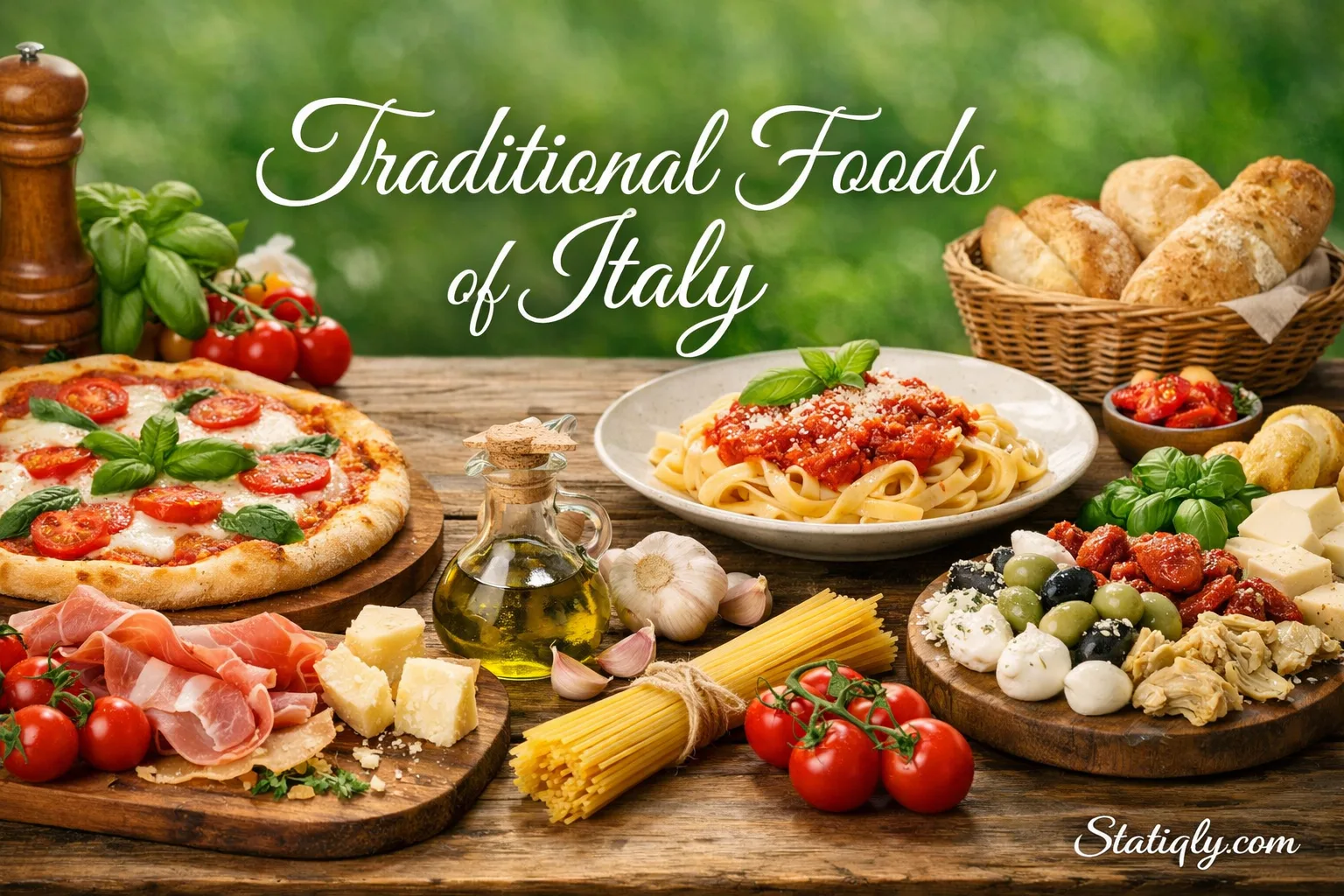
Italy’s traditional foods aren’t just “things to eat.” They’re little stories told with olive oil, tomatoes, and the kind of patience you can taste. Ever wondered why a simple plate of pasta can feel like a warm hug? That’s the magic of regional Italian cuisine: humble ingredients, handled well, served at the right moment.
Why Traditional Italian Food Feels So Alive
Italian cooking leans on seasonality, local identity, and simple techniques done with care. A sauce isn’t “heavy” because it’s complicated—it’s rich because it’s right. Think of it like a well-tuned instrument: fewer notes, better sound.
What you’ll get from this guide
- Regional classics you’ll actually see on menus
- A clear look at how Italians build a meal
- Ordering tips that make you feel confident
- A handy table you can skim in seconds
Italy On A Plate: Regional Classics Worth Knowing
Italy is a mosaic of regions, and traditional Italian dishes often feel “native” to their home turf. You’ll spot the difference fast: butter and risotto show up more in the north, while tomato-forward flavors shine in many southern kitchens.
| Region | Traditional Food | What It Tastes Like | Best Moment To Try It |
|---|---|---|---|
| Campania | Pizza Napoletana | Soft, airy crust; bright tomato; creamy mozzarella | Lunch or dinner, fresh from a hot oven |
| Lazio | Pasta alla Carbonara | Silky egg-and-cheese sauce, savory pork, peppery finish | When you want comfort with a punch |
| Lombardy | Risotto alla Milanese | Creamy rice with a warm saffron aroma | Cool evenings, slow dinners |
| Emilia-Romagna | Ragù (Bolognese-Style) | Deep, savory meat sauce; gentle richness | Perfect with fresh egg pasta |
| Liguria | Pesto Genovese | Herby basil, pine nuts, garlic, cheese, olive oil | Sunny days, light dinners |
| Sicily | Arancini | Crisp rice balls with a warm, savory center | Street snack, anytime hunger hits |
| Tuscany | Ribollita | Hearty veggie-and-bread soup, cozy and rustic | Winter lunches, slow afternoons |
How Italians Build A Meal, Step By Step
Italian meals often follow a rhythm. Not every table uses every course, but knowing the flow helps you order with ease—and enjoy the full experience.
Antipasti
Small starters that wake up your appetite: cured meats, cheeses, marinated vegetables, or a simple bruschetta.
- Great for sharing
- Pairs beautifully with sparkling water or a soft drink
Primi
The first main course—often pasta, risotto, or soup. This is where many iconic flavors live.
- Choose one pasta or risotto per person
- Ask about house specialties
Secondi
A protein-focused course: meat, fish, or eggs. Often served with a separate side called contorni.
- Ideal if you’re extra hungry
- Pair with veggies for balance
Dolci And Caffè
Sweet endings like tiramisu, gelato, or a crisp pastry—often followed by a small, strong coffee.
A Helpful Note
You don’t need to order everything. Many locals keep it simple: a primo and a salad, or a secondo with vegetables. The goal is to leave happy, not stuffed.
Beloved Traditional Dishes, Explained Simply
These are some of the most famous Italian foods you’ll see across Italy and beyond. Names vary by region and restaurant style, but the heart stays the same.
Pizza Napoletana
Neapolitan-style pizza is known for a soft center and a puffy edge. The classic combo—tomato, mozzarella, basil—tastes bright and clean, like a snapshot of summer.
Pasta alla Carbonara
Carbonara is silky from egg and cheese, not from cream. The peppery finish is the wink at the end.
Pesto Genovese
A fragrant basil sauce blended with olive oil, cheese, and pine nuts. When it’s good, it tastes like you just walked through a garden after rain.
Risotto alla Milanese
Risotto is all about texture: creamy, glossy rice with a gentle bite. Saffron gives golden warmth and a perfume-like aroma.
Lasagne
Layered pasta, sauce, and creamy richness in each forkful. Many versions use a slow-cooked meat sauce and a smooth white sauce, making it deeply comforting.
Parmigiana di Melanzane
Eggplant layered with tomato sauce and cheese, baked until bubbly. It’s hearty, but still feels fresh when the sauce is bright.
Street Foods That Locals Love
If you want the quickest taste of everyday Italy, look for street food. It’s practical, flavorful, and often surprisingly filling.
- Arancini: crispy rice balls with savory fillings
- Focaccia: olive-oil bread, sometimes topped with herbs or tomatoes
- Supplì: Roman-style fried rice bites with a melty center
- Panzerotti: fried or baked stuffed dough pockets in many southern areas
Ordering Tips That Make Everything Easier
Want to feel at home in Italian restuarants? Use these simple moves.
- Ask what’s seasonal. Seasonal dishes often taste brighter and more “alive.”
- Pick one focus. Either go for a signature pasta or a special second course.
- Share starters. Antipasti are built for the middle of the table.
- Keep sides simple. Vegetables or potatoes let the main dish shine.
- Save room for something sweet. Even a small scoop of gelato can end the meal perfectly.
Small detail, big impact: If you see “house-made” pasta, it’s often worth trying.
Diet-Friendly Choices Without Missing Out
Italian food can be wonderfully flexible. With a little attention, many people find options that fit their needs while still tasting authentic.
More Veggie-Forward
- Parmigiana di Melanzane (eggplant)
- Minestrone (vegetable soup varies by kitchen)
- Ribollita (Tuscan-style hearty soup)
Lighter Picks
- Grilled fish with vegetables (often simple and clean)
- Salads and roasted seasonal sides
- Tomato-based pasta when you want something bright
A Simple Tasting Plan For First-Timers
If you’re new to traditional foods of Italy, this plan keeps things easy and memorable—no overthinking, no overload.
- Start with one shared antipasto. Try a simple platter with cheeses and vegetables.
- Pick one iconic primo. Carbonara or a local pasta special.
- Add a second only if you’re truly hungry. Keep it classic: grilled fish, roast chicken, or a simple cutlet.
- Finish small. One scoop of gelato or a slice of tiramisu.
Mini Glossary Of Menu Words You’ll See
| Word | What It Means | Helpful Hint |
|---|---|---|
| Antipasto | Starter | Often shareable and light |
| Primo | First main course (pasta/risotto/soup) | Usually the star of the meal |
| Secondo | Second main course (protein-focused) | Order with vegetables on the side |
| Contorno | Side dish | Veggies, potatoes, salads |
| Dolce | Dessert | Try one local sweet if available |
Bring Italy To Your Next Meal
Pick one regional classic, keep the sides simple, and let great ingredients do the talking. That’s the soul of Italian tradition—easy to love, easy to return to.