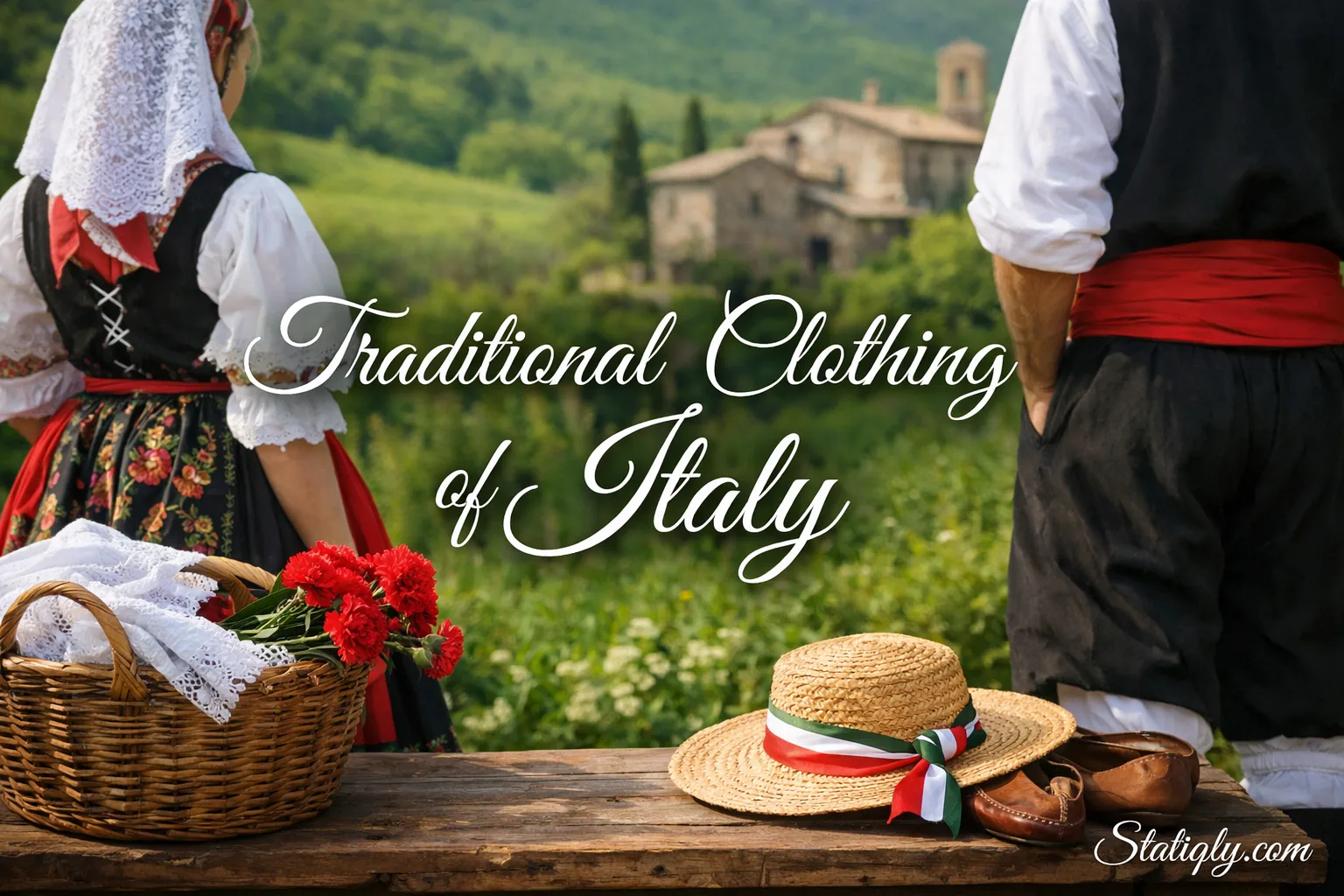
Italy’s traditional clothing is a living scrapbook—stitched from mountains, coastlines, village celebrations, and everyday work. There isn’t one single “national costume” that fits the whole country. Instead, you’ll find a beautiful puzzle of regional folk dress, each piece shaped by local materials, climate, and craft.
Ever wondered why one town favors velvet and gold thread while another leans into linen and simple stripes? Traditional Italian dress is like a map you can wear—quietly pointing to where you are, who made it, and what mattered to the community.
Three Things To Notice Right Away
- Layers that move nicely (skirts, shawls, vests).
- Handwork you can almost “read” (embroidery, lace, metal buttons).
- Headwear that frames the look (scarves, caps, hats).
What Counts As Traditional Clothing In Italy
In Italy, traditional clothing usually means regional folk costumes worn for community events, dance performances, historical parades, and cultural festivals. Many outfits have everyday roots—clothes made for farming, fishing, shepherding, or craft work—then refined over time for special occasions.
You may see words like costume tradizionale (traditional costume) or abito popolare (folk dress). Even within a single region, villages can differ—sometimes in tiny details like apron patterns, ribbon colors, or the way a scarf is tied.
Core Elements You’ll Spot Again and Again
Think of traditional Italian outfits as modular: a few core pieces, then local touches that make them unmistakable. Here are common elements you’ll see across many areas.
Women’s Staples
- Blouse (often linen or cotton), sometimes with gathered sleeves
- Bodice or fitted vest for shape and support
- Full skirt with movement, sometimes layered
- Apron that can be practical and decorative
- Shawl for warmth and elegance
Men’s Staples
- Shirt in linen or cotton
- Vest (gilet is a word you might hear) for structure
- Trousers or knee-breeches depending on the area
- Waist sash (fascia) adding color and shape
- Hat or cap as a strong finishing detail
Details That Do The Talking
- Embroidery showing local patterns
- Lace on cuffs, collars, or aprons
- Metal buttons or clasps, sometimes filigree-style
- Headscarves (fazzoletto) tied in regional ways
- Handmade footwear in leather or sturdy fabric
Small detail, big clue: Aprons and sashes are not “extra.” In many places, they’re the easiest way to spot a village style—almost like a signature on a painting.
Regional Styles Worth Knowing
Italy’s wardrobe changes fast from north to south. Alpine areas lean into warm wool and sturdy tailoring. Coastal regions often favor lighter fabrics and bright accents. Islands bring their own flair—bold color, rich decoration, and eye-catching jewelry.
| Region / Area | Signature Look | Common Fabrics | Where You Might See It |
|---|---|---|---|
| Sardinia | Layered skirts, embroidered bodices, striking metal details; often a strong focus on craft | Wool, linen, velvet accents | Local festivals, folk dance events, cultural gatherings |
| Sicily | Bright contrasts, decorative aprons and shawls; elegant finishing touches | Cotton, linen, lace, silk accents | Community celebrations, cultural shows, artisan fairs |
| Campania | Fitted vests and full skirts; crisp shirts with bold accessories that pop | Cotton, wool blends, linen | Folk music events and regional costume exhibitions |
| Abruzzo | Structured layers designed for cooler air; aprons and shawls often stand out | Wool, linen, sturdy cotton | Mountain-town festivals and folklore performances |
| Puglia | Lightweight layers with strong waist accents; headscarves and aprons play a starring role | Linen, cotton | Summer festivial celebrations and local cultural nights |
| Veneto | From simple folk styles to celebration wear; Venice is also famous for ornate Carnival dress | Wool, linen, velvet and brocade for special costumes | Historical parades, Carnival season, museum displays |
| South Tyrol | Alpine heritage with dirndl and tailored vests; clean lines and sturdy construction | Wool, felt, cotton | Seasonal festivals, alpine cultural events |
Tip for curious eyes: Focus on silhouette first (layers, waist shape), then zoom into the finishing details (buttons, trim, embroidery). That’s where local identity usually lives.
Accessories That Tell A Story
Traditional clothing isn’t only fabric. The “voice” of the outfit often comes from accesories—small pieces that carry meaning, pride, and artistry.
- Headscarves and caps that can signal age, role, or local style
- Shawls that add warmth and a graceful outline
- Sashes bringing contrast and structure to the waist
- Jewelry (from delicate filigree to bold statement pieces)
- Apron details that look simple until you notice the stitching
A Handy Visual Shortcut
If you’re looking at a photo and thinking, “This could be from anywhere,” check the headwear and the waist area first. Scarves, caps, belts, and sashes often carry the most local personality.
From Loom To Wardrobe: Craft Traditions
Traditional Italian dress shines because it’s rooted in craft. Even when an outfit looks “simple,” it can hide serious skill: clean seams, careful gathering, balanced proportions, and decoration that sits exactly where the body moves.
Materials
- Wool for warmth and structure
- Linen for breathability and crispness
- Cotton for everyday comfort
- Silk and velvet for celebration pieces
Techniques
- Embroidery for pattern and identity
- Lacework for delicate texture
- Weaving for durable cloth and stripes
- Metalwork for buttons, clasps, and jewelry
Why does that matter today? Because when you understand the craft, you stop seeing “costumes” and start seeing skills passed down—the kind that turns clothing into heritage.
How To Experience Traditional Dress As A Visitor
You don’t need to track down a rare event to enjoy traditional clothing culture. Many places make it easy to see, learn, and appreciate—without feeling intrusive.
- Look for local festivals and cultural nights where folk groups perform dances and music.
- Visit museums with ethnographic collections to see garments up close and understand their materials.
- Try artisan workshops or craft markets for embroidery, lace, weaving, or metalwork.
- Watch details, not stereotypes: how the scarf is tied, how the apron sits, how the vest fits.
A Respectful Approach
- Ask before taking close-up photos of individuals in traditional dress.
- Keep your tone warm and curious—people often love to share the story behind a garment.
- If you’re invited to try something on, treat it gently like you would a handmade artwork.
Shopping For Traditional-Inspired Pieces
If you want a wearable memory, you don’t have to buy a full outfit. A few well-chosen pieces can carry the spirit without feeling like dress-up.
Smart Finds
- Woven shawl in a classic pattern
- Handmade lace accessory (small but meaningful)
- Leather belt or simple waist sash
- Artisan jewelry with local techniques
What To Check
- Fiber content (wool, linen, cotton tend to age nicely)
- Stitching quality and clean finishing
- Origin story: who made it, where, and how
- Care needs so it stays beautiful
Easy Care Tips For Heritage Fabrics
- Wool: air out after wear; spot-clean when possible.
- Linen: gentle wash; it softens over time and still looks crisp.
- Lace and embroidery: handle softly, store flat when you can.
- Metal details: keep dry; wipe lightly after use.
A Simple Outfit Builder For Traditional Style
Want to capture the feel without wearing a full costume? Use this mix-and-match idea. It’s practical, photo-friendly, and still respectful.
- Base: simple white blouse or shirt in cotton or linen.
- Shape: add a fitted vest or waist sash.
- Texture: bring in a woven shawl or a small lace detail.
- Finish: artisan jewelry or a classic hat, kept understated.
If it feels balanced and comfortable, it usually looks right. Traditional clothing was made for real bodies doing real things, after all.
Frequently Asked Questions
Does Italy Have One National Traditional Outfit?
Not really. Italy is best understood through regional traditions. Many towns have their own variations, sometimes distinct enough that locals can immediately tell where a costume comes from.
Are Carnival Outfits The Same As Folk Costumes?
They’re related to tradition, but different in purpose. Folk costumes often grow out of everyday clothing and local craft. Carnival outfits are usually celebration wear—dramatic, playful, and designed for spectacle.
Where Can I See Traditional Clothing Without Planning A Big Trip Around It?
Look for regional museums, cultural centers, and seasonal festivals. Even small towns sometimes host folk performances where outfits are part of the show.
Can I Buy An Authentic Piece?
Yes, especially accessories and craft items. The best experiences usually come from artisan-made pieces with a clear story behind them—materials, maker, and technique.
Ready To Explore Italy Through Fabric And Craft?
Traditional clothing is a gentle way to meet local identity—no debate, no noise, just skill, color, and community pride.