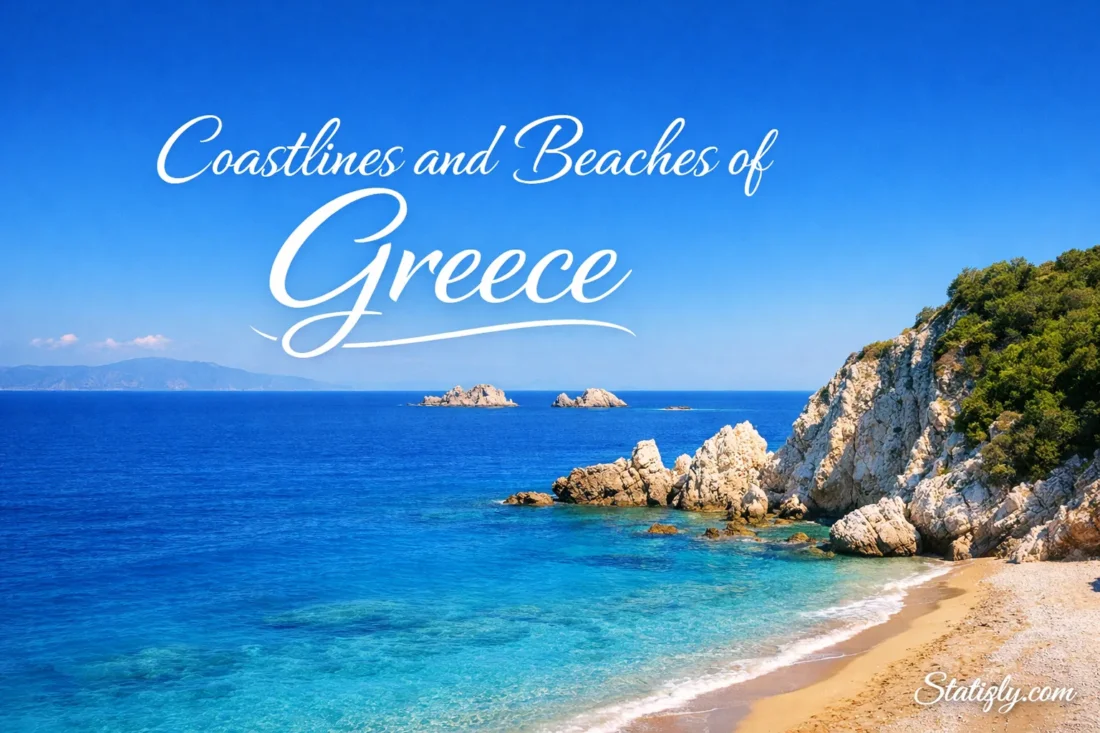
Greece does not give you one single kind of beach. It gives you many. On one shore, your feet sink into pale sand and the water stays calm and shallow. A short ferry ride later, the coast turns stony, the sea deepens into a darker blue, and the bay feels cut straight into rock. That variety is what makes the coastlines and beaches of Greece so memorable. The country is shaped by peninsulas, island groups, coves, long open strands, and mountain slopes that often fall close to the sea. For beach lovers, that means choice. Real choice.
| Region | Coast Feel | Common Beach Look | Water Character | Often Suits |
|---|---|---|---|---|
| Ionian Islands | Green hills, softer outlines, calm bays | Sand, rounded pebbles, sheltered coves | Clear, often gentle | Easy swimming, relaxed family days, boat stops |
| Cyclades | Open horizons, dry slopes, bright light | Sandy bays, rocky edges, some volcanic shores | Very clear, sometimes breezy | Scenic beach hopping, airy summer trips |
| Crete | Big island contrasts, long drives between coasts | Wide sands, hidden coves, pink and dark-toned beaches | Changes a lot from coast to coast | Long stays, mixed beach styles, road trips |
| Peloponnese | Mainland variety with broad western shores and cut-in eastern coves | Long sandy beaches, coves, pebble stretches | Wide choice, from open to protected | Travelers who want sea with towns and day trips |
| Sporades | Pine forests meeting the sea | Coves, pebbles, soft sand | Bright, clean, often sheltered | Quiet swims, green scenery, nature-first stays |
| Attica and Nearby Islands | Easy coastal access near Athens | Organized beaches, small coves, urban seaside strips | Practical and varied | Short escapes, first-time visitors, simple day plans |
Why Greek Shores Feel Different From One Place to the Next
Why can two Greek beaches feel like they belong to two different countries? Part of the answer sits in the shape of Greece itself. The mainland is deeply cut by the sea, and the islands spread across several marine zones. Add local rock types, changing winds, and the angle of the coast, and the beach mood shifts fast.
The Ionian side often feels greener and softer. The Aegean side looks sharper, brighter, more open to wind and light. Crete behaves almost like a country of its own, with long shores, small coves, and beaches that can change character within the same day. On the Peloponnese, the west side tends to open into longer sandy stretches, while the east can feel more broken, rocky, and tucked away.
Then there is the sea color. In Greece, blue is never just blue. It turns glassy, emerald, turquoise, sapphire, then nearly ink-dark where the water drops fast. Sand, pebble, rock, depth, and sun all play their part. Small details matter here. A lot.
How Beach Types Change Across Greece
Ionian Islands: Soft Light, Green Backdrops, Easier Swimming
The Ionian Islands sit off Greece’s west coast and often give visitors the beach image they carry in their head before they arrive: calm coves, soft sand, green hillsides, and water that looks painted from below rather than above. The landscape feels fuller here. Trees come close to the shore. Hills soften the horizon. Even the air can feel gentler.
That is one reason the Ionian coast works so well for travelers who want long swims, slower mornings, and bays that feel protected rather than exposed. Pebble beaches are common, yet many are smooth underfoot, and sandy beaches are easy to find too. Quiet, especially in the early part of the day, can many of these bays feel.
Cyclades: Bright Shores, Open Water, and Beaches With Shape
The Cyclades are different. Drier hills. Stronger light. Cleaner lines. Beaches here often sit between rocky arms or open directly to wide Aegean views. Some are broad and sandy. Others are small, curved, and hidden below low cliffs. On several islands, volcanic ground changes the texture and even the color of the shore.
This is where beach scenery in Greece can feel almost sculpted. Not lush. Not heavy. Clear, spare, sunlit. Summer winds also shape the experience, so the same island may offer one breezy side and one calmer side. Good beach days in the Cyclades often come from choosing the coast well, not just the island.
Crete: Long Coasts, Many Moods, and Rare Beach Variety
Crete is the largest island in Greece, and its beaches show that scale. You can find long sandy fronts, tiny coves under rock, shallow lagoons, rougher open water, pink-toned sand in some areas, and darker volcanic stretches in others. A beach day in Crete is rarely one-note.
What makes Crete’s coastline special is range. One coast may feel broad and easy, with room to spread out and stay all day. Another may ask for a walk, a boat, or a winding road before it opens up below you. That gives the island real depth for repeat visitors. You do not “finish” Crete’s beaches quickly. Not even close.
Peloponnese: A Mainland Coast With Room to Roam
The Peloponnese often surprises people who arrive focused on islands. It should not. Its shoreline is large, varied, and very rewarding for travelers who like to combine beach time with villages, drives, and short cultural stops. On the western side, long sandy beaches are more common. On the eastern side, the coast breaks into coves, rocky corners, and smaller beach pockets.
That split matters. Want space, soft entries into the sea, and long walks by the water? The western stretches often suit that mood. Prefer a smaller bay, a more intimate setting, and a coast that twists and folds? The eastern side often delivers it.
Sporades and Northern Shores: Pine, Shade, and Calm Water Color
In the Sporades, the beach experience changes again. Pine forests reach toward the sea, and many shores feel tucked into green surroundings rather than open to bare rock. That meeting of trees and water gives the coast a softer, cooler feel even in high summer.
These beaches often appeal to travelers who want nature to stay present while they swim. The sea can look especially bright where forest shade meets shallow water. There is beauty in the contrast, and a quiet one at that. Some of Greece’s most nature-centered coastal experiences sit in this part of the country, including protected marine areas around Alonissos.
Attica and Nearby Islands: The Easy Side of Greek Beach Life
Not every Greek beach trip needs a ferry plan and a full week. Around Attica and the nearby island groups, the coast becomes more practical without losing its charm. Organized beaches, small coves, seaside towns, and quick island escapes make this area useful for travelers who want simple access.
It is a good reminder that Greek beach culture is not only about remote beauty. It is also about rhythm: a morning swim, a long lunch, an afternoon by the water, then back to town before dark. Close to Athens, that rhythm becomes very easy to enjoy.
What You Can Read From the Shore Itself
A Greek beach tells you a lot before you step in. Fine sand usually signals an easier entry and longer lounging time. Pebbles often mean clearer-looking water and less sand carried home in your bag. Rocky edges may hide the best color shifts in the sea, especially when the water deepens fast near the shore.
- Soft sand often works well for families, longer walks, and slow beach days.
- Pebble beaches tend to feel cleaner under moving water and can look dazzlingly clear.
- Rocky coves often reward swimmers who care more about water color and quiet than broad lounging space.
- Volcanic beaches bring darker tones, dramatic contrast, and a more unusual visual feel.
- Pink-toned or pale beaches usually stand out most in early morning or late afternoon light.
Even the sound changes. Sand softens the beach. Pebbles click with the pull of the tide. Rock throws the wave back with a firmer echo. Small things, yes. Yet they shape memory.
How to Choose the Right Greek Beach for Your Travel Style
People often ask for the “best” beaches in Greece. That is the wrong question. A better one is this: best for what kind of day? Once you answer that, Greece becomes much easier to read.
- For calm swimming: look for sheltered bays, often on the Ionian side or on the protected side of an island.
- For dramatic scenery: choose rocky coves, volcanic shores, or beaches reached by road bends, paths, or boat.
- For long walking beaches: target wide sandy coasts, especially on parts of the mainland and larger islands.
- For variety in one trip: pick Crete or the Peloponnese, where beach styles change fast across the region.
- For green scenery: head toward the Sporades or greener western islands.
- For easy access: stay near Attica or choose islands with several organized beaches and short transfer times.
And yes, orientation matters. On many islands, one coast can be calm while another feels lively under summer wind. Ask locally. A two-minute tip from someone on the ground can save a full beach day.
Protected Shores and Gentle Beach Habits
Some of Greece’s most beautiful beaches are also part of delicate coastal habitats. In places such as Alonissos and Zakynthos, the shoreline is closely linked with marine life and protected natural areas. That does not make the beach less enjoyable. It makes it more meaningful.
- Use marked paths when dunes or nesting zones are present.
- Respect beach rules in protected areas, even when the sea looks open and free.
- Keep the shore clean and take small litter away with you.
- Leave sand, pebbles, shells, and plants where they are; the beach keeps its character that way.
- Choose a quieter presence in small coves and nature-first beaches.
That is part of Greek beach culture too: not only enjoying the coast, but fitting into it lightly.
Beach Experiences Greece Does Especially Well
- Morning swims in clear water before the shore fills out.
- Short hops between very different beaches on the same island or peninsula.
- Half-day beach plans that still leave room for a village walk or a long lunch.
- Coves with a sense of discovery, especially where the approach road hides the sea until the last bend.
- Beaches backed by pine, cliffs, or whitewashed settlements, where the setting changes the whole mood of the swim.
That mix is where Greece shines. Not because every beach looks the same, but because so few do. One shore feels open and bright. Another feels private and cool. Another still looks almost unreal by late afternoon, when the light drops lower and the sea starts holding deeper color. For travelers who care about texture, mood, and choice, the beaches of Greece keep giving more than one answer.