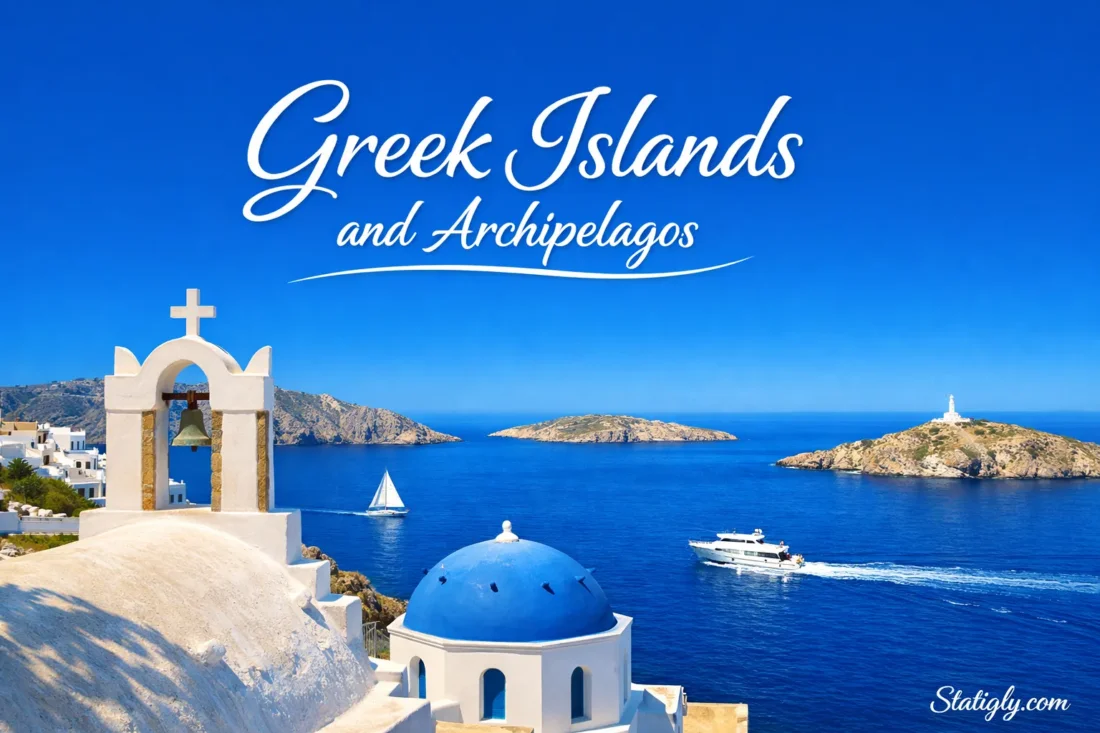
Greece is not a single island story. It is a wide mosaic of seas, harbors, hills, whitewashed towns, green coves, long beaches, stone villages, and ferry routes that seem to stitch one horizon to the next. The country has 6,000 islands and islets, and 227 of them are inhabited, yet the real magic starts when you stop thinking of them as one big set and begin to see the archipelagos behind the map. Each group has its own mood. Some feel dry, bright, and sculpted by light. Others feel leafy, gentle, and almost secretive. That is why names such as Cyclades, Ionian, and Dodecanese matter so much. They are not labels for show. They tell you how a place looks, how it moves, and what kind of stay fits it best.
Greek Island Groups Most Travelers Hear About First
| Island Group | Where It Sits | Well-Known Islands | What You Notice First |
|---|---|---|---|
| Cyclades | Central Aegean Sea | Santorini, Mykonos, Naxos, Paros, Milos | White villages, dry hills, bright light, open sea views |
| Dodecanese | Southeastern Aegean | Rhodes, Kos, Patmos, Karpathos, Symi | Long coastlines, layered history, varied landscapes, easy island pairing |
| Ionian Islands | West of mainland Greece | Corfu, Kefalonia, Zakynthos, Lefkada, Ithaca | Greener scenery, deep blue water, lush slopes, softer palette |
| Sporades | Off the east coast of mainland Greece | Skiathos, Skopelos, Alonnisos, Skyros | Pine forests, calm coves, relaxed pace |
| Saronic Islands | Near Athens, in the Saronic and Argolic Gulf area | Aegina, Poros, Hydra, Spetses, Agistri | Shorter transfers, elegant ports, easy escapes from the capital |
| North Aegean Islands | Northeastern Aegean | Lesbos, Chios, Samos, Lemnos, Ikaria | Roomier landscapes, strong local identity, fewer postcard clichés |
| Crete | South of the Aegean | Heraklion, Chania, Rethymno, Agios Nikolaos | A large island feel, mountains, long drives, many distinct regions |
| Euboea | Beside mainland Greece | Chalkida, Karystos, Edipsos, Limni | Mainland access with island scenery, varied coast and mountain mix |
Why The Archipelago Names Matter
An archipelago is simply a group of islands. In Greece, that simple idea does a lot of work. It helps explain why one island has cube-shaped white houses and dry slopes while another has cypress, Venetian lanes, and a greener shoreline. It also helps with practical choices. Want short hops between islands? Some groups make that easier. Looking for a single large island where you can mix beaches, mountain villages, food stops, and city days? That points you somewhere else.
And this is where many first-time readers get confused: Greek islands are famous as a whole, but they do not feel the same at all. Not even close. The sea changes. The color of the earth changes. Even the rhythm of a harbor changes from one group to another. Learn the groups once, and the map starts making sense.
The Main Greek Archipelagos
Cyclades
The Cyclades sit in the central Aegean and shape much of the image people already carry in their heads when they hear “Greek islands.” Think white walls, blue shutters, hilltop lanes, bright chapels, and a dry landscape that glows under the sun. Santorini and Mykonos get much of the global attention, yet the group is far wider than those two names. Naxos feels broader and more grounded. Paros balances village life and beach time well. Milos adds unusual coastal forms and a softer, slower mood.
What makes the Cyclades easy to recognize is not just the architecture. It is the whole visual language: open horizons, little shade in many places, and towns that look almost carved from light. For travelers who want that classic Aegean look, this group usually answers first. Clean lines. Dry air. Strong contrast.
Dodecanese
The Dodecanese lie in the southeastern Aegean and offer a broader mix than many people expect. Rhodes is often the first name mentioned, and for good reason. It is large enough to hold beaches, old quarters, resorts, hill villages, and day-trip variety in one stay. Kos feels easier and flatter in parts. Symi looks graceful from the water. Patmos has a quiet pull. Karpathos feels more rugged and local in rhythm.
This group works well for travelers who want islands with shape and range. The landscapes can shift fast: one bay feels polished and lively, the next feels tucked away and still. You notice variety here sooner. The Dodecanese do not ask you to like just one kind of island mood. They give you several.
Ionian Islands
West of mainland Greece, the Ionian Islands feel different almost at once. The palette softens. Hills look greener. The sea often appears darker blue, sometimes glassy, sometimes almost ink-deep under changing light. Corfu brings gardens, town life, and a polished urban feel in places. Kefalonia opens into dramatic bays and mountain-backed roads. Zakynthos has famous coastal views, while Lefkada makes beach access easy in a way many island visitors love. Ithaca keeps a more inward, quieter tone.
If the Cyclades often feel sun-drawn and spare, the Ionian can feel fuller and leafier. Not heavy. Just greener, softer, and more layered. That difference matters. Some travelers want white cubes and stark slopes. Others want olive trees, shaded roads, and coves wrapped in vegetation. The Ionian tends to speak to the second group.
Sporades
The Sporades are smaller in scale but deeply loved. Skiathos, Skopelos, Alonnisos, and Skyros each carry their own tone, though the group as a whole leans green, wooded, and sea-close in a very intimate way. Beaches feel tucked into pine-covered settings. Harbors often feel personal rather than grand. You can sense the appeal fast: less show, more ease.
For many visitors, this is where a Greek island stay becomes less about collecting famous names and more about settling into a daily rhythm. A swim. A shaded lunch. A walk through a small town in the evening. Then another cove the next day. Quietly satisfying, the Sporades can be.
Saronic Islands
The Saronic Islands sit close to Athens, which changes everything. Aegina, Poros, Hydra, Spetses, and Agistri are often chosen because they are easy to fit into a shorter trip. Yet convenience is only part of the story. Hydra is admired for its harbor scene and car-light character. Spetses has a polished feel. Poros feels gentle and green in parts. Aegina mixes access, food, and local life in a very practical way.
This group is a good match for travelers who do not want long transfers. It also suits people who enjoy the feeling of being on an island without stepping too far from the mainland orbit. Close, yes. Bland, no. These islands have personality, and often a very immediate kind of charm.
North Aegean Islands
The North Aegean Islands are often skipped by readers who only scan the most familiar postcard names, and that is a mistake. Lesbos, Chios, Samos, Lemnos, and Ikaria have space, depth, and a strong sense of place. Villages can feel less staged. Landscapes often feel roomier. The food identity on these islands also stands out more quickly because local products are not treated as side notes. They are part of daily life.
If you want Greek islands that feel lived-in first and photographed second, this group deserves attention. The reward is subtle at first, then very clear. You stop chasing the expected image and start noticing the island itself.
Crete and Euboea Sit a Little Apart
Crete
Crete is the largest Greek island, and it behaves less like a small island stop and more like a full region. That changes how you should read it. You do not “cover” Crete in a light way. You choose an area, then let the island open slowly. Chania brings one mood. Heraklion another. The south coast feels different from the north. Mountain villages feel different from resort strips. Beach days can sit next to archaeological sites, gorges, city breaks, and long food-focused drives.
For travelers who want range without changing islands, Crete makes a very strong case. It can feel coastal, urban, rural, and alpine within the same trip. Few islands can do that. Crete can.
Euboea
Euboea, also called Evia, is the second-largest Greek island and sits so close to the mainland that many visitors overlook it when they first scan a map. That would be a shame. Its appeal comes from contrast: mountain areas, thermal spring towns, working ports, long coastlines, and an easier overland feel than many other islands offer. Because it is connected to the mainland, it can suit travelers who want island scenery without fully depending on the classic island-hopping pattern.
Euboea feels practical in the good sense of the word. Accessible, varied, and often under-discussed. Sometimes that is exactly the right mix.
What Really Changes From One Group to Another
Landscape and Sea Color
- Cyclades: Dry slopes, open rock, bright glare, wide sea views.
- Ionian: Greener hills, fuller vegetation, darker blue water.
- Sporades: Pine-backed coves and softer shorelines.
- North Aegean: Larger-feeling terrain and a broader rural presence.
- Crete: Beaches, plains, mountains, gorges, and long driving distances all on one island.
This is why photos from different Greek islands can look as if they came from different countries. The shared language of sea and stone is there, yes, but the visual feel shifts more than many first-time readers expect.
Town Style and Building Character
Many people expect one standard island town style. Greece does not really work that way. The Cyclades lean into the famous whitewashed look. The Ionian often feel more leafy and urban in parts. The Saronic can feel elegant and harbor-led. In the North Aegean, village texture often feels more grounded and less polished for display. Even within one group, the differences are real, but the family resemblance still holds.
Food and Local Products
Food changes with geography too. On some islands you notice capers, local cheeses, and sun-fed produce first. On others, olive oil, citrus, herbs, or seafood define the table more clearly. Crete has one of the strongest food identities in the country, with olive oil, greens, cheeses, rusks, and mountain village cooking all shaping the meal. Chios is closely linked with mastic. Lesbos is known for olive groves and strong kitchen traditions. Naxos is often remembered for cheese and potatoes. Small details, but they stay with people.
And that is the real pleasure: not only seeing islands, but tasting how each one settles into daily life.
Trip Rhythm
Some islands invite movement. Others invite staying put. A short break near Athens may point naturally toward the Saronic. A one-island trip with lots of variety may point toward Crete. A classic multi-stop summer route often leads people to the Cyclades. Want greenery and beach days with a softer visual mood? The Ionian or Sporades may fit better. The map is not just geography. It is pace.
How to Pick the Right Greek Island Setting
- Choose the look you want first. White villages and bright rock usually point toward the Cyclades. Green hills and fuller vegetation often point west, toward the Ionian.
- Decide whether you want one base or several stops. A large island such as Crete can carry a whole trip on its own. Smaller grouped islands often suit hopping better.
- Think about transfer tolerance. Some travelers enjoy ferries as part of the trip. Others want fewer moves. Be honest here.
- Match the island to your daily rhythm. Do you want beach-town energy, quiet coves, village walks, food drives, or a balance of all four?
- Do not pick only by fame. Famous islands can be wonderful, but they are not the whole story. Often, the better fit is the island that matches your pace, not the one you see most online.
Pairings That Often Make Sense
- Cyclades route: Paros, Naxos, and Milos for balance, beaches, and village time.
- Saronic short break: Hydra with Poros or Aegina for an easy island mix near Athens.
- Ionian stay: Corfu for town life, or Kefalonia and Lefkada for a beach-led trip.
- Sporades focus: Skiathos and Skopelos for sea, trees, and a gentler pace.
- Single-island depth: Crete when you want one place with many layers.
Not every trip needs a long chain of ferries. Sometimes two islands are enough. Sometimes one is more than enough.
Small Details That Help You Read the Map Better
- An island group is not a promise of sameness. It is a useful family name.
- Large islands behave differently from small ones. Crete and Euboea feel broader and more regional.
- Distance from Athens matters. It shapes ease, planning, and trip rhythm.
- Landscape changes the mood fast. Dry and bright, green and shaded, flat and beachy, mountainous and dramatic — all of these exist within Greece.
- The right island is often the one that fits your day-to-day style. Not the loudest name on a list.
That is why Greek Islands and Archipelagos is such a useful topic. It moves the conversation beyond famous names and into something more practical and more interesting: how the islands are grouped, why they feel different, and what those differences mean once you actually start choosing where to go.