Greece has no shortage of famous places, yet the landmarks that stay with people do more than look good in photos. They help you read the country. One hill explains Athens. One mountain sanctuary changes the scale of the trip. One old town slows your pace without asking. That is why choosing the right stops matters. Some places give you marble, some give you sea, some give you silence. A smart route makes room for all three.
Landmarks Worth Planning Around
| Landmark | Where To Find It | What It Gives You | Works Well For |
|---|---|---|---|
| Acropolis Of Athens | Athens | Hilltop temples and a clear view of the city’s shape | First visits, short city stays |
| Delphi | Central Greece | A sacred site set against mountain scenery | History-led road trips |
| Meteora | Thessaly | Monasteries balanced on towering rock pillars | Landscape lovers, slower mainland routes |
| Olympia | Peloponnese | The sanctuary linked to the ancient Olympic Games | Classic mainland itineraries |
| Epidaurus | Peloponnese | A theatre known for balance, shape, and sound | Culture-focused trips |
| Palace Of Knossos | Crete, near Heraklion | Minoan palace remains, courtyards, and early urban planning | Crete stays |
| Temple Of Poseidon At Cape Sounion | Attica | Sea views and a temple on a dramatic headland | Athens day trips |
| Medieval City Of Rhodes | Rhodes | Walled streets, gates, and a palace-led skyline | Island trips with urban history |
| Old Town Of Corfu | Corfu | Arcades, forts, and elegant streets that still feel lived in | Walkable island city breaks |
Ancient Sites That Still Shape the Trip
Acropolis Of Athens
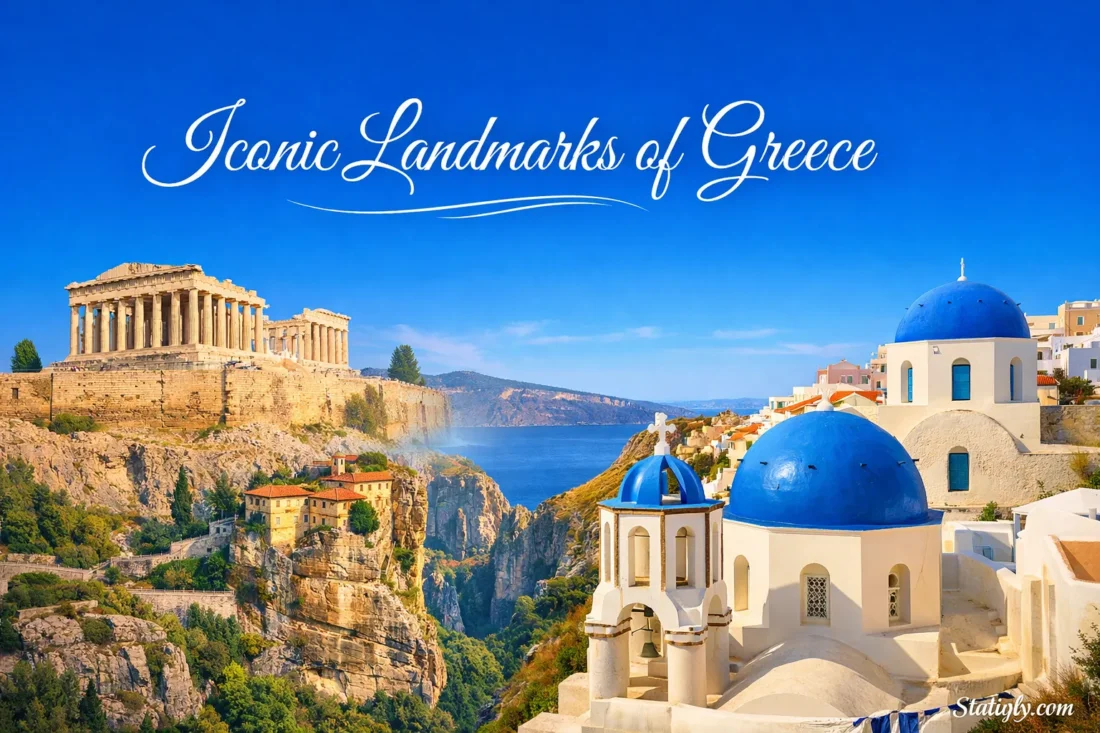
The Acropolis is where many trips begin, and that makes sense. It rises above central Athens with a calm, hard outline that you notice long before you reach the entrance. The Parthenon, the Erechtheion, and the Propylaea give the hill its identity, but the real pull is the way the site sits over the modern city. Old stone below a bright sky. Apartment blocks in every direction. It is not a closed-off ruin. It still speaks to the city around it. If you only have one major stop in Athens, make it this one.
Delphi
Delphi feels different from Athens at once. The setting does a lot of the work. The sanctuary sits on the slopes of Mount Parnassus, and the land opens toward the valley and the Gulf of Corinth. You do not just look at monuments here. You look through them, beyond them. The site linked with Apollo carries real weight, yet it never feels heavy. Walk slowly and the layout starts to make sense: the sacred route, the temple area, the theatre, the stadium, and nearby the round Tholos at the sanctuary of Athena Pronaia. Wide views, clean mountain air, and layers of meaning—Delphi gives you all of that in one place.
Olympia
Olympia does not lean on height or sea views. Its strength is different. The site sits in a green valley in the Peloponnese, and the remains spread out in a way that feels open and easy to follow. This was the sanctuary of Zeus and the place tied to the ancient Olympic Games, so the ground carries both ritual and athletic memory. That mix makes Olympia stand out. You can move from temple remains to the old stadium and still feel a clear sense of purpose in the landscape. It is one of those places where the story is big, but the walk stays calm.
Epidaurus
The name Epidaurus brings one image to mind first: the theatre. Fair enough. It deserves the attention. Built as part of the sanctuary of Asklepios, it is known for its harmony, its shape, and the clean way sound moves through the space. Even empty, it feels ready for a voice. The wider site matters too, because the theatre was not standing alone. It belonged to a healing centre that gave the whole place a different tone from a standard ruin field. If you like landmarks that still feel usable rather than frozen, Epidaurus is an easy yes.
Palace Of Knossos
On Crete, the Palace of Knossos gives you a different Greek landmark story. This is not the Greece of one isolated temple on a hill. It is a larger palace site, close to Heraklion, tied to the Minoan world and the long memory of King Minos. The appeal is in the layout as much as the remains: courtyards, ceremonial spaces, storage areas, and the feeling that you are moving through an early urban centre rather than a single monument. Some travelers love the Acropolis for its sharp simplicity. Knossos works in another way. It feels layered, busy, and lived in.
Temple Of Poseidon At Cape Sounion
If you want a landmark that is easy to pair with Athens, go south to Cape Sounion. The Temple of Poseidon stands at the southern tip of Attica, above the Aegean, and the setting is the whole point. The temple is elegant on its own, but the sea turns it into something larger. Light changes quickly there. So does mood. What makes Sounion useful for a trip is how little explanation it needs. You arrive, you see the columns, you see the horizon, and it lands immediately. Short drive. Strong payoff.
Places Where the Setting Does Half the Work
Meteora
Meteora is the sort of place people remember in full scenes, not single details. Rock pillars rise out of the plain, and monasteries sit high above the roads in ways that still look slightly unreal. The monastic presence here goes back many centuries, and several monasteries still receive visitors today. Yet history is only part of the draw. Scale matters more. So does silence. You spend a lot of time looking up, then looking out. Few landmarks in Greece give such a strong sense of vertical space. It is quiet, striking, and a little unreal in the best way.
Medieval City Of Rhodes
The Medieval City of Rhodes works because it is still a real town before it becomes a checklist of sights. The walls, gates, stone streets, and the Palace of the Grand Master give the place its shape, though the daily rhythm matters just as much. You can walk through it and feel that the urban plan still holds. That is the charm. This is not a landmark that asks for one big viewpoint and then lets you leave. It asks for time on foot. Turn a corner, find a quiet lane, then another. Rhodes gives you history in street form.
Old Town Of Corfu
Corfu Old Town has a softer rhythm than Rhodes, but it is just as rewarding. The streets narrow, open, bend, and pull you toward arcades, squares, church towers, and sea-facing edges almost without effort. The town’s roots run deep, and the forts give it a strong outline, yet what many visitors remember is the lived-in grace of it all. Laundry above a lane. A café under arches. Pale facades that catch the light well. Corfu is a landmark you walk inside rather than stand back and admire from afar. For many travelers, that makes it easier to love.
How To Choose the Right Stops
- For a first trip with limited time, pair Athens with the Acropolis and add Cape Sounion if you want one more landmark without changing hotels.
- For a mainland route with variety, combine Delphi and Meteora. One gives you sacred landscape, the other gives you height and stillness. They do not blur into each other.
- For classical site lovers, build around Olympia and Epidaurus. The first feels broad and ceremonial; the second feels focused and intimate.
- For an island stay with history built into the streets, choose Rhodes or Corfu. Rhodes feels more walled and stone-heavy. Corfu feels more polished and airy.
- For Crete, let Knossos lead the historic side of the trip, then balance it with time in Heraklion and the coast. It works well when you do not rush it.
You do not need to see every famous site in one journey. Greece rewards a lighter touch. Two or three landmarks chosen well can say more than a packed list ever will. Pick the ones that match the trip you actually want: city views, mountain calm, island streets, or a place where old stone meets open sea.