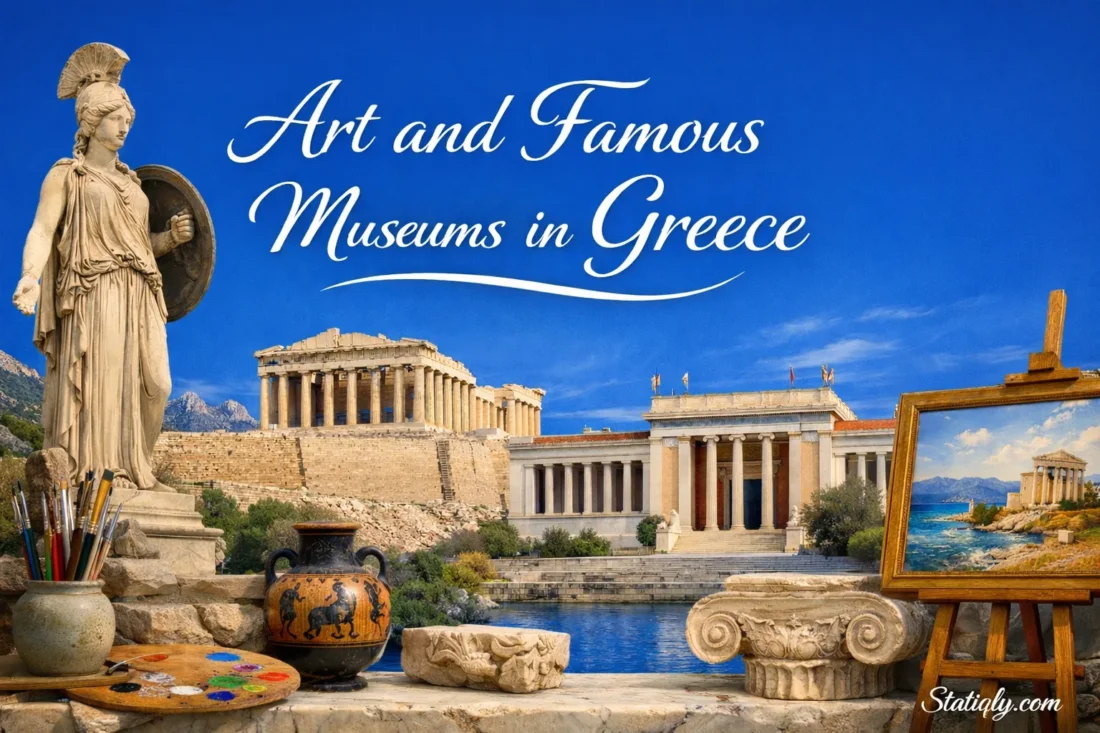
Greece gives art lovers something rare: a chance to see whole chapters of visual culture in one country, often within a short train ride, a ferry trip, or a walk across a city center. In Athens, marble statues, painted pottery, icons, and modern canvases sit within easy reach of each other. In Crete, Minoan art still feels fresh and alive. In Thessaloniki, Byzantine art fills galleries with a quiet glow. If you want to understand why Greek art still shapes how people picture beauty, balance, story, and form, museums in Greece make that easy.
And that is the real pull. You are not only looking at isolated objects. You are moving through a long visual line that includes Cycladic marble figures, Bronze Age frescoes, Classical sculpture, Byzantine icons, and modern Greek painting. Few places let you do that so naturally.
Why Art in Greece Feels So Direct
Why do so many visitors leave Greek museums with a sharper memory than they expected? Part of it is clarity. Greek art often speaks in clean shapes, readable gestures, and human scale. You notice a face. A hand. A fold of stone made to look soft. Then you notice something else: each era changes the mood without breaking the thread.
- Cycladic art strips form down to calm, spare lines.
- Minoan art brings movement, color, animals, and rhythm.
- Classical Greek art searches for order, proportion, and control.
- Hellenistic works open the door to drama, motion, and feeling.
- Byzantine art turns attention toward devotion, symbols, and luminous surfaces.
- Modern and contemporary Greek art keep the past nearby, but speak in a newer visual language.
That is why a museum visit in Greece rarely feels flat. One room may slow you down. The next may surprise you. Then, suddenly, a piece made thousands of years ago feels close. Very close.
Museums Worth Putting Near the Top of Your List
| Museum | City | What Stands Out | Who Will Enjoy It Most |
|---|---|---|---|
| Acropolis Museum | Athens | Finds from the Athenian Acropolis and the Parthenon Gallery | Travelers who want ancient Athens to make immediate sense |
| National Archaeological Museum | Athens | Large sweep of ancient Greek culture, from prehistory to late antiquity | Visitors who want one museum with broad range |
| Heraklion Archaeological Museum | Heraklion | Minoan art, frescoes, palace finds, famous prehistoric objects | Anyone curious about Crete and Bronze Age art |
| Museum of Cycladic Art | Athens | Cycladic figurines and early Aegean art | People who love simple form and early sculpture |
| Benaki Museum | Athens | A wide view of Greek culture across many periods | Readers of history through art, dress, objects, and design |
| Byzantine and Christian Museum | Athens | Icons, manuscripts, mosaics, and later religious art | Visitors drawn to sacred art and visual symbols |
| National Gallery | Athens | Modern Greek art from post-Byzantine painting onward | Travelers who want to move beyond archaeology |
| Museum of Byzantine Culture | Thessaloniki | Thoughtful galleries on Byzantine daily life, worship, and art | Visitors who want context, not just objects |
Acropolis Museum in Athens
If there is one museum that helps Athens click into place, this is it. The Acropolis Museum centers on finds from a single site: the Athenian Acropolis. That focus matters. Instead of jumping across regions, you stay with one sacred hill and watch its story unfold room by room.
The museum moves from slope finds and early pieces to the Archaic Acropolis Gallery, then rises toward the Parthenon Gallery. There, the relationship between sculpture and monument becomes easy to grasp. You are not just seeing fragments in glass cases. You are seeing how reliefs, metopes, and pedimental figures belonged to a larger whole.
Go here if you want to understand Athenian sacred art, temple sculpture, and the visual language of the Parthenon without feeling buried under too much information. Clean layout. Strong sightlines. Clear story.
National Archaeological Museum in Athens
The National Archaeological Museum is the place to visit when you want scale. Not noise. Scale. Its collections stretch from prehistoric antiquities to sculpture, bronzes, vases, Egyptian material, and Cypriot works. So the museum does something very useful: it lets you compare different regions, media, and periods without leaving the building.
This is where many visitors begin to feel the full width of ancient Greek art. Mycenaean gold sits in the same broader journey as marble sculpture, painted pottery, metalwork, and scientific objects such as the Antikythera Mechanism. The result is not just a parade of famous pieces. It is a visual education in how Greek makers worked with stone, bronze, clay, ivory, and line.
If your time is limited and you want one museum that covers a lot of ground, start here. Then narrow your focus elsewhere.
Heraklion Archaeological Museum in Crete
Crete changes the tone of Greek art, and the Heraklion Archaeological Museum shows that shift beautifully. Its strength is Minoan art: frescoes, ritual objects, ceramics, seal stones, palace finds, and works tied to Knossos, Phaistos, and other Cretan sites.
What feels different here? Motion, for one. Minoan images often seem lighter on their feet. Bulls leap, plants curve, marine life flows across surfaces, and painted walls feel open rather than rigid. The museum is also the place most travelers associate with pieces such as the Phaistos Disc and the Hagia Triada Sarcophagus, works that keep pulling people back into the Bronze Age world of Crete.
If Athens shows you order, Heraklion often shows you pulse. A different mood, and a memorable one.
Museum of Cycladic Art in Athens
The Museum of Cycladic Art is often the museum people did not expect to love so much. Then they walk into the galleries and the reaction is immediate. The marble figurines are spare, balanced, and unmistakable. Their faces are reduced. Their bodies are simplified. Yet the visual impact is strong.
This museum is a smart stop for anyone interested in how early Aegean makers handled shape. It also helps visitors see that Greek art did not begin with Classical temples. Long before that, artists in the Cyclades were already making objects with a striking sense of proportion and presence.
There is a useful lesson here for casual visitors too: small does not mean minor. Some of the most lasting forms in Greek art are quiet ones.
Benaki Museum in Athens
The Benaki Museum works well for visitors who like connections. Rather than staying inside one narrow period, it opens doors between eras. Greek dress, decorative arts, painting, household objects, and works from many centuries sit within one wider cultural view.
That makes it especially helpful if you are less interested in only one medium and more interested in how people lived, dressed, furnished spaces, worshipped, and represented themselves. Not every museum needs to feel monumental. Benaki often feels human-sized, and because of that, intimate in the best way.
Byzantine and Christian Museum in Athens
For many travelers, Byzantine art is the missing bridge in their understanding of Greece. They know the ancient world. They know modern city life. The centuries in between feel hazy. The Byzantine and Christian Museum helps clear that haze.
Its collections include icons, wall paintings, manuscripts, ceramics, textiles, mosaics, and works on paper across a long timeline. The visual language changes here. Gold grounds, frontal figures, sacred gestures, and symbolic color take over. If you slow down, the art starts to read differently. Less about physical realism alone, more about presence, meaning, and devotion.
This museum suits visitors who like to look carefully. It rewards patience.
National Gallery in Athens
Many first-time visitors to Greece spend so much time on antiquity that they miss what comes later. That is why the National Gallery matters. It brings modern Greek art into focus, with works that move from post-Byzantine painting through later schools and into newer directions.
This is where you begin to see how Greek painters and sculptors responded to Europe, local memory, faith, portraiture, landscape, and the shaping of a modern artistic identity. You also get a fuller sense of continuity. Greece is not only a place of ancient marble. It is also a place of modern image-making, debate in paint, and renewed forms of looking.
Museum of Byzantine Culture in Thessaloniki
Thessaloniki has a different museum rhythm from Athens, and the Museum of Byzantine Culture shows why. Its permanent galleries are arranged thematically, which helps visitors move through daily life, worship, burial customs, architecture, trade, and art without losing the thread.
That balance between object and context is one of its strengths. You do not just see icons or minor arts in isolation. You see how Byzantine culture shaped a whole visual environment. For travelers who want museum rooms to tell a fuller story, this is an excellent stop.
EMST for Contemporary Art in Athens
If your taste leans toward the present, make room for EMST, the National Museum of Contemporary Art in Athens. Its collection focuses on 21st-century contemporary art and includes painting, sculpture, installations, photography, video, and other mixed media.
It offers a useful shift in pace after archaeology-heavy days. You step from marble, bronze, and icons into a newer language of image, space, sound, and concept. Different energy. Still worth your time.
How Greek Art Changes From One Era to the Next
It helps to know a little before you walk in. Not too much. Just enough to spot the change in mood.
- Cycladic Art
Look for folded arms, reduced facial detail, and balanced outline. These works feel calm, almost architectural in their order. - Minoan Art
Notice fluid lines, sea life, plants, and scenes with movement. Frescoes from Crete often feel open, bright, and active. - Mycenaean Art
Watch for gold work, grave goods, strong forms, and objects tied to elite life and ceremony. - Archaic and Classical Greek Art
Here the human body becomes a central subject. Proportion matters. So does poise. - Hellenistic Art
Faces, torsos, and drapery carry more tension and feeling. The body turns, leans, twists. - Byzantine Art
Shift your eye from natural depth to symbol, surface, and sacred presence. Eyes matter. Hands matter. Gold matters. - Post-Byzantine and Modern Greek Art
These works often carry older traditions forward while opening up to newer techniques and subjects. - Contemporary Greek Art
Media expands. Installation, photography, video, and conceptual practice take a larger role.
How to Choose the Right Museum for Your Trip
You do not need to see everything. Better, usually, to choose with purpose.
- If this is your first visit to Greece: pair the Acropolis Museum with the National Archaeological Museum.
- If you are visiting Crete: make the Heraklion Archaeological Museum a priority, even if you have only half a day.
- If you like early sculpture and simple form: go to the Museum of Cycladic Art.
- If sacred art interests you: choose the Byzantine and Christian Museum in Athens or the Museum of Byzantine Culture in Thessaloniki.
- If you want art after antiquity: spend time in the National Gallery.
- If you want a present-day angle: add EMST to your Athens plan.
- If you enjoy cross-period cultural reading: the Benaki Museum is a rewarding choice.
One small tip (it helps more than people think): do not stack too many large museums back to back. Greek museums ask for close looking. Eyes tire. Feet do too.
Details Worth Looking For Inside Greek Museums
Famous objects pull attention first. Fair enough. Still, some of the richest moments come from details many visitors rush past.
- Traces of paint on marble — ancient sculpture was not always plain white.
- Drapery folds — they often carry movement and mood better than faces do.
- Hands and eyes in icons — Byzantine artists used them with great care.
- Marine forms in Cretan art — octopus, fish, shells, and flowing plant shapes say a lot about place.
- Small ritual objects — quiet pieces often reveal daily life more clearly than monumental ones.
- Room sequence — sometimes the order of galleries tells the story as much as the objects themselves.
Worth remembering is this: Greek museums are not only about masterpieces. They are also about continuity. A vessel, a seal, a painted fragment, a small icon panel — each can sharpen your sense of the whole.
Cities Where Museum Time Pays Off the Most
Athens is the obvious starting point because the range is so wide. You can move from the Acropolis Museum to the National Archaeological Museum, then into Cycladic, Byzantine, modern, and contemporary collections without changing cities. For art lovers, it is dense in the best way.
Heraklion is ideal when you want a focused Cretan experience. The museum visit deepens nearby archaeological sites and turns palace names into something visual and memorable.
Thessaloniki feels especially rewarding for visitors drawn to Byzantine art and museum displays with strong narrative flow. The city itself supports that mood, and the museum experience often feels less rushed.
So where should you start? If you want the broadest sweep, Athens. If you want Bronze Age Crete, Heraklion. If you want Byzantine depth, Thessaloniki. Each choice works. Just a different lens.