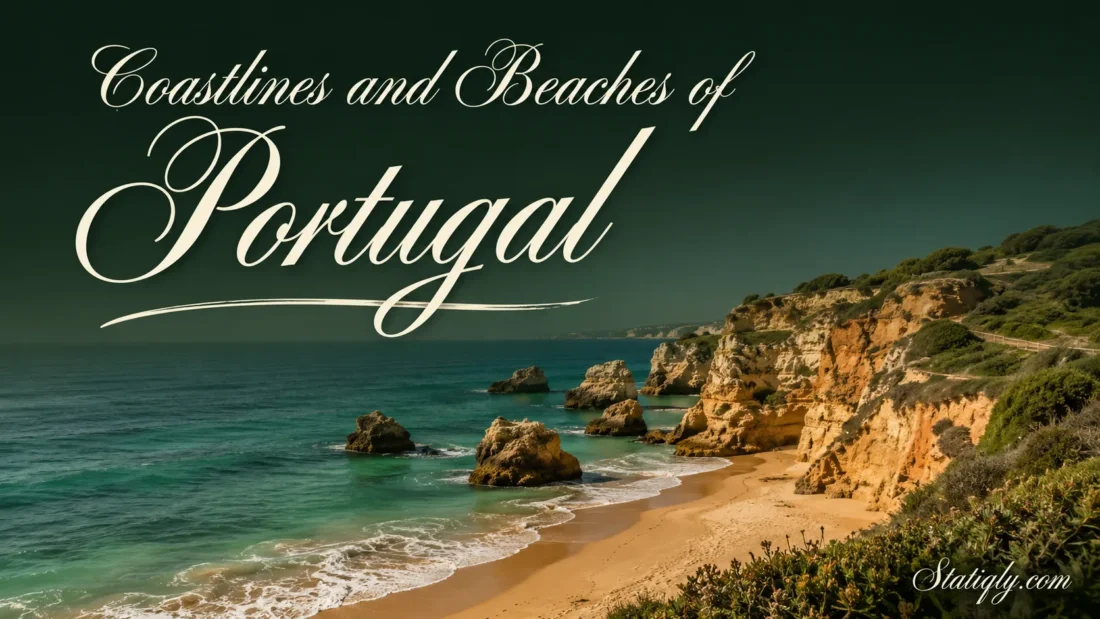
Portugal meets the Atlantic with a coastline that feels different every few hours of travel. In the north, beaches sit beside granite towns and cool surf. Around Lisbon, sandy bays, river mouths, and elegant seaside towns sit close together. Farther south, the Algarve brings golden cliffs, calm coves, and long sunny beaches. Add Madeira, Porto Santo, and the Azores, and Portugal becomes one of Europe’s most varied coastal countries.
For travelers, the real value is choice. You can swim in sheltered bays, walk above wild cliffs, learn to surf, watch fishing boats come in, or take a slow day on soft sand. The coast is not one single scene. It changes like a map being unfolded section by section.
Portugal’s Coastline in Plain View
Portugal has a long Atlantic edge on the western side of the Iberian Peninsula. Its mainland coast runs for about 1,800 kilometers, while the islands add volcanic shores, natural pools, and ocean viewpoints. The country’s beaches are shaped by wind, tides, rivers, cliffs, dunes, and island geology.
| Coastal Area | What It Feels Like | Good For |
|---|---|---|
| Northern Portugal | Wide Atlantic beaches, cooler water, fishing towns, rocky edges | Surfing, coastal walks, seafood, quieter seaside stays |
| Central Coast | Long sandy beaches, dunes, surf towns, open ocean views | Surf schools, road trips, beach towns, relaxed summer breaks |
| Lisbon Coast | Urban beaches, elegant resorts, river-meets-sea scenery | Short beach trips, families, city-and-coast travel |
| Alentejo Coast | Protected-feeling landscapes, dunes, cliffs, wide beaches | Nature walks, quiet beach days, slow travel |
| Algarve | Golden cliffs, coves, caves, warm light, sandy bays | Swimming, family trips, scenic beach walks |
| Madeira and Porto Santo | Volcanic coast, sea pools, cliffs, one long sandy island beach | Ocean viewpoints, bathing areas, soft-sand beach days |
| Azores | Volcanic shores, black sand, natural pools, green cliffs | Nature travel, coastal scenery, island swimming spots |
Why Portugal’s Beaches Feel So Different
The Atlantic shapes everything here. It brings clean air, wide horizons, steady surf, and cooler water than many visitors expect. Even in summer, the sea can feel fresh. That is part of the Portuguese beach rhythm: bright sun above, cool ocean below.
Geography does the rest. Limestone cliffs form sheltered coves in the Algarve. Dunes protect long beaches in Comporta and the Alentejo. Volcanic rock creates natural pools in Madeira and the Azores. Near Lisbon, beaches sit close to train lines, promenades, and old coastal towns. Easy to reach, yet still full of character.
The Algarve Coast and Its Golden Cliffs
The Algarve is Portugal’s most famous beach region, and it earns that attention through scenery rather than size alone. Around Lagos, Lagoa, Carvoeiro, and Albufeira, the coast is carved into cliffs, arches, caves, and small coves. The sand often glows gold under late afternoon light.
Praia da Marinha is often linked with classic Algarve scenery: cliffs, clear water, and natural rock forms. Praia do Camilo near Lagos gives a more compact cove experience, with steps leading down between cliffs. Around Benagil, the coast is known for sea caves and boat trips, though local access rules may change by season and sea conditions.
Beaches That Suit Families
Families often look for sand, services, lifeguarded areas in season, and calmer water. Parts of the Algarve offer that mix well, especially in resort towns with broad beaches and easy walking access. Meia Praia near Lagos, Praia da Rocha in Portimão, and beaches around Vilamoura are popular for simple beach days.
- Choose beaches with lifeguards during the bathing season.
- Check tide times before settling near rocks or cliff bases.
- Use marked paths above cliffs rather than informal trails.
- Bring shade in summer, especially for children.
The Wild Beauty of Costa Vicentina
The western Algarve and Alentejo share one of Portugal’s most open-feeling coastlines: the Costa Vicentina. Here the beaches are broader, the cliffs are darker, and the Atlantic feels more direct. It is not a polished postcard. Better than that, it feels alive.
Places such as Arrifana, Amado, Bordeira, and Odeceixe are loved by surfers, walkers, and travelers who prefer space over crowds. The area also connects with the Rota Vicentina, a network of walking routes that follows parts of the southwest coast.
What Makes This Coast Special
- Open Atlantic surf: waves can be strong, so marked swimming zones matter.
- Cliff-top views: many beaches look dramatic from above before you even reach the sand.
- Small coastal villages: towns and villages keep the pace slower.
- Nature-focused travel: dunes, cliffs, birds, and walking routes are part of the experience.
Lisbon’s Coast: City Life Beside The Sea
Lisbon gives visitors a rare mix: a capital city with beaches close by. To the west, the train line toward Cascais passes several easy beach stops. Carcavelos is one of the most practical choices for a beach day from the city, with wide sand and surf schools. Farther along, Estoril and Cascais bring a more polished seaside mood.
Across the Tagus River, Costa da Caparica stretches for many kilometers, with beach bars, surf spots, and long sandy areas. It feels more open than the small beaches near Cascais. On a warm day, Lisbon locals often spread out here. Space matters.
Sintra-Cascais Coast
The coast near Sintra is more rugged. Praia da Adraga, Praia Grande, and Praia das Maçãs sit between cliffs, roads, and green hills. The ocean here can be powerful, yet the views are memorable. For many travelers, this part of the coast works better for walking, photography, and fresh-air stops than for long swims.
Central Portugal: Surf Towns, Dunes, and Long Beaches
Central Portugal is shaped by wide Atlantic beaches and steady surf culture. Peniche, set on a small peninsula, is one of the country’s main surf centers. Nearby Baleal offers a softer beach-town feel, with surf schools, cafés, and long stretches of sand.
Nazaré is known worldwide for very large winter waves offshore, especially near Praia do Norte. For most visitors, the town also offers a traditional seaside setting, a broad main beach, and a high viewpoint above the coast. Not every day is about waves. Some days are for walking the promenade and watching the sea change color.
Good Central Coast Stops
- Peniche: surf schools, beaches on different sides of the peninsula, boat access to the Berlengas in suitable conditions.
- Baleal: relaxed surf-town energy and easy beach access.
- Nazaré: ocean viewpoints, a classic beach town, and strong Atlantic identity.
- Figueira da Foz: very broad sand and a long waterfront setting.
- Aveiro Coast: dunes, lagoon scenery, and colorful coastal houses near Costa Nova.
Northern Portugal: Cooler Water and Strong Coastal Character
The north feels different from the Algarve. The water is cooler, the air can feel brisk, and the towns often have a more working-coast atmosphere. Beaches near Porto, Matosinhos, Vila do Conde, Esposende, and Viana do Castelo suit travelers who like coastal walks, surf, seafood, and local life.
Matosinhos is one of the easiest beach areas from Porto, with surf schools and seafood restaurants nearby. Farther north, Moledo and Afife offer broader views and a wilder Atlantic mood. Simple places, strong scenery.
Alentejo Coast: Slow Days and Open Sand
The Alentejo coast sits between the Lisbon region and the Algarve, yet it has its own pace. Beaches often feel wide and quiet, backed by dunes, cliffs, pine trees, or small towns. Comporta, Tróia, Melides, Vila Nova de Milfontes, and Zambujeira do Mar are among the names travelers often notice first.
This coast suits people who prefer room to breathe. It is good for long walks, gentle road trips, and stays where the beach is part of the day rather than the whole schedule.
Madeira: Cliffs, Sea Pools, and Atlantic Views
Madeira is not a classic sandy beach island. Its coast is mostly volcanic, steep, and dramatic. That is the point. The island gives travelers natural sea pools, pebble beaches, bathing platforms, and cliff viewpoints that look straight into the Atlantic.
Porto Moniz is known for natural volcanic pools. Seixal has black sand and green mountain scenery behind it. Around Funchal, bathing complexes and coastal promenades make ocean access easier. Nearby Porto Santo, a separate island in the Madeira archipelago, offers something very different: a long sandy beach with calm, open space.
The Azores: Volcanic Shores and Natural Pools
The Azores sit far out in the Atlantic, and their coastlines show it. Beaches may be black sand, small, and framed by green cliffs. Natural pools and rocky swimming areas are common, especially where lava shaped the shoreline.
On São Miguel, places such as Praia dos Moinhos and Mosteiros show the island’s volcanic beach character. On other islands, coastal bathing areas often matter as much as sandy beaches. The sea feels close everywhere, even when the shore is rocky.
Which Portuguese Coast Suits Your Trip?
Choosing a coast in Portugal is easier when you match the place to the kind of day you want. A beach for swimming is not always the same as a beach for surfing. A scenic cove may not be the easiest choice with small children. The coast rewards a little planning.
| Travel Style | Strong Coastal Choices | Why They Fit |
|---|---|---|
| First Beach Trip To Portugal | Algarve, Cascais, Costa da Caparica | Easy access, many services, familiar beach settings |
| Surf-Focused Trip | Peniche, Baleal, Ericeira, Costa Vicentina, Matosinhos | Surf schools, Atlantic swell, beach variety |
| Family Beach Stay | Algarve resort towns, Cascais area, Tróia | Sand, services, seasonal lifeguards, simple access |
| Quiet Coastal Escape | Alentejo Coast, western Algarve, parts of northern Portugal | Open beaches, slower towns, more room outside peak periods |
| Nature and Walking | Costa Vicentina, Sintra-Cascais Coast, Madeira, Azores | Cliffs, viewpoints, trails, volcanic scenery |
| City Plus Beach | Lisbon Coast, Porto and Matosinhos | Beach access without giving up museums, food, and city life |
Beach Seasons in Portugal
Summer brings the warmest beach weather, especially from June to September. The Algarve usually has the most reliable sun for classic beach holidays. Lisbon and the central coast also work well in summer, though Atlantic winds can appear. In the north, the sea often stays cooler, even when the air is warm.
Spring and autumn can be excellent for walking, road trips, surfing, and quieter stays. Winter is not a standard swimming season for most visitors, but it can be a fine time for coastal scenery, seafood towns, and surf watching in suitable areas.
Simple Seasonal Notes
- June to September: warmest beach period, busiest in famous coastal towns.
- April, May, October: good for walks, views, mild weather, and fewer beach crowds.
- Winter: better for coastal scenery and surf culture than casual swimming.
- Island weather: Madeira and the Azores can change quickly, so flexible plans help.
Coastal Food and Local Beach Life
Portugal’s coastline is tied to food in a natural way. Grilled fish, seafood rice, clams, octopus dishes, and simple seaside cafés are part of many coastal trips. In smaller towns, the beach day often ends with a walk, a meal, and a view of the harbor or sunset.
There is no need to rush it. The coast is often best enjoyed in small pieces: one beach, one viewpoint, one meal, one slow walk back.
Safe and Respectful Beach Habits
Portugal’s beaches are welcoming, but the Atlantic deserves respect. Conditions can change with tides, wind, and swell. Lifeguarded beaches and posted flags give the clearest local guidance during the bathing season.
- Swim only where conditions look safe and follow beach flag rules.
- Keep distance from cliff edges and avoid standing below unstable-looking cliffs.
- Use marked paths through dunes to protect fragile coastal plants.
- Carry water and sun protection in summer.
- Leave shells, rocks, plants, and natural features where they are.
- Check local guidance before visiting caves, sea arches, or remote beaches.
Well-Known Beaches and What They Offer
| Beach Or Coastal Spot | Region | Main Appeal |
|---|---|---|
| Praia da Marinha | Algarve | Golden cliffs, clear water, scenic rock forms |
| Meia Praia | Algarve | Long sandy beach near Lagos |
| Praia da Rocha | Algarve | Broad sand, services, resort-style beach access |
| Arrifana | Costa Vicentina | Surf, cliffs, west-coast atmosphere |
| Odeceixe | Alentejo / Algarve Border Area | River-meets-sea scenery and wide sand |
| Carcavelos | Lisbon Coast | Easy beach trip from Lisbon and surf schools |
| Costa da Caparica | Lisbon Area | Long sandy coast across the Tagus |
| Baleal | Central Coast | Surf town feel and beach variety |
| Nazaré | Central Coast | Seaside town, viewpoints, famous surf culture |
| Matosinhos | Northern Portugal | Easy access from Porto, surf, seafood nearby |
| Porto Santo Beach | Madeira Archipelago | Long sandy beach and calm island pace |
| Mosteiros | Azores | Volcanic coast, dark sand, Atlantic sunsets |
How To Plan a Portugal Coast Route
A good coastal route should not try to cover every famous beach. Portugal looks small on a map, but the coastline bends, climbs, and slows you down in the best way. Pick a region first, then build around nearby beaches and towns.
For Three To Four Days
- Lisbon Coast: Lisbon, Cascais, Sintra coast, Costa da Caparica.
- Western Algarve: Lagos, Sagres, Praia do Camilo, Meia Praia, Arrifana.
- Porto Coast: Porto, Matosinhos, Vila do Conde, Viana do Castelo.
For One Week
- Algarve Route: Faro or Tavira, Carvoeiro, Lagos, Sagres.
- Central Surf Route: Ericeira, Peniche, Baleal, Nazaré, Aveiro coast.
- Slow Alentejo Route: Comporta, Melides, Vila Nova de Milfontes, Zambujeira do Mar.
For Island Coast Travel
- Madeira: Funchal, Cabo Girão area, Porto Moniz, Seixal, eastern viewpoints.
- Porto Santo: long beach stay with a slower rhythm.
- Azores: natural pools, volcanic beaches, viewpoints, and flexible weather plans.
Small Details That Make Beach Days Easier
Portuguese beaches can be simple to enjoy when you plan around the ocean rather than against it. Tide, wind, and access matter. A beach that feels perfect in the morning may feel very different by late afternoon.
- Pack a light layer for windy Atlantic evenings.
- Bring sandals or shoes for rocky paths near coves.
- Arrive earlier at small Algarve beaches in peak summer.
- Check public transport times for beaches outside city areas.
- Choose larger beaches when traveling with children or beach gear.
- Keep a flexible plan on island coasts, where weather can shift fast.
Frequently Asked Questions About Portugal’s Coastlines and Beaches
Does Portugal Have Warm Beach Water?
Portugal’s sea is Atlantic, so it often feels cooler than the Mediterranean. The Algarve usually feels more comfortable for swimming in summer, while the north and west coast can stay fresh even on warm days.
Which Part of Portugal Is Better For Classic Beach Holidays?
The Algarve is the most common choice for classic beach holidays because it has many sandy beaches, sunny weather, resort towns, and sheltered coves. Lisbon’s coast also works well for shorter beach stays mixed with city travel.
Where Should Surfers Go in Portugal?
Peniche, Baleal, Ericeira, Costa Vicentina, Nazaré, and Matosinhos are well-known surf areas. Beginners should use surf schools and choose beaches suited to their level, since Atlantic conditions vary.
Are Portugal’s Beaches Good For Families?
Yes, many are good for families, especially larger beaches with lifeguards, easy access, toilets, cafés, and space for shade. The Algarve, Cascais area, Costa da Caparica, and Tróia are practical choices for many family trips.
Are Madeira and The Azores Good For Sandy Beaches?
They are better known for volcanic coastlines, natural pools, cliffs, and ocean views. Porto Santo, part of the Madeira archipelago, is the main exception, with a long sandy beach that suits a more traditional beach stay.
What Is The Most Scenic Coastal Area in Portugal?
That depends on the scene you want. The Algarve is known for golden cliffs and coves. Costa Vicentina feels wild and open. Sintra-Cascais brings cliffs and hills near Lisbon. Madeira and the Azores offer volcanic coastal views that feel very different from the mainland.