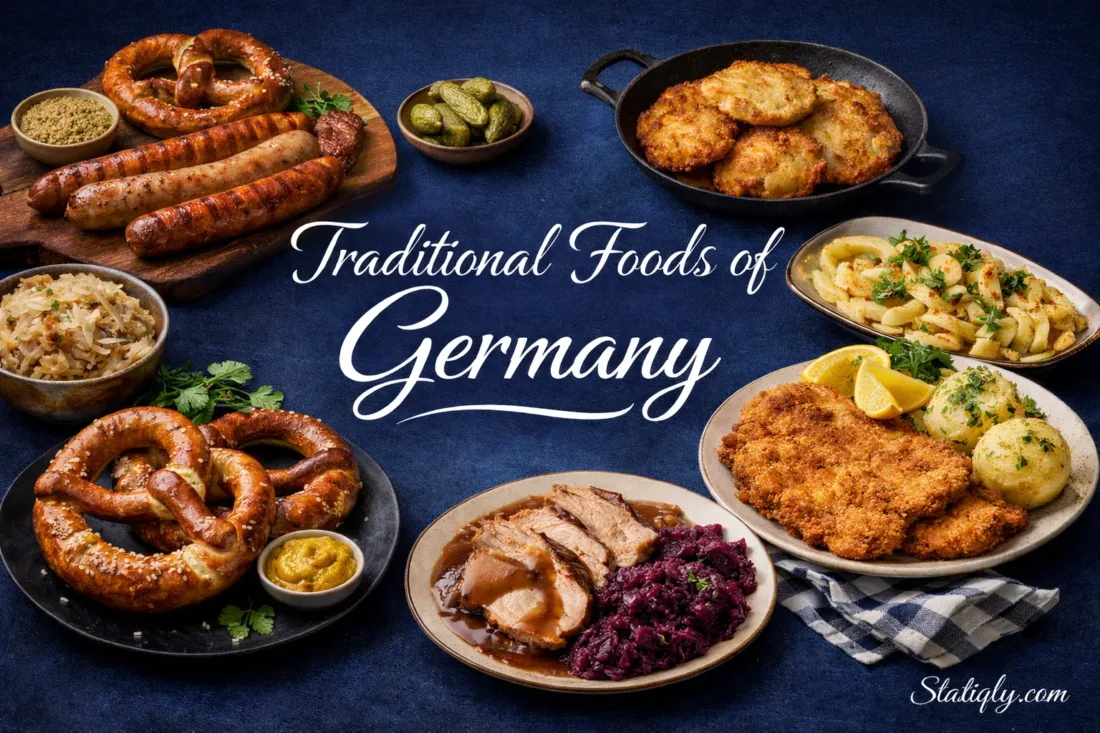
Germany’s traditional food feels like a warm kitchen on a crisp day: hearty, balanced, and built around simple ingredients treated with care. You’ll notice a love for golden crusts, slow-cooked comfort, and bright, tangy sides. If you’re curious what to order, what to cook, or how to recognize the classics on a menu, this guide walks you through the most-loved dishes in a friendly, practical way.
Jump To The Parts You Need
A Handy Starting List Of Traditional Favorites
If you want quick orientation, use this list as your map. Each dish below is widely recognized, easy to spot on menus, and tied to everyday German cooking.
| Dish | Where You’ll Often See It | What It Tastes Like | Common Pairing |
|---|---|---|---|
| Bratwurst | Across Germany, especially in the south | Juicy, gently spiced, grilled until browned | Mustard, bread roll, or warm potato salad |
| Sauerbraten | Rhineland-style home cooking and restaurants | Tender roast with a pleasantly tangy sauce | Red cabbage, dumplings, or potatoes |
| Rouladen | Family meals nationwide | Beef rolls with savory filling, slow-braised | Mashed potatoes or dumplings |
| Käsespätzle | Swabia and Alpine regions | Soft egg noodles with melted cheese, comforting | Crispy onions, simple green salad |
| Maultaschen | Swabian kitchens and bistros | Stuffed pasta pockets, hearty and mild | Broth, sautéed onions, or potato salad |
| Kartoffelsalat | Side dish at many tables | Potato salad that can be tangy or creamy | Sausages, schnitzel-style cutlets, or fish |
| Brezel | Bakeries everywhere | Chewy crust, soft middle, lightly salty | Butter, cheese, or soup |
| Lebkuchen | Especially famous in Nuremberg | Spiced, aromatic, often with nuts | Tea, coffee, or as a small sweet bite |
What Traditional German Food Tastes Like
Warm And Savory
Many classic dishes lean into slow cooking and deep browning. Think roasted meats, pan-seared cutlets, and long-simmered sauces. The flavors stay clear and comforting, not fussy.
- Toasty notes from grilling, roasting, or frying
- Gentle spices like pepper, nutmeg, caraway, or marjoram
- Hearty textures from dumplings, potatoes, and noodles
Bright And Balanced
German meals often add a bright counterpoint. A tangy salad, a spoon of sauerkraut, or a lightly sweet red cabbage can make rich food feel fresh. It’s a simple trick, like opening a window in a warm room.
- Tang from vinegar-based dressings and pickled sides
- Sweet-sour notes in cabbage and some sauces
- Crunch from fresh onions, cucumbers, and crisp breads
A Typical Plate
A classic traditional plate often has three parts: the main (meat or a filling vegetarian option), the starch (potatoes, dumplings, noodles), and the bright side (cabbage, salad, pickles). Once you see that pattern, menus start to feel easy.
Iconic Savory Dishes To Try
These are the dishes that show up again and again in traditional German cooking. Some are everyday comfort food. Others are special-occasion favorites. All of them are worth knowing.
Bratwurst And Other Regional Sausages
German sausage culture is huge, and bratwurst is one of the easiest entry points. It’s usually grilled or pan-seared until the outside turns deeply browned. Inside stays juicy. The seasoning is often mild and fragrant, not overpowering.
- If you like simple flavors, look for fine-textured sausages with gentle spices.
- If you want something bolder, try versions with herbs or a coarser grind.
- On a plate, it’s commonly served with potato salad or sauerkraut.
Sauerbraten (Marinated Pot Roast)
sauerbraten is a slow-cooked roast known for its tender texture and its pleasantly tangy sauce. The meat is traditionally marinated with vinegar, aromatics, and spices, then braised until it practically yields to a fork. The result feels rich, but the tang keeps it lively.
How To Spot A Great Serving
- The sauce tastes balanced, not sharply sour.
- The meat slices cleanly and looks moist, not dry.
- Sides like red cabbage or dumplings usually mean it’s presented in a classic style.
Rouladen (Beef Rolls With Filling)
rouladen are thin slices of beef wrapped around a savory filling, then braised until tender. Every household has a preferred version, so you’ll see small differences. That’s part of the charm. When it’s done well, you get soft meat, a flavorful interior, and a sauce that tastes like it simmered patiently.
Best Sides
- Mashed potatoes
- Boiled potatoes with parsley
- Dumplings
- Red cabbage
Why People Love It
It’s comforting without being heavy in a dull way. Each bite has layers: meat, filling, sauce, then a mild starch on the side.
Spätzle And Käsespätzle
spätzle are soft egg noodles, often associated with Swabian cooking. They can be served as a side (think “German comfort noodles”) or turned into käsespätzle, a rich, satisfying dish with melted cheese and usually crisped onions on top.
- Spätzle as a side pairs well with saucy mains like roasts.
- Käsespätzle is often a full meal, especially with a simple salad.
- Texture matters: it should feel tender, not rubbery.
Maultaschen (Swabian Stuffed Pasta)
maultaschen are large pasta pockets with a hearty filling. You might see them served in broth, sliced and pan-seared, or paired with potato salad. If you enjoy comfort food that feels homey and filling, this one is a smart pick.
Kartoffelsalat (Potato Salad With Regional Styles)
Potato salad in Germany can feel like two different dishes depending on where you are. Some versions are dressed with a vinegar-based dressing and served warm or room temperature. Others are creamy and served cold. Either way, it’s a classic side that turns a simple meal into something satisfying.
Regional Specialties Worth Seeking Out
Germany’s regional cooking is a big part of the fun. One city’s comfort food can be completely different from the next. If you like tasting a place through its everyday meals, this is where to lean in.
North German Favorites
- Fischbrötchen: a fish sandwich commonly found in northern coastal areas. It’s simple, satisfying, and ideal when you want something quick.
- Labskaus: a traditional northern dish with a strong identity. Recipes vary, so it’s worth trying where it’s local and well-loved.
- Rote Grütze: a bright berry dessert that feels fresh and light after a hearty meal.
South German Comfort Plates
- Schupfnudeln: potato noodles often pan-fried until golden and served with savory sides.
- Flammkuchen: a thin, crisp flatbread-style tart that’s easy to share.
- Weißwurst-Style Breakfast Plates: in some regions, you’ll find gentle, mild sausages served with classic sides in the morning.
Central And Eastern-Style Classics
- Thüringer-Style Grilled Sausages: a well-known regional sausage tradition with a loyal following.
- Dresden-Style Stollen: a celebrated fruit-and-nut loaf especially popular in colder months.
- Potato Soups And Eintopf: one-pot meals that feel practical and cozy.
A Simple Way To Explore By Region
Try this low-stress approach: pick one main and one side that feel “local” to the area you’re visiting, then add a bakery item later. In one day, you’ll taste how the region cooks from morning to night.
Breads, Baked Goods, And Everyday Snacks
Walk into a German bakery and you’ll understand why bread is treated like a daily essential. The choices can feel endless, yet the focus stays clear: good crust, good crumb, and flavors that work with simple toppings.
Brezel (Pretzel)
The brezel is a bakery icon. The outside is chewy and browned; the inside is soft. It’s great on its own, but also perfect with butter, cheese, or soup. If you want one classic snack that travels well, this is it.
Rye And Mixed-Grain Breads
Rye-forward breads and mixed-grain loaves show up in many regions. They taste nutty, earthy, and satisfying. They also pair beautifully with savory spreads, sliced cheese, and soups.
- Look for loaves that feel dense but not heavy.
- A good crust should be firm and aromatic, not tough.
- Many breads taste even better the next day.
Classic German Desserts That Feel Truly Traditional
German desserts often aim for comfort over flash. You’ll see fruit, nuts, gentle spices, and bakes that feel generous without being overly sweet.
Apfelstrudel (Apple Strudel)
Apple strudel is a crowd-pleaser: tender apples, warm spices, and thin pastry. Served warm, it’s the kind of dessert that makes a table go quiet for a moment. Want something familiar but still distinctly Central European? This is a safe, delicious choice.
Käsekuchen (German-Style Cheesecake)
käsekuchen often tastes lighter than many cheesecakes people know. It tends to be gently sweet, with a soft, airy texture. If you like desserts that don’t overwhelm, it’s a great pick.
Lebkuchen (Spiced Soft Gingerbread)
lebkuchen is known for its aromatic spice blend and often includes nuts. It’s associated with seasonal baking in many households, but it’s enjoyable any time you want a cozy, fragrant sweet bite.
Bienenstich (Bee Sting Cake)
bienenstich usually features a soft yeast cake base, a creamy layer, and a crunchy almond top. It’s a lovely contrast of textures: soft, creamy, and crisp in one slice.
Vegetarian-Friendly Traditional Options
Traditional doesn’t always mean meat-heavy. There are classic German plates that feel fully satisfying without relying on meat. If you’re vegetarian, these are strong choices that still taste “local.”
- Käsespätzle: rich, comforting noodles with cheese and onions.
- Potato soup: creamy and hearty, often served with bread.
- Mushroom dishes: sautéed mushrooms or creamy sauces show up in many traditional kitchens.
- Red cabbage and salads: classic sides that can become a full meal with bread and cheese.
- Apfelstrudel and Käsekuchen: desserts that double as an easy café-style meal.
A Quick Ordering Tip
If you want to keep it simple, look for dishes centered on potatoes, noodles, cheese, and vegetables. Traditional menus often list sides clearly, so you can build a satisfying plate.
Helpful German Menu Words You’ll See Often
Ever stared at a menu and thought, “I know I want something comforting, but what is this?” These common words help you decode the basics quickly.
- Braten: roast
- Schnitzel: thin cutlet (usually breaded)
- Wurst: sausage
- Knödel: dumplings
- Kraut: cabbage (often sauerkraut)
- Kartoffeln: potatoes
- Salat: salad
- Soße: sauce or gravy
- Gebraten: pan-fried
- Gebacken: baked
Simple Ways To Bring Traditional German Flavors Home
You don’t need complicated techniques to cook in a German style. The real magic is in a few habits: browning well, using potatoes wisely, and balancing rich dishes with something tangy or crisp.
Starter Shopping List
- Potatoes (waxier ones hold their shape for salads)
- Onions and apples (great for savory-sweet balance)
- Cabbage (red cabbage or sauerkraut)
- Mustard
- Egg noodles or ingredients for spätzle
- Caraway, nutmeg, and black pepper
A No-Stress Cooking Flow
- Brown first: sear meat or onions until deeply golden for flavor.
- Simmer gently: keep heat low for tender textures and smoother sauces.
- Add a bright side: a vinegar-dressed salad or cabbage keeps the plate lively.
- Finish with a bakery-style touch: pretzels, rye bread, or a simple cake slice makes it feel complete.
Three Easy Meal Ideas
- Bratwurst plate: sausages + warm potato salad + cucumber salad.
- Käsespätzle night: cheesy spätzle + green salad + pretzels on the side.
- Roast-style dinner: slow-cooked roast + red cabbage + boiled potatoes.
Common Questions People Ask About German Food
Is German food always heavy?
It can be hearty, but it’s often balanced with crisp salads, cabbage, pickled sides, and lighter soups. If you want a lighter meal, choose a soup, a salad with bread, or a noodle dish paired with vegetables.
What should I try first if I’m new to German cuisine?
Start with bratwurst with potato salad, or käsespätzle if you want a vegetarian option. For dessert, apfelstrudel is a friendly classic.
What’s a good traditional side dish to order?
kartoffelsalat is the easiest universal side to try. If you like tangy flavors, add sauerkraut or a vinegar-dressed salad for balance.