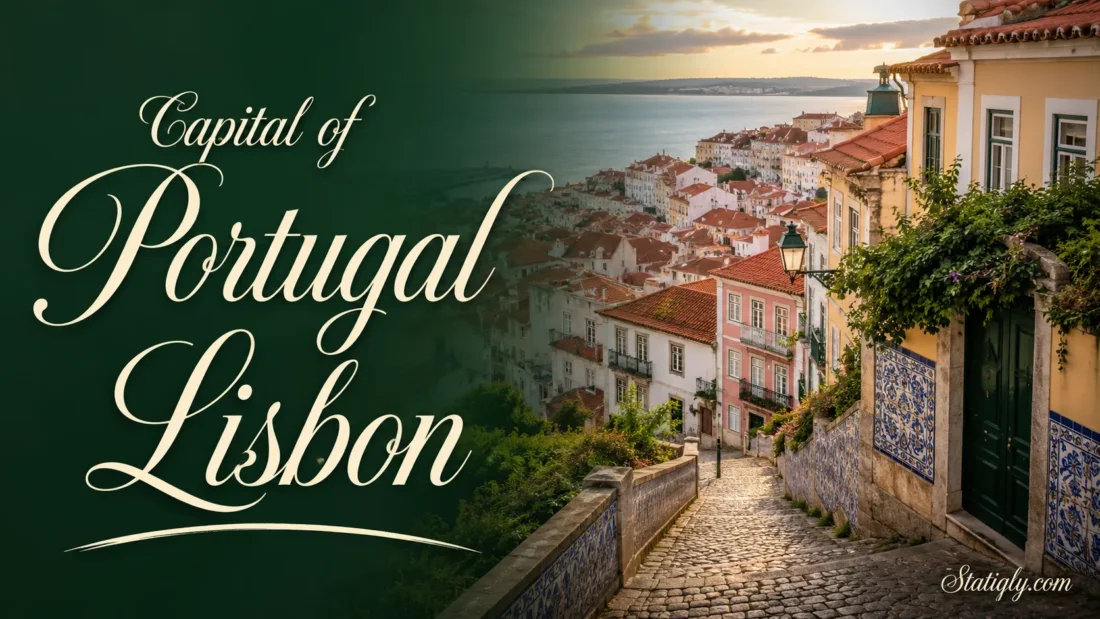
Lisbon is the capital of Portugal and one of Europe’s most rewarding cities to understand. It sits where the Tagus River opens toward the Atlantic, so the city feels both urban and coastal. Streets rise and fall across hills, yellow trams pass tiled buildings, and wide squares lead toward the water. For travelers, students, and curious readers, Lisbon is an easy city to picture: old neighborhoods, bright river views, simple food, useful transport, and a calm pace that makes the capital feel human.
Useful Details About Lisbon
| Detail | Information |
|---|---|
| Country | Portugal |
| Portuguese Name | Lisboa |
| Role | Capital city and main national administrative center |
| Location | Western Portugal, near the mouth of the Tagus River |
| River | Tagus River, called Tejo in Portuguese |
| Nearby Ocean | Atlantic Ocean |
| Language | Portuguese |
| Currency | Euro |
| Known For | Historic hills, tiled streets, viewpoints, trams, riverfront areas, Belém monuments, and pastel de nata |
Where Lisbon Is Located
Lisbon stands in western Portugal, on the northern side of the Tagus River estuary. The river widens before it meets the Atlantic, giving the city a broad waterfront and a natural link with the sea.
This location shaped Lisbon’s daily life. The river is not a small detail on the map. It helps explain the city’s light, trade history, neighborhoods, ferry routes, and open public squares. Walk near Praça do Comércio, and the capital suddenly makes sense: the city faces the water like a front door.
Lisbon is also often described as the westernmost capital city in mainland Europe. That makes its setting easy to remember. Portugal sits at the edge of the Iberian Peninsula, and Lisbon sits close to that Atlantic edge.
Why Lisbon Is The Capital Of Portugal
Lisbon is Portugal’s capital because it has long been the country’s main center for administration, trade, culture, transport, and public life. Its river position gave it access to inland routes and the Atlantic coast. Over time, that made it a natural place for national institutions, business activity, and cultural exchange.
The city is not just a name on official documents. It is where many national decisions, major cultural events, universities, museums, transport links, and public services come together. For many visitors, Lisbon is also the first place they see in Portugal because the main airport is close to the city center.
Still, Lisbon does not feel like an oversized capital. Its center is walkable in many areas, and each district has its own rhythm. Some streets feel grand. Others feel like a village built into a hillside. That mix gives Lisbon much of its charm.
What Lisbon Feels Like
Lisbon feels bright, layered, and easy to enjoy slowly. The city has formal squares, narrow lanes, tiled facades, river promenades, small cafés, and scenic viewpoints. It is a capital, yes. But it does not rush at every corner.
The hills matter. They make short walks feel longer, but they also reward you with views. One street may lead to a tram stop. Another may open onto a lookout over red roofs and the Tagus. Lisbon asks you to pause. Often, that is the best part.
Visitors often notice three things first:
- The light, especially near the river and at sunset.
- The tiles, known as azulejos, which decorate many buildings.
- The hills, which shape the streets, viewpoints, and tram routes.
Main Areas Of Lisbon
Lisbon is easier to understand when you see it as a group of neighborhoods rather than one large block. Each area has a different use for visitors and locals.
Baixa
Baixa is the downtown area with straight streets, shops, restaurants, and wide squares. It connects Rossio, Praça do Comércio, and the riverfront. If someone has only a short time in Lisbon, Baixa is often the simplest place to begin.
Alfama
Alfama is one of Lisbon’s oldest and most atmospheric districts. Its lanes are narrow, steep, and full of small details: balconies, steps, tiled walls, and viewpoints. It is a place for slow walking, not fast planning.
Chiado
Chiado feels polished and literary. It has bookstores, cafés, theaters, shops, and elegant streets. It works well for people who want culture, coffee, and easy access to nearby districts.
Bairro Alto
Bairro Alto sits above the lower city and is known for small streets, local dining, and a lively evening mood. During the day, it feels much quieter. The change is sharp. Same streets, different energy.
Belém
Belém is west of the central districts and sits close to the river. It is known for the Jerónimos Monastery, the Tower of Belém, museums, gardens, and the famous custard tart, pastel de nata. This area is flat compared with much of central Lisbon, which makes it easier for relaxed walking.
Parque Das Nações
Parque Das Nações shows a newer side of Lisbon. It has modern buildings, wide paths, riverside views, the oceanarium area, and a different layout from the older center. It is useful for families, conference visitors, and anyone who wants open space by the water.
Landmarks That Explain The City
Lisbon’s landmarks are not only places to photograph. They help explain how the city grew, how it faced the river, and how local culture developed across centuries.
Praça Do Comércio
Praça Do Comércio is one of Lisbon’s most recognizable squares. It opens toward the Tagus River and gives the lower city a grand sense of arrival. The square is wide, formal, and easy to reach from Baixa.
Jerónimos Monastery
The Jerónimos Monastery in Belém is one of Portugal’s most famous monuments. Its stonework, cloisters, and setting near the river make it a strong example of Manueline architecture, a Portuguese style linked with detailed carving and maritime motifs.
Tower Of Belém
The Tower Of Belém stands near the water and is often used as a visual symbol of Lisbon. Together with the Jerónimos Monastery, it forms part of a UNESCO World Heritage property. The tower’s setting also shows how closely Lisbon’s story is tied to the river and the Atlantic.
São Jorge Castle Area
The São Jorge Castle area sits high above the city. Many people visit for the views over Alfama, Baixa, and the Tagus. The climb can be steep, but the view explains Lisbon’s layout better than any map.
Santa Justa Lift
The Santa Justa Lift connects lower and higher parts of the city. It is both practical and decorative, which is very Lisbon. The city often turns movement into scenery.
Lisbon’s Hills And Viewpoints
Lisbon is famous for its hills. They can surprise first-time visitors because distances on a map may look shorter than they feel on foot. A walk of ten minutes can include stairs, slopes, and stone pavements.
Plan with that in mind. Comfortable shoes help. So does a flexible pace.
The reward is simple: viewpoints. Lisbon has many places where the city opens below you. Red rooftops, church towers, river light, and bridges all appear in one frame. Not every capital gives you that so easily.
Climate And Best Seasons To Visit Lisbon
Lisbon has a Mediterranean climate, with mild winters and warm, dry summers. Spring and autumn often feel comfortable for walking, sightseeing, and using public transport. Summer brings long bright days, while winter is usually softer than in many northern European capitals.
| Season | What To Expect | Useful Note |
|---|---|---|
| Spring | Mild days, flowers, good walking weather | Often one of the easiest seasons for city exploring |
| Summer | Warm, sunny, dry days | Start walks early and use shade during hotter hours |
| Autumn | Comfortable temperatures and softer light | A good time for viewpoints, river walks, and museums |
| Winter | Mild compared with many European cities, with more rain | Bring a light rain layer and keep museum plans ready |
How To Get Around Lisbon
Lisbon has several public transport options, and most visitors can move around without a car. The metro is useful for longer city trips, including travel between the airport and central areas. Trams, buses, trains, lifts, and ferries fill in the rest.
Metro
The metro is one of the simplest ways to travel across Lisbon. It is especially useful for reaching the airport, major stations, and modern parts of the city.
Trams
Trams are part of Lisbon’s image, especially the older yellow trams that climb through tight streets. Some routes are scenic and popular, so they can get crowded. For everyday movement, buses and metro lines may be easier.
Ferries
Ferries cross the Tagus and give a different view of the capital. They are useful for some local routes and pleasant for visitors who want to see Lisbon from the water without making a long trip.
Walking
Walking is one of the best ways to enjoy Lisbon’s older districts. Still, the hills and stone pavements can be tiring. Choose shoes with grip, take your time, and do not judge the walk only by distance.
Food And Everyday Flavors
Lisbon’s food is simple to enjoy. The city is known for pastel de nata, a small custard tart with a crisp pastry shell. Many visitors try it in Belém, though good versions appear across the city.
Seafood is common because Lisbon sits close to the Atlantic. Grilled fish, cod dishes, soups, rice dishes, and fresh bread appear often on local menus. Meals can be casual and direct. No need to overthink it.
For a gentle food plan, try this:
- Start the morning with coffee and pastel de nata.
- Choose a simple lunch near Baixa, Chiado, or Belém.
- Save time for a riverside walk after eating.
- Pick dinner close to your hotel if you walked a lot during the day.
Culture, Language, And Local Manners
Portuguese is the official language in Lisbon. Many people in visitor areas speak English, but a few Portuguese words are always welcome. A small effort goes far.
| Portuguese Word Or Phrase | Meaning In English |
|---|---|
| Olá | Hello |
| Bom Dia | Good Morning |
| Boa Tarde | Good Afternoon |
| Obrigado | Thank You, said by a man |
| Obrigada | Thank You, said by a woman |
| Por Favor | Please |
| Desculpe | Excuse Me Or Sorry |
Daily manners in Lisbon are usually polite and calm. Greet people when entering small shops or cafés. Wait your turn. Keep your voice moderate in residential streets, especially in older neighborhoods where homes, guesthouses, and small businesses share the same narrow lanes.
What Makes Lisbon Different From Other European Capitals
Lisbon does not look or feel like a flat inland capital. The river, hills, Atlantic air, tiles, and light give it a very clear identity. It is formal in some places, relaxed in others, and full of small visual details.
The city also has a strong sense of neighborhood life. A visitor can move from a grand square to a quiet stairway in a few minutes. You may hear tram bells, café cups, church bells, and ferry sounds in the same morning. Softly, the city layers itself.
For many people, that is Lisbon’s appeal. It feels like a capital with room to breathe.
Simple Lisbon Itinerary Ideas
Lisbon works well for short visits, but it also rewards slower travel. A two or three day visit can cover the main districts, while a longer stay allows time for nearby places such as Sintra, Cascais, or the south bank of the Tagus.
One Day In Lisbon
- Start in Baixa and Rossio.
- Walk toward Praça Do Comércio and the river.
- Visit Alfama or the castle area for views.
- End the day in Chiado or near a viewpoint.
Two Days In Lisbon
- Use the first day for Baixa, Alfama, Chiado, and the riverfront.
- Use the second day for Belém, including the monastery area, the tower, gardens, and custard tarts.
- Add a ferry ride if the weather is pleasant.
Three Days In Lisbon
- Spend one day in the central historic districts.
- Spend one day in Belém and along the river.
- Use the third day for Parque Das Nações, museums, viewpoints, or a nearby day trip.
Lisbon For Families
Lisbon can be a good city for families, especially with a balanced plan. The older center has hills and uneven pavements, so shorter walking sections help. Parque Das Nações is easier for strollers and has wider paths.
Families may enjoy:
- Riverside walks with open views.
- Short tram rides outside peak times.
- Belém’s gardens and flat paths.
- The oceanarium area in Parque Das Nações.
- Simple café stops between sightseeing blocks.
Lisbon For First-Time Visitors
First-time visitors should not try to see every district in one day. Lisbon looks compact, but the hills change the pace. Choose a few connected areas and leave space for sitting, eating, and looking around.
A practical first visit can focus on three themes:
- The river: Praça Do Comércio, Cais Do Sodré, Belém, and ferry views.
- The hills: Alfama, viewpoints, and the castle area.
- The city center: Baixa, Chiado, Rossio, and nearby streets.
Helpful Notes Before Visiting Lisbon
- Wear comfortable shoes. The stone pavements can be smooth, and many streets are steep.
- Check transport routes before you leave. Some tram routes are scenic but crowded.
- Book popular sites ahead when possible. Belém monuments and well-known attractions may have lines.
- Carry a light layer. River breezes can feel cool in the evening.
- Use simple Portuguese greetings. Even one or two words can make a warmer first impression.
- Plan by neighborhood. Lisbon is easier when you group nearby places together.
Common Questions About Lisbon
Is Lisbon The Capital Of Portugal?
Yes. Lisbon is the capital of Portugal. It is also the country’s largest city and one of its main centers for transport, culture, education, tourism, and administration.
What Is Lisbon Called In Portuguese?
Lisbon is called Lisboa in Portuguese. You will see this name on signs, transport information, local websites, and official materials.
Is Lisbon Near The Ocean?
Lisbon is near the Atlantic Ocean, but the city center sits on the Tagus River estuary rather than directly on an ocean beach. Coastal towns and beaches are reachable from the wider Lisbon area.
Is Lisbon A Walkable City?
Lisbon is walkable in many central areas, but it is not flat. Hills, stairs, and stone pavements can make walking slower than expected. Public transport helps connect the lower city, higher districts, Belém, and modern areas.
What Is Lisbon Best Known For?
Lisbon is best known for its riverfront setting, old neighborhoods, tiled buildings, viewpoints, trams, Belém monuments, pastel de nata, and relaxed Atlantic character.
How Many Days Are Enough For Lisbon?
Two to three days are enough for a first look at Lisbon’s main areas. A longer stay gives more time for museums, viewpoints, Belém, ferry rides, and nearby day trips.
Small Details That Help You Understand Lisbon
Lisbon is a capital shaped by movement: river crossings, tram climbs, steep lanes, railway stations, and long walks between viewpoints. Yet it also rewards stillness. Sit near the Tagus for a few minutes and the city becomes easier to read.
Its beauty is not hidden, but it is often found in pieces: a blue tile wall, a bakery window, a shadowed staircase, a ferry moving across the water, a quiet square just beyond a busy street. That is Lisbon. Large enough to be a capital. Small enough to feel close.