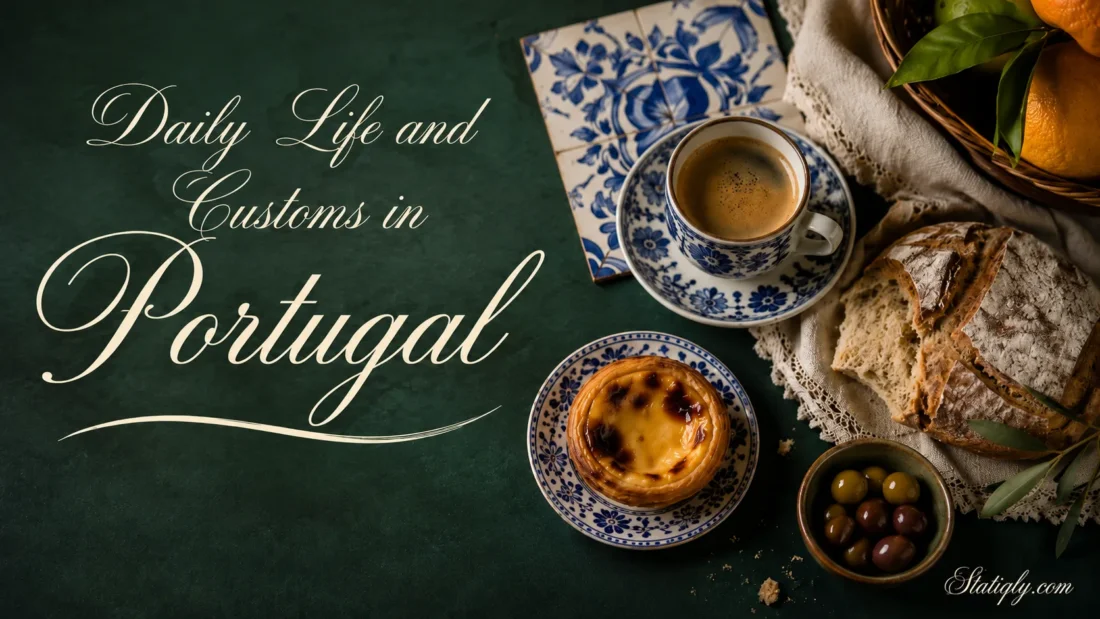
Portugal’s daily life is shaped by family, food, neighborhood routines, language, music, local celebrations, and the Atlantic coast. The country feels calm in many small moments: a short coffee at the counter, a polite greeting at a bakery, a long lunch with relatives, a walk through a tiled street, or a Sunday meal that brings several generations to the same table. Life moves with purpose, but it rarely feels cold. People value good manners, personal space, and simple acts of care.
To understand daily life and customs in Portugal, it helps to look at the small details first. What time do people eat? How do they greet each other? Why does a café feel like part of the neighborhood? What makes a local festival more than a date on a calendar? These details show the real texture of Portuguese life.
| Part of Daily Life | What It Often Looks Like | Useful Cultural Note |
|---|---|---|
| Morning Routine | Coffee, bread, pastry, or a light meal before work or school | Breakfast is usually simple, not a long sit-down meal |
| Café Culture | Short espresso, small pastries, friendly service, regular customers | A café can feel like a daily checkpoint in the neighborhood |
| Lunch | A warm meal, often between late morning and early afternoon | In smaller towns, some shops may pause during lunch hours |
| Dinner | Usually later than in many northern European countries | Meals are often social, not rushed |
| Greetings | Polite words, handshakes, and cheek kisses among people who know each other | Formality depends on age, place, and relationship |
| Family Life | Strong ties with parents, grandparents, children, and close relatives | Family meals and weekend visits are common |
| Public Behavior | Calm tone, patient waiting, respect in shared spaces | Loud behavior in quiet places may feel out of place |
| Local Celebrations | Municipal feasts, music, food, processions, and street gatherings | Many towns and regions keep their own calendar of events |
The Everyday Rhythm of Portugal
Daily life in Portugal has different speeds. Lisbon and Porto feel busy in the morning, with commuters, students, small shops opening, and people moving between metro stations, offices, cafés, and schools. Smaller towns may feel slower. In villages, the day can still follow a more local rhythm: market, church square, bakery, home, lunch, afternoon errands, evening walk.
That rhythm changes by region. The coast has a strong outdoor feel. The interior often feels more tied to land, family homes, and seasonal habits. The islands of Madeira and the Azores have their own pace, shaped by distance, weather, sea routes, farming, and local community life.
One thing appears again and again: people often make room for daily rituals. Coffee is not only coffee. Lunch is not only food. A greeting is not only a word. These acts keep the day human.
A Day Often Starts Simply
A typical morning may begin with a light breakfast. Many people choose coffee with bread, toast, butter, cheese, or a small pastry. In a café, the order may be short and direct. A small espresso is often just called um café. In Lisbon, some people say bica. In Porto, cimbalino is also heard.
The habit is quick, but not empty. Regular customers may greet the same person behind the counter every morning. The exchange is brief. Still warm.
- Bom dia means good morning.
- Boa tarde means good afternoon.
- Boa noite means good evening or good night.
- Obrigado or obrigada means thank you, depending on the speaker.
- Por favor means please.
These words matter. Portuguese daily manners often begin with the first greeting, even in a small shop or elevator.
Food, Cafés and the Social Table
Food is one of the easiest ways to understand Portuguese customs. The table is practical, yes, but also social. Many meals are built around simple ingredients: fish, vegetables, olive oil, bread, rice, potatoes, soups, eggs, beans, meat dishes, cheese, fruit, and sweets.
Portugal’s coastline gives seafood and fish a strong place in the kitchen. Grilled fish, cod dishes, seafood rice, soups, and regional stews all appear in different parts of the country. Inland areas add their own style with meats, vegetables, breads, cheeses, and slow-cooked dishes.
Lunch Can Carry the Day
Lunch in Portugal often has more weight than breakfast. In many homes and restaurants, it may include soup, a main dish, and coffee afterward. Office workers may choose a daily menu near work. Students may eat at school or return home, depending on age and place.
In smaller towns, lunch can still shape business hours. A shop may close for a pause and reopen later. In larger cities, this pattern is less fixed, but the idea remains familiar: lunch deserves time.
Dinner Feels More Relaxed
Dinner is often later than visitors expect. A household may eat around the evening news, after work, or after children return from activities. Restaurant dinners may begin later too, especially in cities. The meal does not need to be fancy. It needs to feel settled.
At the table, rushing can feel strange. People may talk about family, work, school, errands, plans for the weekend, or a local event. Food keeps the conversation moving, like a quiet engine under the table.
The Café Is a Social Room
A Portuguese café is not only a place to drink coffee. It can be a meeting point, a pause between errands, a place to read the paper, a spot for a small pastry, or a corner where older neighbors sit and talk. Some people visit the same café for years.
Pastéis de nata are well known, but Portugal has many regional sweets. Some are tied to convent baking traditions, local ingredients, and town identity. In daily life, a sweet with coffee is not always a big treat. Sometimes it is just Tuesday.
How People Greet Each Other
Portuguese greetings depend on setting and closeness. In a formal setting, a handshake is common. In friendly or family settings, people may greet with two cheek kisses, especially among women or between men and women who know each other. Among men, handshakes, hugs, or a light pat on the shoulder may appear when the relationship is close.
There is no need to force a greeting style. Watch the other person. Follow their lead. Easy does it.
- Use polite greetings when entering a small shop, waiting room, office, or elevator.
- Use titles such as Senhor or Senhora when a formal tone feels right.
- Do not jump into first names too fast in formal settings.
- Keep your voice calm in quiet public places.
- Say thank you after service, even for small help.
Good manners in Portugal are often quiet. They do not call attention to themselves. They simply make daily life smoother.
Family Life and Close Relationships
Family has a strong place in Portuguese daily life. Many adults keep close contact with parents, grandparents, siblings, cousins, and in-laws. Sunday meals, holiday gatherings, birthdays, baptisms, weddings, and school milestones may bring relatives together.
Grandparents can play a visible role in family routines. You may see them walking children to school, helping with meals, joining family outings, or sitting with younger relatives in cafés and parks. In many households, care moves in both directions: older relatives help the young, and adult children help older parents.
Not every family lives the same way, of course. City life, work schedules, housing costs, study, and travel all shape modern routines. Still, the idea of family as a steady center remains easy to see.
Home Visits and Shared Meals
When invited to someone’s home, it is polite to arrive close to the agreed time. A small gift may be welcome, such as flowers, dessert, or something simple for the host. Guests often wait for the host to begin the meal or to invite everyone to start.
Conversation at home is usually warm but not too loud. People may talk over each other when the table is lively, then slow down over dessert and coffee. Portuguese meals can stretch gently. They are not built for speed.
Public Manners and Everyday Courtesy
In public, many Portuguese people value a calm tone. On buses, trains, and in waiting rooms, loud phone calls may feel out of place. In shops and public offices, waiting your turn matters. A simple bom dia before asking a question can change the whole mood of the exchange.
Respect for older people is also visible in daily manners. Giving a seat to an older person, speaking politely, and allowing space in queues are small gestures that fit the social rhythm.
- Greet before asking for help.
- Use com licença when passing through a tight space.
- Say desculpe if you need to apologize or get attention.
- Keep conversations softer in churches, museums, public transport, and small offices.
- Do not treat service workers as invisible. A greeting and thanks are expected.
Work, School and the Weekly Routine
Workdays in Portugal vary by field, city, and season. Many offices follow a morning and afternoon schedule with a lunch break in between. Shops and public services may have their own hours, and smaller businesses can keep more traditional patterns.
Schools also shape family life. Morning drop-offs, after-school activities, homework, and family dinners create the rhythm of the week. In cities, public transport, walking, and short car trips connect these routines. In smaller towns, daily life often feels closer: school, bakery, pharmacy, café, and home may sit within a short walk.
Punctuality is valued in professional life, appointments, tours, and formal meetings. Social gatherings may feel more relaxed, but that does not mean time has no meaning. It means the setting matters.
Markets, Shops and Neighborhood Habits
Neighborhood life still matters in Portugal. Even in large cities, people often build small routines around local shops. A person may buy bread from one bakery, fruit from a local market, medicine from the same pharmacy, and coffee from the café on the corner.
Markets are useful places to understand daily customs. They show what people cook, what is in season, and how local speech sounds in real life. Fish stalls, fruit stands, cheese counters, flower sellers, and small talk all share the same space.
Shopping Is Often Personal
In smaller shops, service can feel more personal than in a large supermarket. Regular customers may be recognized. A baker may remember a usual order. A shop owner may ask about family. These exchanges are not dramatic. They are everyday ties, stitched slowly over time.
Visitors who learn a few polite Portuguese phrases often receive warmer help. Perfect grammar is not the point. Effort is noticed.
Regional Customs Across Portugal
Portugal is a small country on the map, but daily life changes from north to south and from mainland to islands. Geography plays a part. So do food, accent, weather, local history, work patterns, and family traditions.
| Region | Daily Life and Custom Notes |
|---|---|
| Porto and the North | Often known for direct speech, strong food traditions, family ties, and lively local identity. |
| Lisbon Region | Urban routines, public transport, cafés, workplaces, schools, and cultural venues shape daily life. |
| Centro de Portugal | Historic towns, university life, rural areas, mountain villages, and local food habits all mix here. |
| Alentejo | Life can feel more spacious, with strong ties to land, bread, olive oil, singing traditions, and town festivals. |
| Algarve | Coastal life, fishing heritage, seasonal visitors, markets, beaches, and relaxed outdoor routines are visible. |
| Madeira | Island life brings steep landscapes, gardens, sea views, local festivals, and close community ties. |
| Azores | Daily life is shaped by islands, weather, farming, fishing, nature, and strong local bonds. |
These notes should not be read as fixed labels. A student in Porto, a farmer in Alentejo, a designer in Lisbon, and a teacher in Madeira will live different lives. Still, regional habits help explain why Portugal never feels like one single rhythm.
Music, Tiles and Everyday Culture
Culture in Portugal is not locked inside museums. It appears in streets, voices, walls, cafés, churches, village squares, and family parties. Three examples help explain this: fado, azulejos, and local singing traditions.
Fado in Daily Memory
Fado is a music and poetry tradition closely linked with Lisbon, though it is loved far beyond the capital. It often carries feelings of memory, distance, love, loss, and longing. In daily life, fado may appear in restaurants, music houses, family memories, radio, or cultural events.
You do not need to understand every word to feel its mood. A Portuguese guitar begins, a singer pauses, the room quiets. Then the song does its work.
Azulejos on Streets and Homes
Azulejos, the painted ceramic tiles seen across Portugal, are part of daily scenery. They cover churches, train stations, homes, fountains, stairways, and shopfronts. Some show patterns. Some tell stories. Others simply catch light and make a street feel alive.
For a visitor, tiles may look decorative at first. For local life, they are also memory, craft, and place.
Local Singing and Village Traditions
In Alentejo, group singing known as Cante Alentejano remains one of the country’s noted cultural expressions. It is sung without instruments and carries a strong local identity. Across Portugal, folk dances, local bands, choirs, and community performances still appear at festivals and town events.
Not every person joins these traditions, but many recognize them. They sit in the background of national life, like familiar music from another room.
Local Festivals and Seasonal Customs
Portugal’s calendar includes national holidays, religious dates, municipal celebrations, family events, and seasonal festivals. Many towns honor a local patron saint with music, food, lights, decorations, and gatherings in public spaces. These events are often family-friendly and community-centered.
In June, popular saint celebrations are especially visible in places such as Lisbon and Porto. Streets may be decorated, neighborhoods gather outside, and local food traditions become part of the celebration. Other towns hold their own feasts at different times of year.
Christmas and Easter also shape family routines for many households. Some families focus on meals, sweets, religious services, and visits. Others keep the season more private. The style changes, but the family table often stays near the center.
Language Habits and Polite Speech
Portuguese is the main language of daily life. English is widely used in many tourist areas, hotels, airports, and younger urban settings, but a few Portuguese words go a long way. People often appreciate the effort, even when the accent is new.
Portuguese speech can sound soft, fast, and closed to new ears, especially in European Portuguese. Visitors may know words from Brazilian Portuguese and still need time to adjust. That is normal. Listen first. Repeat slowly.
- Bom dia works from morning until lunch.
- Boa tarde works after lunch and through the afternoon.
- Boa noite works in the evening.
- Faz favor or por favor can soften a request.
- Com licença is useful when passing, entering, or asking for space.
- Desculpe helps when apologizing or getting attention politely.
Small words can open doors. Sometimes literally.
Visiting Churches, Homes and Formal Places
Portugal has many churches, monasteries, chapels, and religious sites that also serve as cultural landmarks. When entering these spaces, calm behavior and modest clothing show respect. The same tone fits museums, public offices, libraries, and formal buildings.
Inside a home, it is polite to follow the host’s lead. If shoes, seating, meal timing, or serving order matters, the host will usually guide the guest. Portuguese hospitality is often generous, but it may be quiet rather than showy.
- Wait before sitting at a formal table if the host is arranging places.
- Accept food kindly, even if you only take a small portion.
- Ask before bringing extra guests.
- Keep praise natural; too much can feel heavy.
- Send thanks after a warm invitation, especially for a family meal.
Leisure, Weekends and Outdoor Life
Leisure in Portugal often stays close to simple pleasures. A walk by the river. Coffee after lunch. A beach day when the weather allows it. A family meal. A football match on television. A visit to grandparents. A local market. A town festival. A quiet evening in a square.
Outdoor life depends on region and season. Coastal areas draw people to beaches, promenades, fishing towns, and waterfront cafés. Inland areas offer river beaches, mountain villages, farms, parks, and historic centers. In cities, parks and viewpoints become meeting places.
Weekends may include errands on Saturday and family time on Sunday. Some shops and services may close or keep shorter hours, especially outside large urban centers. Planning ahead helps.
Daily Life in Cities and Small Towns
Life in Lisbon, Porto, Braga, Coimbra, Faro, Funchal, Ponta Delgada, and other urban areas brings a mix of old and new. People use public transport, work in offices, study at universities, shop in malls, order online, and meet friends in modern cafés. At the same time, older habits remain visible: neighborhood bakeries, tiled buildings, family lunches, markets, and evening walks.
Small towns can feel more personal. People may know each other by name. A local café may serve as a news desk, meeting point, and waiting room all at once. Festivals may bring the whole town outside. Time feels closer to the ground there.
Neither life is more “Portuguese” than the other. Both belong to the country.
Customs Visitors Often Notice First
Visitors usually notice Portugal through small, repeated moments. The polite greeting before service. The espresso taken standing at the counter. The lunch menu written on a board. The elderly neighbor watching the street from a balcony. The tiled walls. The fresh bread. The family table. The late dinner. The quiet pride in local food.
These customs do not ask for much. They ask for attention.
- Greet first before asking a question in a shop or office.
- Do not rush meals when eating with Portuguese hosts.
- Keep your tone calm in shared spaces.
- Learn a few local words and use them often.
- Check opening hours for small shops, museums, and public offices.
- Respect local festivals as community events, not just entertainment.
- Dress neatly for formal meals, churches, and official appointments.
Small Ways to Feel More at Home
To feel more comfortable in Portugal, slow down just enough to notice the rhythm around you. Say bom dia when entering a bakery. Try the daily lunch menu. Learn the name of the coffee you like. Watch how people wait in line. Leave room for long meals. Ask before assuming. Let the neighborhood teach you.
Portugal’s customs are not hidden. They are in plain sight, carried through ordinary acts: a greeting, a plate of food, a tiled wall, a family visit, a song, a market, a café table. Small things, mostly. But together, they make daily life feel rooted.