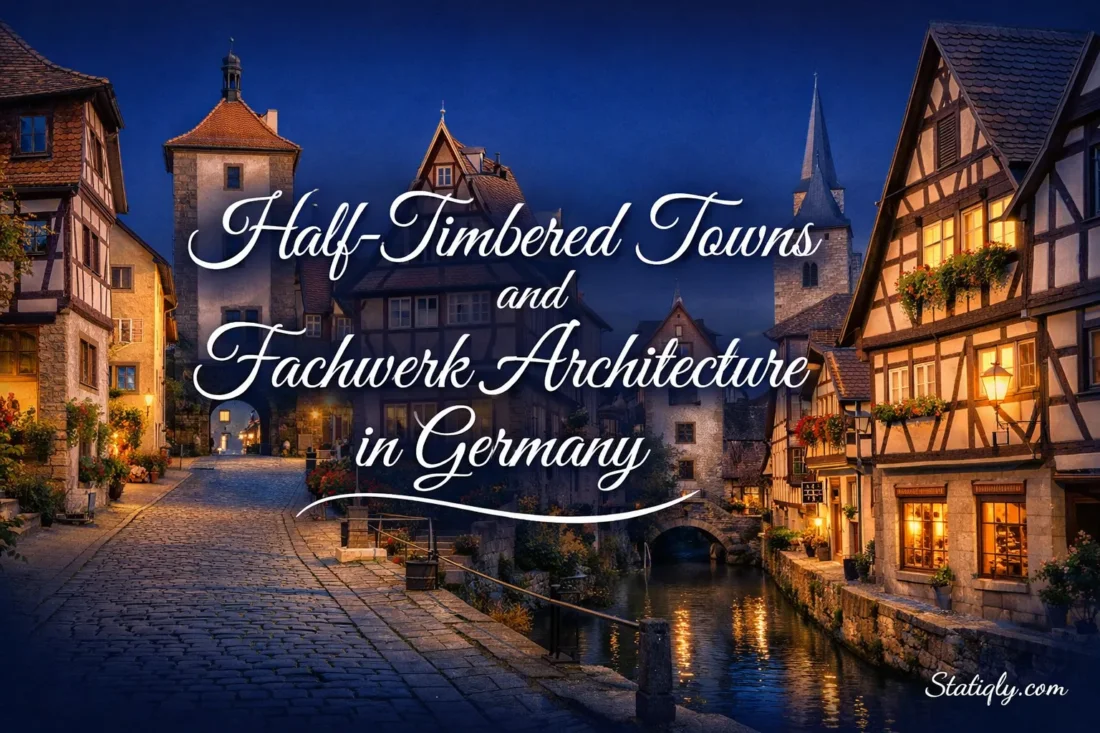
Fachwerk isn’t just “pretty old houses.” In Germany’s half-timbered towns, the streets feel like an open-air design studio where structure becomes decoration. Wooden frames draw crisp lines across plaster or brick, braces form patterns like handwritten signatures, and every corner seems to have a new detail to spot. Want a trip that rewards slow walking and curious eyes? These towns deliver—quietly, confidently, and in color.
Why Half-Timbered Towns Feel So Addictive to Explore
- You can “read” the buildings. Braces, beams, and joints show how the house stands—like a visible skeleton, but elegant.
- The scale is human. Lanes stay walkable, façades sit close, details land right at eye level.
- Each region has a different accent. Harz towns, Weser towns, and Hessian market squares don’t look copy-paste.
- It’s practical beauty. Many houses were built for merchants and craftspeople—design with a purpose.
| Town | Region | What to Look For | Best For |
|---|---|---|---|
| Quedlinburg | Saxony-Anhalt (Harz) | One of Germany’s biggest half-timbered ensembles; houses spanning many centuries | Deep, immersive old-town wandering |
| Wernigerode | Saxony-Anhalt (Harz) | A showpiece town hall with a timber façade; colorful streetscapes | Classic “storybook” views |
| Goslar | Lower Saxony (Harz) | UNESCO-listed historic town; a dense mix of timbered houses and stone landmarks | Variety in one compact center |
| Celle | Lower Saxony | Hundreds of restored half-timbered houses with bright façades | Easy strolling, relaxed pace |
| Hann. Münden | Lower Saxony | More than 700 half-timbered buildings; lively patterns and river-town charm | Architecture lovers who like long walks |
| Alsfeld | Hesse | Iconic half-timbered town hall (built 1512–1516); strong medieval town layout | Market-square architecture |
| Michelstadt | Hesse (Odenwald) | Picture-perfect center; a famous timbered town hall and nearby early medieval basilica | A calm day trip with highlights |
| Idstein | Hesse (Taunus) | Colorful half-timbered streets and compact old town | Short, satisfying visits |
What Makes Fachwerk Architecture Different
Fachwerk is Germany’s timber-frame tradition where the wooden structure stays visible on the exterior. Think of it like a well-cut suit with the stitching proudly on display: posts and beams form the frame, braces stop it from “racking” sideways, and the spaces between get filled with materials such as brick, clay, or plaster.
There’s craft hiding in plain sight. Traditional carpentry relies on precise joints (often pegged) and smart geometry. Even the patterns can be structural—those diagonal braces aren’t just there to look nice. They help the building stay true and steady.
Two Building Ideas You’ll See Mentioned
- Ständerbau: an older approach that uses vertical posts as the main load-bearers, often tied to early medieval and late medieval survivals in some towns.
- Rähmbau: a later “frame construction” approach, common in many well-known market-square buildings and civic structures.
How to “Read” a Half-Timbered Façade
Ever stood in front of a timbered house and felt your eyes bouncing around? That’s the fun. Use this simple scan, top to bottom:
- Roofline and gables: steep roofs and pronounced gables often frame the whole street view.
- Jetties (upper floors that project outward): a subtle overhang can make the street feel cozy, almost like the buildings are leaning in to chat.
- Bracing patterns: look for chevrons, crosses, and repeating diagonals—some towns have signature “rhythms.”
- Beam ends and carved posts: small cut details often mark the best craftsmanship.
- Infill panels: brick, plaster, or painted sections change the mood of the entire façade.
- Doorways: older portals can feel like punctuation marks—one great doorway can define a whole street.
Regional Styles That Change the Vibe
Germany’s half-timbering isn’t one single look. Travel a few hours, and the same building method starts speaking with a different accent—new proportions, new colors, new pattern habits. If you like comparing details, this is where the obsession begins.
Harz Towns
Expect dense old-town cores and a satisfying mix of timber, stone, and steep roofs. The streets often feel layered—turn a corner and the scene changes fast.
- Quedlinburg
- Wernigerode
- Goslar
Lower Saxony Favorites
You’ll often see towns that feel airy and welcoming, with bright restorations and long streets full of repeating patterns—great for slow, satisfying walks.
- Celle
- Hann. Münden
- Goslar (Harz edge)
Hesse and the Odenwald
Market squares shine here. Look for civic buildings that show off craftsmanship, plus side streets where timber houses feel lived-in and calm.
- Alsfeld
- Michelstadt
- Idstein
Half-Timbered Towns You Can Actually Feel in Your Feet
Some places look good in a single photo. The best Fachwerk towns do more than that—they keep rewarding you as you move. A new angle. A new pattern. A beam with a tiny carved flourish you didn’t notice five minutes ago. Here are standout stops, each with a different personality.
Quedlinburg: A Masterclass in Variety
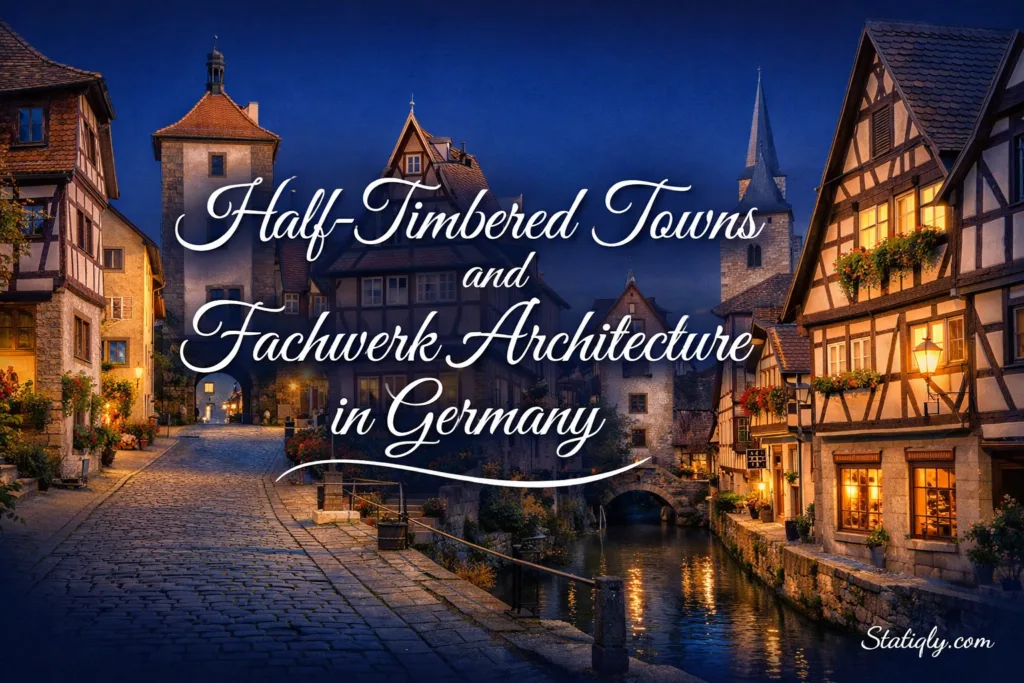
Quedlinburg is famous for its sheer concentration of half-timbered buildings—around two thousand or more across a broad historic area. The joy is the timeline: you’ll see how façades evolve across centuries without needing a textbook. If you only visit one place to understand why Fachwerk feels “alive,” this town makes a strong case.
- Don’t miss: side lanes off the main routes—many of the most charming façades hide just one turn away.
- Spotting tip: look for shifts in bracing patterns as you move between streets; it’s like watching styles change in real time.
Wernigerode: Bold Colors and a Legendary Town Hall
Wernigerode is the place for people who like their architecture with a little stage presence. The town hall’s timber façade dates to 1498, and it anchors the market square like a centerpiece. Walk outward and the streets keep the energy—bright hues, crisp lines, and plenty of details that make you stop mid-step.
- Best moment: arrive early or later in the day when the square feels calmer and you can study the façade without rushing.
- Look for: carved elements and decorative figures that turn a civic building into a storybook page.
Goslar: UNESCO Heritage and Dense Old-Town Texture
Goslar’s historic town has been UNESCO-listed since 1992. What makes it special for Fachwerk fans is the texture: timbered houses sit alongside stone buildings, and the mix gives the streets a layered look. It’s also a town where short walks feel rich—excellent if you want a full architectural day without long distances.
- Look for: streets where timber frames cluster tightly, then suddenly open into broader squares.
- Pace idea: take one slow loop, then repeat it—details pop on the second pass.
Celle: Bright, Restored, and Easy to Love
Celle is known for having hundreds of beautifully restored half-timbered houses—many dating back to the 16th century and beyond. The old town feels friendly and walkable, with façades that lean into color without becoming chaotic. If you want a place where Fachwerk feels cheerful and polished, Celle fits.
- Look for: repeating window rhythms and painted infill panels that change from street to street.
- Small challenge: pick one façade and trace the structural frame with your eyes—posts, beams, braces. It’s oddly satisfying.
Hann. Münden: More Than 700 Timbered Buildings in One River Town
Hannoversch Münden (often shortened to Hann. Münden) is celebrated for having more than 700 half-timbered houses. That number matters because it changes the experience: timbered façades don’t feel like highlights—they feel like the town’s natural language. Add its riverside setting, and your walk gets an extra layer of atmosphere.
- Look for: dense clusters where bracing patterns repeat like music, then shift as you cross into the next lane.
- Walking tip: plan for a longer stroll than you think—you’ll keep pausing.
Alsfeld: A Market Square with a Showpiece Town Hall
Alsfeld’s town hall is a headline act for anyone who loves timber-frame construction. Built between 1512 and 1516 in medieval Rähmbau style, it shows how structural logic and decorative confidence can live together. The market-square setting makes it easy to appreciate proportions and detail without hunting.
- Look for: bracing that feels both engineered and artistic, plus carefully shaped beam ends.
- Best way to see it: walk a full circle around the square and compare each view.
Michelstadt: A Calm Center with Iconic Timbered Charm
Michelstadt is a favorite for travelers who want a gentle pace without sacrificing beauty. Its historic center delivers classic half-timbered scenes, and nearby you can find early medieval architecture with roots in the Carolingian period—a nice reminder that Germany’s built heritage isn’t one single chapter.
- Look for: the way timbered façades frame small spaces—courtyards, corners, short lanes.
- Mood: unhurried, ideal for a relaxed day trip.
Idstein: Colorful Streets in a Compact Old Town
Idstein is proof that you don’t need a huge old town to get a strong Fachwerk experience. The streets are compact, the color palette is lively, and the best details appear quickly—perfect if you’re fitting architecture into a broader itinerary.
- Look for: contrasts—dark timber lines against lighter panels and vivid paint.
- Perfect visit length: a focused half day with plenty of “wow” moments.
German Timber-Frame Road: One Idea, Many Towns
If you like structure in your travel planning, the German Timber-Frame Road (Deutsche Fachwerkstraße) is a ready-made backbone. It was founded in 1990 and connects over 100 half-timbered towns across eight regional routes, stretching from the Elbe in the north down toward Lake Constance in the south. You don’t need to “do it all.” Treat it like a menu—pick a region, then hop between towns that match your pace.
- Want maximum variety? Mix one Harz town with one Hessian market-square town.
- Traveling with kids? Choose compact old towns where short loops still feel rewarding.
- Photography-friendly? Pick places with wide squares plus narrow lanes for contrast.
A Simple Plan for Your Own Fachwerk Walk
Not sure how to explore without turning it into a checklist? Try this: give yourself permission to be a little aimless, but follow a few smart “anchors.” You’ll see more, and you’ll enjoy it more.
- Start at the market square. Civic buildings often show the best craftsmanship.
- Walk one main street end to end. This is where towns tend to show off their most consistent façades.
- Turn into two side lanes. This is where the “real” town texture appears.
- Pause twice and look up. Upper stories are where the best braces and beam details live.
- Finish with a second pass. The same street looks different once your eyes know what to hunt for.
Small Details That Make You Stop Mid-Step
- Bent chevron bracing: a dynamic zig-zag look that feels like motion frozen in wood.
- Overhanging upper floors: subtle shadows that make narrow streets feel warm and enclosed.
- Carved corner posts: small flourishes that often mark a builder’s pride.
- Painted infill panels: colors that change the mood of the entire block.
Respectful Visiting That Keeps These Streets Beautiful
Many Fachwerk houses are private homes. That’s part of the charm—these places aren’t stage sets. A few small habits go a long way and help towns stay welcoming.
- Keep your distance from doorways and windows. Enjoy details without stepping into someone’s personal space.
- Stay on paved paths. Old surfaces can be delicate, and the best views still come from the street.
- Choose comfortable shoes. Cobblestones reward slow walking, not speed.
- Try a guided walk if available. A good guide can point out construction clues you’d miss on your own.
Common Questions People Ask About Fachwerk Houses
Are Half-Timbered Houses Strong or Just Decorative?
They’re strong by design. The visible timber isn’t wallpaper—it’s the structural frame. The beauty comes from the same thing that makes the building work: posts carry loads, braces stabilize, and the geometry keeps everything aligned.
Why Do Some Towns Look More Colorful Than Others?
Local tradition, restoration choices, and regional taste all play a role. Some places favor crisp contrasts and bright infill panels. Others keep tones muted so the timber lines feel like fine drawing on paper. Neither is “right”—it’s simply a different visual dialect.
How Do I Pick One Town If I Only Have a Day?
Ask yourself one simple question: Do you want maximum density or maximum variety? For density, choose a place known for a huge concentration of Fachwerk streets. For variety, pick a town where timber houses sit beside stone landmarks and open squares—then walk slowly and let the details do the work.