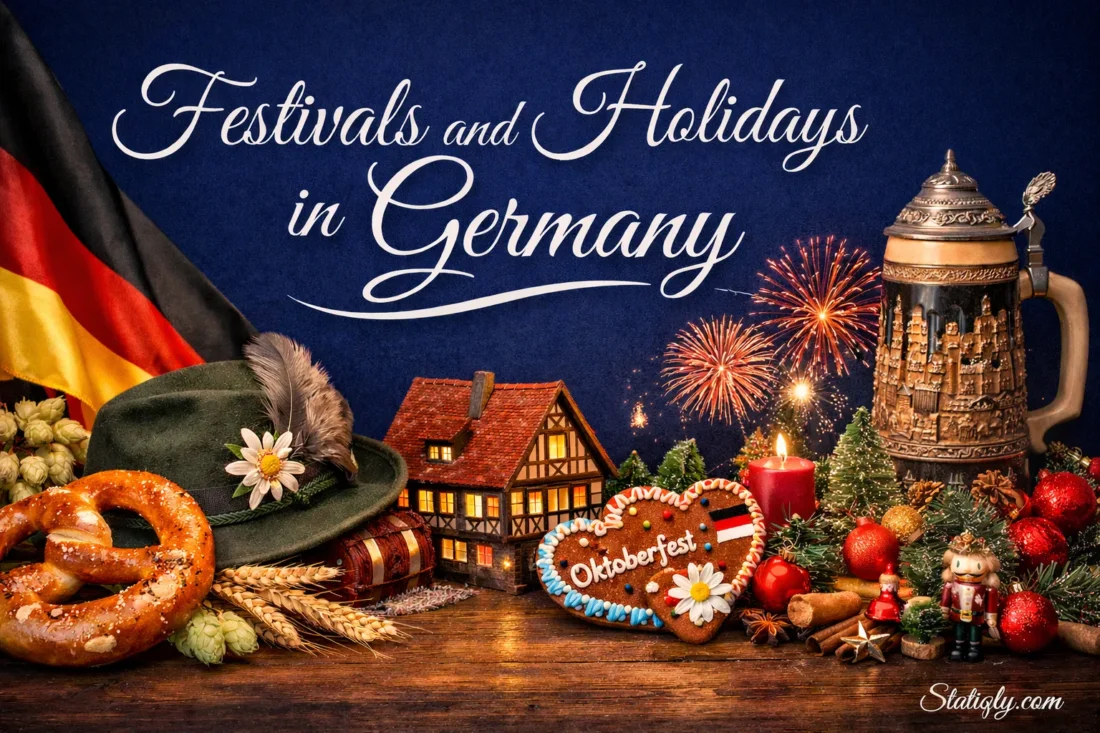
Germany has a gift for turning ordinary dates into shared moments. One week it’s a calm, candlelit market; the next it’s a street full of costumes, music, and smiling strangers. If you want to enjoy the country at its most welcoming, learning how festivals and public holidays work is like getting a local’s map—simple, practical, and surprisingly fun.
Holiday And Festival Overview
Here’s a fast way to orient yourself. Dates marked as “moves each year” follow the calendar and won’t land on the same day every year.
| What It Is | When It Usually Happens | What You’ll Notice |
|---|---|---|
| New Year’s Day | January 1 | Quiet streets, relaxed pace, limited shopping |
| Easter Season | March or April (moves each year) | Decor, seasonal treats, family time, some closures |
| May Day | May 1 | Spring outings, local events, many shops closed |
| Karneval / Fasching | Late winter (moves each year) | Costumes, parades, music, playful energy |
| Oktoberfest (Munich) | Late September to early October | Traditional outfits, bands, rides, big fair atmosphere |
| German Unity Day | October 3 | Day off nationwide, events vary by city |
| Christmas Days | December 25 and 26 | Family focus, closures, calm neighborhoods |
| Christmas Markets | Late November to December | Lights, crafts, seasonal food, cozy evening strolls |
How Public Holidays Work In Germany
Germany has national public holidays and also state public holidays. That means a date can be a normal workday in one region and a full day off in another. Sounds complicated, yet it’s easy to live with once you know what to watch for.
- Most shops close on public holidays. Train stations and airports still have some open options, but don’t count on regular shopping streets.
- Sundays feel similar in many places, with a slower rhythm and fewer retail options.
- Services run, just differently: public transport may use a Sunday timetable, and some attractions shorten hours.
- Local calendars matter because school breaks and city events can change the feel of a place overnight.
A small planning trick: If you’re arriving on a public holiday, pick up essentials the day before. Think snacks, transit tickets if needed, and anything you’d hate to search for while everything is closed.
Public Holidays You’ll See Nationwide
These are widely observed across Germany. Some are fixed; others move each year. If you’re planning trips between cities, these dates are the ones most likely to affect opening hours.
| Holiday | Timing | What It Means For Visitors |
|---|---|---|
| New Year’s Day | January 1 | Many closures; a gentle start to the year |
| Good Friday | March or April (moves each year) | Quiet vibe; plan meals and shopping ahead |
| Easter Monday | March or April (moves each year) | Day off; popular for short trips and family outings |
| May Day | May 1 | Spring energy; many shops closed |
| Ascension Day | Late spring (moves each year) | Long-weekend travel often increases |
| Whit Monday | Late spring or early summer (moves each year) | Museums and attractions may be busy |
| German Unity Day | October 3 | Nationwide day off; some cities host special programs |
| Christmas Day | December 25 | Widespread closures; peaceful streets |
| Second Christmas Day | December 26 | Still a holiday; plan travel and meals accordingly |
Regional Holidays That Depend On The State
Germany’s federal structure means some holidays are observed only in certain states. If you’re traveling, the same date can feel completely different from one region to the next. Ever arrived expecting a normal day and found the city peacefully closed? That’s usually why.
Common Regional Public Holidays
- Epiphany (January 6) in parts of southern and eastern Germany
- Corpus Christi (moves each year) in several western and southern states
- Assumption Day (August 15) in parts of Bavaria
- Reformation Day (October 31) in several northern and eastern states
- All Saints’ Day (November 1) in parts of western and southern Germany
How To Use This Without Overthinking
- Check your city + date before booking tours.
- Assume shopping streets will be limited, then be pleasantly surprised if something is open.
- Plan one “low-effort” activity for the day: a park walk, a viewpoint, a museum that opens on holidays.
- Book intercity trains early if the holiday creates a long weekend.
Festivals And Traditions By Season
Think of Germany’s festival calendar like a well-paced playlist. Some months are quiet and cozy. Others are loud, colorful, and full of movement. The best part? You can enjoy a lot of it just by showing up and following the sound of music.
Winter: Lights, Crafts, And Warm Streets
Winter festivals in Germany lean into comfort. Town squares glow. Stalls fill the air with the smell of roasted nuts and spices. People move slowly, like they’re walking through a postcard.
- Christmas Markets (late November to December): handmade ornaments, wooden toys, seasonal sweets, and a friendly evening stroll.
- St. Nicholas Day (December 6): a family tradition where children often receive small treats and surprises.
- New Year’s Eve (Silvester) (December 31): celebratory dinners, city centers that feel lively, and lots of people out late.
Spring: Costumes, Blossoms, And Fresh Starts
Spring arrives like a deep breath. After the darker months, even small events feel brighter. You’ll see decorations in windows, flowers at markets, and parks that suddenly fill up.
- Karneval / Fasching (moves each year, usually February or March): costumes, music, parades, and a playful spirit that spreads quickly. If you like big smiles and bold colors, this is your moment.
- Easter Markets (often March or April): decorated eggs, spring crafts, and local treats. Great for relaxed daytime exploring.
- May Traditions (around May 1): village greens and town squares may feature community gatherings and spring displays.
A simple way to pick a city in spring: Want costumes and big parades? Look for Karneval celebrations along the Rhine region. Prefer a calmer vibe? Choose a smaller town with spring markets and parks.
Summer: Open-Air Energy And City Celebrations
Summer is when Germany steps outside. Riversides, plazas, and old-town streets become natural stages. If you enjoy that “the city is a living room” feeling, you’ll love summer here.
- City Festivals (Stadtfeste): local celebrations with music, food stands, and activities that often feel family-friendly and easy to join.
- Kiel Week (Kieler Woche) (often in June): a major sailing and waterfront event with a festive atmosphere.
- Harbor Celebrations (often spring to summer in port cities): ships, waterfront walks, and a lot of people enjoying the view.
- Open-Air Concerts And Museum Nights: longer daylight means more evening programs, often in beautiful historic settings.
Autumn: Traditions, Lanterns, And Big Fair Atmospheres
Autumn in Germany feels crisp and focused, like the year is sharpening into its most colorful form. This is the season for harvest-themed traditions, lantern walks, and large fairgrounds.
- Oktoberfest (Munich) (late September to early October): traditional Bavarian outfits, marching bands, rides, and a world-famous fair atmosphere that’s easy to enjoy even for first-timers.
- Erntedankfest (Harvest Thanksgiving) (often early October): community events in some towns, with seasonal decorations and local warmth.
- Lantern Walks (often November around St. Martin’s Day): children carry lanterns, and neighborhoods feel gently festive in the early evening.
- Festival Of Lights (Berlin) (often in October): landmarks illuminated with artistic light displays, perfect for evening walks.
What To Expect On Public Holidays
Public holidays can feel like a soft pause button. Streets get quieter, families spend time together, and the whole day can take on a slower heartbeat. The question is: what will be open, and what should you plan in advance?
Are Restaurants And Cafés Open?
Often, yes—especially in city centers and tourist areas. Hours may be shorter, and popular spots can fill up. If you have a specific place in mind, reserving can save you a lot of wandering.
Do Trains And Local Transport Run?
Yes, but schedules may shift to a Sunday-style timetable. It’s smart to check the day’s departures in the morning, especially for regional connections.
Will Museums And Attractions Be Open?
Many are open, but it depends on the location and the holiday. On popular dates, expect higher visitor numbers. Arriving earlier in the day can make everything smoother.
Easy Planning: A Visitor-Friendly Approach
You don’t need a complicated plan. A good holiday day in Germany is often built from a few simple choices—like assembling a small, satisfying meal. One solid base, a couple of extras, and you’re set.
Before You Go
- Save the day’s transit options (or screenshot them) for quick access.
- Pick one must-do and one nice-to-do.
- Grab simple food the day before if your holiday morning starts early.
- Check whether your destination is observing a regional holiday.
On The Day
- Start with a walk: parks, riversides, and old towns feel extra pleasant on quieter days.
- Choose attractions that handle crowds well: large museums, botanical gardens, viewpoints.
- Leave room for spontaneity—street musicians, seasonal stalls, and small events pop up.
- Eat earlier than usual if the area is busy. It keeps your day smooth.
Festival Etiquette That Helps You Blend In
Want to feel comfortable fast? These small habits work almost everywhere in Germany. They’re simple, and they make a big difference—like holding the door open for someone behind you.
- Arrive a little earlier for parades, markets, and evening light events. Good spots go quickly.
- Bring cash for small stalls and crafts, especially in outdoor markets.
- Respect quiet spaces around churches, memorial areas, and residential streets near event zones.
- Follow the flow: if locals line up, you line up. If they step aside, you step aside. It’s the easiest social language.
Ideas For A Holiday Day In Germany
If you land on a public holiday and wonder, “Now what?” you’re not stuck. You’re just in a different mode. Think of it as Germany inviting you to enjoy the country at walking speed.
- Old Town Walk: pick a historic center, follow the main square, and let side streets surprise you.
- River Or Lake Stroll: many German cities have waterfront paths that feel peaceful even when the city is busy.
- Panorama Spot: a tower, a hill, a viewpoint—one good view can anchor your whole day.
- Big Museum Visit: ideal for unpredictable weather and popular holiday weekends.
- Seasonal Market Loop: browse crafts, try local sweets, and enjoy the atmosphere without rushing.
A Small Packing List For Festival Days
- A compact umbrella or light rain jacket
- Comfortable shoes you can stand in for a while
- A phone charger or power bank
- Cash for small purchases
- A warm layer for evenings, even in summer