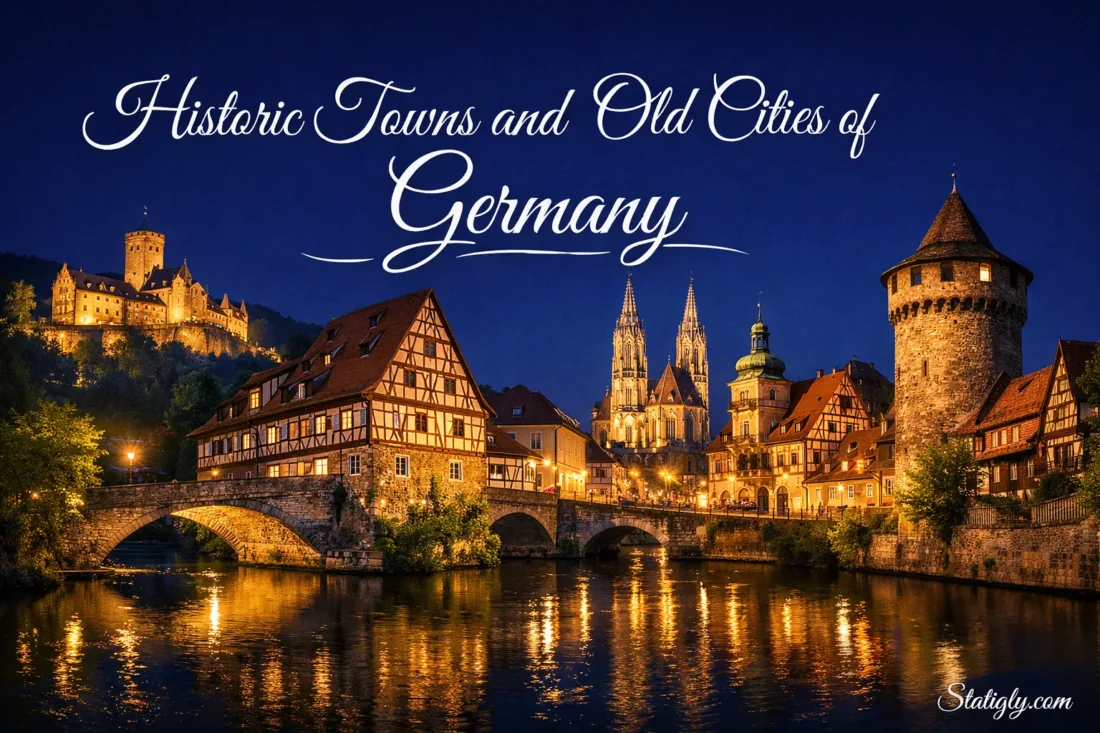
Germany’s historic towns don’t feel like museum pieces. They feel lived-in—like a storybook you can walk through, one cobblestone at a time. Ever turned a corner and suddenly found a market square, a clock tower, and a café terrace all in one view? In Germany, that moment happens a lot.
If you’re planning to explore historic towns and old cities in Germany, focus on places where the Altstadt (old town) still shapes daily life. You’ll get medieval lanes, riverfront promenades, Gothic spires, and half-timbered houses—without needing to chase “hidden gems” on social media.
A Simple Starting List Of Germany’s Most Historic Old Towns
| Place | Region | What It Feels Like | Don’t Miss | Time That Works Well |
|---|---|---|---|---|
| Bamberg (UNESCO, 1993) | Bavaria | Rivers, bridges, and a layered old-town skyline | Riverside lanes + hilltop viewpoints | 1–2 days |
| Regensburg (UNESCO, 2006) | Bavaria | Stone towers, narrow passages, Danube energy | 12th-century Stone Bridge + old-town lanes | 1–2 days |
| Lübeck (UNESCO, 1987) | Schleswig-Holstein | Brick Gothic drama and Hanseatic elegance | Holstentor + warehouse views by the water | 1 day (or a calm overnight) |
| Quedlinburg (UNESCO, 1994) | Saxony-Anhalt | Half-timbered streets that feel timeless | Castle hill + timber-framed side streets | 1–2 days |
| Rothenburg Ob Der Tauber | Bavaria | Classic walled-town fairytale vibes | Walk the town walls at golden hour | Day trip (better with 1 night) |
| Heidelberg | Baden-Württemberg | River views, castle atmosphere, student-town buzz | Old Bridge + Germany’s oldest university (founded 1386) | 1–2 days |
| Freiburg Im Breisgau | Baden-Württemberg | Sunny lanes and a cathedral-centered old town | The Bächle water channels + Münster square | 1–2 days |
| Görlitz | Saxony | “Open-air set” architecture across many eras | Old-town strolls from Gothic to Art Nouveau | 1–2 days |
Pick Your Base City In Two Questions
- Do you want half-timbered streets (think storybook houses) or stone-and-brick city drama?
- Do you prefer one perfect old town with slow mornings, or several day trips from a bigger hub?
Simple rule: stay at least one night in your favorite old town. Day-trippers leave, lanterns come on, and the place starts to feel like it’s yours.
What To Look For In Germany’s Old Cities
Germany’s historic city centers often follow a comforting logic. Once you spot it, you’ll navigate like you’ve been there before.
- Market Square at the center, usually with a town hall and a church nearby
- Altstadt lanes that narrow and curve—perfect for slow strolling
- City gates or walls (even partial remains add instant atmosphere)
- Riverside paths where locals walk, cycle, and linger
- Distinct “house languages”: half-timbered frames, brick Gothic silhouettes, or solid stone facades
Four UNESCO-Listed Old Towns To Build A Trip Around
If you want places where the old-town fabric feels especially cohesive, start here. These are the kind of cities where one walk can cover centuries—without feeling like homework.
Bamberg (UNESCO, 1993)
Bamberg’s old town sits where water and stone keep trading places—bridges, islands, and lanes that feel gently tangled. It’s a city that rewards wandering without a plan.
Do This First: walk along the river, then climb to a viewpoint. You’ll understand the city’s layout in one glance.
- Best Pace: slow, with frequent stops
- Great For: scenic walks + layered skylines
- Easy Time Plan: half-day highlights, full-day deep dive
Regensburg (UNESCO, 2006)
Regensburg is built for the satisfying “turn-left, discover-something” rhythm. The Danube sits right there, and the old town’s stone lanes feel compact and complete.
Signature Moment: crossing the 12th-century Stone Bridge, then slipping back into the old-town passages.
- Best Pace: brisk in the morning, relaxed later
- Great For: river scenery + medieval city character
- Easy Time Plan: 1 day is solid, 2 days feels luxurious
Lübeck (UNESCO, 1987)
Lübeck is where Brick Gothic architecture shows off. Think tall churches, merchant houses, and waterside views that look almost painted.
Start Here: the Holstentor, then wander toward the market area and the waterways.
- Best Pace: focused loop + open-ended wandering
- Great For: architecture lovers and city photographers
- Easy Time Plan: full day, or overnight for a calmer feel
Quedlinburg (UNESCO, 1994)
Quedlinburg is a love letter to timber-framed streets. The castle hill anchors the view, and the old town feels richly textured—wood beams, steep roofs, quiet corners.
Look Up: the collegiate church on the hill, then drift back down through the side lanes.
- Best Pace: unhurried, with lots of detours
- Great For: half-timbered streets + viewpoints
- Easy Time Plan: 1 day for highlights, 2 days for full atmosphere
More Old Cities That Photographs Love
Not every unforgettable old town needs a big label. These places shine because they’re easy to enjoy: clear layouts, memorable viewpoints, and streets that make you slow down without trying.
Rothenburg Ob Der Tauber
Come for the walkable town walls, stay for the way the lanes keep revealing tiny squares and towers. Want an easy win? Walk the walls, then dip into the side streets away from the main route.
Dinkelsbühl
A walled medieval town with a strong sense of place. If you like the Romantic Road idea but want something that feels calmer, this is a satisfying pick.
Nördlingen
A compact old town that’s easy to explore on foot. It’s great when you want a complete old-town loop without a long list of “musts.”
Heidelberg
Heidelberg blends old-city charm with everyday energy. The castle above the Neckar sets the scene, and the city’s university heritage adds a lively rhythm.
Freiburg Im Breisgau
Freiburg’s old town feels bright and friendly, with the cathedral at its heart and the Bächle water channels running along many streets. Watch your step—people really do pause to dip their fingers in on warm days.
Görlitz
Görlitz is made for architectural strolling. You’ll see building styles shift as you walk—like flipping through chapters of European design history.
Route Ideas That Work In Real Life
These routes keep travel time reasonable and old-town time generous. That’s the secret. Nobody wants to spend a “historic towns” trip staring at station boards all day.
Bavaria Old-Town Loop
- Regensburg as a river-and-lanes base
- Bamberg for skyline walks
- Add Rothenburg if you want walls and a storybook core
Brick Gothic By The Baltic
- Lübeck as the main old-city anchor
- Slow down for waterways, squares, and church silhouettes
- Perfect if you like architecture that feels bold and clean-lined
Timber-Frame Trail
- Quedlinburg for classic half-timbered density
- Görlitz for “many eras in one walk” variety
- Ideal when you want texture, detail, and slower streets
Practical Tips That Save Time
- Sleep inside the old town at least once. Morning streets feel calmer, and evenings glow.
- Start with a loop: market square → main church → riverside or wall walk → viewpoint. Then improvise.
- Bring a little cash alongside your card. Payment habits vary by place and venue.
- Plan around Sundays. Many shops close, so it’s a good day for slow walks, viewpoints, and relaxed cafés.
- Wear comfortable shoes. Old towns love uneven stones. Your feet will notice.
- Check opening times for towers, courtyards, and small museums—especially outside peak season.
Travel Etiquette That Keeps Things Smooth
Old towns are neighborhoods first, attractions second. A few small habits make your visit feel better—for you and for everyone around you.
- Keep voices softer in narrow lanes and residential courtyards, especially in the evening.
- Leave bikes and scooters parked properly so sidewalks stay easy for families and wheelchair users.
- Respect private doorways. Many “perfect photo” facades are people’s homes.
- Choose one guided walk in a city you love. It adds context fast, and you’ll notice more afterward.