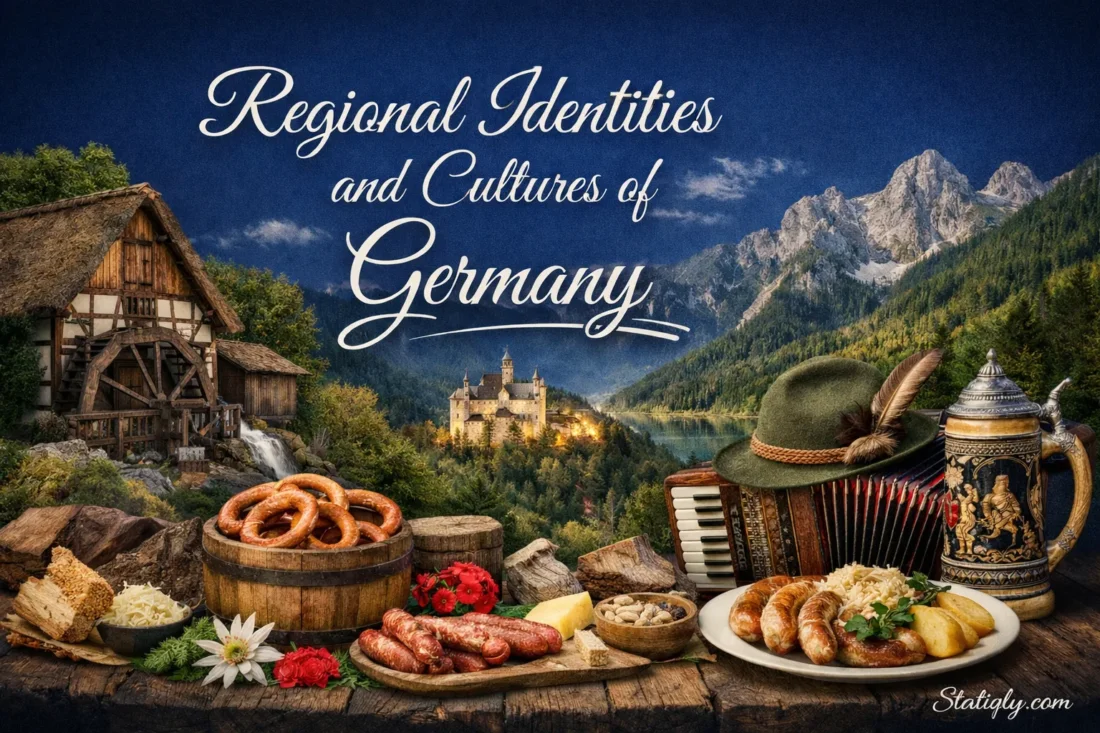
Germany isn’t one single vibe. It’s more like a well-stitched quilt: coastal wind in the north, river life in the west, alpine edges in the south, and storybook towns scattered through the center and east. If you listen closely, you’ll hear it in accents. If you look closely, you’ll see it in roofs, markets, and meals. So what makes regional identities in Germany feel so alive? They grow from place, history, craft, and daily habits—small things that add up to a strong sense of “this is us.”
Germany’s Regions Overview
Use this as a friendly map while you read. It’s not about “better” or “worse.” It’s about different flavors of Germany.
| Region Feel | Places You’ll Hear Mentioned | What Stands Out | Food You’ll Likely Spot |
|---|---|---|---|
| North Coast | Hamburg, Bremen, Schleswig-Holstein | Hanseatic heritage, sea air, clean-lined architecture | Fischbrötchen, hearty soups |
| Rhine & West | Cologne, Düsseldorf, Bonn | River promenades, big-city warmth, lively street culture | Sauerbraten, Reibekuchen |
| Southwest | Stuttgart area, Black Forest towns | Craft pride, tidy villages, forest traditions | Spätzle, Maultaschen |
| Bavaria & Franconia | Munich area, Nuremberg area, Alpine foothills | Costume traditions, mountain scenery, iconic folk crafts | Pretzels, Nürnberger Bratwürste |
| Central Germany | Frankfurt area, Kassel, Würzburg area | Market squares, museums, “crossroads” feeling | Handkäse mit Musik, seasonal pastries |
| East | Dresden, Leipzig, Erfurt | Baroque streetscapes, craft regions, forest hikes | Dresdner Stollen, Thüringer Rostbratwurst |
Why Regional Identity Feels So Strong
Germany is made up of federal states, called Bundesländer, and many people feel close ties to their state, city, or even valley. Geography plays a huge role. Coastlines shape daily life in the north. Mountains shape rhythm in the south. River corridors connect cities in the west. Add local dialects, school traditions, and community clubs, and you get a culture that’s deeply lived, not just displayed.
A simple way to think about it: regional culture in Germany often shows up in speech, food, festivals, and everyday manners. If you pay attention to those four, you’ll “get” a place faster than any guidebook can explain.
Northern Coast: Hanseatic Calm and Sea-Born Traditions
Up north, you’ll hear people talk about Hanseatic cities like Hamburg and Bremen. The mood often feels direct, practical, and quietly proud. Architecture can lean clean and brick-heavy, shaped by trade history and maritime weather. Want a small cultural clue? Step into a harbor neighborhood and watch how naturally people talk about tides, ferries, and fish markets—as if the sea is a neighbor.
What to Notice
- Brick Gothic churches and warehouses in many old towns
- Markets where fresh, simple ingredients shine
- Seaside paths, dunes, and flat horizons that feel endless
Small Cultural Moments
- Ferries as everyday transport, not a novelty
- Sea-inspired crafts and clean, functional design
- Quiet confidence in how people describe their city
Rhine and West: River Cities, Street Life, and Friendly Rituals
The west is famous for big, welcoming city energy—especially along the Rhine. In places like Cologne and Düsseldorf, public spaces matter: promenades, plazas, and busy sidewalks. One of the region’s most recognizable traditions is Carnival season, known for costumes, music, and playful humor. Ever seen a city turn into a stage? That’s the feeling.
Easy Ways to Join In
- Try a classic regional dish like Sauerbraten or crisp potato pancakes (Reibekuchen).
- Stroll a riverfront at sunset. Locals do it for a reason.
- Look for small neighborhood festivals—often family-friendly and full of music.
South: Alpine Edges, Village Pride, and Living Traditions
Southern Germany is where many people imagine “classic” Germany—yet it’s more varied than postcards suggest. Bavaria and Baden-Württemberg each have distinct sub-regions and customs. You’ll see traditional clothing during local celebrations, hear proud local sayings, and find crafts that have been refined over generations. It can feel like culture here has a steady heartbeat: markets, family recipes, seasonal events, repeat.
Southwest Highlights
The Black Forest is often linked with woodcraft and recognizable folk imagery. In Swabian areas, food culture is famously hands-on—think Spätzle and Maultaschen.
Bavaria and Franconia Notes
Bavaria’s alpine foothills bring hiking culture and scenic villages. Franconia (often associated with northern Bavaria) has its own identity, with historic towns and local specialties like Nuremberg-style sausages served in many traditional ways.
East: Baroque Cities, Craft Regions, and Forest Trails
In eastern Germany, cultural identity often shines through architecture, music traditions, and artisan work. Dresden is known for baroque beauty and museum culture. Leipzig has a strong reputation for music and publishing history. In smaller towns, you’ll find craft regions where woodwork, ornaments, and seasonal items are still part of everyday life. Curious why so many visitors fall in love with the east? It’s the mix of grand city streets and quiet nature escapes—close together, easy to balance.
Try This Local Rhythm
- Morning in a historic center: courtyards, cafés, museum streets
- Afternoon in nature: sandstone viewpoints, forest paths, lakeside walks
- Evening in a market square: pastries, street musicians, warm lights
Central Germany: Market Squares, Museums, and “Crossroads” Energy
Central regions feel like a natural meeting point. Cities and towns here often revolve around market squares, museums, and easy transport links. The experience can be wonderfully balanced: urban culture without losing the small-town charm nearby. If you like variety without long travel days, central Germany is a smart pick.
Things That Feel “Central”
- Half-timbered streets in many towns
- Seasonal markets with local crafts
- Food that shifts quickly from one valley to the next
A Gentle Food Note
In Hesse, you may see Handkäse mit Musik, a small cheese dish traditionally served with onions and a tangy dressing. It’s a fun example of how Germany loves playful food names.
Dialects, Manners, and Local Humor
Dialects in Germany are not just “different accents.” They can change vocabulary, melody, and even how jokes land. In some areas, you’ll hear dialect words in daily conversation; in others, Standard German dominates in public while dialect appears at home. Here’s the nice part: you don’t need to understand every word to feel the culture. Notice the tempo. Listen for repeating expressions. Ask a simple question like, “What do locals usually say here?” People often love sharing.
Polite, Simple Moves That Work Everywhere
- Greet shop staff with a friendly “Hallo” or “Guten Tag”.
- Use please and thank you often. It’s appreciated.
- On public transport, keep your voice calm. It matches the space.
- If you’re unsure, ask: “Is this the usual way?” It invites help without awkwardness.
Regional Food Culture Without Overthinking It
German regional food is comfort-first and practical. Recipes often match climate and local produce. Coastal areas lean fish-forward. Forest and mountain regions lean hearty. Big cities bring variety, but you’ll still find a “local classic” that shows up on many menus. Think of it as a tasty shortcut to understanding a place: one plate, one story.
North and Coast
- Fischbrötchen (fish sandwich)
- Warm soups and simple bakery items
West and Rhine
- Sauerbraten (marinated roast)
- Reibekuchen (potato pancakes)
South and Southwest
- Spätzle (soft egg noodles)
- Maultaschen (filled pasta pockets)
- Pretzels and bakery culture
Festivals, Seasonal Customs, and Local Pride
Germany’s calendar is full of regional events—some big, many small, most rooted in community. You’ll see spring celebrations with flowers and music, summer street fairs, autumn harvest-themed gatherings, and winter markets that glow at dusk. The best part is how local these can feel. Two towns an hour apart might celebrate in completely different styles. Isn’t that the fun of it?
- Christmas markets in many regions, each with its own sweets and crafts
- Carnival traditions in parts of the west, with costumes and parades
- Maypole and village festival traditions in several southern and central areas
- Music and craft fairs that spotlight local makers and family activities
Crafts and Everyday Art That Define Regions
Regional culture often lives in objects you can hold. A carved wooden figure. A porcelain piece. A hand-printed ornament. These aren’t just souvenirs. They’re local memory, made visible. If you want an authentic slice of German culture, spend time in workshops, small museums, and market stalls where the maker is present.
Regional Craft Examples You’ll Hear About
- Meissen porcelain (Saxony)
- Erzgebirge woodcraft (Saxony)
- Black Forest woodwork (Southwest)
- Regional textiles, folk costumes, and embroidery traditions in several areas
How to Pick Regions That Match Your Travel Style
Choosing where to go in Germany gets easier when you start with your preferred pace. Do you want big museums every day, or quiet villages with one perfect bakery? Do you love coastlines, forests, or mountains? Answer that, then match the region.
If You Love Cities
- Pick a river city in the west for street life and promenades
- Choose a music-and-museum city in the east for culture-packed days
- Mix one major city with two smaller day-trip towns
If You Love Nature
- North: beaches, dunes, and coastal paths
- South: alpine foothills, lakes, and mountain trails
- East: forests and sandstone viewpoints close to historic towns
If You Love Traditions
- South: village festivals, crafts, and regional costume culture
- West: Carnival energy and local rituals in neighborhoods
- Central: markets, half-timbered streets, seasonal crafts
A Practical Culture-First Checklist
- Pick one main region and explore it slowly instead of racing around.
- Choose one local dish to try each day. Food is an easy doorway into culture.
- Visit a market or small craft shop and ask what’s made locally.
- Learn two phrases: “Guten Tag” and “Danke”. Simple, effective, always welcome.
- Keep an eye out for regional details: street signs, building styles, and local festival posters.