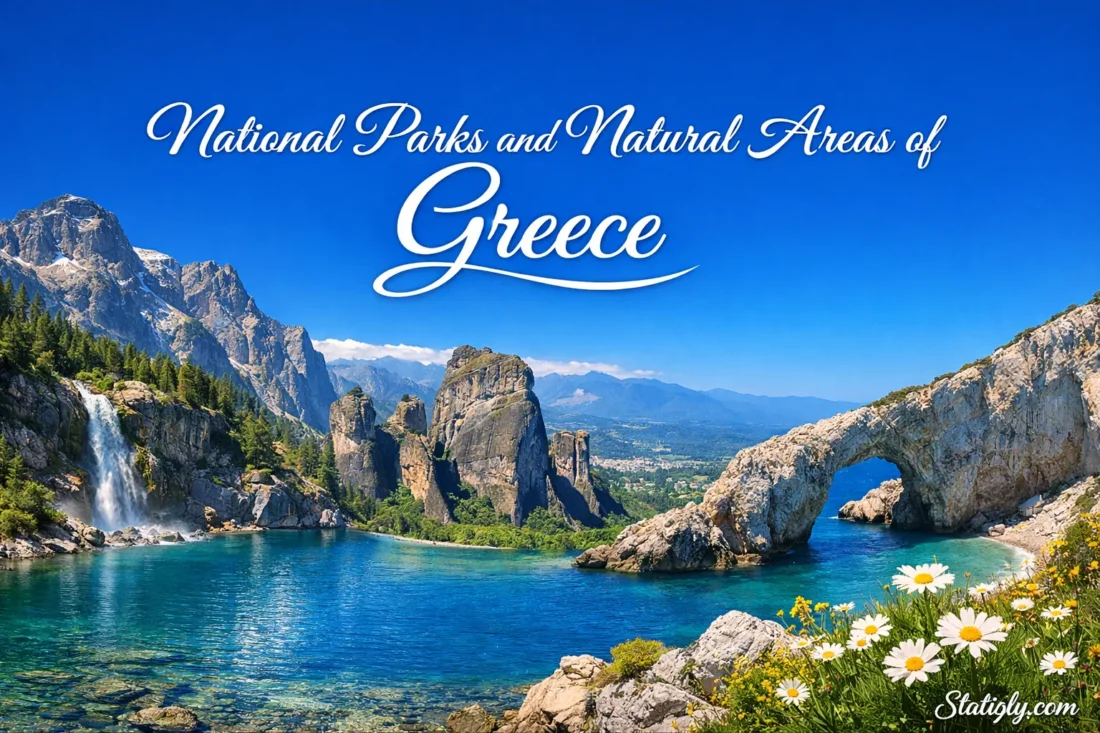
Greece rewards nature lovers in a way few countries do. In one trip, you can stand on a high limestone ridge, walk through a deep gorge, cross a wetland full of birdlife, and end the day near a quiet stretch of protected sea. That range matters. It means national parks and natural areas in Greece are not one note, not one mood, not one kind of journey. Some places ask for boots and stamina. Others ask you to slow down, watch the water, and listen. The country’s protected landscapes hold mountain forests, island peaks, lake basins, coastal dunes, marine habitats, and old footpaths that still feel alive under your feet.
| Area | Landscape Type | What Stands Out | Best Fit for Visitors |
|---|---|---|---|
| Mount Olympus | High mountain massif | Alpine relief, rare flora, layered trails | Hikers, plant lovers, mountain scenery |
| North Pindos | Mountain park and gorge country | Vikos, Valia Calda, rivers, stone villages | Long walks, road trips, mixed landscapes |
| Samaria | Gorge and mountain park | Long canyon walk, Cretan endemics, dramatic descent | Full-day walkers and active travelers |
| Prespa | Lakes and wetlands | Birdlife, reedbeds, calm waters, village scenery | Birdwatching, soft travel, slow days outdoors |
| Alonissos Marine Park | Protected sea and islands | Remote coves, clear water, marine habitats | Boat-based nature trips and quiet island stays |
| Ainos | Island mountain forest | Greek fir forest, sea views, compact trail network | Easy island hiking and short nature escapes |
| Zakynthos Marine Park | Protected coast and sea | Nesting beaches, dunes, marine life | Coastal visitors who want nature with clear rules |
Why Nature in Greece Changes So Fast
Part of the appeal is geographic. Mountains rise close to the sea, islands hold their own small climates, and wetlands sit along migration routes that turn quiet water into a living stopover. So the shift from one habitat to another can feel quick, almost sudden. You leave a pine slope and meet bare rock. You leave bare rock and find reeds, lagoons, or sheltered bays. For travelers, that makes Greece’s natural areas easy to combine but hard to reduce to one image.
The other reason is the country’s broad network of protected land and sea. Some areas are known first as national parks. Others are better known as marine parks, wetlands, mountain reserves, or Natura 2000 sites. For a visitor, the label matters less than the experience on the ground: marked trails, protected habitats, seasonal access rules, and places where wildlife still shapes the pace of a day.
Mountain Parks That Give the Mainland Its Character
Mount Olympus
Mount Olympus is the natural starting point. It was Greece’s first national park, and it still feels like a place that sets the tone. The slopes rise sharply from lower ground, the terrain changes fast, and the mountain carries a rare mix of scale and detail. Big views, yes. But also small alpine plants, shifting tree lines, gullies, springs, and wind-shaped stone.
What makes Olympus special for ordinary visitors is not only the summit story. It is the layering. Lower trails feel wooded and sheltered. Higher routes open into exposed terrain with a very different rhythm. Even a short stay shows why this mountain matters so much in Greek nature travel. It is not just a peak. It is a whole vertical landscape.
North Pindos and Valia Calda
Farther west, North Pindos National Park brings together some of the most rewarding inland scenery in the country. This is a large park, broad in feel and broad in layout, with mountain chains, rivers, ravines, dense forest, and high villages built from stone. The well-known names here are Vikos Gorge and Valia Calda, though the wider park holds much more than those two anchors.
Valia Calda has a quieter pull. The forest feels deep, the air often cooler, the mood more inward. Vikos, by contrast, opens out in dramatic lines and cliff views. Seen together, they explain why the Pindos range matters so much in any article about the natural areas of Greece. It gives you scale without crowding, beauty without noise. Rare thing, that.
- Choose North Pindos if you want more than one landscape in the same trip.
- Choose it if old bridges, mountain roads, river valleys, and long viewpoints matter to you.
- Choose it, too, if you prefer nature that unfolds slowly rather than all at once.
Parnassos, Oiti, and the Wider Central Belt
Central Greece has a different feel. The mountains are still strong, but access can be easier, and nature often sits closer to villages, roads, and shorter travel loops. Parnassos and Oiti belong in that conversation. They show how protected mountain land in Greece is not limited to one faraway, rugged corner. Sometimes it is woven right into routes that travelers already know.
That matters for trip planning. Not every visitor wants a remote, multi-day park journey. Some want a half-day walk, a forest road, a cool upland stop in summer, maybe a meadow and a ridge before dinner. Greece can do that well.
Ainos on Kefalonia
Ainos National Park proves that island nature in Greece is not only beaches and coves. On Kefalonia, the mountain rises above the Ionian Sea and creates a protected forest landscape with its own character. The park is known for the endemic Greek fir, and that forest cover gives the area a cool, resin-scented feel that surprises many visitors on a summer island trip.
It is also practical. You can enjoy Ainos without committing to a demanding expedition. Shorter walks, viewpoints, and the contrast between mountain air and sea horizons make it a good choice for travelers who want real nature on an island schedule. Few places show that contrast so neatly. Forest above. Sea below. Very Greek, and yet not the first image most people expect.
Gorges, Forests, and Relief That Feel Distinctly Greek
Samaria and the White Mountains of Crete
No survey of national parks in Greece feels complete without Samaria. The White Mountains National Park in Crete centers on the famous gorge, and the walk through it remains one of the country’s best-known nature experiences. The route is long, the descent is serious, and the scenery keeps changing as you move from higher ground down toward the Libyan Sea.
But Samaria is not only a famous hike. It is a protected mountain environment with endemic life and a strong sense of place. Cypress stands, rocky slopes, narrow passages, and the chance to see the Cretan wild goat give the area a clear identity. You feel it quickly. This is not a generic canyon walk. It belongs to Crete in shape, light, and rhythm.
For visitors, the key is simple: treat Samaria as a full nature day, not a casual stroll. Wear proper shoes. Start early. Carry water. And leave room in your plan for the ending, because the descent stays with you longer than you think it will.
What Makes Greek Gorges Different
Greek gorges often combine stone, altitude, dryness, shade, and sudden views of the sea in a tight space. That combination gives them a distinct feel. They are not only scenic corridors. They are transition zones. A path drops, the air warms, the vegetation changes, and what looked harsh from above begins to feel sheltered inside. Step by step, the place rewrites itself.
That is why gorges matter so much in Greece’s protected areas. They are not side features. Often, they are the experience people remember first.
Wetlands and Lakes Where Birdlife Sets the Pace
Prespa
If mountain parks show Greece at its most vertical, Prespa National Park shows another side entirely. Here, lakes, reedbeds, wet meadows, quiet roads, and village edges shape the experience. The atmosphere is slower. Softer, too. Yet the ecological value is high, and the area is especially important for birdlife and wetland habitats.
Prespa works well for travelers who do not need dramatic elevation to feel close to nature. A hide, a shoreline, a boat ride, a calm morning near the water, these things matter here. So do the shifts in light. Wetland landscapes rarely shout. They gather meaning more quietly.
There is also a wider sense of connection in Prespa because the lake system links more than one country. For visitors, that adds depth without making the place feel heavy. You notice how nature moves across borders even when your day stays simple: a lakeside road, a small village, a flock lifting from the reeds.
- Best for: birdwatching, calm routes, photography, slower travel
- Good to know: early morning and shoulder seasons often bring the most rewarding wetland atmosphere
- Why it stands out: it feels peaceful, but never empty
Marine Parks and Protected Coasts
Many travelers think first of beaches when they hear “nature in Greece.” Fair enough. Yet the country’s protected coasts and marine parks deserve a more careful look. They protect habitats, nesting areas, island clusters, underwater life, dunes, and quiet stretches of sea where rules matter for a reason. A marine park is not just a scenic boat zone. It is a living protected system.
Alonissos and the Northern Sporades
The National Marine Park of Alonissos Northern Sporades is one of the flagship protected sea areas in Greece. It brings together the island of Alonissos, smaller islands, rocky islets, and a large marine zone that gives the park its sense of space. Clear water is part of the appeal, of course, but remoteness is just as important. The area feels open and protected at the same time.
This is the kind of place that suits travelers who enjoy nature by boat, by swim stop, by coastal walking, by simply being in a quieter island setting where the sea still feels in charge. There is beauty here, obviously. More than beauty, though, there is structure. Protected areas work best when visitors understand that access and behavior shape the future of the place.
Zakynthos and Its Protected Shoreline
The National Marine Park of Zakynthos adds another layer to the story of Greece’s natural areas. It protects coastal and marine habitats in the southern part of the island and is closely tied to nesting beaches used by the loggerhead sea turtle. This gives the park a very clear identity: beautiful coast, yes, but with visible rules, seasonal care, and a stronger link between tourism and habitat protection.
For visitors, that creates a useful lesson. The best coastal experiences in Greece are not always the freest in the casual sense. Sometimes the most memorable places are the ones where you keep your distance, follow local guidance, and let the landscape stay a little less disturbed. Good parks ask something of us. That is part of their value.
- Stay on marked access routes.
- Keep beaches and coves clean.
- Respect wildlife distance rules.
- Check local access conditions before boat trips or long coastal walks.
What Travelers Actually Notice on the Ground
Guidebooks often focus on names and labels. Visitors remember something else. The smell of fir on Ainos. The shift from forest to exposed stone on Olympus. The stillness of Prespa at first light. The long descent through Samaria when the rock walls narrow and the day becomes physical. The way an Alonissos boat route feels both open and protected. Small details, really. Then not so small.
That is why choosing the right natural area in Greece depends less on fame and more on travel style. Ask a better question than “Which park is best?” Ask this instead: Do I want a mountain day, a wetland day, or a sea day? Do I want effort, calm, or a mix of both? Once you answer that, the map gets much easier to read.
Best Seasons for Different Nature Trips
- Spring: one of the best times for wildflowers, cooler hikes, active wetlands, and clear mountain walking conditions.
- Early Summer: good for mixed trips that combine coast and uplands, especially where you want sea access without the heaviest heat.
- High Summer: strongest for island marine areas and higher-elevation routes, but timing matters more. Start early.
- Autumn: excellent for quieter trails, softer light, bird movement in wetland zones, and more relaxed road travel.
Winter has its own appeal in some mainland areas, especially for scenery and shorter nature stops, but access and conditions can change quickly in mountain regions. Check locally, always.
How to Choose the Right Part of Greece for Nature Travel
- Choose Olympus if you want a classic mountain name with real hiking depth.
- Choose North Pindos if you want the richest mix of mountains, rivers, gorges, and traditional villages.
- Choose Samaria if you want one of Greece’s most memorable full-day walks.
- Choose Prespa if quiet water, birdlife, and slower travel suit you better than hard climbs.
- Choose Alonissos if protected sea and remote island character matter most.
- Choose Zakynthos Marine Park if you want a coastal trip shaped by wildlife protection and clear visitor rules.
- Choose Ainos if you want mountain forest on an island without losing easy access to the sea.
Seen together, the national parks and natural areas of Greece offer more than scenery. They offer choice. High trails or calm wetlands. Fir forest or open sea. A gorge that tests your legs or a lakeside morning that asks almost nothing from you at all. That variety is the real gift, and Greece has plenty of it.